Tomato Container Gardening Tips for Maximum Yield and Flavor
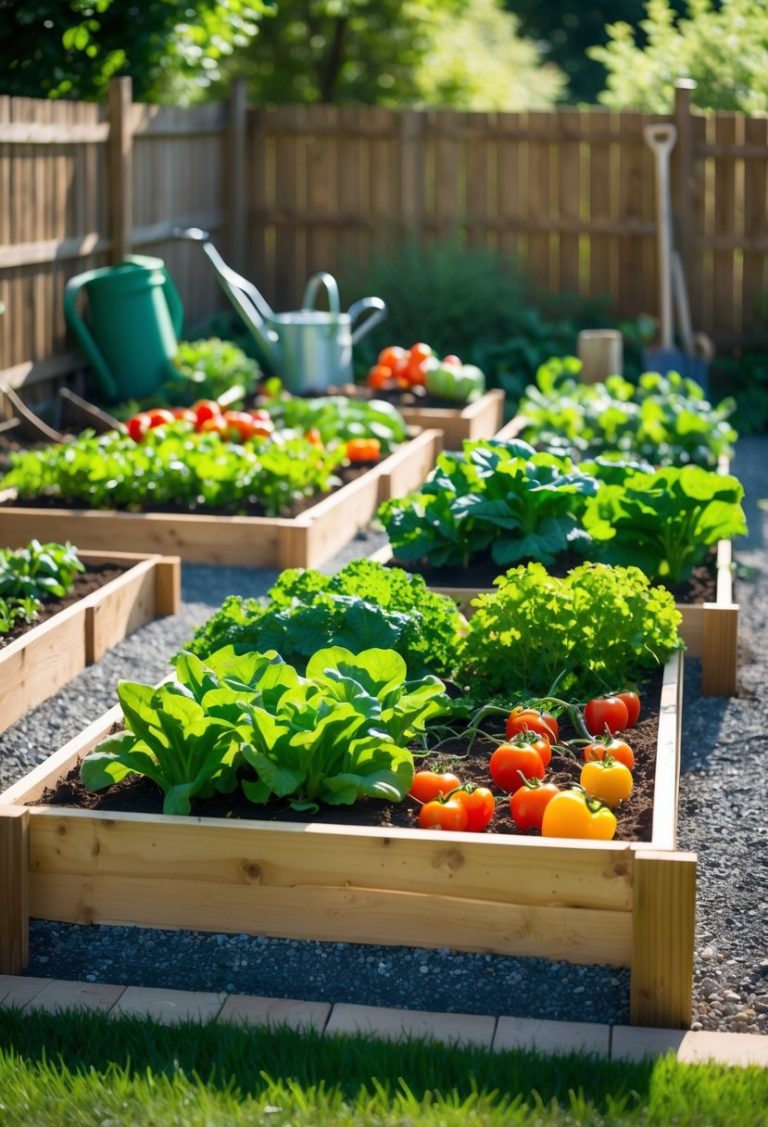
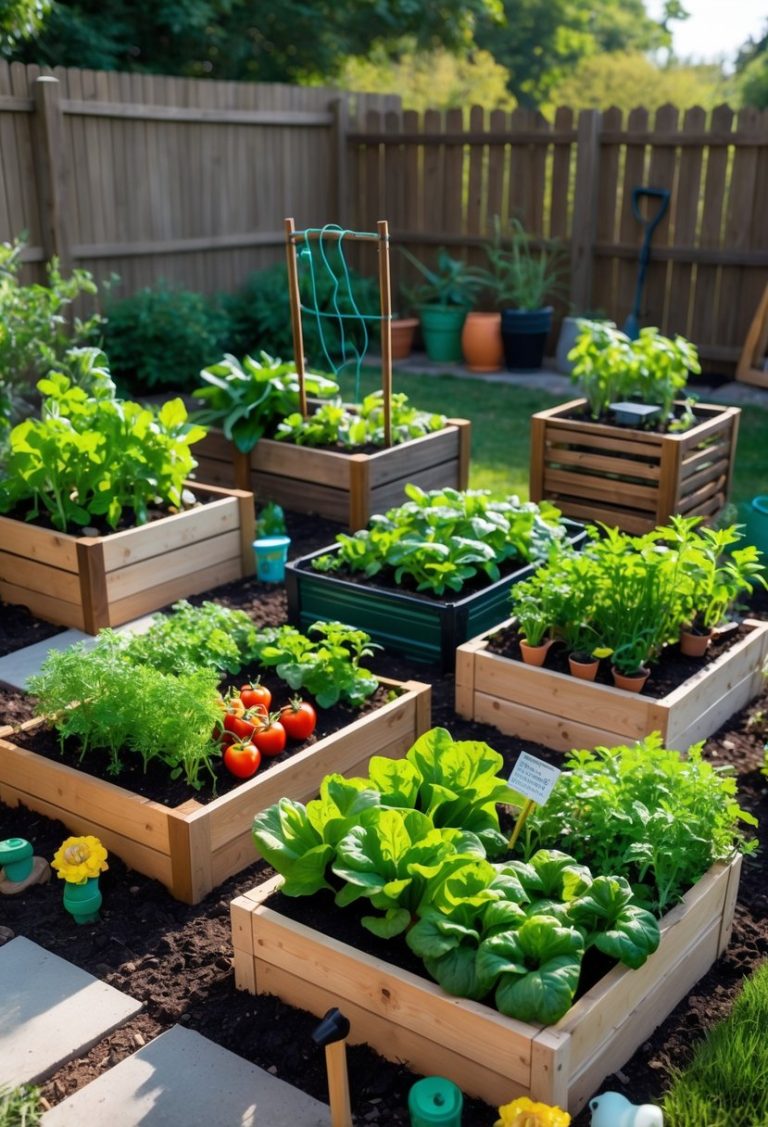
Growing tomatoes in containers is a smart way to enjoy fresh produce, even if you don’t have a large garden. It allows you to control the soil, sunlight, and water, making it easier to grow healthy plants in small spaces like patios or balconies. Choosing the right type of tomato and container is key to a successful tomato container garden.
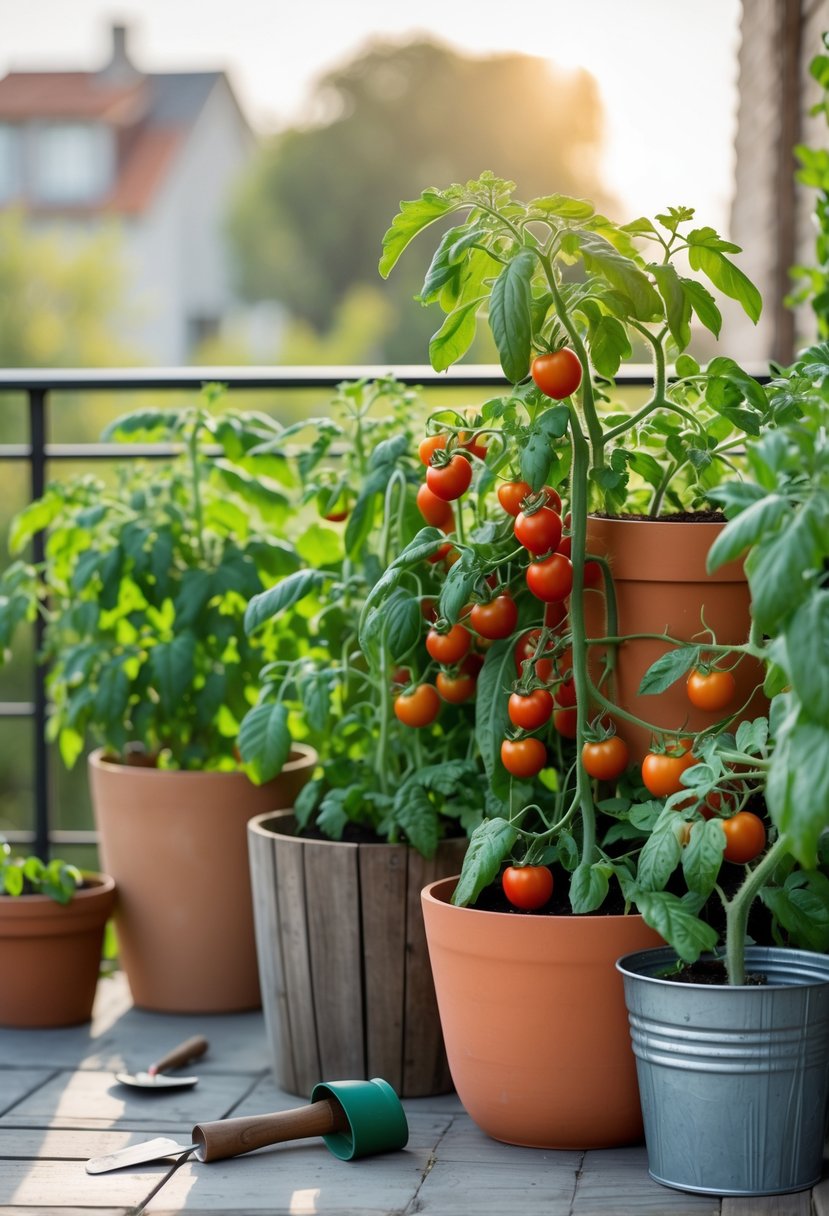
Bush or determinate tomato varieties work best in pots because they stay compact and often don’t need extra support. Container size matters too—larger pots give roots room to grow, which helps plants produce more fruit. Proper care like watering, soil quality, and managing pests will keep your tomatoes healthy and productive throughout the growing season.
You can grow tomatoes almost anywhere when you use containers, giving you fresh tomatoes to enjoy at home no matter where you live. With the right setup and care, container gardening gives you a simple way to grow your own food successfully.
Key Takeaways
- Choosing compact tomato varieties helps plants thrive in containers.
- Use a large enough pot to support healthy root growth.
- Consistent watering and quality soil improve tomato yield.
Benefits of Tomato Container Gardening
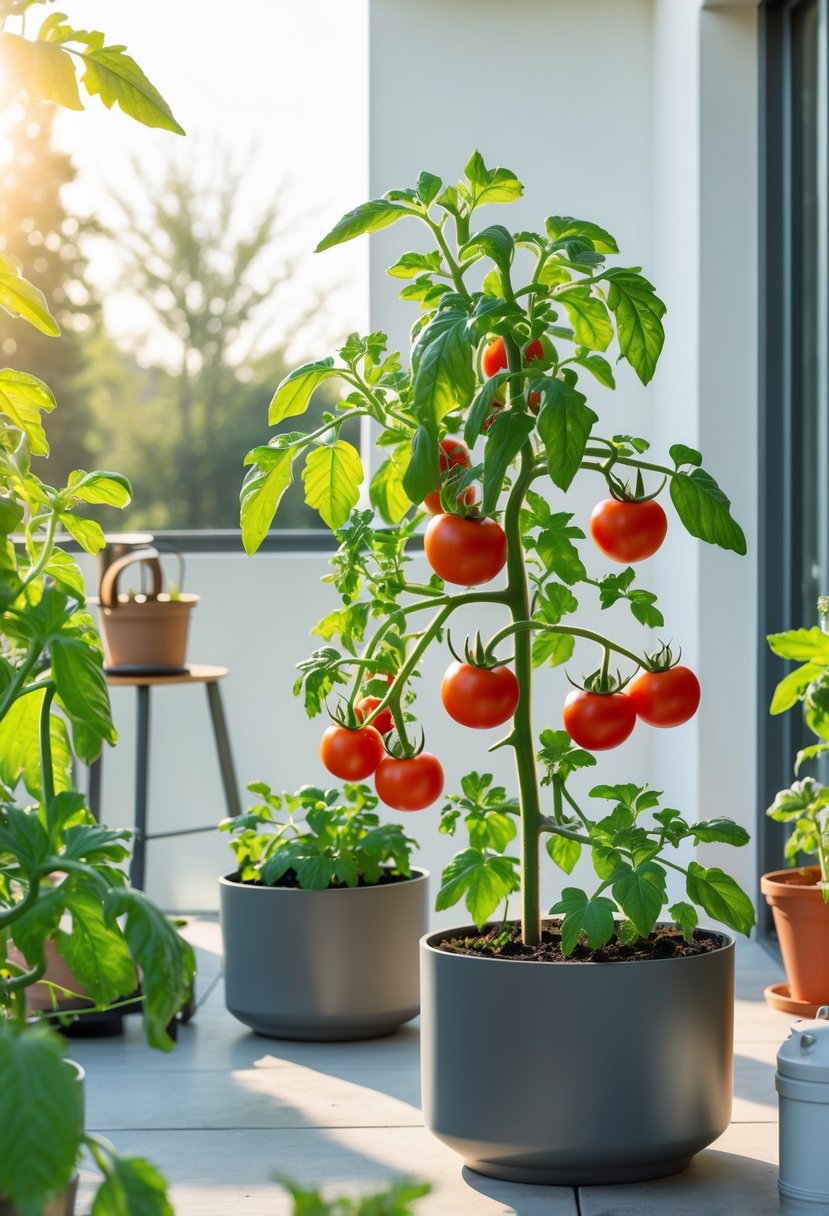
Growing tomatoes in containers offers practical advantages that help you manage space, move plants when needed, and reduce problems with pests and diseases. These benefits make container gardening a good choice for beginners and experienced gardeners alike.
Space Efficiency
Container gardening allows you to grow tomatoes even if you have little or no garden soil. You can use patios, balconies, windowsills, or small outdoor spaces. This way, you maximize limited areas without needing a full garden bed.
Because containers take up minimal space, you can grow multiple tomato plants side by side. Small pots can fit on shelves or ledges. This flexibility lets you grow enough tomatoes without a large yard.
You can also choose containers of different sizes to match your tomato plants. For example, smaller determinate tomato varieties work well in pots about 12 inches wide. This size gives roots enough room to grow without wasting space.
Flexibility and Mobility
One key advantage of container tomato gardening is that you can move the plants. This helps you place your tomatoes where they get 6 to 8 hours of sunlight each day, which they need to thrive.
You can also shift containers to protect plants from harsh weather like heavy rain or strong wind. Moving pots indoors or to sheltered spots during cold nights can keep your plants healthy.
Mobility lets you adjust sunlight exposure through the growing season. You can even rearrange your containers to optimize space or create better airflow, which helps prevent mold and fungal issues.
Pest and Disease Management
Growing tomatoes in containers makes it easier to control pests and diseases. Since the plants aren’t in the ground, they avoid many soil-borne pests and diseases common in garden beds.
You control the soil quality by using fresh potting mix, reducing the risk of harmful pathogens. Containers also dry faster, which lowers the chance of root rot compared to ground soil.
Finally, container-grown plants are more isolated, making it harder for pests to spread. You can monitor your tomatoes closely and take quick action if you see insects or disease starting. This control simplifies your tomato container gardening care routine.
Choosing the Right Containers and Systems
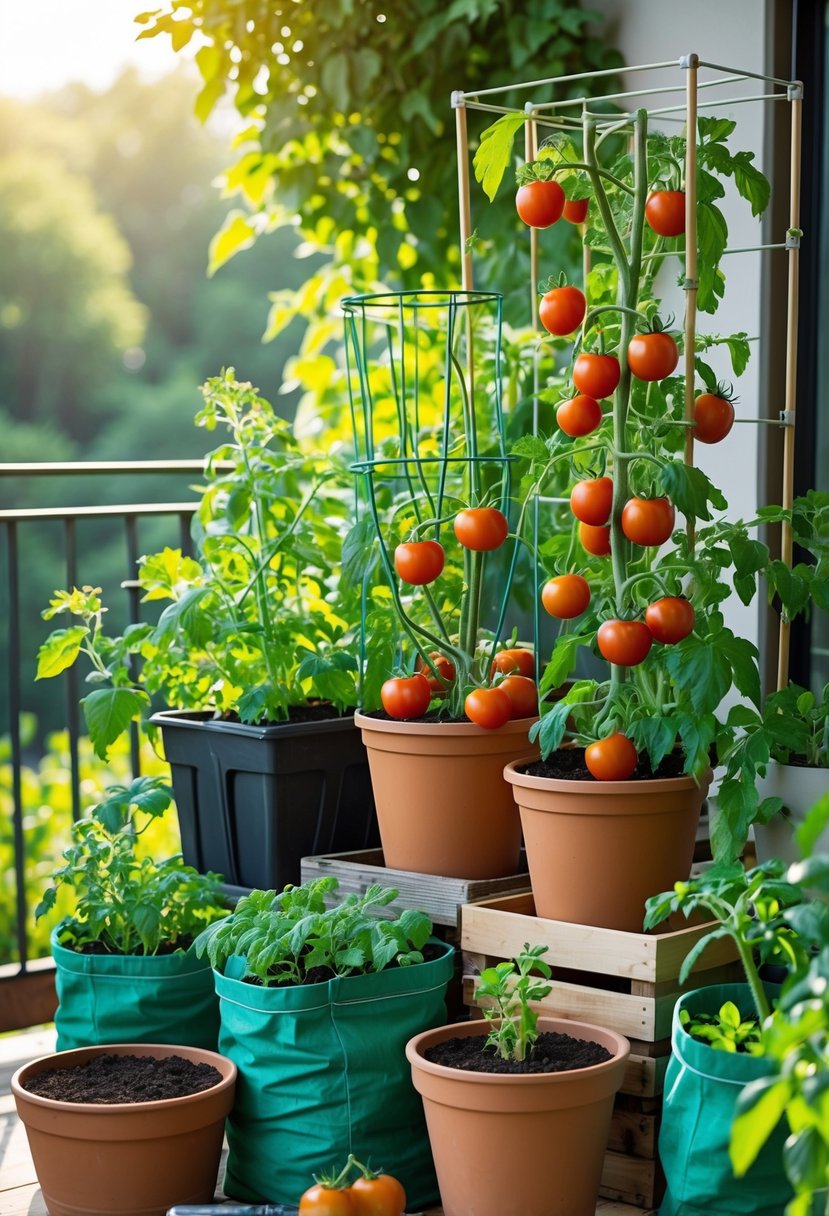
To grow healthy tomatoes in containers, you need to pick the right pots and systems. The size, type, and drainage affect how well your plants will grow. Using self-watering containers can also help keep moisture steady without much daily work.
Selecting Ideal Container Types
Choose containers made from durable materials like plastic, fabric, or terra cotta. Plastic pots are lightweight and hold water well but can overheat in the sun. Fabric pots allow air to reach the roots and prevent waterlogging.
Aim for containers that are at least 5 gallons for one tomato plant. Larger tomato varieties do better in bigger containers, like 20 gallons, to have room to grow roots. You can use buckets or tubs if they fit.
Make sure your container has a wide base and enough depth. This gives the roots space they need to spread and take up nutrients properly.
Self-Watering Solutions
Self-watering containers are useful for tomato growing because they keep soil evenly moist. These systems usually have a water reservoir at the bottom.
You fill the reservoir, and plants absorb water through wicking. This means you don’t have to water as often, which is good if you forget or travel.
Look for containers with clear water level indicators so you know when to refill. Self-watering pots also reduce the risk of overwatering, which can cause root rot.
Many gardeners use self-watering buckets or specially made fabric containers with built-in reservoirs.
Drainage and Sizing Considerations
Good drainage is critical. Containers must have holes to let extra water escape. Without drainage, roots can drown or get diseases.
If you use a pot without holes, you must water carefully or add a layer of rocks to improve flow, but it’s better to choose pots with built-in drainage.
Size matters too. For tomatoes, a minimum of 5 gallons per plant is recommended, but bigger types need 10 to 20 gallons.
Wider containers give your tomato roots more area to grow horizontally, helping plants stay stable and healthy.
Summary Table:
| Factor | Recommendation |
|---|---|
| Material | Plastic, fabric, or terra cotta |
| Minimum volume | 5 gallons for small tomatoes |
| Larger setups | 10-20 gallons for big varieties |
| Drainage | Pots must have drainage holes |
| Self-watering | Use reservoirs with water indicator |
Soil and Planting Requirements
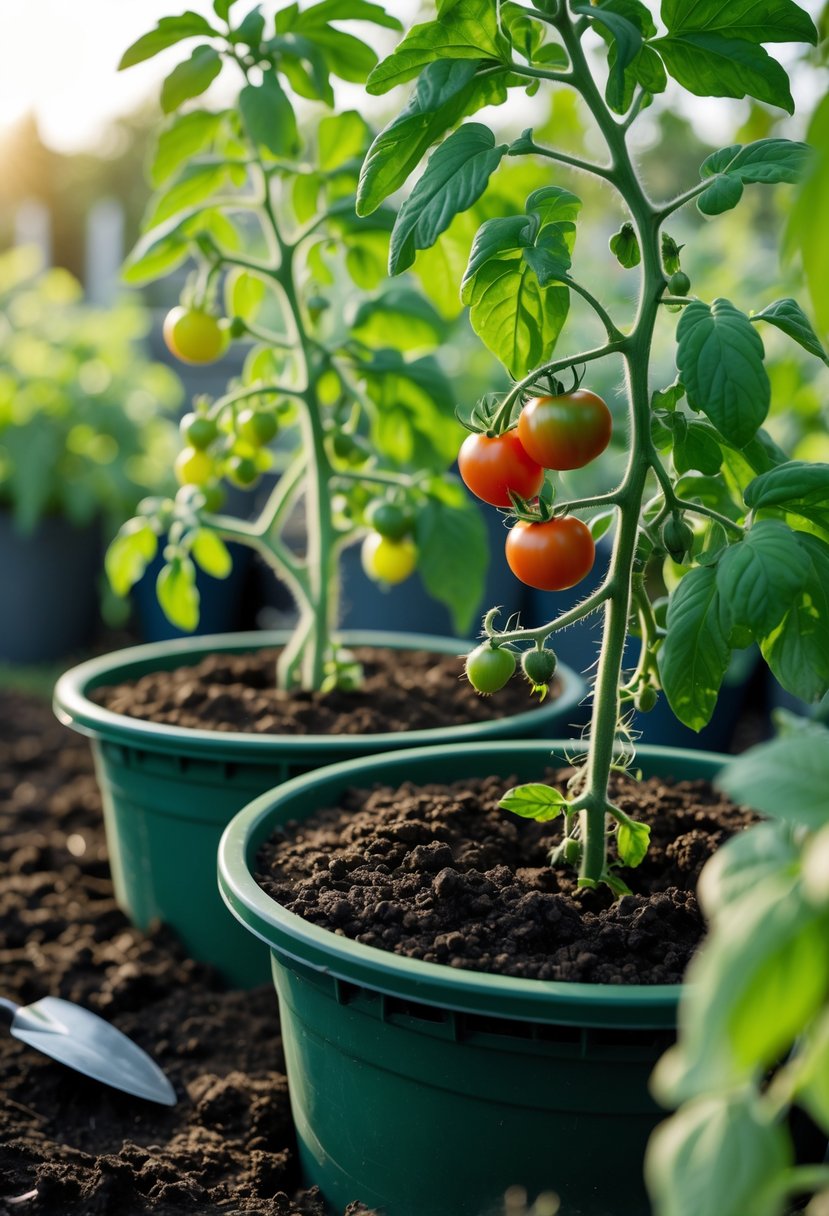
Choosing the right soil and planting method is key to growing healthy tomatoes in containers. Your soil must hold moisture, drain well, and provide nutrients. Planting techniques should support root growth and give plants enough space.
Soil Quality and Preparation
Use a light, well-draining soil mix specifically made for containers. Avoid garden soil because it is too heavy and can carry pests or diseases. Mix equal parts of potting soil, compost, perlite, and sphagnum moss to create a balanced soil that stays moist but drains excess water.
The soil’s pH should be slightly acidic, around 6.0 to 6.8. You can test this with a home kit. Adding organic fertilizer or compost boosts nutrient levels. Refresh the soil yearly to prevent nutrient loss and reduce disease risk.
Planting Techniques for Containers
Start with a container that holds at least 5 gallons to give your tomato roots enough room. Ensure the container has drainage holes to stop water buildup.
Place seedlings deep, burying part of the stem. This helps roots grow along the stem, making the plant stronger. Space plants one per pot to avoid crowding and allow airflow.
Use stakes or cages sized about 15 to 20 inches tall to support the plant as it grows. This prevents damage from wind or heavy fruit. Water regularly but avoid overwatering by checking soil moisture before watering again.
Essential Tomato Container Care
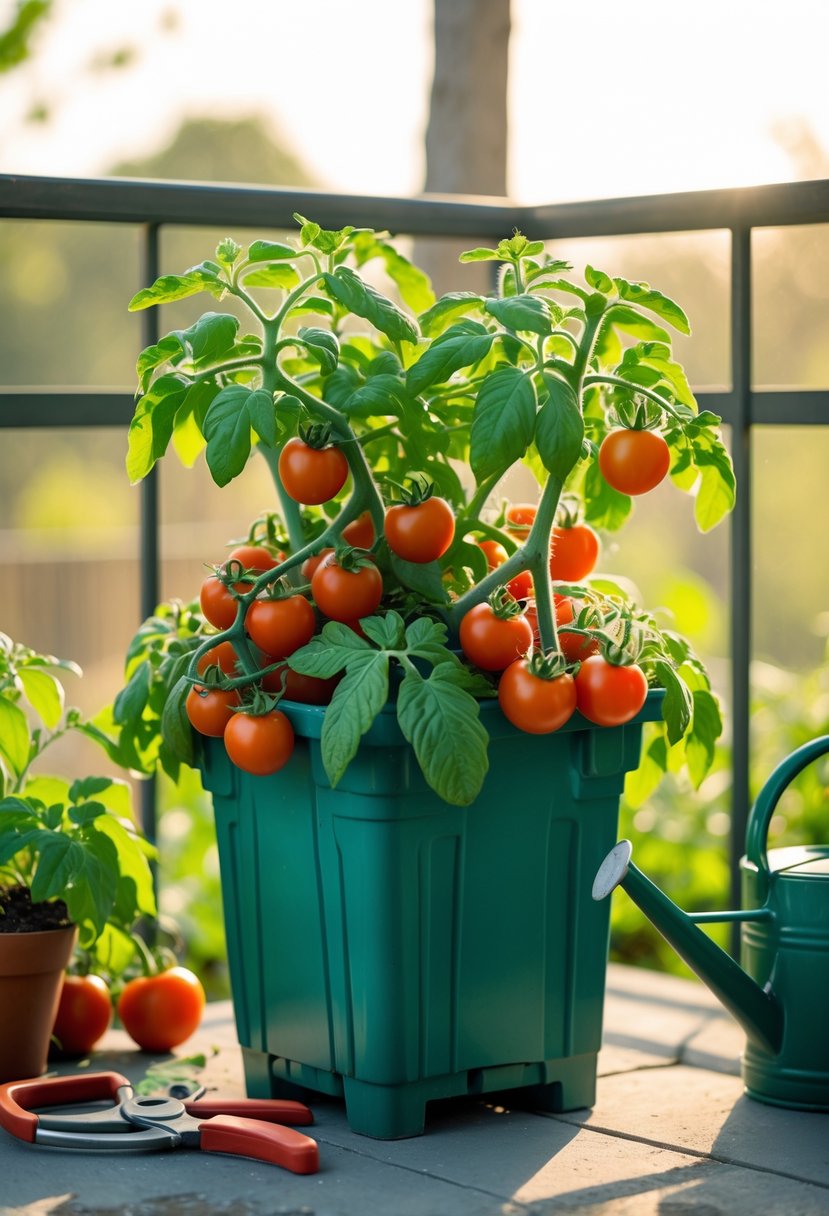
To grow healthy tomatoes in containers, you need to manage water, nutrients, and plant structure carefully. Proper care helps your plants produce better fruit and avoid common problems like blossom end rot or pest damage.
Watering Practices
Tomato plants in containers need consistent moisture because the soil dries out faster than in the ground. Check the soil daily by touching it; if the top inch feels dry, it’s time to water.
Water deeply until excess drains from the bottom of the pot. This ensures the roots get enough moisture without becoming waterlogged. Avoid letting the soil dry out completely, as it can stress the plant and reduce fruit quality.
Using self-watering pots or adding mulch on top of the soil can help keep moisture steady. Tomatoes are heavy drinkers, so watering regularly, especially in hot weather, is key to healthy growth.
Fertilization Methods
Container tomatoes need regular feeding because nutrients wash out with watering. Use a balanced fertilizer like one with equal parts nitrogen, phosphorus, and potassium, or a formula designed for tomatoes.
Start fertilizing about two weeks after planting. Follow the package directions for container plants and apply every two weeks or as instructed. You can use slow-release pellets or liquid fertilizer.
Adding calcium nitrate can prevent blossom end rot, a common problem where fruit bottoms turn dark and soft due to calcium deficiency. Always check the nutrient levels in the soil and adjust feeding if plants look yellow or weak.
Pruning and Staking
Pruning helps direct the plant’s energy into fruit production, not just leaf growth. Remove small suckers (side shoots) that grow between the main stem and branches to keep the plant strong and open.
Use stakes, cages, or trellises to support your tomato plants. This keeps them upright, improves air circulation, and prevents fruit from touching the soil where it can rot.
Check ties regularly to avoid damaging the stems. Proper support also makes it easier to harvest and reduces pest problems. Regular pruning combined with staking leads to better fruit yield and healthier plants.
Seasonal Considerations and Troubleshooting
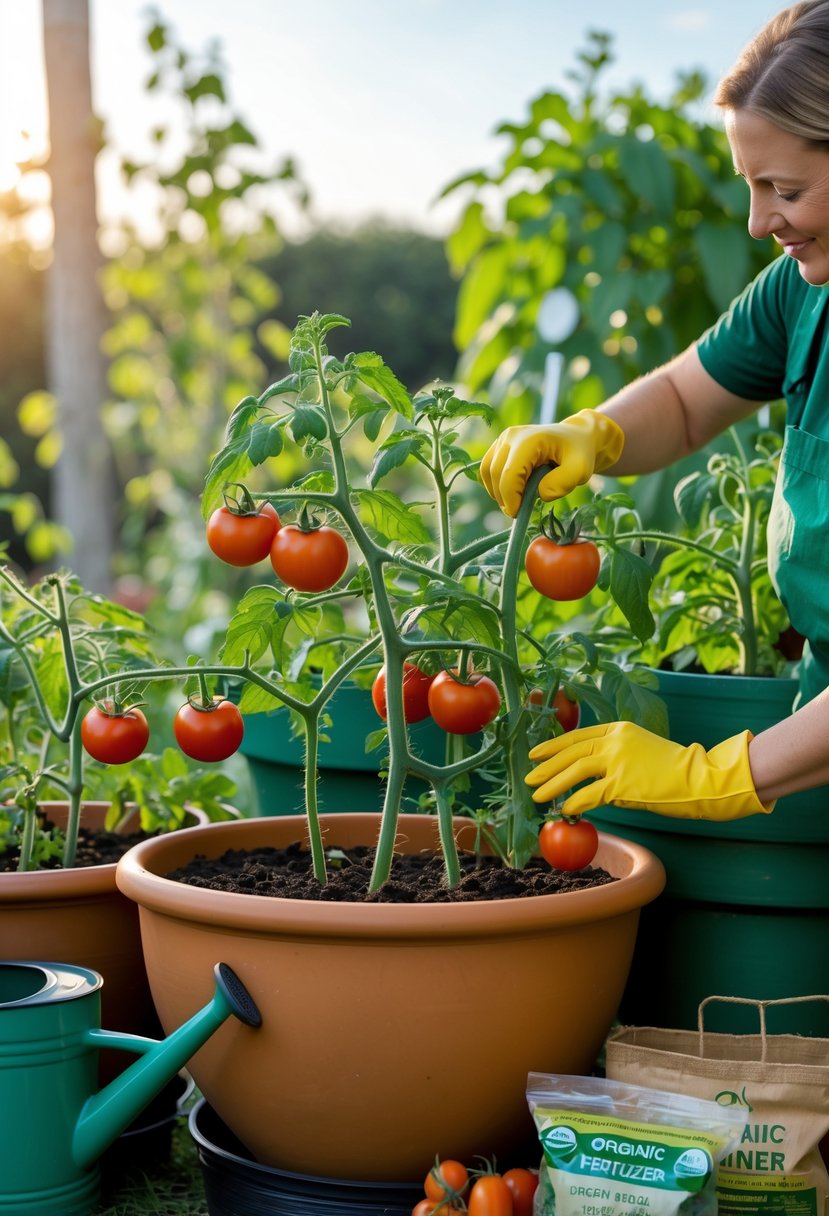
Pay attention to the temperature changes and pest activity around your tomato plants. Proper care during colder months and quick action against pests and diseases can keep your tomatoes healthy and productive.
Protecting Tomatoes in Winter
Tomato plants in containers are more vulnerable to cold weather than those in the ground. You need to move your pots indoors or to a sheltered spot before frost hits.
If moving them isn’t possible, wrap the containers in insulating materials like burlap or bubble wrap. This helps protect the roots from freezing. You can also use a cold frame or cover plants with frost cloth or blankets on cold nights.
Make sure your tomatoes get enough sunlight during winter. Position them near a south-facing window or under grow lights to support growth. Avoid overwatering as plants need less water in colder months.
Managing Pests and Diseases
Check your plants regularly for common pests like aphids, whiteflies, and spider mites. These pests thrive in warm, indoor environments during winter.
Use insecticidal soap or neem oil to control them. Always spray the undersides of leaves where pests hide. Removing dead leaves and cleaning fallen debris helps prevent disease.
Watch for signs of fungal diseases such as blight or powdery mildew. Avoid overwatering and ensure good air circulation around your plants to reduce the risk.
Quick tips for pest and disease control:
| Action | Purpose |
|---|---|
| Inspect plants weekly | Catch problems early |
| Remove affected leaves | Stop disease spread |
| Use natural pesticides | Control pests safely |
| Improve airflow | Prevent damp conditions |
Frequently Asked Questions
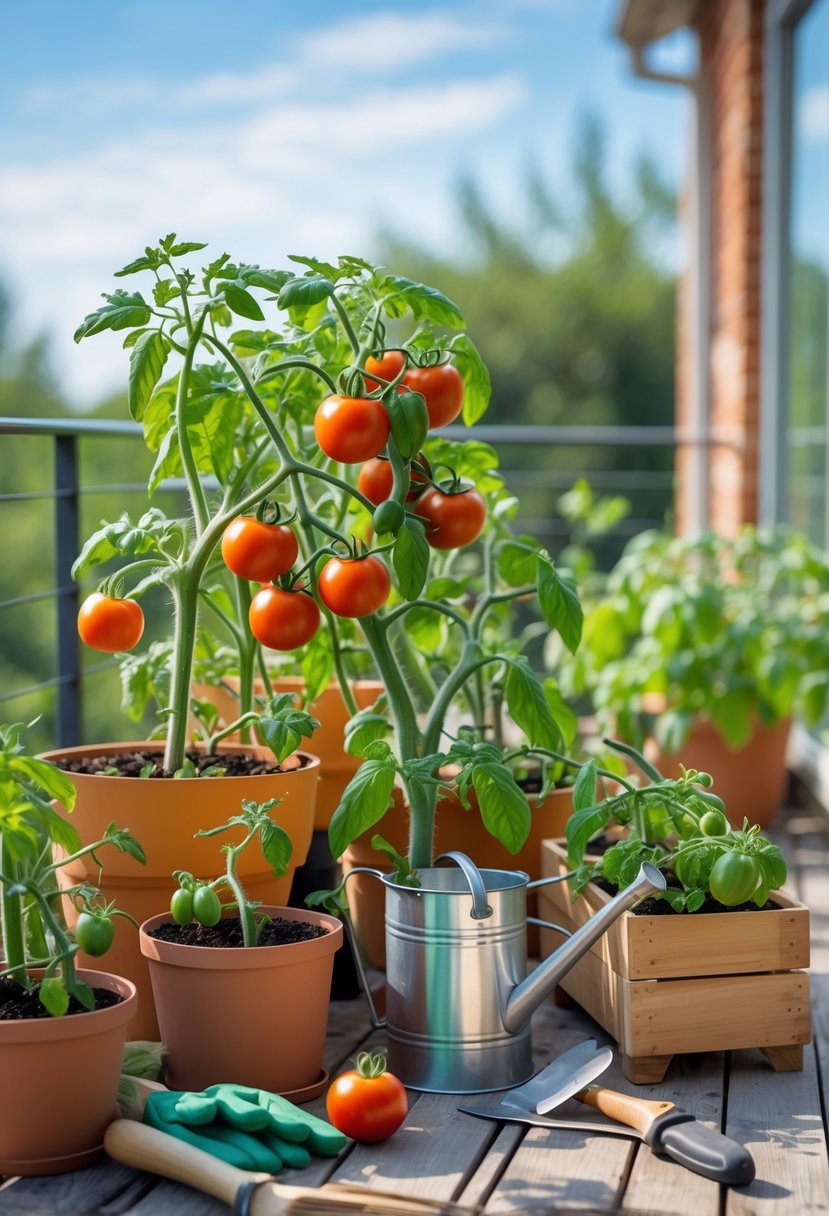
Growing tomatoes in containers requires attention to pot size, soil type, watering, fertilizing, and plant support. Choosing the right tomato variety also affects your success.
What size pot is ideal for a single tomato plant?
Use a container that holds at least 5 gallons of soil. Larger pots help roots grow well and keep the soil moist longer.
Which soil mix should be used for container-grown tomatoes?
Choose a well-draining potting mix rich in organic matter. Avoid garden soil, as it can be too dense and may carry pests.
How often should tomatoes in containers be watered?
Water your tomato plants when the top inch of soil feels dry. This might mean watering every day or every other day in hot weather.
What type of fertilization is best for tomatoes grown in pots?
Use a balanced fertilizer with equal parts nitrogen, phosphorus, and potassium, like a 7-7-7 formula. Feed your plants regularly to support steady growth.
How can I support tomato plants growing in containers?
Use stakes, cages, or trellises to keep plants upright. Tie the main stem gently to the support as the plant grows to prevent damage.
Are there specific tomato varieties that perform better in pots?
Cherry and grape tomatoes work well in containers. Dwarf or patio tomato varieties are also good choices because they stay smaller and need less space.