How To Plant Bougainvillea In Pots: Step-by-Step Container Success
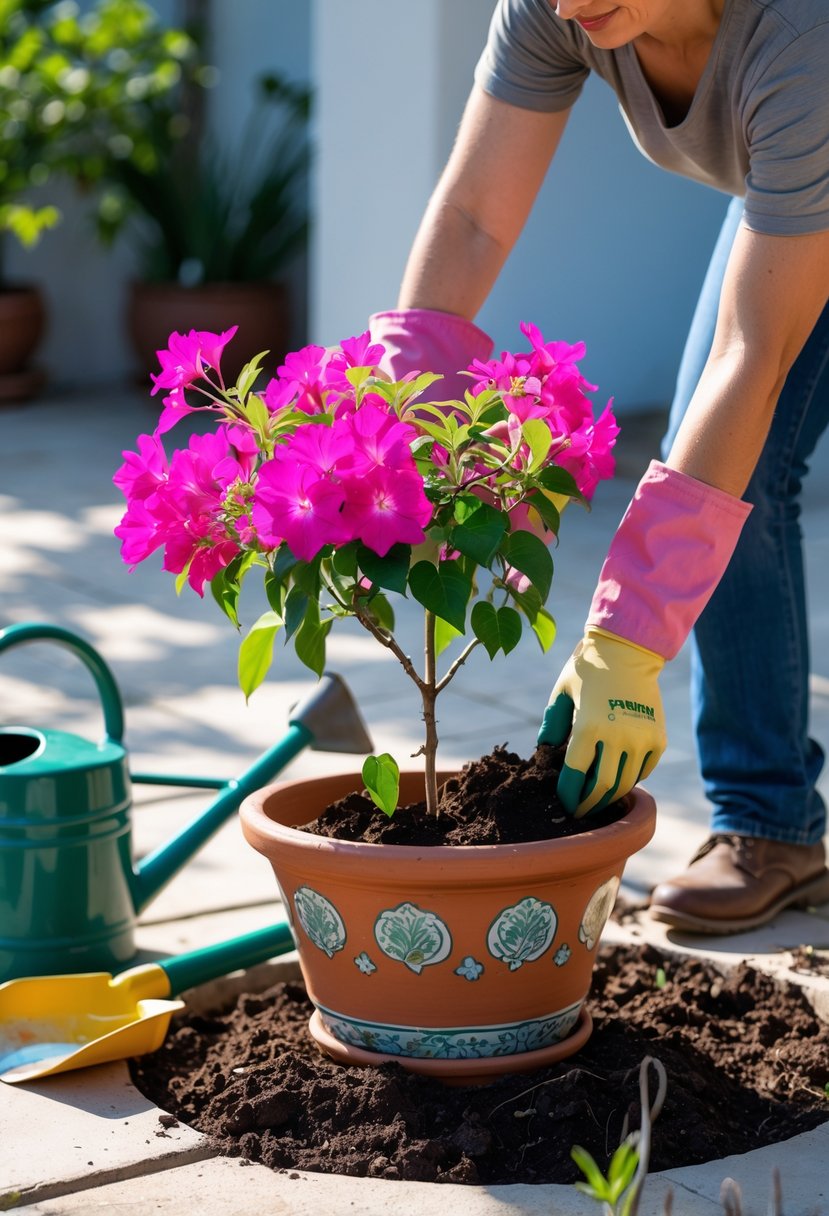
Planting bougainvillea in pots is a great way to enjoy vibrant blooms even if you don’t have a large garden. To do it right, you need a sunny spot that gets at least 5 to 6 hours of direct sunlight and a pot with good drainage. The key to success is using well-draining soil and planting the bougainvillea in its grow pot with few slits cut in the sides to protect its sensitive roots.
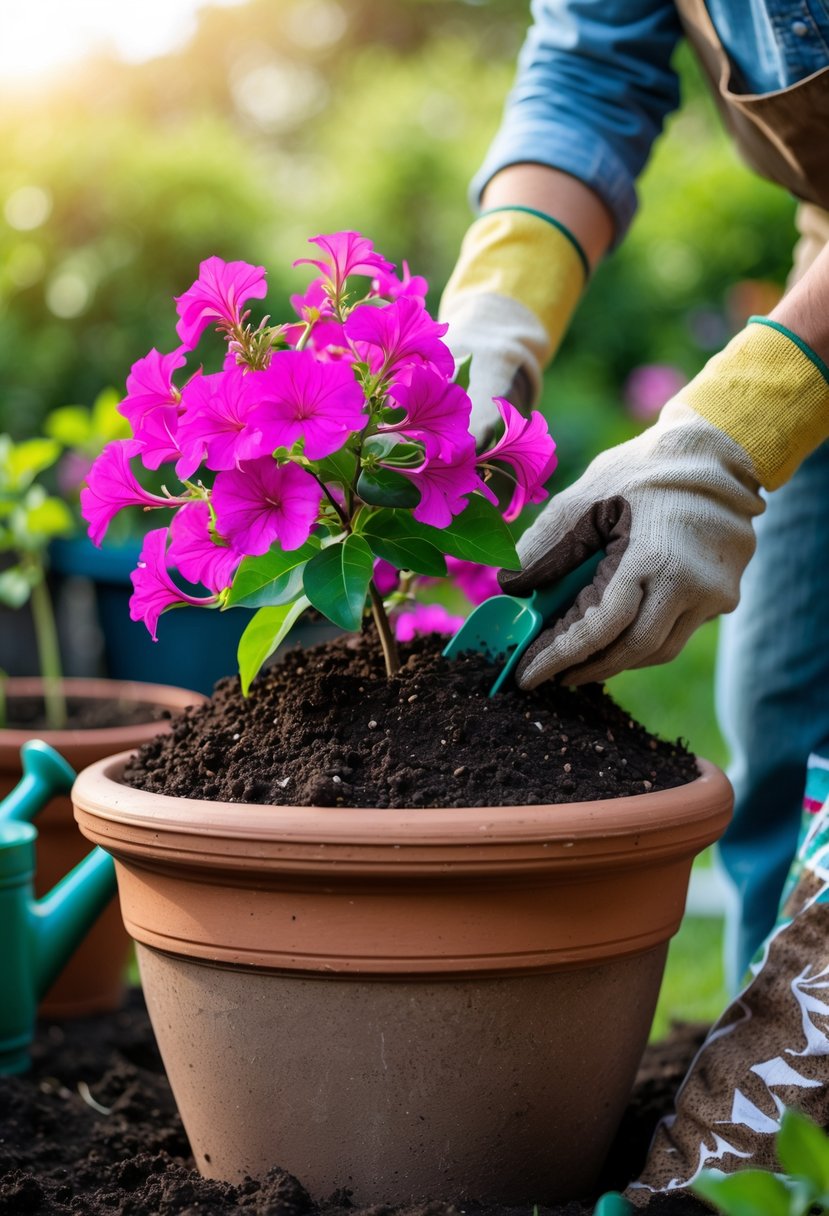
Choosing the right pot size is important because bougainvilleas can grow quite large. Compact varieties work best for small spaces and require smaller pots, but if your plant grows tall, you’ll want a bigger pot to give its roots room. Keep in mind that your bougainvillea needs plenty of sun and warmth to thrive and bloom well.
Watering correctly is also crucial. Water thoroughly after planting but avoid overwatering, as bougainvilleas do not like soggy soil. With the right care and a good planting method, your potted bougainvillea can bring bright color and heat tolerance to your patio or balcony.
Essential Preparation for Potting Bougainvillea
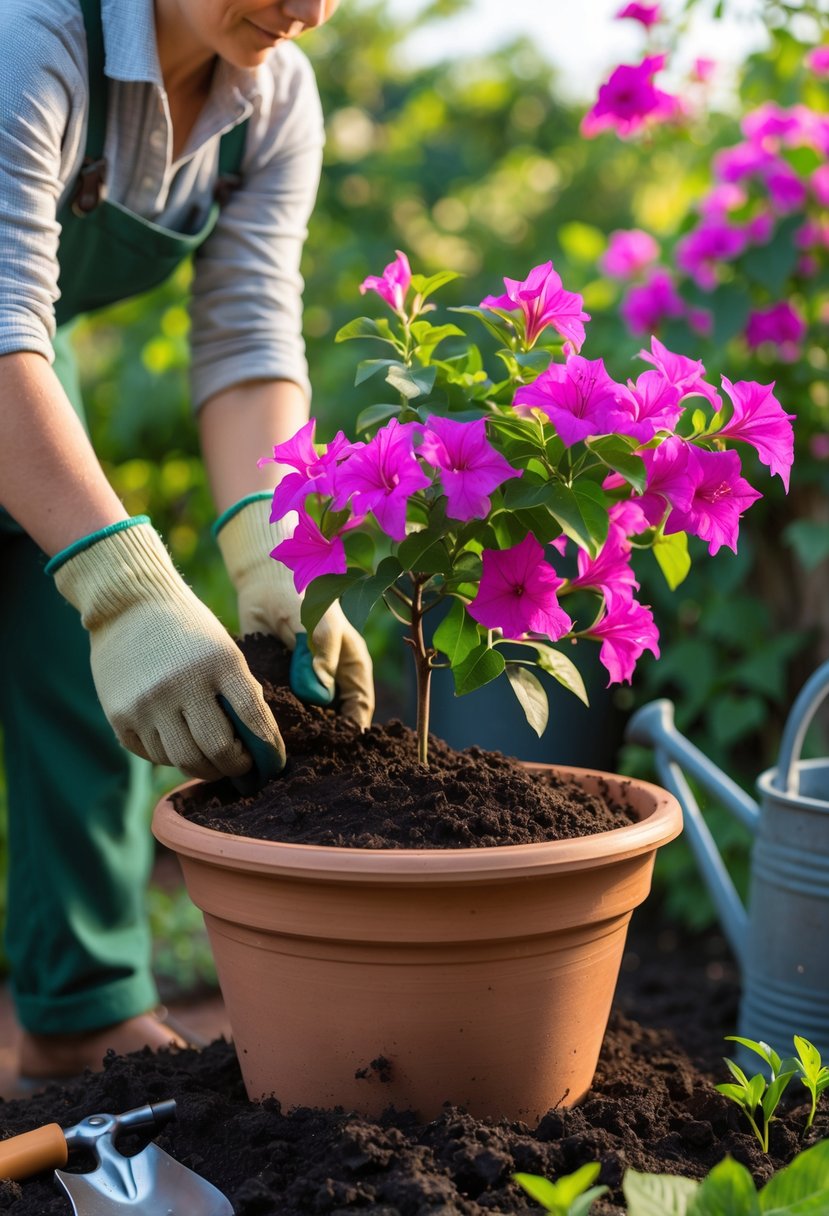
To successfully pot bougainvillea, you need to select a variety that suits container growth, choose a container with proper drainage, and prepare a well-draining soil mix. Each step ensures healthy roots, good moisture control, and strong plant development.
Choosing the Best Bougainvillea Varieties for Pots
When growing bougainvillea in pots, pick varieties known for their compact size and manageable growth habits. Dwarf or semi-dwarf types like ‘Barbara Karst,’ ‘San Diego Red,’ and ‘Glabra’ work well. These are easier to shape and don’t outgrow containers quickly.
If you want to start from seeds, keep in mind that this requires patience. Seeds need warm, moist conditions to germinate and take several months to develop into small plants suitable for potting. For quicker results, consider buying young plants or cuttings instead.
Focus on plants or seeds from reliable sources. Varieties that adapt well to pots respond better to pruning and regular feeding, making it easier for you to maintain vibrant blooms.
Selecting the Right Container and Drainage
Choose a pot that is at least 12-18 inches wide and deep to allow enough room for roots. Larger pots support stronger growth and reduce the need for frequent repotting.
Always use containers with drainage holes. Bougainvillea roots are sensitive to waterlogged soil, which causes root rot. If the pot doesn’t have holes, drill some yourself.
If you use a decorative pot without drainage, place the plant in a smaller plastic pot inside it, which lets excess water escape. Adding a layer of gravel or broken pottery pieces at the bottom can improve drainage.
Consider pot weight too. Clay or terra-cotta pots are heavy and stable, but they dry out faster. Plastic pots hold moisture longer, so adjust your watering accordingly.
Creating the Ideal Soil Mix
Bougainvillea needs soil that drains well but holds some moisture. Use a mix that includes:
- 30-40% topsoil or garden soil
- 20-30% compost or well-rotted manure
- 10-20% peat moss or coconut coir
- 10-20% perlite or coarse sand for drainage
This mix provides nutrients, good aeration, and moisture retention without becoming soggy.
Avoid heavy clay soils or pure sand, which either trap water or drain too quickly. You can test and adjust soil pH to keep it between 6.0 and 6.5. If it’s too acidic, add lime; if too alkaline, add sulfur.
Before planting, loosen the soil to improve aeration. Mix in organic matter to support root growth and feeding. This helps your bougainvillea develop strong roots and vibrant blooms in the pot.
Planting Bougainvillea in Pots: Step-by-Step Process
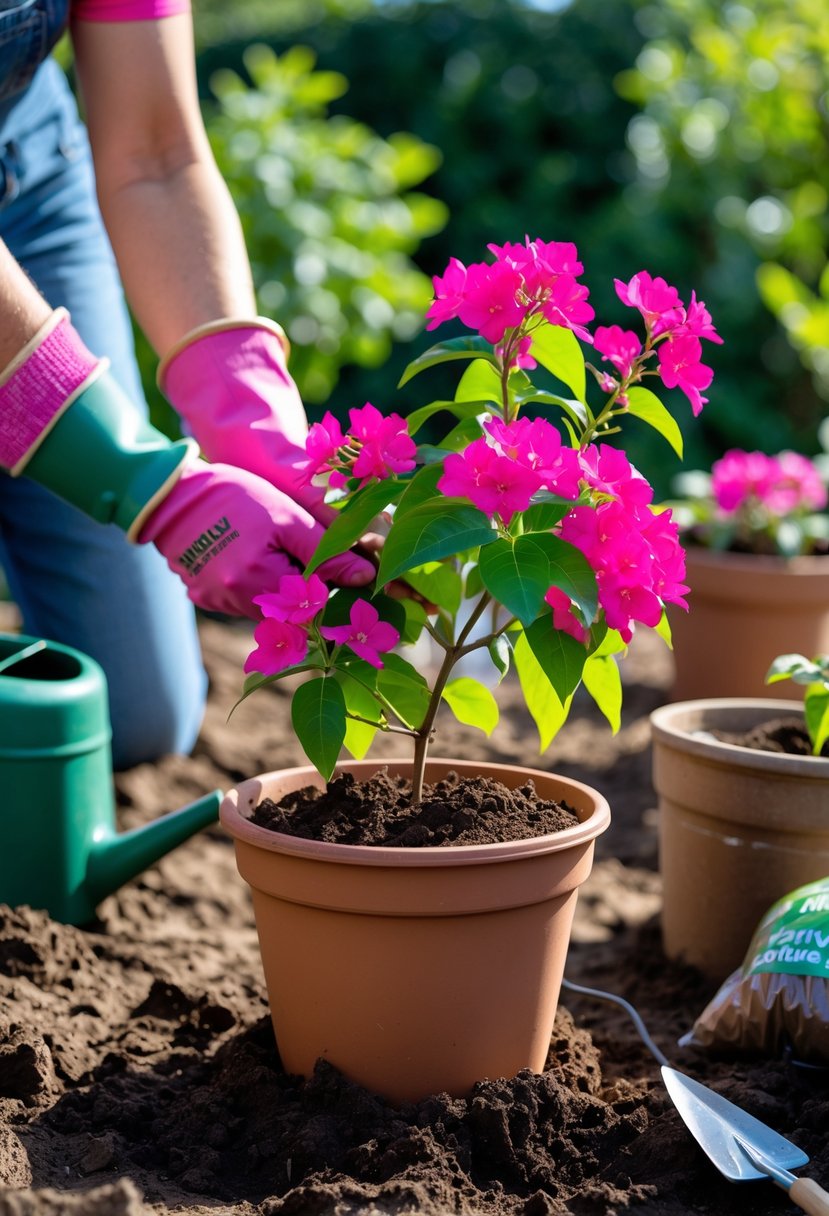
Planting bougainvillea in pots requires timing the planting correctly, handling the plant carefully to protect its roots, and watering properly after. You also need to place the pot where the plant gets enough sun and air for healthy growth.
The Best Time to Plant Bougainvillea in Pots
The best time to plant bougainvillea depends on your climate. Choose early spring or early fall if you live in a hot area. Avoid planting during the peak summer heat, especially if temperatures go above 100°F (38°C). This prevents stress on the plant as it establishes.
If your region has mild winters, late winter to early spring works well. You want your plant to have warm weather and long daylight hours to develop strong roots before cooler temperatures arrive. Make sure nighttime temperatures stay above 50°F (10°C) to avoid damage.
How to Handle and Position Bougainvillea
Bougainvillea has sensitive roots, so avoid disturbing the root ball too much. If you are planting from a grow pot, you can cut slits in the plastic to let roots come out, then plant the entire grow pot inside the decorative pot. This keeps the roots protected.
Position the bougainvillea in a spot that gets at least 5 to 6 hours of direct sunlight every day. Good sunlight is essential for strong blooms. Also, choose a location with good air circulation to reduce disease risk.
Make sure your pot has drainage holes and use well-draining soil. The plant should sit with the root ball level with the soil surface to avoid burying or exposing the roots.
Initial Watering and Placement After Planting
Water the bougainvillea thoroughly right after planting. The soil should be moist but not soaking wet. In warm climates, water about once a week, adjusting based on heat and soil dryness.
Place the pot where it gets warmth and sunlight but avoid harsh midday sun if your plant is still settling in. After a few weeks, reduce watering to let the soil dry slightly between watering sessions, which helps prevent root rot.
Watch the plant closely for signs of stress, like drooping or yellowing leaves, and adjust care as needed. Proper initial watering and sun exposure are key parts of helping your bougainvillea thrive in its new pot.
Care and Maintenance of Potted Bougainvillea
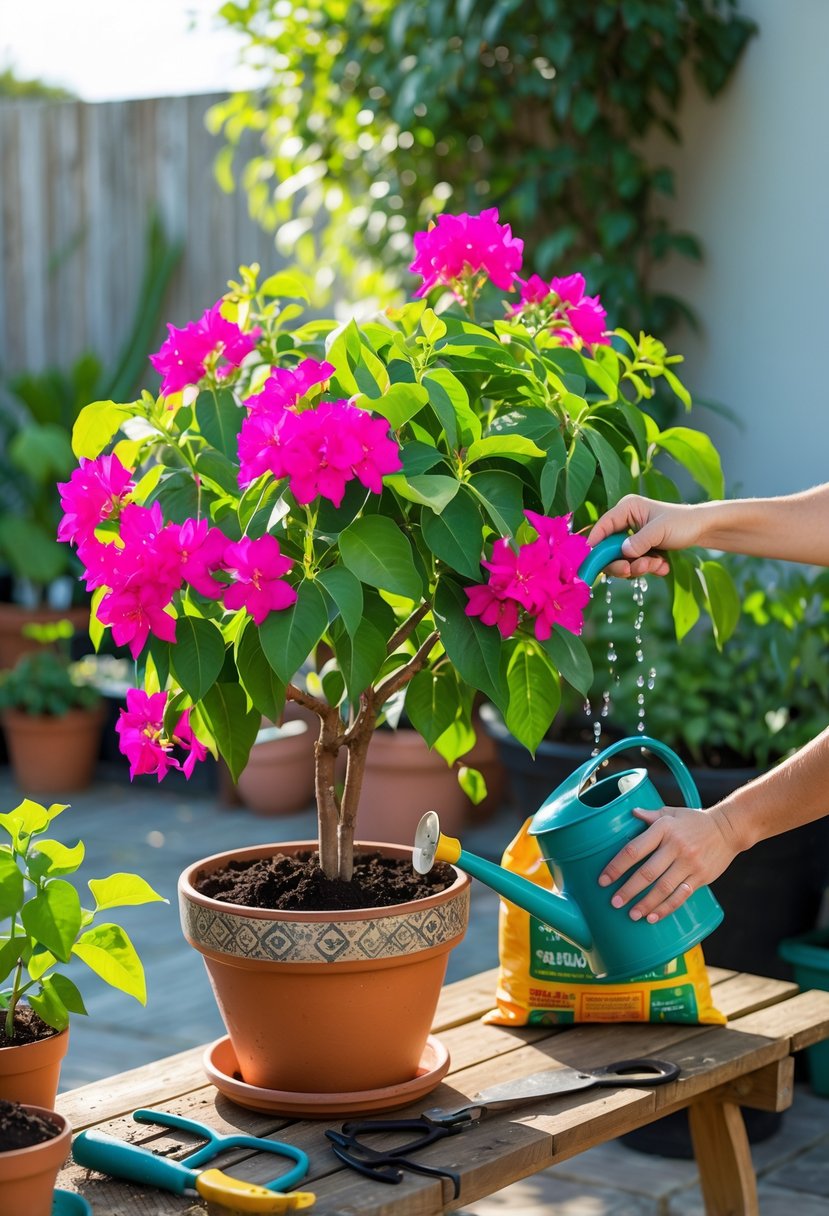
To keep your bougainvillea healthy and flowering, you need to manage light, watering, pruning, fertilizing, and repotting carefully. Each of these elements affects growth and blooming in important ways.
Light and Sun Requirements
Your bougainvillea needs full sun for at least six hours every day. This amount of direct sunlight helps the plant produce more flowers and stay strong.
Place the pot where it won’t be shaded by other plants or buildings. If it gets less than six hours of sun, expect fewer blooms and more leafy growth.
If you live in a cooler climate, you can move the plant indoors during winter, but make sure it still gets bright light. Low light means fewer flowers.
Pruning for Shape and Maximum Blooms
Prune your bougainvillea regularly to keep it in shape and encourage more flowers. Remove dead or faded flowers (deadheading) throughout the year to promote continuous blooming.
Cut back hard in early spring to stimulate fresh growth. This encourages new branches where flowers will form.
Avoid pruning too late in the season as the plant needs time to grow new blooms. Use clean tools to prevent disease.
Fertilizing for Healthy Growth
Use a balanced, all-purpose fertilizer at half strength starting in spring once the risk of frost is past. Feeding once a month until mid-July works best.
Avoid over-fertilizing, especially with high nitrogen, which encourages leaves over flowers. Stop fertilizing in summer to prevent soft growth that can be damaged by cold.
If your plant has been in the same pot for years, feeding can help replace nutrients used up in the soil.
Repotting and Managing Root Health
Repot bougainvillea when the roots start to crowd the pot. Choose a slightly larger pot each time, about 1-2 inches wider than the current one.
Use well-draining soil with about 80% compost and 20% grit or perlite. This mix keeps moisture balanced and prevents root rot.
Make sure your pot has drainage holes. Avoid overly large pots; slightly tight roots encourage blooming. Lift the pot off the ground if you live in a wet climate to improve airflow.
Troubleshooting, Tips, and Alternatives
Careful attention to watering, pest control, temperature, and placement helps keep your bougainvillea healthy. You might also consider planting them in the ground if space allows, which changes some care needs.
Managing Watering and Avoiding Root Rot
Water your bougainvillea deeply but only when the top inch of soil feels dry. Over-watering is the most common cause of problems, leading to root rot. Use a pot with drainage holes to prevent water from sitting at the bottom.
If you see yellowing leaves or wilting, check the soil moisture and reduce watering if necessary. Allow water to drain freely, and avoid using heavy, moisture-retaining soil. A mix of potting soil with sand or perlite improves drainage and restricts excess moisture.
Avoid frequent shallow watering, which encourages weak root growth. Instead, soak the soil occasionally to support strong root development.
Preventing Common Pests and Diseases
Inspect your plant regularly for pests like aphids and spider mites. These can cause damage by sucking sap from leaves and stems. Using insecticidal soap or neem oil can control infestations without harsh chemicals.
Ensure good airflow around your pots to minimize fungal diseases. Avoid overly damp conditions by watering wisely and choosing well-draining soil.
Remove any dead or damaged leaves promptly to reduce disease risk. Keeping your bougainvillea healthy through proper care is the best defense against pests and illness.
Temperature and Overwintering Strategies
Bougainvillea thrives in warm conditions and needs protection from frost. If you live where winter temperatures drop near or below freezing, move your potted plant indoors before the first frost.
Place it in a bright, sunny spot indoors and reduce watering to allow the plant to rest. Some leaf drop is normal during winter dormancy. You can use frost blankets or cloches if moving the plant indoors isn’t possible.
In warmer regions, leave bougainvillea outside year-round but still watch for cold snaps. Gradually move the plant back outside as spring warms to avoid shock.
Growing Bougainvillea in the Ground: Key Differences
Planting bougainvillea in the ground offers more space for roots to spread but changes watering and feeding needs. Soil should be well-draining to avoid root rot, similar to potted plants.
In-ground plants usually need less frequent watering because the soil retains moisture longer and has better drainage. Fertilize regularly with a balanced, slow-release fertilizer to encourage blooms.
Bougainvillea planted in the ground can grow larger and require more pruning to keep shape and control size. They are less vulnerable to cold but still need protection in colder climates.
Sunlight and airflow remain crucial factors whether grown in pots or in the ground.