How to Grow Turmeric Successfully in Any Home Garden
Growing turmeric at home is simpler than many think, and it can be a rewarding way to add fresh spice to meals. Turmeric grows best in warm, loose, and well-draining soil, and it takes about 8 to 10 months to fully mature. It needs a long growing season and regular watering but does not require complex care.
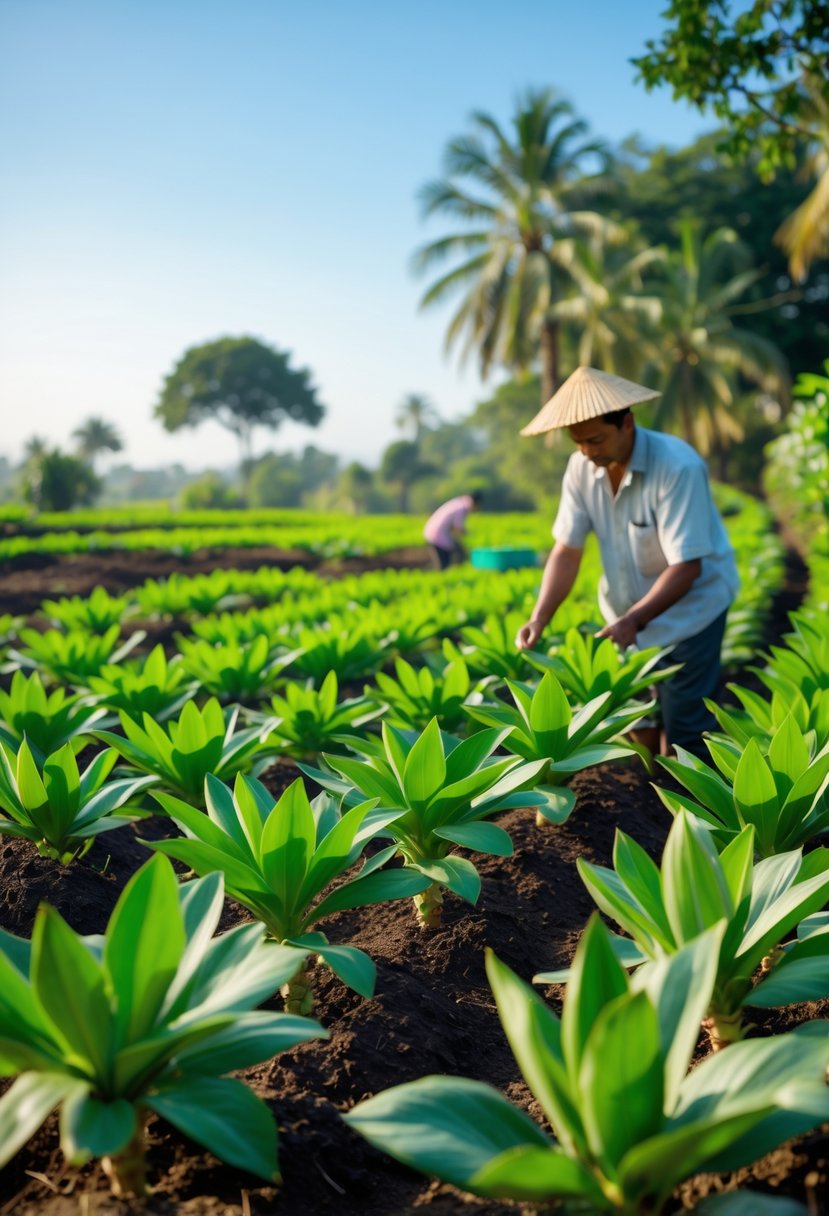
People can plant turmeric indoors in containers or outdoors in gardens, depending on their climate. The root or “rhizome” is the part used for planting, placed a few inches deep with the bud facing upward. With good soil and enough warmth, turmeric will grow steadily and can be harvested nearly a year later.
Having your own turmeric can save money and ensure fresh spice right at hand. Understanding its growing needs is key to success, and this guide will cover the steps to start, care for, and harvest turmeric efficiently.
Key Takeways
- Turmeric needs warm, well-drained soil and a long growing season.
- Plant turmeric roots a few inches deep with buds pointing up.
- Regular watering and patience are essential for healthy turmeric growth.
Understanding Turmeric: Basics and Benefits
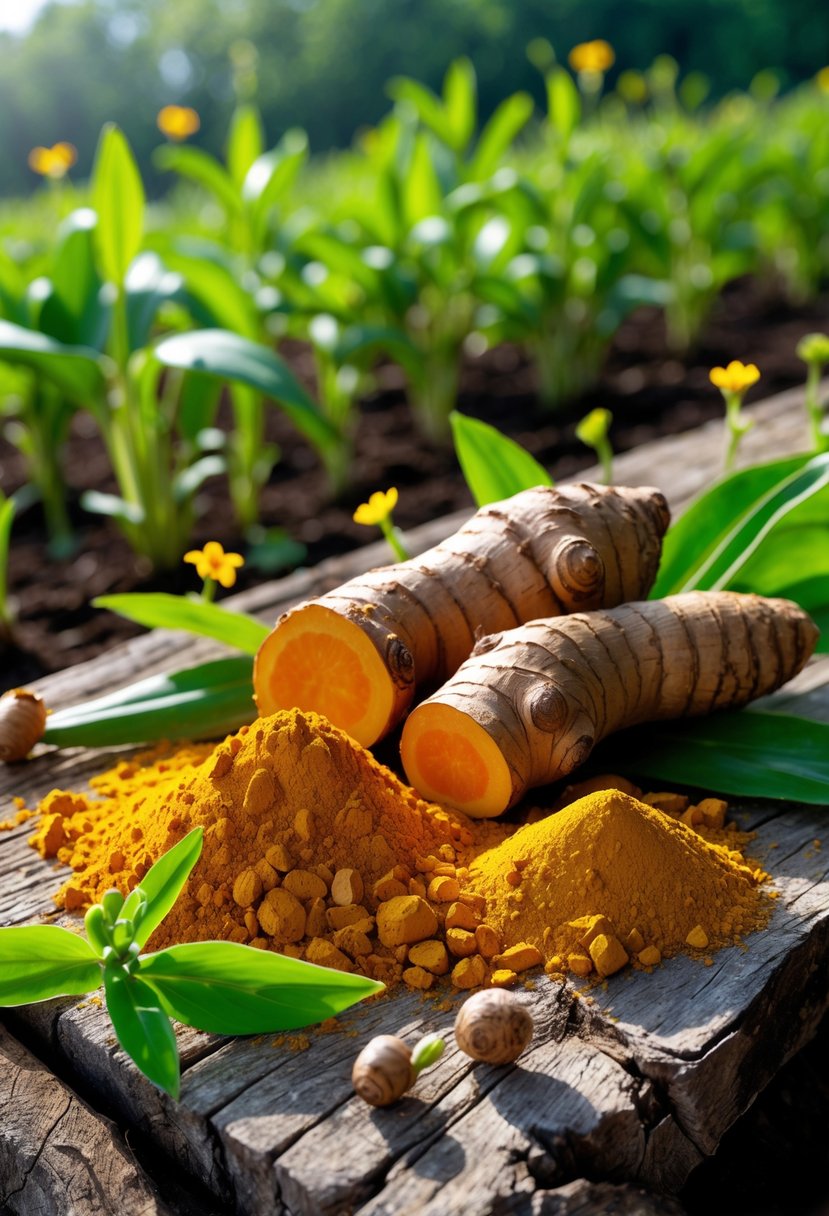
Turmeric is a bright yellow root used widely as a spice and natural remedy. It grows as a rhizome underground and requires specific conditions to thrive. It has several health properties and is used in many dishes and products.
What Is Turmeric?
Turmeric is a plant from the ginger family. The part used is its root, called a rhizome. It looks like ginger but has a strong yellow color inside.
People dry and grind the root into powder, commonly used in cooking. It adds color and flavor to foods, especially in Indian and Southeast Asian dishes. Turmeric prefers warm, humid climates with moist soil and some shade during strong sunlight.
Health Benefits of Turmeric
Turmeric contains a compound called curcumin, which acts as an antioxidant and anti-inflammatory agent. This compound is why many people use turmeric for health purposes.
It may help reduce inflammation, improve digestion, and support joint health. Some studies also suggest it could support immune function, but more research is needed. Turmeric is generally safe when consumed in food amounts but should be used carefully in large doses or supplements.
Uses for Turmeric
Turmeric’s primary use is as a spice in cooking, especially in curries, soups, and rice dishes. Its bright yellow color also makes it a natural food coloring.
Besides cooking, turmeric is used in traditional medicine and skincare. People apply it in face masks to improve skin health. It can be taken in teas, supplements, or extracts for potential health benefits.
| Common Uses | Details |
|---|---|
| Cooking | Spice and natural food dye |
| Traditional medicine | For digestion and pain relief |
| Skincare | Masks and topical treatments |
Choosing and Preparing Turmeric for Planting
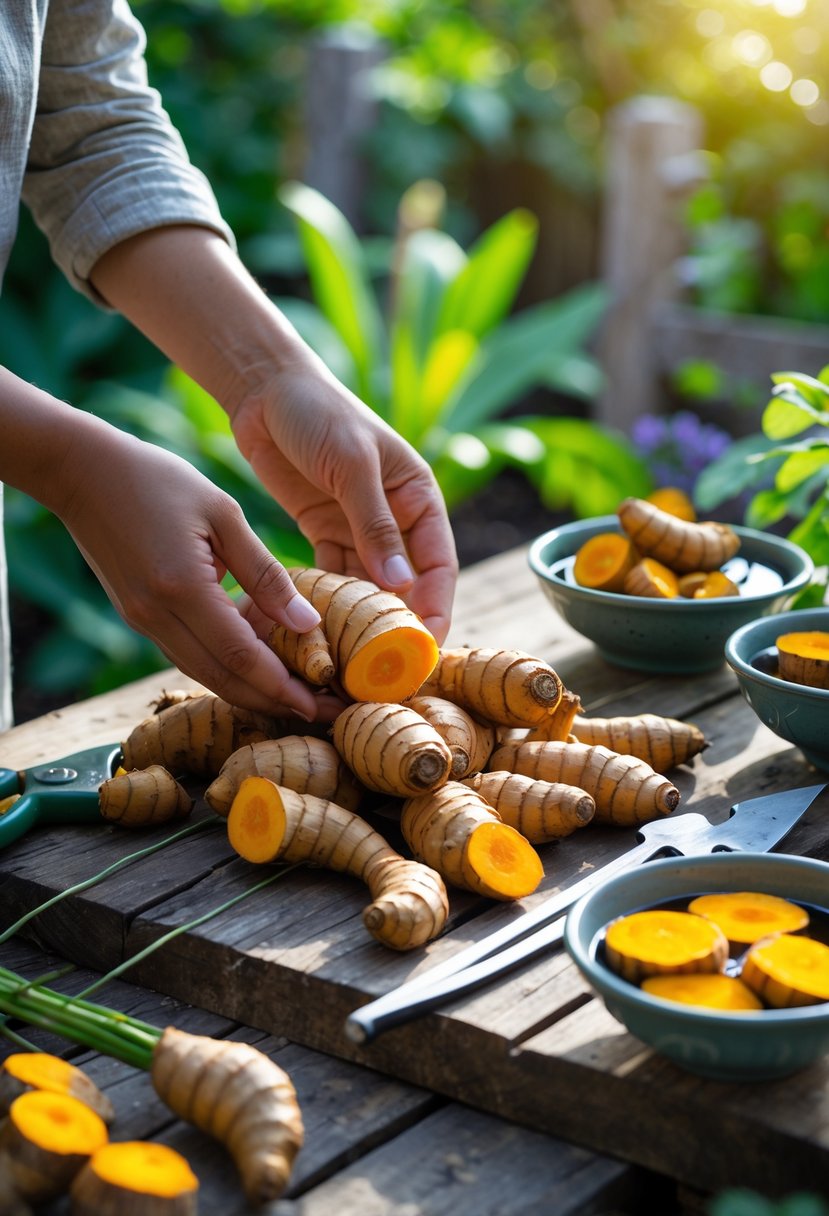
Successful turmeric growth starts with selecting healthy rhizomes and preparing them properly. The soil used must be loose, rich in nutrients, and well-drained to support good root development. Preparing the rhizomes before planting helps reduce the risk of rot and encourages faster sprouting.
Selecting the Right Turmeric Rhizomes
Choose turmeric rhizomes that are firm and free from mold or damage. They should have several visible buds or “eyes,” as these are where new shoots will grow. Larger rhizomes often produce better plants.
If possible, buy fresh rhizomes from a garden center or a reliable source for planting turmeric at home. Avoid shriveled or soft rhizomes because they are less likely to sprout.
Pre-Sprouting Turmeric Rhizomes
Cut the rhizomes into smaller pieces, each with two to three buds. This allows more plants to grow from one rhizome. After cutting, let the pieces dry in a warm, dry place for 1 to 2 days. This drying time helps the cut edges heal and lowers the chance of rotting once planted.
Pre-sprouting the rhizomes indoors in warm conditions before planting can encourage faster growth. Keep them in a humid environment or cover lightly with a damp cloth until small shoots appear.
Soil Preparation and Amendments
Turmeric grows best in soil with a pH between 4.5 and 7.5. The soil should be rich in organic matter and drain well to prevent waterlogging, which causes root rot.
Before planting turmeric root, loosen the soil deeply, removing rocks and debris. Work in compost or aged manure to add nutrients. Adding a balanced fertilizer with phosphorus supports root development.
Choose a planting site that receives at least six hours of direct sunlight a day. A spot shielded from strong winds protects young plants from damage while helping them grow tall and strong.
Planting Turmeric Indoors and Outdoors
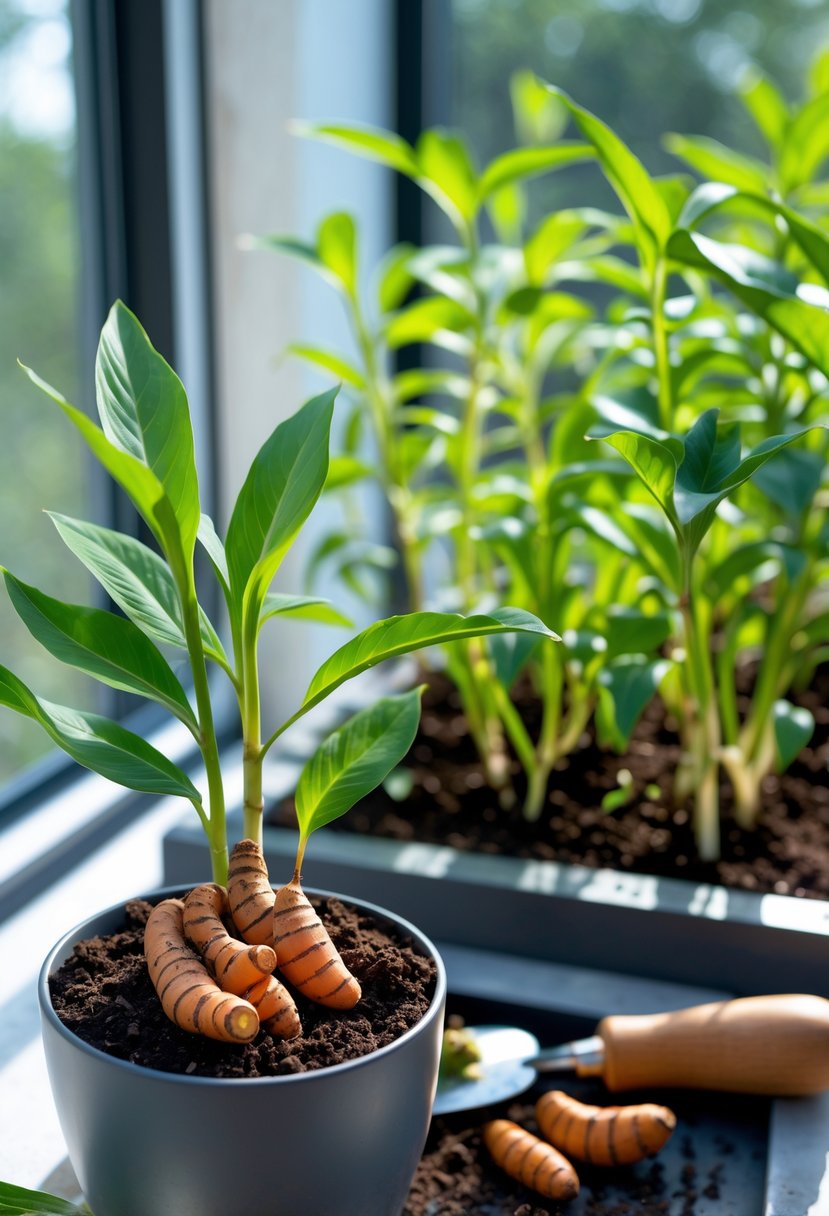
Turmeric needs warm soil and steady moisture to grow well indoors or outside. It requires at least 68°F air temperature and rich, well-draining soil for healthy roots. Proper lighting and space help turmeric plants develop strong stalks and rhizomes.
How to Plant Turmeric in Containers
Start with turmeric rhizomes that have visible buds. Soak the rhizomes overnight before planting to help sprouting. Use a container at least 12 inches deep and wide with drainage holes.
Fill the container with loose, fertile potting soil mixed with compost. Plant the rhizomes 2 inches deep with buds facing up. Water thoroughly after planting and keep soil moist but not soggy.
Place the pot in a sunny spot, such as a south-facing windowsill or under a grow light. Maintain indoor temperatures of 68°F or higher. When shoots reach about 8 inches, ensure the turmeric has enough room for growth by moving to a larger container if needed.
Outdoor Bed Planting Techniques
Choose a location with full sun and soil that warms to 55°F or higher. Prepare the bed with rich organic matter for better drainage and nutrients.
Plant turmeric rhizomes 2 to 4 inches deep and space them about 12 inches apart. Keep the soil consistently moist but avoid waterlogging. Mulch can help retain moisture and regulate soil temperature.
Start planting outdoors in late winter or early spring after the last frost. Turmeric needs about 7 to 10 months to fully mature. Protect young plants from cold or strong winds during early growth stages.
Caring for Your Turmeric Plants
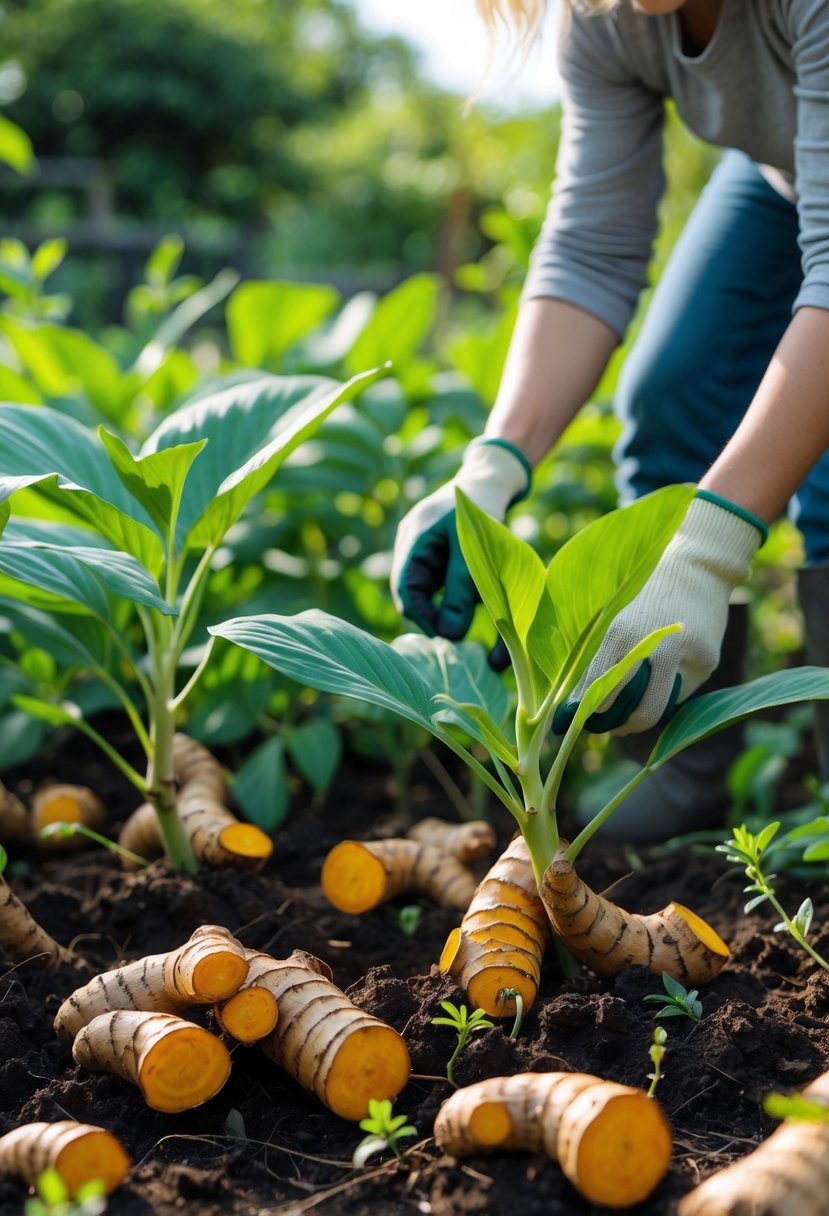
Turmeric plants need regular attention to thrive. Proper watering, light, temperature, and feeding are key to healthy growth. Mulching also supports the plant by keeping moisture steady and reducing weeds.
Watering and Humidity Needs
Turmeric prefers soil that is moist but not waterlogged. Water the plant when the top inch of soil feels dry. Overwatering can cause root rot, so it’s important to let the soil dry slightly between watering.
High humidity helps turmeric grow well. If growing indoors, mist the leaves or use a humidity tray to maintain moisture in the air. Outdoors, turmeric usually gets enough humidity in warm, tropical climates.
Light and Temperature Requirements
Turmeric grows best in warm conditions. It needs partial to full sunlight, ideally about 6 hours of light daily. Too much direct, hot sunlight can cause leaf burn.
Temperatures between 68°F and 95°F (20°C to 35°C) suit turmeric well. It does not tolerate frost. If planted outside in cooler areas, it may need to be moved indoors or given protection during cold weather.
Fertilizing and Mulching
Use a balanced, water-soluble fertilizer every 4 to 6 weeks in spring and summer. This helps support leaf and root growth. Avoid overfeeding to prevent weak stems.
Mulching with organic material like straw or leaves keeps soil cool and moist. It also reduces weed growth. Apply a layer about 2 to 3 inches thick around the plant, leaving space near the stem to avoid rot.
Harvesting and Storing Turmeric Root
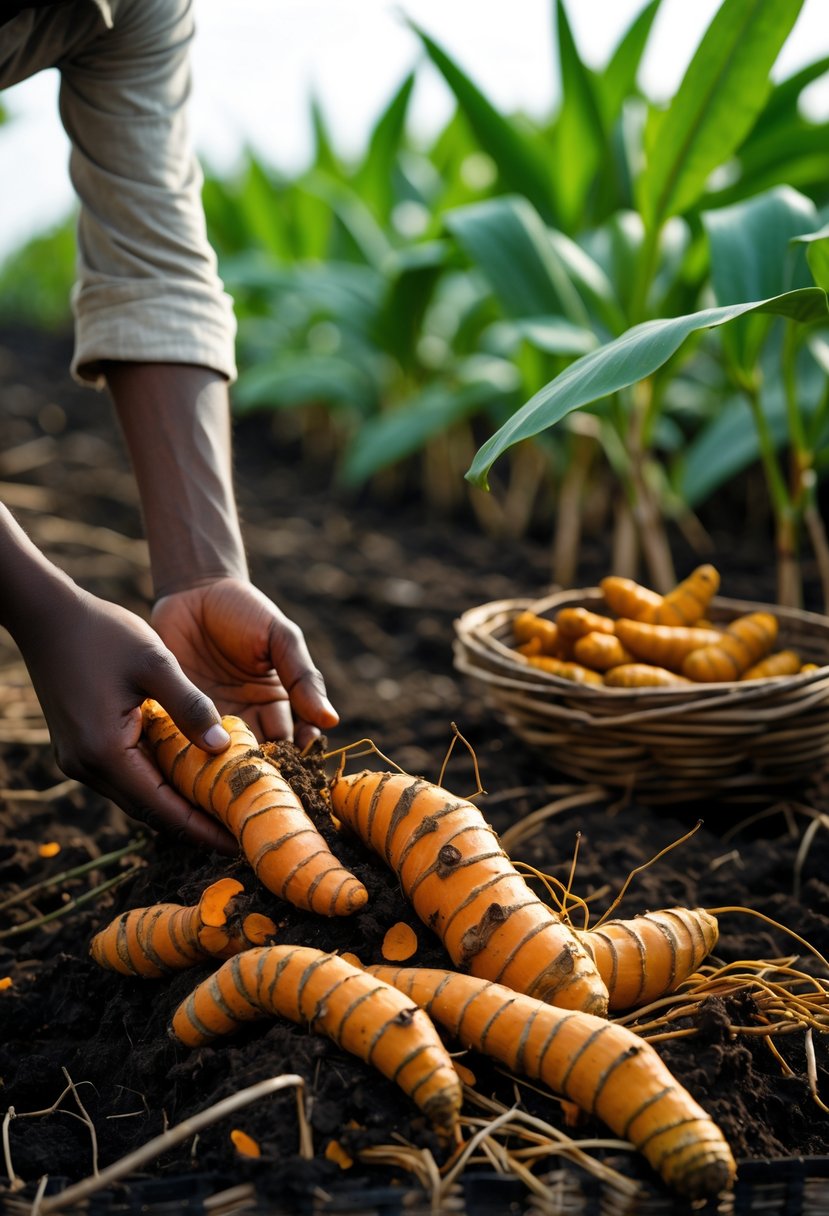
Turmeric is ready to harvest after several months of growth, and proper techniques are needed to collect and store the rhizomes. Knowing the right time to dig up the turmeric and how to handle the roots affects the quality and shelf life of the spice.
Identifying When Turmeric Is Ready to Harvest
Turmeric usually takes 8 to 10 months to mature. The main sign that it is ready is when the leaves turn yellow and begin to dry out. This typically happens in late fall or early winter.
Before harvesting fully, it helps to dig a small test rhizome. The mature rhizome should be firm and show a bright orange color inside. If the rhizome looks pale or soft, give it more time to grow.
Temperature also matters. Turmeric grows best in warm, humid climates and will go dormant when it gets cold. If frost is expected, harvesting should not be delayed.
Harvesting Techniques
To harvest, use a garden fork or trowel to dig at the base of the turmeric stems without stabbing the rhizomes. Carefully loosen the soil around the plant to avoid damage to the roots.
Lift the entire plant from the ground along with the rhizomes attached. Shake off the soil gently but do not wash them immediately to prevent rot during storage.
Cut off the foliage and fibrous roots once the rhizomes are free. Handling the turmeric rhizomes with care preserves their quality for cooking or planting again.
Cleaning and Preserving Turmeric Rhizomes
After harvest, turmeric rhizomes should be cleaned by rinsing them with water to remove leftover soil. Use a soft brush if needed but avoid scrubbing too hard.
Dry the turmeric roots fully before storage to prevent mold. Lay them out in a well-ventilated, shaded area for a few days, turning occasionally for even drying.
For long-term storage, turmeric can be kept in a cool, dry place. Storing in paper bags or breathable containers helps reduce moisture buildup. Avoid plastic bags as they trap moisture and cause decay.
If intending to replant, select firm, healthy rhizomes without any soft spots or blemishes. Store them for a few weeks in slightly damp conditions to keep them viable for planting.
Frequently Asked Questions
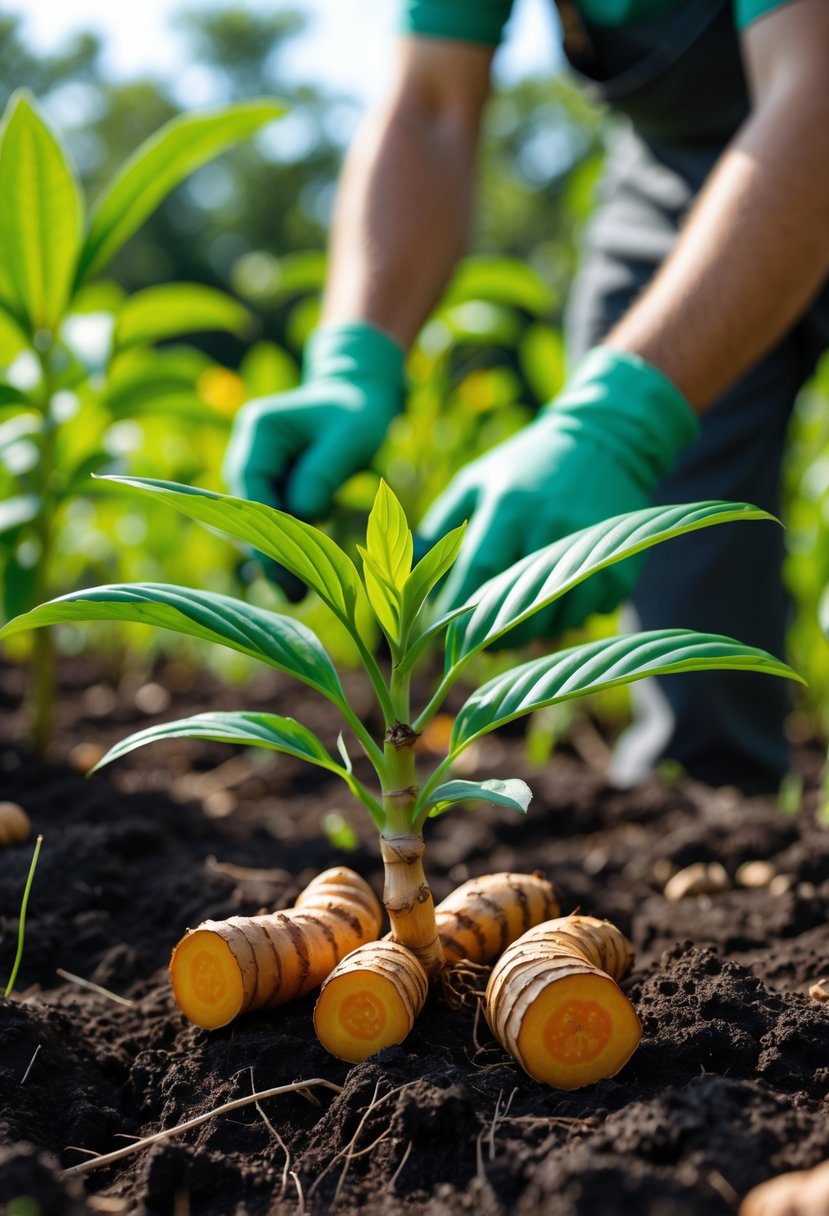
Growing turmeric requires warm temperatures, plenty of moisture, and rich, well-drained soil. It can be grown in pots or gardens, indoors or outdoors, but each method has specific steps and conditions. Understanding planting, propagation, companion plants, and climate challenges helps improve success.
What conditions are required to grow turmeric successfully?
Turmeric thrives in warm, humid environments with temperatures between 68°F and 95°F (20°C to 35°C). It needs at least 8 hours of indirect sunlight daily. The soil should be loose, rich in organic matter, and well-drained to avoid waterlogging.
What are the steps for planting and cultivating turmeric in pots?
Choose a pot with drainage holes and fill it with rich, loamy soil. Plant a healthy turmeric rhizome horizontally about 2 inches deep. Keep the soil moist but not soggy. Place the pot in a warm, bright location with indirect sunlight.
Can you grow turmeric indoors and if so, how?
Yes, turmeric can grow indoors if given enough light and warmth. Use a wide pot with good drainage and high-quality potting soil. Water regularly and maintain humidity around the plant, possibly by misting or using a humidifier.
Is it possible to propagate turmeric from roots purchased at the grocery store?
Yes, grocery store turmeric can be used if the rhizomes have visible buds or “eyes.” Cut pieces with at least one bud and plant them in soil. However, roots from stores may be treated or dried, so fresh, organic rhizomes tend to grow better.
How do you grow turmeric alongside black pepper and ginger?
Turmeric grows well with black pepper and ginger because they share similar warm and humid needs. Plant them in slightly shaded areas with loose, moisture-retentive soil. Maintain consistent watering and avoid overcrowding to reduce disease risk.
What are the challenges of growing turmeric in different climates, such as those found in the USA?
In cooler or dry climates like much of the USA, turmeric may struggle without protection. Outdoor growing is usually limited to summer months or warm zones. Indoors or greenhouses provide proper warmth and humidity. Protect the plants from frost and sudden temperature drops.