How to Grow Olive Trees Indoors: Proven Steps for Healthy Growth
Growing olive trees indoors is possible if you provide enough sunlight and proper care. Olive trees need at least six hours of direct sunlight daily and well-draining soil to thrive inside your home. Without these conditions, the tree may struggle or lose leaves, so location and light are key.
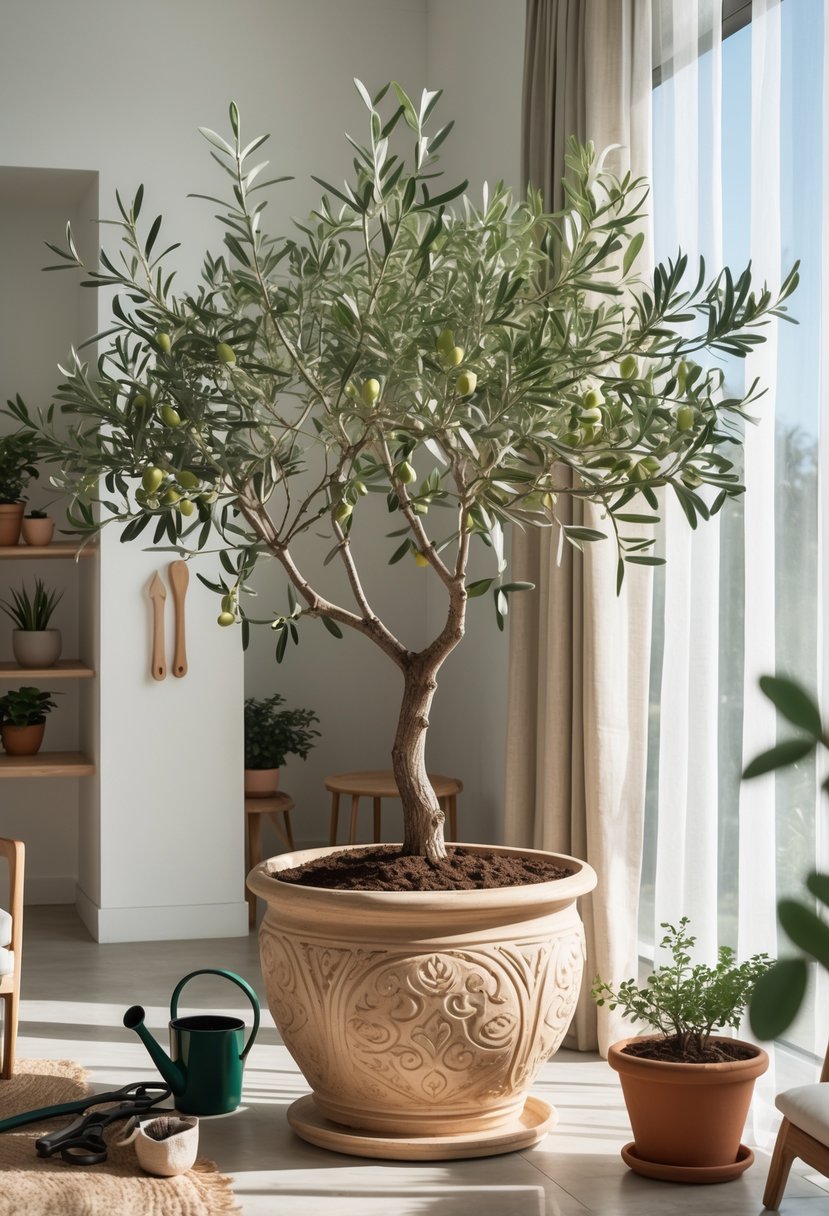
You can keep your olive tree healthy by watering it carefully—never letting the soil dry out completely but avoiding overwatering. Moving the tree outdoors during warm months helps it grow better, but it can still survive indoors with the right light and care. Pruning and occasional fertilizing will support your tree’s shape and growth.
Choosing a dwarf or compact variety makes indoor growing easier since they fit well in containers and stay a manageable size. By understanding these essential needs and following simple steps, you can successfully grow an attractive olive tree inside your home.
Choosing Olive Trees for Indoor Growing
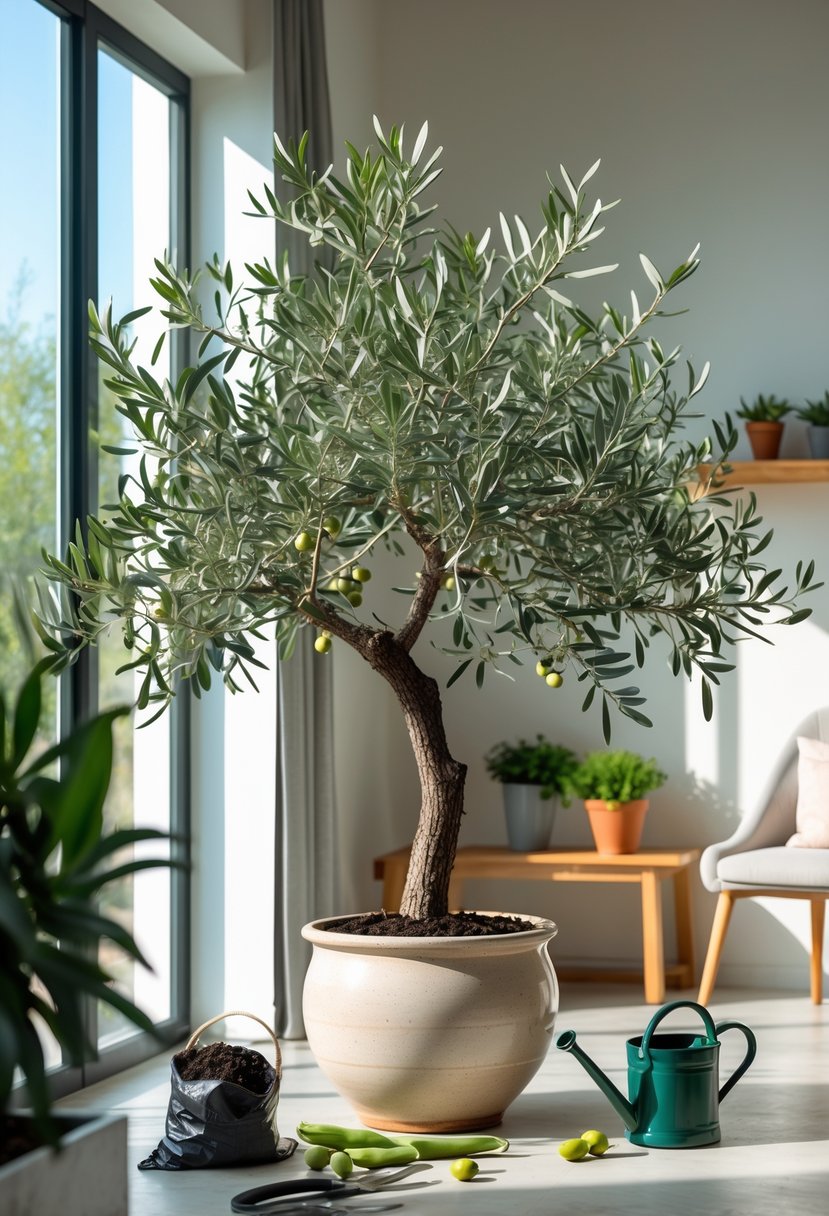
Picking the right olive tree for your indoor space matters. Some varieties do better indoors, and you’ll want to decide if you want fruit or just a pretty plant. Also, choosing a healthy tree or young plant helps it grow well inside your home.
Best Olive Tree Varieties for Indoors
Some olive trees suit indoor growing better because they stay smaller and handle indoor light levels. Popular choices include:
- Arbequina: Compact and fruiting, needs 4–8 hours of sun daily.
- Koroneiki: Drought resistant, self-fertile, and grows well with moderate light.
- Amfissa: Grows slowly, good for tighter spaces, likes full sun.
- Leccino: Needs more sun (6–12 hours), cross-pollination helps fruit.
- Frantoio: Slow growing, tolerates partial shade, produces lots of flowers.
Choose dwarf or compact types to avoid overwhelming your indoor area.
Fruiting vs Ornamental Olive Trees
You can grow olive trees indoors just for decoration or for fruit production. If you want olives, pick self-fertile varieties like Arbequina or Koroneiki. They can fruit without another tree nearby but will do better with a pollinator.
Ornamental olive trees often don’t produce fruit or are bred to stay small and neat. These can add greenery and Mediterranean style to your home without extra care for fruiting.
Decide what you want before buying so you can meet the tree’s needs, like sunlight or pollination.
Selecting Healthy Plants or Saplings
Choose olive trees that look strong and disease-free. Check the leaves—they should be green and firm, not yellow or spotted. The trunk should be sturdy and free from cracks or mold.
Young saplings with well-developed roots adapt faster to indoor life. Avoid plants that look wilted or root-bound in their containers.
Buying from a reputable nursery, either local or online, can give you healthier trees with some growth guarantees. This helps when you want your indoor olive tree to thrive over time.
Creating the Ideal Indoor Environment
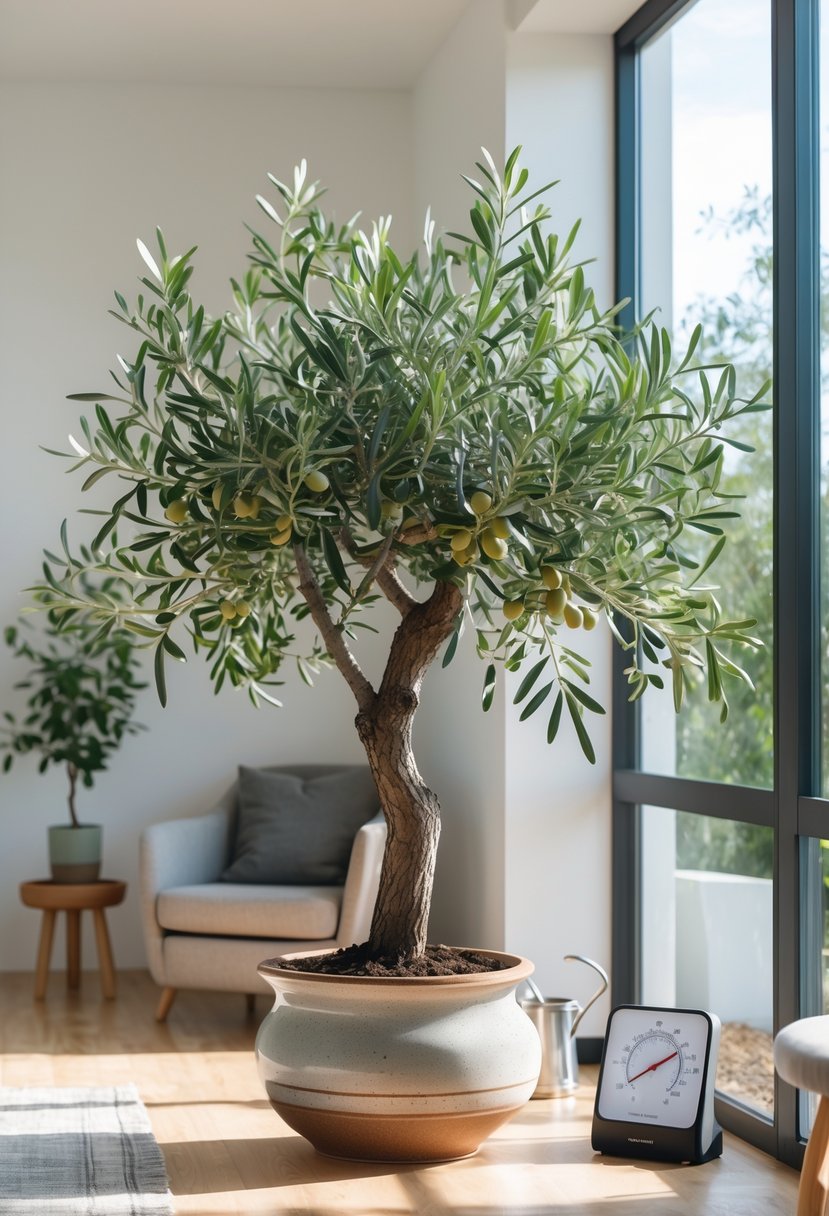
To grow olive trees indoors well, you need to focus on providing enough light, choosing the right soil and pot, and maintaining proper humidity and air flow. Each of these factors affects the tree’s health and chances of thriving inside your home.
Light and Temperature Requirements
Your indoor olive tree needs at least 6 to 8 hours of direct sunlight every day. Place it near a south-facing window or under strong artificial grow lights. LED or fluorescent lights placed 12-18 inches above the tree work well if natural light is limited.
Temperature should stay between 60°F and 80°F (15°C to 27°C). Avoid cold drafts or sudden changes in temperature. Olive trees do not like temperatures below 50°F (10°C).
Soil and Pot Selection
Choose a pot with good drainage holes to prevent water from staying in the soil too long. The container should be at least 20 inches deep and wide to allow roots space to grow.
Use a well-draining soil mix. A blend of peat moss, perlite, and organic compost in equal parts works well. This mix holds enough moisture without causing root rot. Avoid heavy soils that keep waterlogged.
Humidity and Air Circulation
Olive trees prefer low to moderate humidity but benefit from occasional misting or placing a water tray nearby to raise moisture slightly.
Good air circulation helps reduce pests and fungal diseases. Avoid crowded spaces and consider using a small fan to improve airflow around the tree. Keep the area free of stagnant air to maintain healthy leaves and branches.
Daily Care and Maintenance
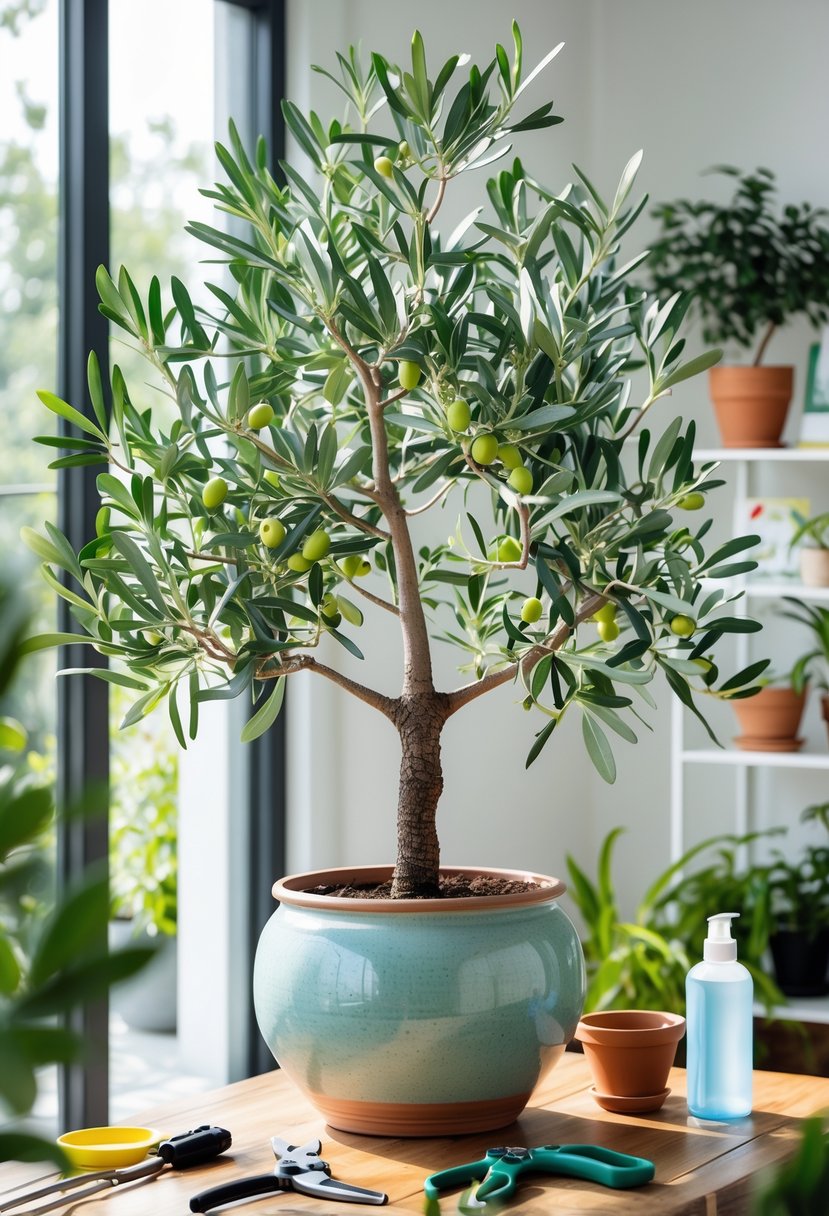
To keep your indoor olive tree healthy, you need to manage watering, feeding, pruning, and repotting carefully. Regular checks and proper care routines help the tree grow strong and maintain its shape.
Watering and Feeding Schedule
Water your olive tree when the top 1-2 inches of soil feel dry. Avoid overwatering, as olive trees do not like sitting in wet soil, which causes root rot. Use pots with drainage holes to prevent water buildup.
Feed your tree with a balanced, slow-release fertilizer every 4-6 weeks during the growing season (spring to early fall). This supports steady growth. In winter, reduce feeding since growth slows down.
Monitor your tree’s response. Yellowing leaves may indicate overwatering, while dry, brown leaf tips might mean underwatering or low humidity. Adjust watering based on these signs to keep your tree thriving.
Pruning and Shaping
Prune your olive tree sparingly to maintain its shape and remove dead or damaged branches. Use clean, sharp tools to avoid infections.
Focus on trimming branch tips to encourage bushier growth. Remove suckers growing from the base to keep energy focused on the main tree.
Regularly clean leaves with a damp cloth to remove dust, which improves photosynthesis. Check for pests like spider mites during pruning and treat them early to avoid damage.
Repotting and Root Management
Repot your olive tree every 2-3 years to give roots more space and refresh the soil. Choose a pot slightly larger than the last with good drainage.
When repotting, gently loosen the roots and remove any that look dead or rotten. Use a well-draining soil mix suitable for olives, such as a blend of potting soil and sand.
Keep an eye on root health by watching for roots growing out of drainage holes. This means your tree needs repotting soon. Proper root care keeps your olive tree strong and able to absorb nutrients well.
Pest, Disease Control, and Troubleshooting
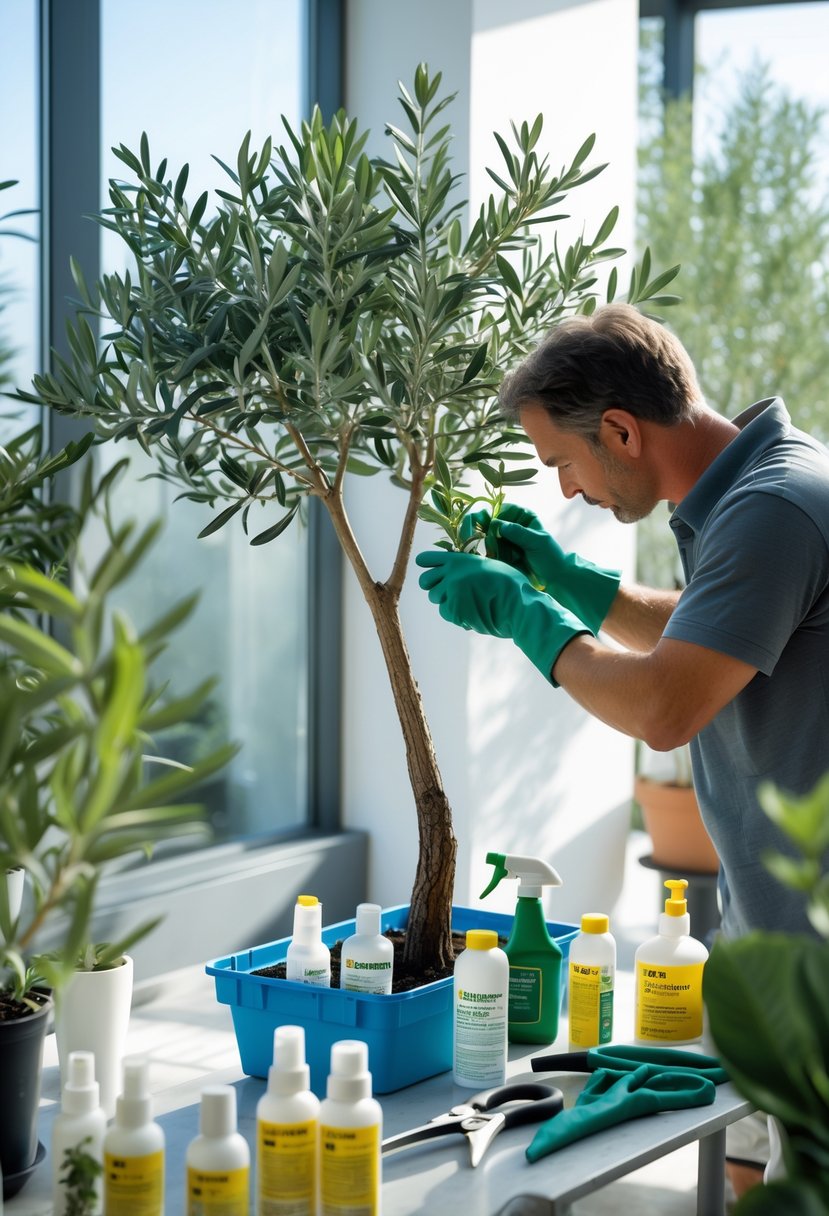
Growing olive trees indoors requires careful attention to pests, diseases, and signs of stress. You need to act quickly at the first sign of trouble to keep your tree healthy. Proper care and early detection can prevent most serious problems.
Common Indoor Olive Tree Pests
Indoor olive trees can attract pests like spider mites, scale insects, and olive fruit moths. Spider mites cause tiny webs and yellow speckles on leaves. Scale insects attach to branches and leaves, feeding on sap and leaving a sticky residue. Olive fruit moths can damage flowers or fruit if your tree produces them indoors.
To control pests, inspect your tree regularly. Use insecticidal soap or ** horticultural oil** to treat infestations. You can also wipe leaves with a damp cloth to remove pests early. Keep your indoor environment clean, and avoid overwatering, which can make your tree more vulnerable.
Preventing and Treating Diseases
Diseases on olive trees indoors often occur because of poor air circulation, overwatering, or unclean tools. Common issues include peacock spot, a fungal disease causing black leaf spots, and root rot from soggy soil.
Prevent disease by watering only when the top inch of soil feels dry. Ensure your tree gets enough light and good air movement, and prune dead twigs to improve airflow. If you see leaf spots or wilting, treat with a copper-based fungicide as a preventive measure. Always sterilize pruning tools to stop spreading infections.
Signs of Stress and How to Respond
Your indoor olive tree may show signs of stress like yellowing leaves, leaf drop, or stunted growth. These often result from too much water, insufficient light, or sudden temperature changes.
If leaves yellow and fall, check your watering habits. Reduce watering if soil stays wet too long. Increase light exposure by placing the tree near a south-facing window or using grow lights. Avoid moving your tree frequently to reduce stress from temperature or humidity shifts.
By watching these signs closely and adjusting care, you can help your indoor olive tree recover and stay healthy.