How To Grow Huge Peonies In Flower Pots: Complete Container Guide
Growing huge peonies in flower pots is possible if you choose the right container, soil, and care routine. To get big, healthy blooms, use a deep pot with good drainage, plant the peony crown at the right depth, and provide even watering without letting the soil stay soggy or dry. This creates the ideal environment for the peony’s large roots and helps it thrive in a container.
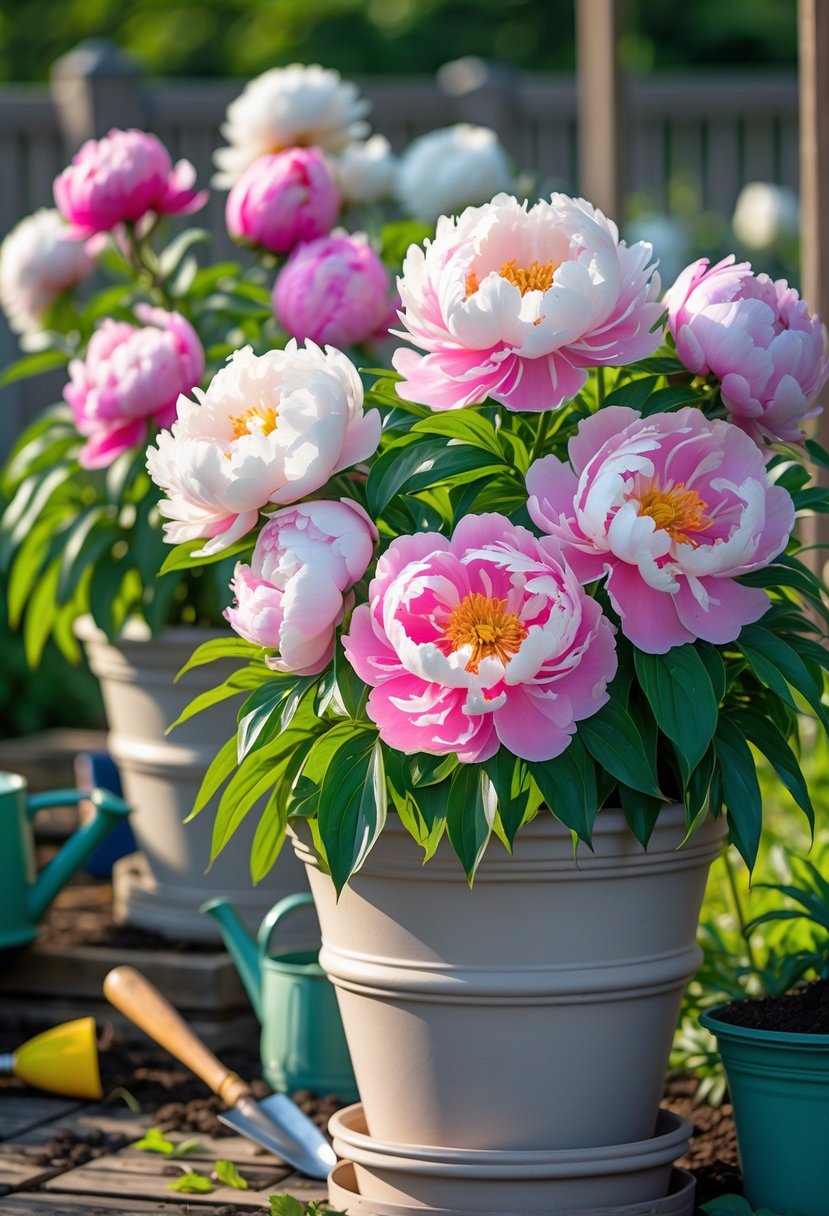
Peonies need full sun and protection from harsh wind to produce strong flowers. Selecting a sturdy variety and placing your pot in a spot with at least six hours of sunlight will improve blooming. You’ll also benefit from using light, well-draining potting soil and adding compost or organic material to keep the soil fertile.
With regular care and attention to watering, sunlight, and pot size, your container-grown peonies can bloom just as beautifully as those planted in the garden. This guide will walk you through each step so you can enjoy spectacular peonies on your patio or balcony.
Choosing the Right Peonies and Containers
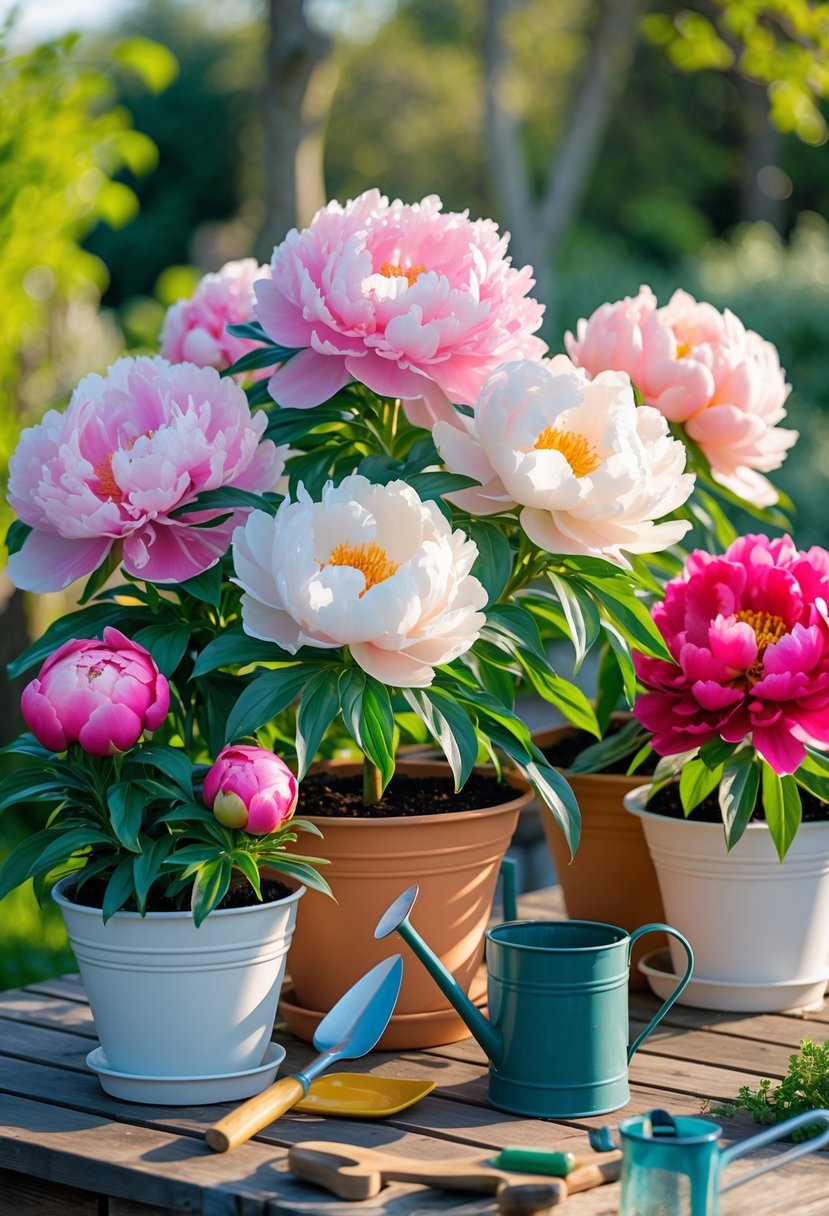
Picking the right type of peony and container is key to growing big, healthy blooms in pots. You need to consider the size, root space, and support needs of your peonies. Also, placing your containers correctly will help your flowers get enough sunlight and shelter from harsh conditions.
Best Peony Varieties for Pots
Choose peony varieties that stay smaller and bloom well in containers. Look for compact types like ‘Pink Hawaiian Coral’, ‘Red Charm’, ‘Karl Rosenfield’, and ‘Sarah Bernhardt’. These peonies have sturdy stems and are less likely to flop over.
Avoid large, sprawling types because they need more root space and support. Smaller varieties will handle container life better and produce more consistent blooms. Also, some intersectional peonies, like ‘Bartzella’ and ‘Border Charm’, work well if you want something a bit different but still manageable in pots.
Selecting the Ideal Container
Your pot should be at least 18 to 24 inches wide and equally deep to give roots room to grow. Peonies have deep roots, so containers must be deep enough to accommodate them. Large, heavy pots made of plastic, ceramic, or wood are good options.
Make sure the pot has drainage holes to prevent water buildup, which can cause root rot. Avoid porous materials like terra cotta, which dry out too fast. A sturdy container will keep your peonies stable, especially when heavy with blooms or exposed to wind.
Positioning for Sunlight and Shelter
Place your potted peonies where they get at least 6 hours of direct sunlight daily. Morning sun is best, with some afternoon shade if you live in hot climates. Good air circulation helps prevent fungal diseases.
Avoid windy or very exposed spots because heavy blooms can be damaged or the plant may fall over. If your area is windy, consider adding supports like stakes or small trellises to keep stems upright. Position pots on stable surfaces to reduce tipping.
Planting Peonies in Flower Pots
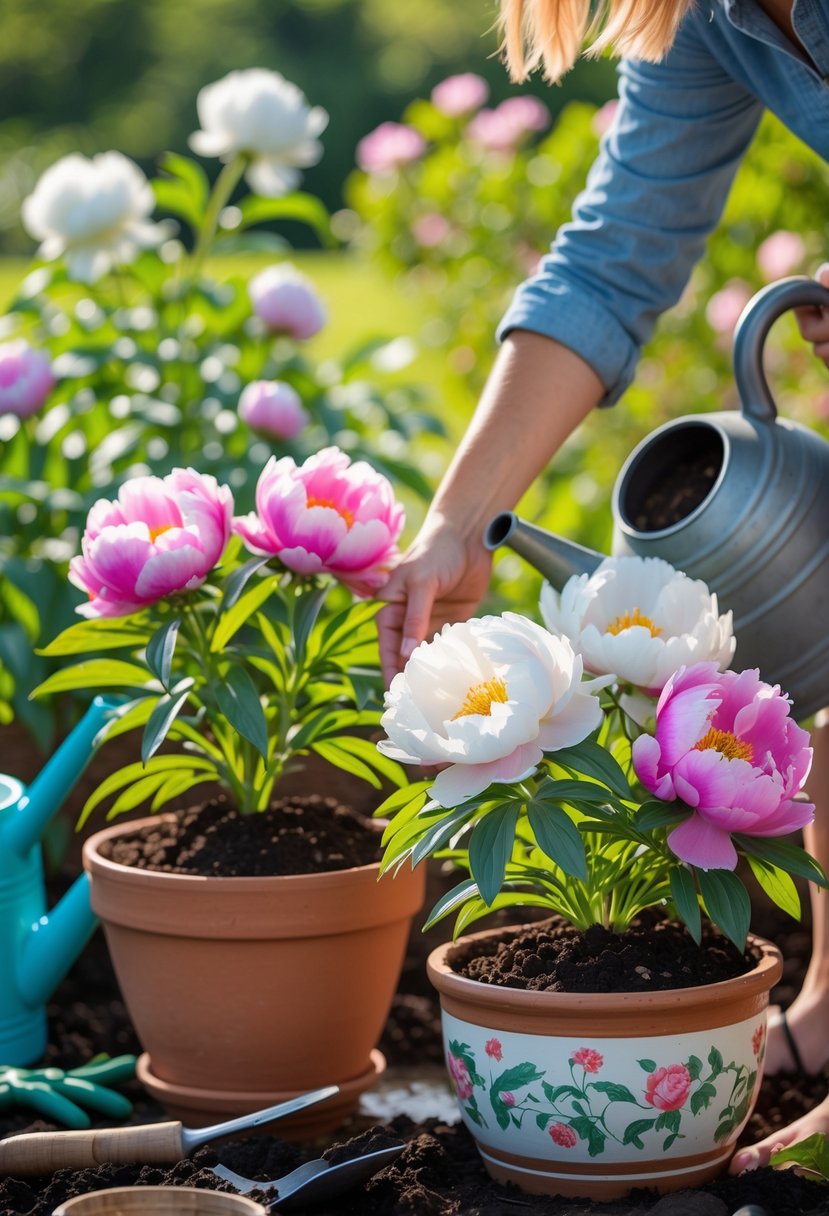
To grow huge peonies in pots, you need to focus on the right soil mix, precise planting depth, and careful watering. These steps help your peony tubers establish strong roots and healthy growth in a container.
Using Well-Draining Soil
Use a light, well-draining potting mix for peonies. Avoid heavy garden soil that holds water, which can cause root rot. A quality potting soil with added compost or organic matter works well to keep the soil loose and moist but not soggy.
Your soil should allow excess water to drain freely through the pot’s drainage holes. This prevents water from pooling around the tubers. Adding a small layer of compost on top in fall can provide nutrients that slowly feed the plant. Make sure to avoid using soil that compacts easily or stays wet for too long.
Planting Depth and Technique for Peony Tubers
Plant your peony tubers with care. The key is to position the tuber’s “eyes” or growth buds about 1 to 2 inches below the soil surface. Planting too deep or too shallow can stop your peony from blooming.
Dig a hole in the pot that fits the tuber’s large tap root comfortably. Place the tuber with the eyes facing up and cover it gently with soil. Avoid mounding soil above the crown or letting it sit too low, as this can cause rot or dry out the roots.
Once planted, press down lightly to remove air pockets and water the soil well to settle it around the tuber.
Watering Requirements After Planting
After planting, water your peony pot to keep the soil evenly moist but not soaked. Overwatering can cause yellowing leaves and root rot, while underwatering will dry out the tuber, causing dry, crispy leaves.
Check soil moisture every few days by sticking your finger about an inch into the soil. If it feels dry, water slowly until water drains from the bottom. In hot weather, check daily. Avoid letting water sit in a tray under the pot for long periods.
Keep in mind that container peonies have limited root space, so consistent moisture is crucial for healthy growth.
Essential Care for Thriving Potted Peonies
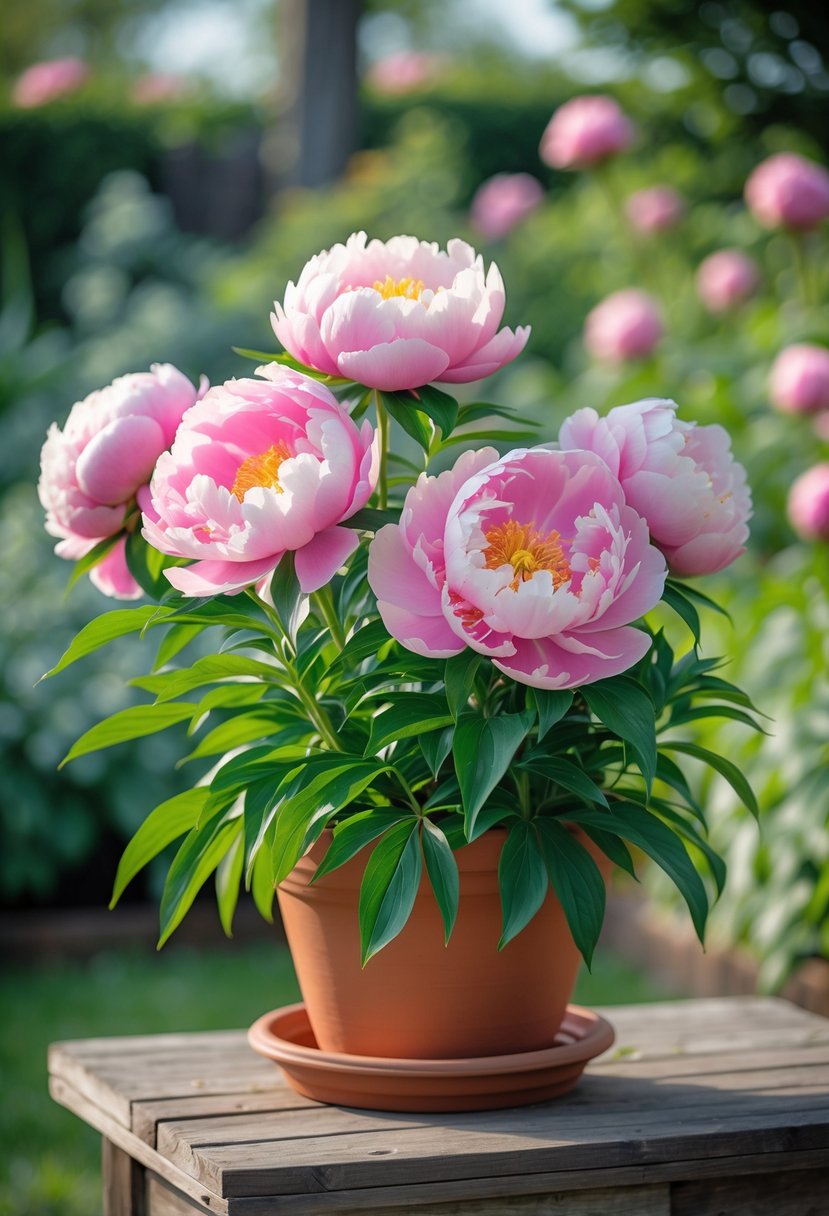
Taking care of peonies in pots means paying close attention to their feeding, watering, and support needs. You’ll need to manage soil nutrients, moisture levels, and the weight of the blooms. Proper pruning keeps your plants healthy and encourages better flowering.
Feeding and Fertilizing Schedule
For peonies in pots, regular feeding is crucial because nutrients in container soil get used up quickly. Apply a balanced fertilizer labeled for flowering plants or use compost tea every 3-4 weeks during spring and summer.
Avoid high-nitrogen fertilizers since they promote leafy growth over flowers. Instead, pick a formula with equal parts nitrogen, phosphorus, and potassium (like 10-10-10). Early spring feeding supports bud development, and a second feeding after blooms fade helps the roots store energy for next year.
Stop fertilizing by late summer to prevent new growth that could be damaged by frost.
Watering and Moisture Management
Peonies in containers need consistent moisture but cannot sit in soggy soil. Water when the top 2-3 inches of soil feel dry. Too little water causes stress and smaller blooms, while excess water can lead to root rot.
Use pots with drainage holes to avoid water buildup. During hot weather, check moisture more often because pots dry out faster than garden beds. Water deeply until it runs out the bottom, ensuring roots absorb enough moisture.
Mulching with organic material like shredded bark on top of the soil helps retain moisture and keeps roots cool.
Supporting Heavy Peony Blooms
Container peonies often struggle to hold up their large flowers, especially during rain or wind. Use sturdy plant cages, trellises, or stakes to keep stems upright.
Place supports around the plant early, before buds open, so you don’t damage delicate stems later. Tie stems loosely with garden twine or soft ties to avoid cutting into the plant.
Choose containers that provide stability. Heavy ceramic pots work well to prevent tipping. Regularly check support as blooms grow to adjust ties or add extra strength if needed.
Pruning and Deadheading Blooms
Remove spent flowers promptly by cutting just below the bloom. This deadheading improves the plant’s appearance and redirects energy from seed production to root growth.
After flowering, trim any yellow or damaged leaves. Fall pruning involves cutting back stems after foliage dies naturally to prepare the plant for winter.
Avoid heavy pruning in spring or summer. Light tidying keeps your container peonies neat and reduces disease risk by removing dead plant material.
Solving Common Problems and Overwintering
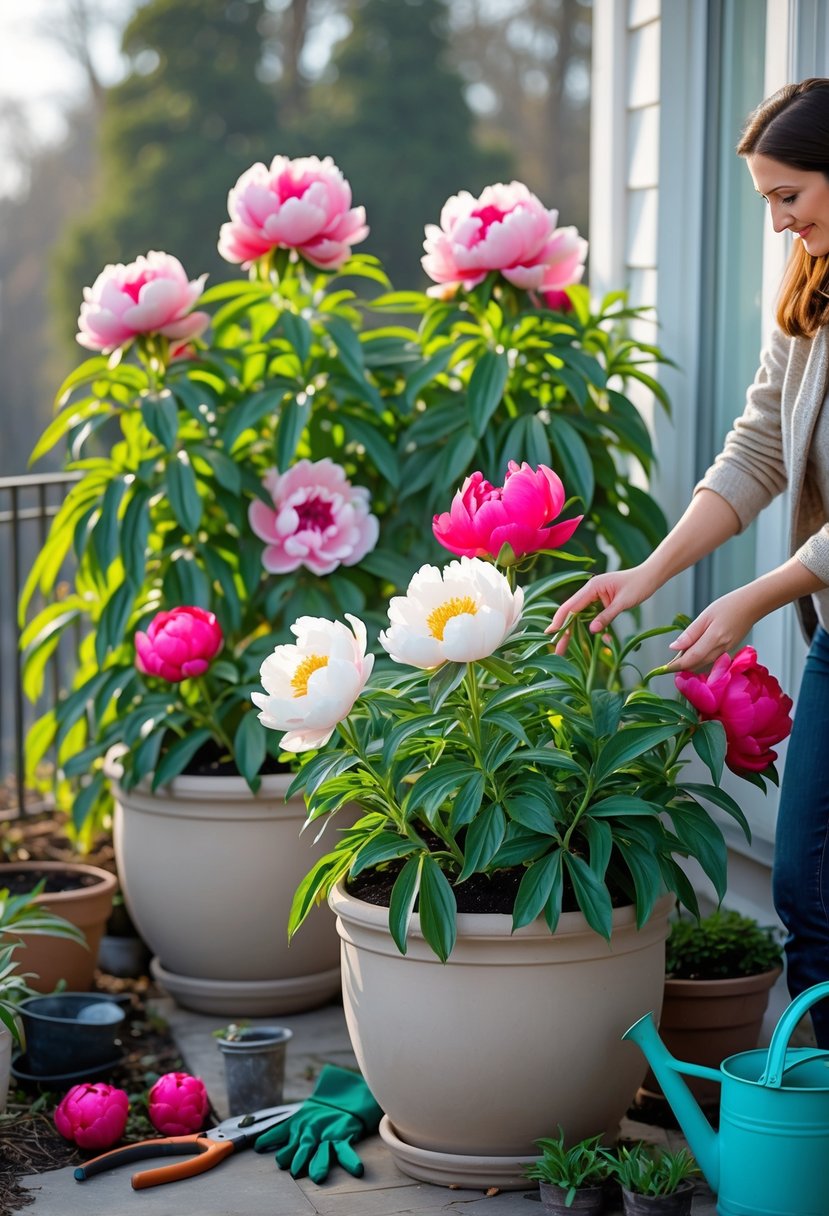
Taking care of potted peonies means dealing with pests, diseases, and cold weather challenges. You need to protect your plants from leaf diseases and insect damage while ensuring their roots stay healthy. Winter requires special steps to keep your peonies alive until spring.
Managing Powdery Mildew and Aphids
Powdery mildew appears as a white, powdery coating on leaves. It harms your peony by reducing photosynthesis and weakening the plant. To prevent it, give your peony good air circulation by spacing pots apart and avoid wetting the leaves when watering.
If powdery mildew appears, wipe off affected leaves or spray with a mix of water and baking soda (1 tablespoon per gallon). Fungicides made for powdery mildew also work but use them carefully.
Aphids are small, soft-bodied insects that gather on new shoots and buds. They suck sap, causing leaves to curl and flowers to deform. Spray your peonies with water to knock aphids off or use insecticidal soap. Check your plants regularly so you can act before infestations grow.
Preventing Root Rot in Containers
Root rot happens when the soil stays too wet and the roots can’t get air. It causes roots to turn brown and mushy, and your peony will wilt or stop growing.
To avoid root rot, use pots with drainage holes and well-draining soil rich in organic matter. Water your peonies only when the top inch of soil feels dry. Avoid overwatering, especially in fall and winter.
If you suspect root rot, carefully remove the plant from the pot and trim away mushy roots. Repot in fresh, dry soil and reduce watering. Good pot drainage and careful watering are key to keeping roots healthy.
Overwintering Potted Peonies Successfully
Potted peonies need a cold period to stay healthy, but they are more vulnerable to freezing than those in the ground. To protect them, place your pots in a cool, sheltered spot like an unheated garage, basement, or covered porch.
Before winter, cut back the foliage to about 3-4 inches above soil. Add 2-3 inches of mulch like bark or straw on top of the soil to keep roots warm.
Wrap the pot sides with bubble wrap, straw, or an insulation blanket to prevent the soil from freezing deeply. Avoid over-insulating, leaving space for air circulation.
Water sparingly in winter. Check pots occasionally, making sure the soil is moist but not soaked. When spring arrives, move your peonies back to a sunny spot and resume regular watering and feeding.