
How to Grow and Care for Fruiting Cherry Trees: Complete Guide
Growing your own fruiting cherry trees can be a rewarding way to enjoy fresh, delicious cherries right from your yard. To successfully grow and care for cherry trees, you need to pick the right type for your area, plant them in well-drained soil with plenty of sunlight, and provide proper watering and pruning throughout the year. Sweet cherries are best for fresh eating and need cross-pollination, while sour cherries suit colder climates and are often self-pollinating.
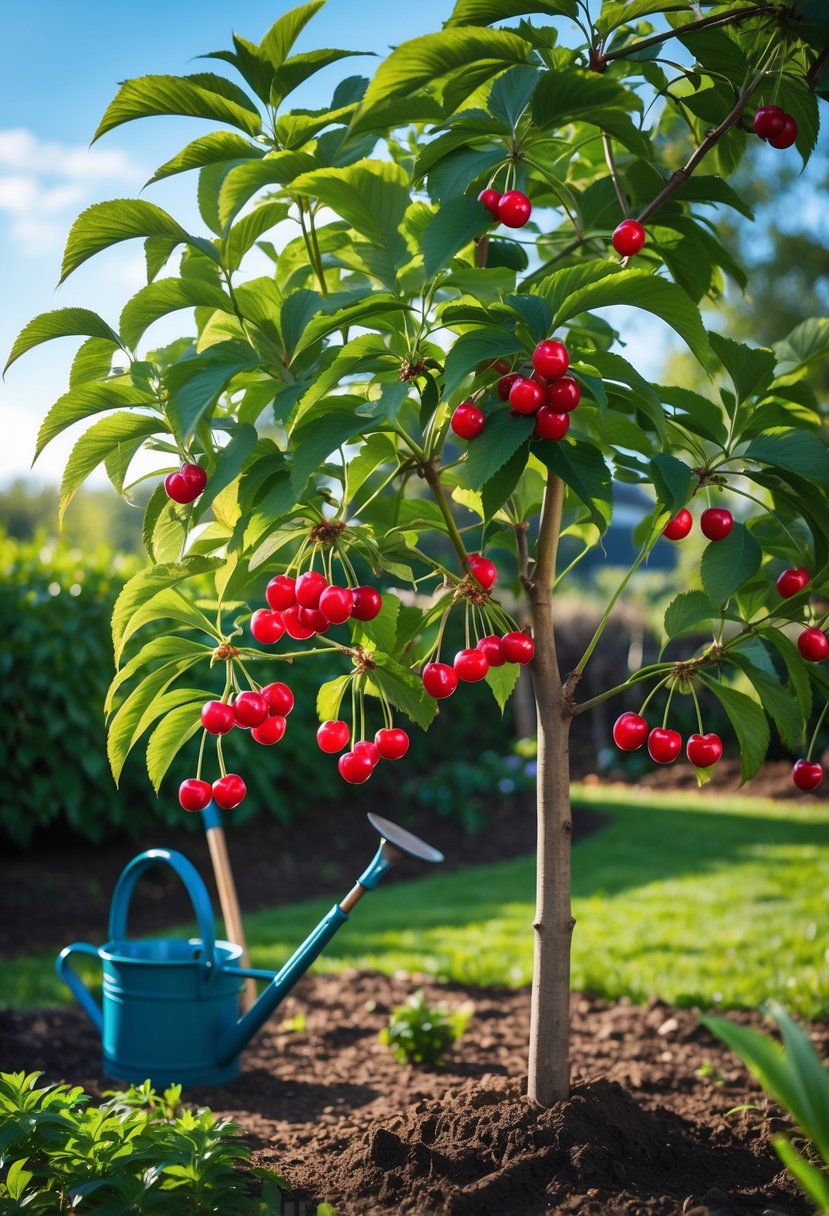
Patience is key because cherry trees usually take three to five years to start producing fruit. Proper care, such as protecting your trees from pests and birds, maintaining soil health, and pruning correctly, will help ensure a healthy tree and a good harvest. Whether you have space for dwarf trees or full-sized varieties, these steps will guide you to better growth and fruit production.
Key Takeways
- Choose cherry trees that fit your climate and space for the best results.
- Plant trees in sunny, well-drained soil and water them consistently but avoid overwatering.
- Regular pruning and pest protection help maintain tree health and improve fruit yield.
Choosing the Right Fruiting Cherry Tree
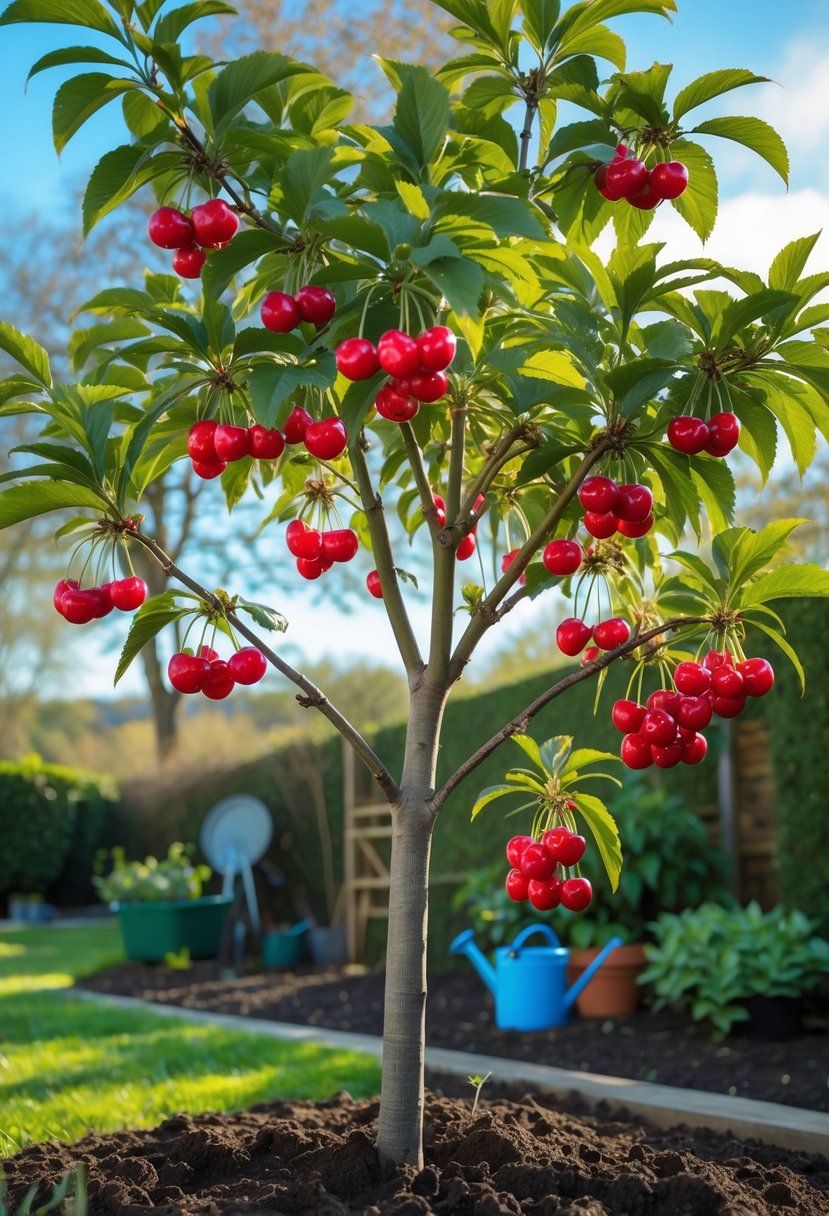
Picking the right cherry tree depends on the type of cherries you want, your local climate, and how your tree will get pollinated. Knowing these details will help you choose a tree that grows well and produces fruit in your yard.
Sweet Cherries vs. Sour Cherries
Sweet cherries are usually eaten fresh. They are larger, sweeter, and best for snacking. Examples include Bing and Rainier. Sweet cherries need warm summers and cold winters to produce well.
Sour cherries, also called tart cherries, are smaller and more acidic. They’re better for cooking and baking. Montmorency is a common sour variety. Sour cherries are more cold-hardy than sweet cherries and tolerate cooler climates better.
Choose sweet cherries if you want fresh fruit, and sour cherries if you plan to use them in pies or jams.
Selecting Cultivars for Your Climate
Your local climate affects which cherry trees will grow successfully. Cherry trees need cold winter temperatures to break dormancy but also need warm summers.
If you live in a cold region, pick cold-hardy varieties like ‘Evans’ or ‘Balaton’ that survive harsh winters. In milder areas, varieties like ‘Bing’ or ‘Stella’ do well.
Check your USDA hardiness zone and select cultivars recommended for your zone. This ensures the trees will bloom and fruit on schedule.
Pollination Requirements
Most cherry trees need another tree to cross-pollinate for fruit production. If you plant only one tree that cannot self-pollinate, you may not get any cherries.
Some sweet cherry cultivars are self-fertile, like ‘Stella,’ but most need a different variety nearby.
Sour cherries are often self-pollinating, so one tree can be enough.
Plant at least two compatible trees close together if your cherry type requires cross-pollination to increase fruit yield.
Planting Fruiting Cherry Trees
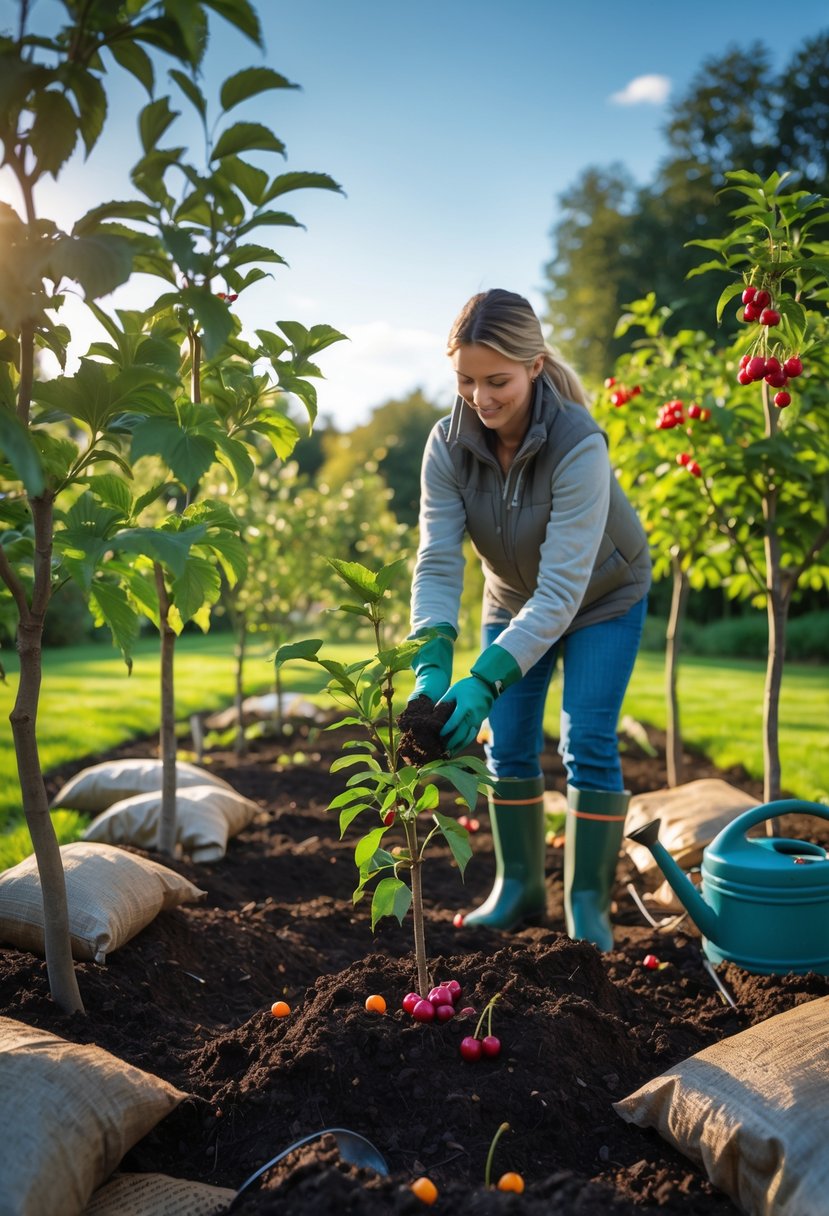
To grow healthy cherry trees, you need to pick the right spot, prepare the soil well, and space your trees properly. These steps help your trees get enough sunlight, nutrients, and room to grow strong and produce fruit.
Best Locations and Sunlight Needs
Choose a planting site that gets at least 6 to 8 hours of full sun each day. Sunlight is vital for fruit production and helps prevent diseases. Avoid low areas where cold air might settle, as frost can damage blossoms and reduce yields.
Good air circulation at the site is important to keep fungal infections away. If your garden is in a warm region, some afternoon shade can protect the tree from the hottest sun and reduce stress.
Keep in mind that spacing affects airflow between trees. Crowded spots increase humidity and diseases.
Soil Preparation and pH
Your soil must be deep, well-drained, and loose to support root growth. Cherry trees do not like waterlogged or heavy clay soils. If your area has poor soil, dig a hole wider and deeper than the root ball and mix in compost.
The ideal soil pH range is between 6.0 and 7.2. Sweet cherries prefer pH 6.3 to 7.2, while sour varieties grow best around 6.0 to 7.0. Getting your soil tested helps you adjust the pH if needed.
Use organic matter like compost to improve soil texture and nutrients. Avoid planting where water stands after rain.
Spacing and Planting Techniques
Space sweet cherry trees about 35 to 40 feet apart for full-size trees. Dwarf varieties need only 5 to 10 feet between trees. Sour cherries also require 35 to 40 feet for standards and about 8 to 10 feet for dwarfs.
Dig holes that are wider and slightly deeper than the root ball. Gently loosen roots before planting to help them spread. Place the tree at the same soil depth it was growing in the nursery.
Water well after planting and apply mulch around the base to keep moisture steady and protect roots.
Following these planting steps will set your cherry trees up for healthy growth and future fruit production.
Essential Care and Maintenance
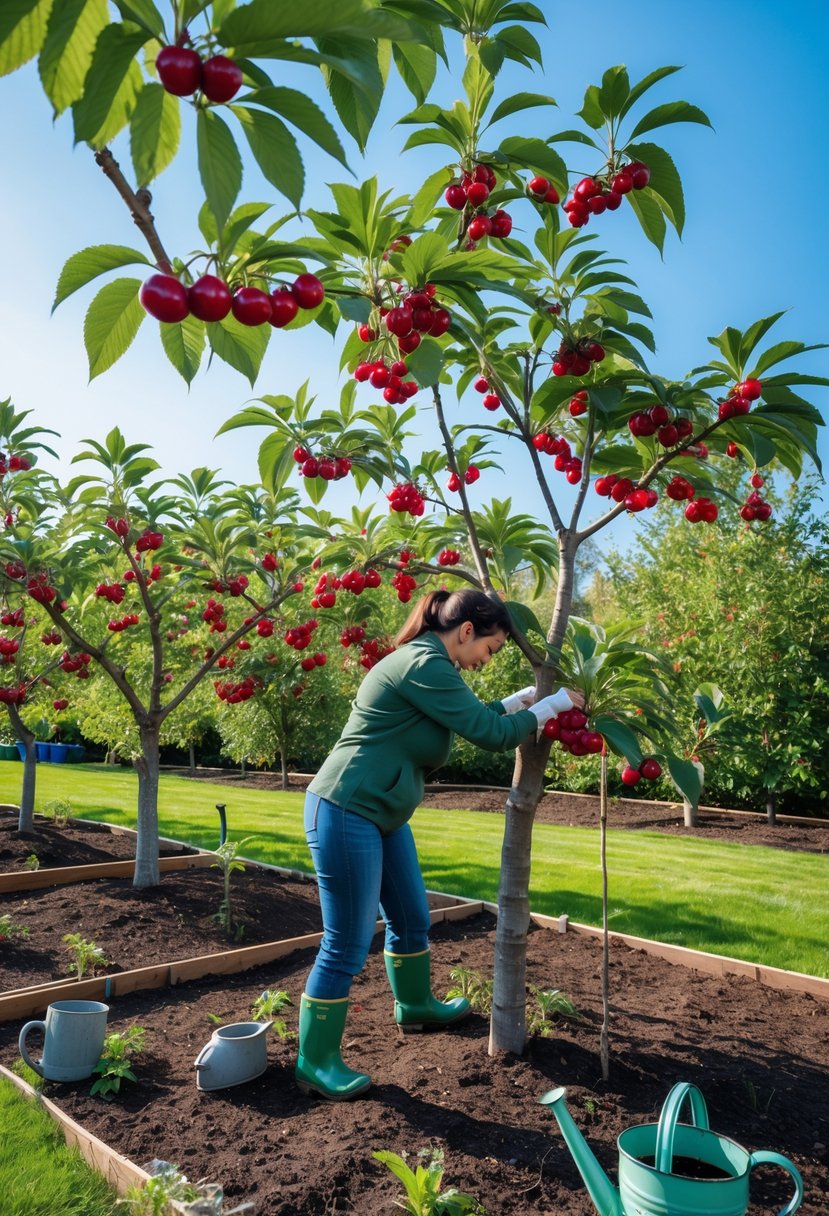
To keep your cherry trees healthy and productive, focus on proper watering, feeding, pruning, and protecting them from pests and diseases. These tasks help your trees grow strong, produce fruit, and stay free from common problems.
Watering and Mulching Practices
Cherry trees need about one inch of water each week, either from rain or supplemental watering. Water deeply once a week during dry periods. Avoid overwatering, which can harm the roots.
Apply mulch around the base of the tree to retain soil moisture and control weeds. Use organic mulch like wood chips or straw. Keep mulch a few inches away from the trunk to prevent rot.
Mulching also regulates soil temperature, promoting healthy root growth. Check soil moisture with a finger test; if the top 2 inches are dry, it’s time to water.
Fertilization for Healthy Growth
Feed your cherry trees once a year before buds bloom. Use a low-nitrogen or balanced fertilizer at half the recommended strength. Over-fertilizing can cause excessive leaf growth with poor fruit production.
Adding compost twice a year also supports nutrient needs. Apply a light layer around the drip line of the tree, not directly at the trunk.
If your tree stops fruiting or shows poor growth, you may add a second fertilizer application after harvest. Stick to fertilizer types designed for fruit trees to avoid nutrient imbalance.
Seasonal Pruning for Fruit Production
Prune cherry trees twice yearly. In early spring, prune heavily to remove weak branches and shape the tree. This encourages strong limbs that support fruit.
In late summer, prune lightly to thin the canopy. This improves airflow and sunlight, helping prevent fungus and pests.
Avoid heavy pruning in late summer since it can stimulate new growth vulnerable to winter damage. Always use clean, sharp tools to avoid spreading disease.
Protecting Trees from Pests and Diseases
Inspect your trees regularly for signs of pests like aphids, Japanese beetles, and cherry fruit flies. You can use organic sprays like neem oil or sulfur-based products to control insects and fungal diseases.
Birds also damage fruit. Use bird netting carefully or try reflective tape and decoys to scare them away, moving decoys often.
Watch for diseases like powdery mildew and gummosis. Remove infected branches promptly and treat fungal infections with copper fungicide or horticultural oil. Clean up fallen debris to reduce disease risk.
Growing Fruiting Cherry Trees in Containers
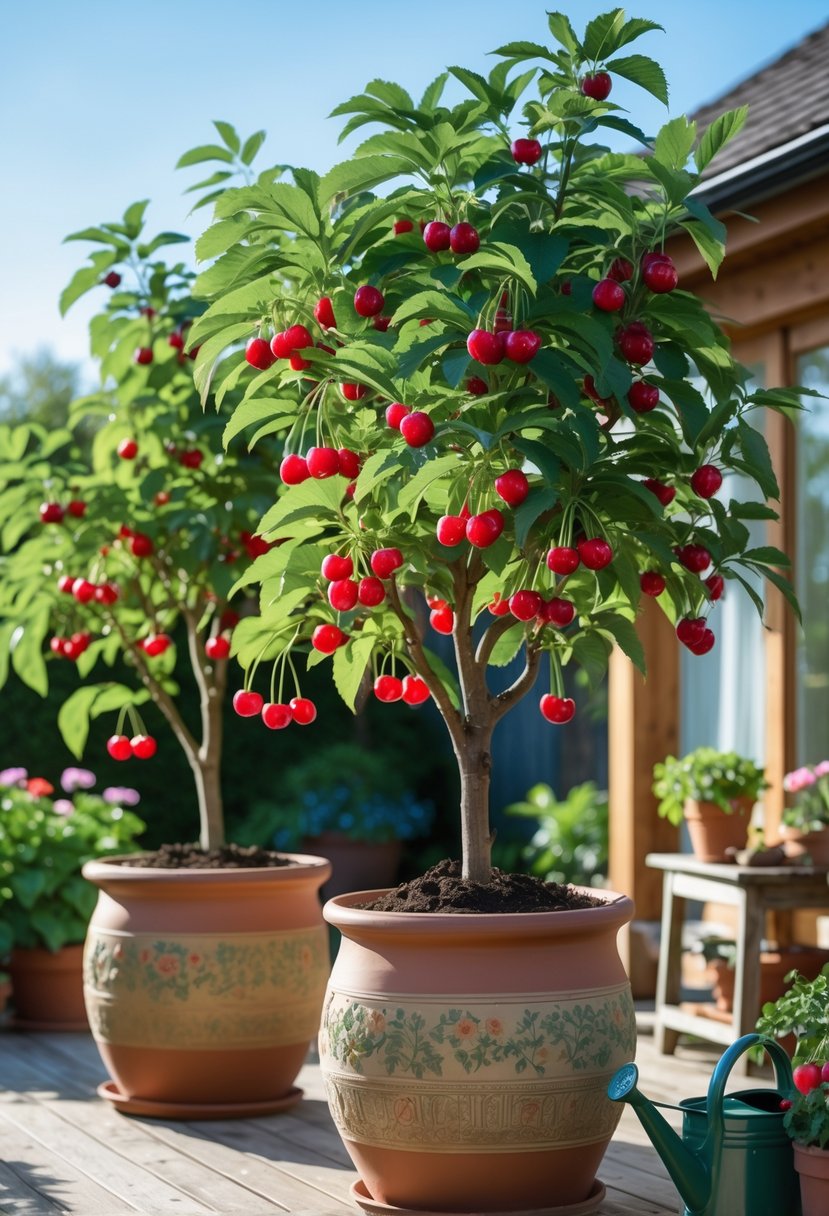
Growing cherry trees in containers lets you enjoy fresh fruit without needing a large yard. To succeed, you must pick the right tree variety and pot, prepare soil with good drainage, and provide proper watering and fertilizing.
Choosing Pots and Varieties for Containers
Pick a container that is at least 15 gallons and wider and deeper than your tree’s root ball. The pot needs drainage holes to prevent water buildup, which can cause root rot. You can add mesh or rocks to improve drainage.
Choose dwarf or compact cherry tree varieties made for container growing. Self-pollinating types like Stella, Morello, and North Star work well alone. If your variety is not self-fertile, you need space for two pots to help with pollination.
If space is very limited, consider trees grafted with multiple cultivars. This allows cross-pollination from one tree. A wheeled dolly for your pot can help when the tree becomes heavy with soil and water.
Potting Mix and Drainage Needs
Use a potting mix that offers good drainage but holds some moisture. A mix of one part sand, one part peat moss, and one part perlite is ideal. Avoid garden soil because it can compact and block air.
The soil should stay moist but never waterlogged. Overwatering can cause roots to rot and harm your cherry tree. Check the pot’s drainage regularly and water only when the top inch of soil is dry.
Adding mulch on the soil surface helps keep moisture steady. Mulch also lowers the frequency of watering, which is important because containers dry out faster than ground soil.
Care Tips for Potted Cherry Trees
Water your tree deeply a few times a week but adjust depending on temperature and rainfall. Regular deep watering encourages strong root growth and reduces fruit cracking.
Fertilize your cherry tree with an organic, balanced fertilizer or seaweed-based product. Avoid fertilizers high in nitrogen; they grow leaves but reduce fruit yield.
Prune your cherry tree to keep its size manageable and improve air flow. Remove dead or weak branches every year during dormancy.
Keep an eye on pests and diseases. Proper watering, good drainage, and healthy soil help prevent most problems.


