How to Freeze Broccoli Quickly and Preserve Freshness
Freezing broccoli is an easy way to keep this healthy vegetable fresh and ready to use whenever you need it. The best way to freeze broccoli is to wash it, trim it, blanch it briefly in boiling water, then cool and dry it before freezing. This method helps keep broccoli’s color, flavor, and nutrients intact for months.
You don’t have to blanch if you plan to use the broccoli quickly or in cooked dishes, but blanching is recommended if you want the best texture and taste after freezing. Once frozen, broccoli can be used in soups, casseroles, or as a side dish without losing much quality.
Knowing how to properly freeze broccoli saves you money and reduces food waste. By following a simple process, you can enjoy fresh-tasting broccoli well beyond its usual shelf life.
Key Takeways
- Wash and trim broccoli before freezing to prepare it properly.
- Blanching broccoli before freezing preserves its color and texture.
- Frozen broccoli works well in many cooked recipes.
Preparing Broccoli for Freezing

To freeze broccoli well, you need to start with fresh, healthy broccoli. Washing and trimming it properly helps remove dirt and tough parts. Cutting broccoli into similar-sized pieces ensures even freezing and better texture later.
Selecting the Best Broccoli
Choose broccoli that is firm, bright green, and fresh. Avoid any bunches with yellowing or soft spots. The smaller, tighter the buds, the better the broccoli will freeze and taste later.
If you grow broccoli in your garden, harvest it before the buds start to flower. Pick it on a dry day and use it quickly to keep it fresh. Freshness directly affects the quality after freezing.
Washing and Trimming
Rinse your broccoli under cold running water. This removes dirt, bugs, and any pesticides.
After washing, trim off any leaves and tough, woody stem ends. These parts don’t freeze well and can affect the taste and texture.
Make sure your broccoli is dry before freezing. You can pat it dry with a clean towel or use a salad spinner.
Cutting Into Florets and Stems
Cut the broccoli head into florets that are about the same size. Uniform pieces freeze and cook more evenly.
You can also cut the stems into small pieces. Remove any thick, woody parts first. The stems can be cooked and frozen along with the florets.
If your stems are thin and tender, treat them like the florets for freezing. This way, you use the whole broccoli without waste.
Step-By-Step Freezing Process

Freezing broccoli properly preserves its taste, texture, and nutrients. You will prepare broccoli by briefly cooking it, then cool and dry it. Finally, you package and label it before placing it in the freezer.
Blanching Broccoli
Start by washing your broccoli well under cold water. Cut the broccoli into similar-sized florets for even cooking.
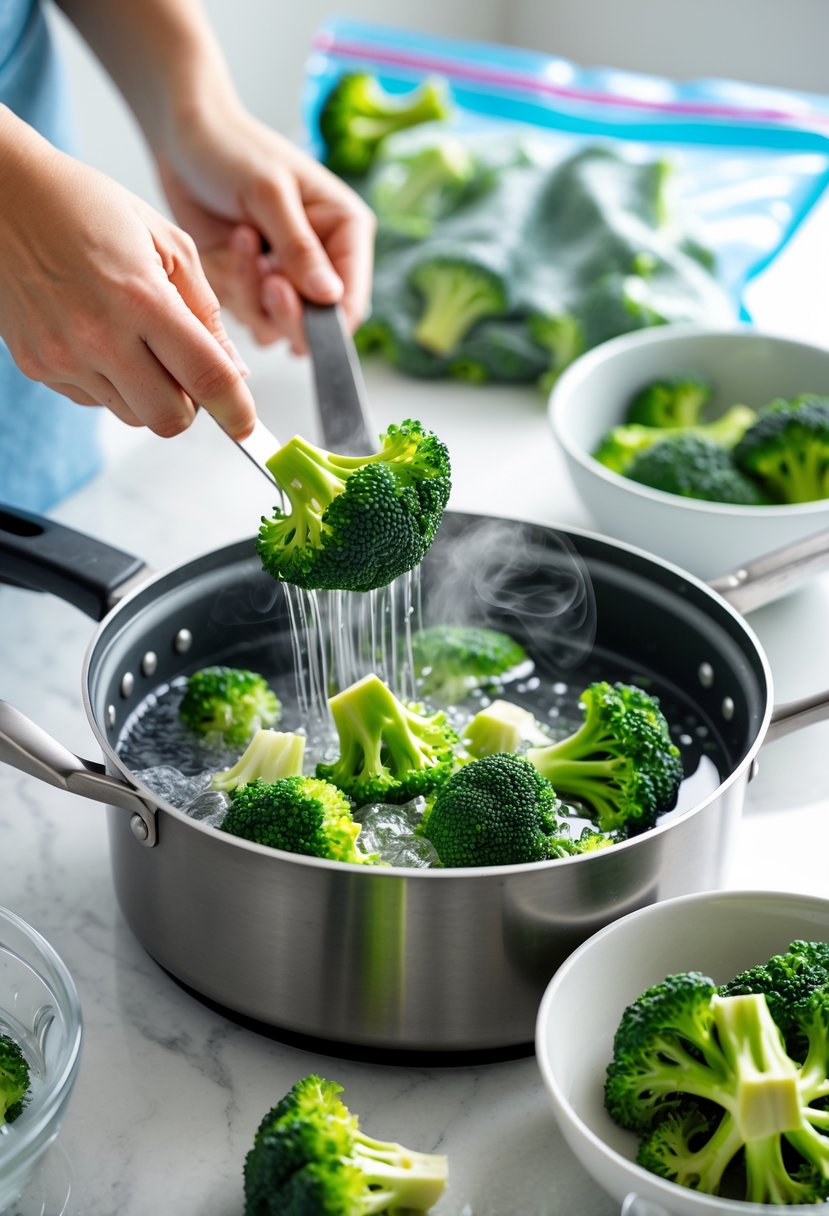
To blanch, boil a large pot of water. Once boiling, add the broccoli florets and cook for 2-3 minutes. This stops enzyme actions that can spoil taste and texture.
After boiling, immediately transfer the broccoli to a bowl of ice water. This cools the broccoli quickly and stops the cooking process.
Drying and Cooling
Once the broccoli is cool, drain it well. Use a clean kitchen towel or paper towels to pat it dry.
Removing excess water is important. Wet broccoli can cause ice crystals and freezer burn during storage.
Make sure the broccoli is completely dry before packaging. This step helps maintain quality and prevents sogginess after freezing.
Packaging for Storage
Choose airtight containers or heavy-duty freezer bags for packaging. Fill them with the broccoli florets without crushing them.
Press out as much air as possible if using freezer bags. Air exposure leads to freezer burn and loss of flavor.
You can also flash freeze by spreading florets on a baking sheet in a single layer and freezing for a few hours. Then transfer to bags. This keeps pieces separate for easy portion use later.
Labeling and Freezing
Label each container or bag with the date of freezing and contents. Use a permanent marker or freezer tape for clear, legible writing.
Store the broccoli in the coldest part of your freezer. Properly prepared broccoli lasts up to six months frozen.
When ready to use, you can cook it directly from frozen or thaw it overnight in the fridge for softer texture.
Freezing Broccoli Variations

Freezing broccoli can vary depending on the type you have and where it comes from. You need to treat broccoli sprouts differently than larger broccoli heads. Also, broccoli fresh from your garden may need extra care before freezing to keep it fresh and tasty.
Freezing Broccoli Sprouts
Broccoli sprouts are delicate and require gentle handling to freeze well. First, rinse the sprouts thoroughly in cold water to remove dirt and bacteria. Drain them well to avoid ice crystals forming during freezing.
Spread the sprouts out in a single layer on a clean towel or paper towels to dry completely. Moisture will cause clumping and ice build-up. Once dry, place the sprouts in an airtight container or freezer bag.
Freeze the sprouts quickly to preserve their texture and nutrients. Use them within 3 to 4 months for best quality. When ready, you can add frozen sprouts directly to smoothies or salads without thawing.
Freezing Broccoli from Your Garden
When freezing broccoli from your garden, timing is important. Harvest broccoli heads when the florets are tight and firm but before the buds start to open. This ensures the best flavor and texture.
Cut the broccoli into small florets and wash them well. To keep color and texture, blanch the florets in boiling water for 2 to 3 minutes. Then plunge them into ice water to stop the cooking process.
Drain and dry the florets thoroughly. Spread them on a baking sheet in a single layer to freeze individually. After they are frozen solid, transfer to freezer bags, squeezing out as much air as possible.
Label bags with the date and use the broccoli within 10 to 12 months for best results. This method keeps your garden broccoli fresh and ready for cooking.
Using Frozen Broccoli

When you use frozen broccoli, how you defrost and cook it can change the texture and flavor. Proper methods help keep broccoli fresh-tasting and prevent it from becoming soggy or mushy.
Defrosting Methods
You can defrost frozen broccoli in several ways depending on your time and intended use.
The easiest method is to thaw it overnight in the refrigerator. This lets it slowly reach a cool temperature, which helps keep the texture firm.
If you need it faster, place the frozen broccoli in a colander and run cold water over it for a few minutes. Drain well before cooking.
Avoid defrosting at room temperature because this can make broccoli soft and encourage bacteria growth.
You can also cook broccoli straight from frozen without defrosting if you plan to roast or steam it. This saves time and keeps it firmer.
Cooking with Frozen Broccoli
Frozen broccoli works well in many recipes but does best when cooked with care.
For steaming or microwaving, add a small amount of water to avoid drying out. Microwave frozen broccoli in a covered dish with about ¼ cup of water for 3-4 minutes on full power.
When roasting, use high heat to help remove extra moisture and keep edges crisp. Spread florets in a single layer with a little oil and roast at 425°F for 15-20 minutes.
If you want to stir-fry frozen broccoli, cook it briefly on high heat and add it toward the end with fresh vegetables or protein.
Keep in mind frozen broccoli may be softer than fresh after cooking, but using the right heat and cooking time helps maintain good texture.
Frequently Asked Questions

You need to blanch broccoli briefly in boiling water before freezing to preserve texture and color. Cooking broccoli before freezing can affect texture. Freezing raw broccoli is possible but requires care. Storage time affects taste and quality.
What is the best method to blanch broccoli before freezing?
Boil water and immerse broccoli florets for 2-3 minutes. Then quickly transfer them to an ice bath for 3-4 minutes to stop cooking. Drain well before freezing to remove excess water.
Can you freeze broccoli after it has been cooked?
Yes, but cooked broccoli may become softer or mushy after freezing. It is better to blanch first than freeze fully cooked broccoli for better texture.
What are the steps to freeze cauliflower and broccoli together?
Blanch the cauliflower and broccoli separately in boiling water for about 3 minutes each. Cool in ice baths, drain well, then combine. Freeze them in single layers before storing in sealed bags.
Is it possible to freeze raw broccoli effectively?
You can freeze raw broccoli but it risks poor texture and possible freezer burn. Blanching before freezing is recommended to maintain quality.
How does the texture of broccoli change after freezing?
Broccoli may become softer or slightly mushy after freezing, especially if not blanched. Blanching helps keep the texture firmer.
What are the recommended storage times for frozen broccoli to ensure freshness?
Frozen broccoli is best used within 8 to 12 months. Using it beyond this period can lead to loss of flavor and texture. Store in airtight, freezer-safe containers.