Home Gardening Ideas Indoor Plants for Stylish and Low-Maintenance Living Spaces
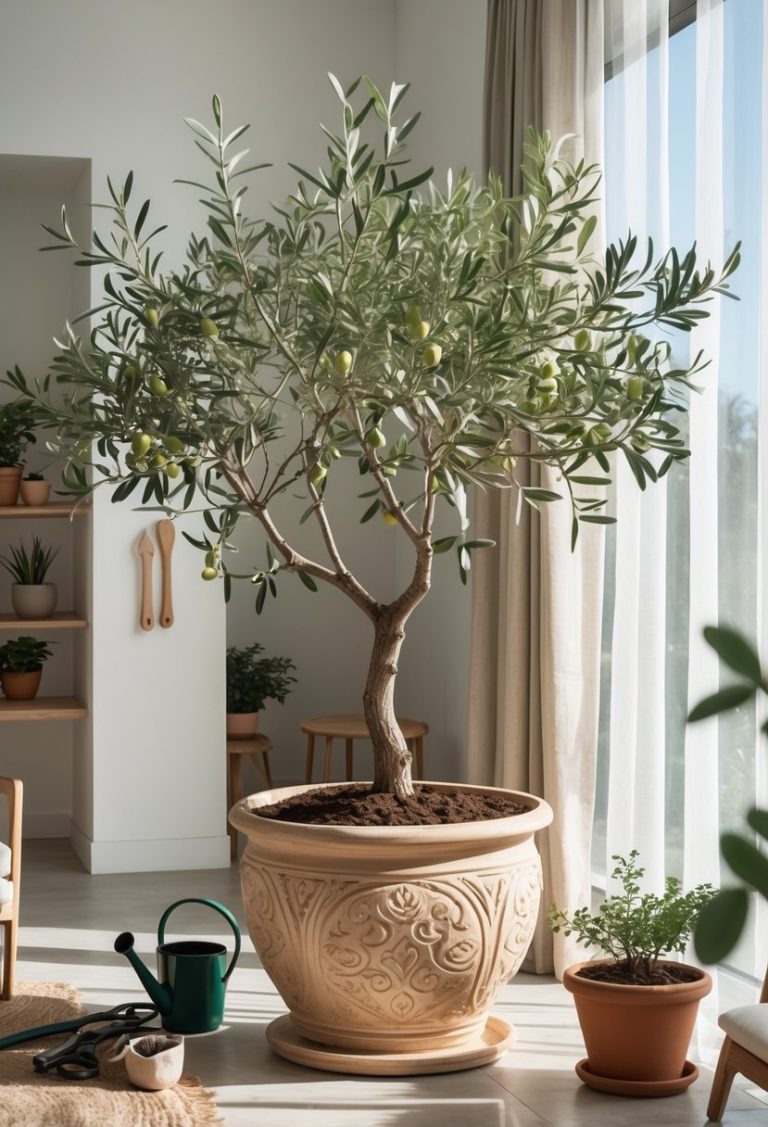
Indoor gardening is a great way to bring life and freshness into your home without needing a big yard. You can use almost any space, from a sunny kitchen window to a quiet corner, to grow plants that brighten your rooms and improve air quality. Choosing the right plants for your space and lifestyle helps make indoor gardening easy and enjoyable.
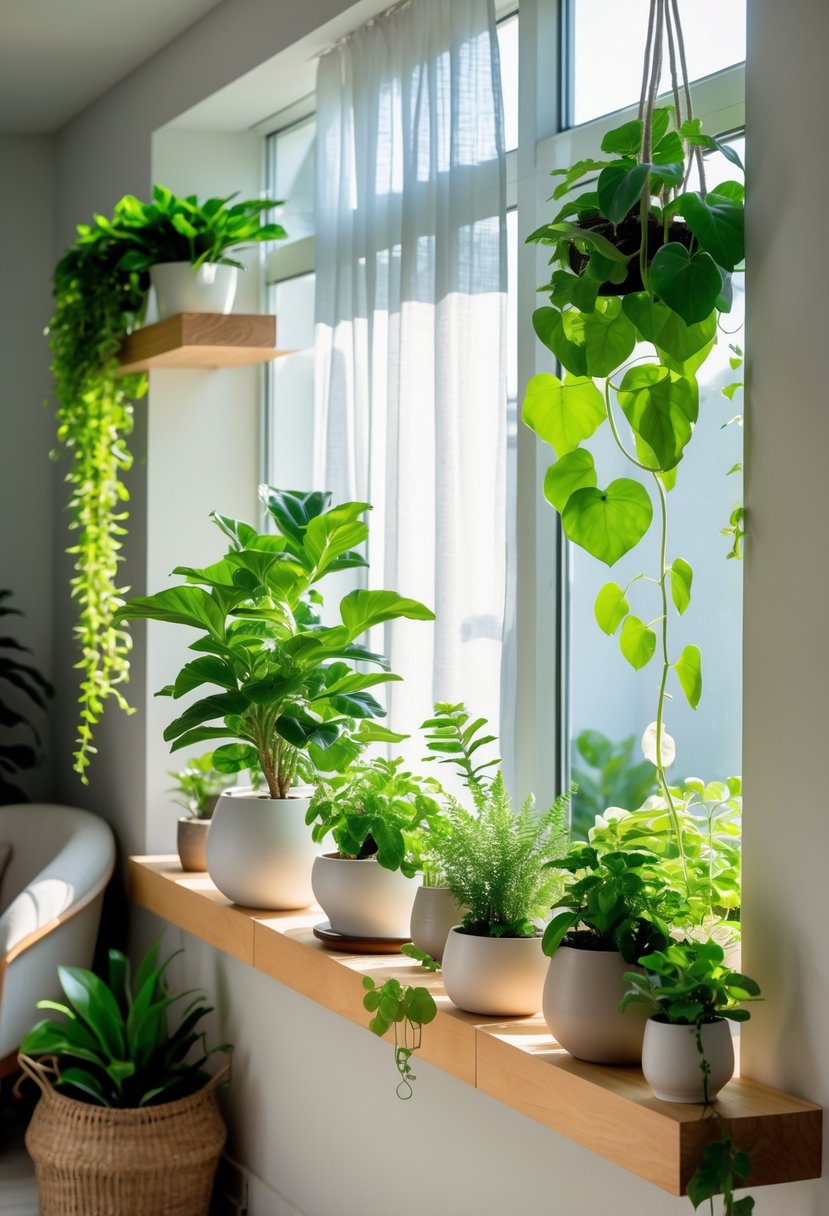
Many indoor plants need little care and adapt well to different light and humidity levels. Starting with simple, low-maintenance plants allows you to build confidence and keep your space green year-round. You can even create unique arrangements like hanging gardens or small herb collections that fit your home’s style.
With the right tips and a few creative ideas, your indoor garden can become a calming, beautiful part of your daily life. You don’t need much experience to get started and see quick, satisfying results.
Key Takeaways
- Choose plants that fit your space and care routine.
- Use simple techniques for healthy, thriving plants.
- Get creative to make your indoor garden unique and lively.
Selecting the Best Indoor Plants for Home Gardens
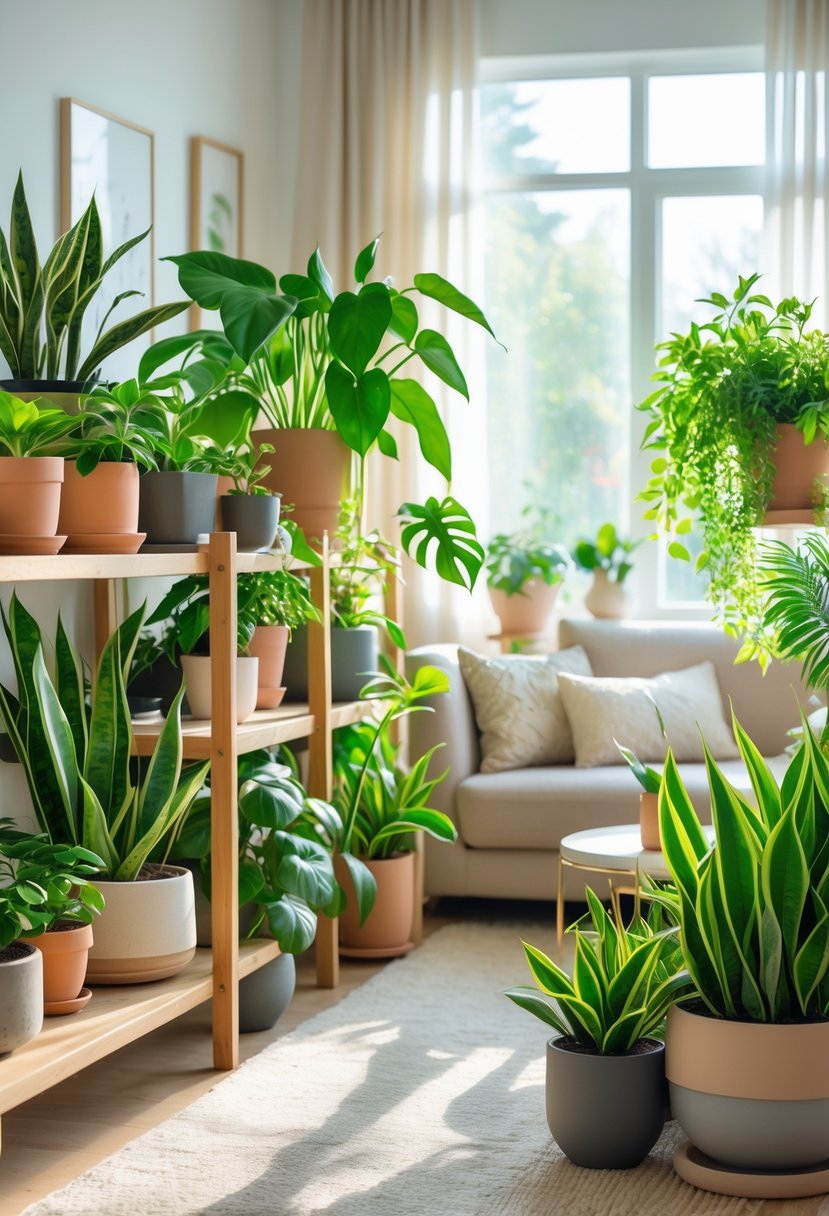
Choosing the right indoor plants means thinking about light, care needs, and your space. Knowing key plant types and their requirements helps you pick plants that thrive in your home and fit your lifestyle.
Understanding Different Types of Indoor Plants
Indoor plants vary by their growth, care, and light needs. Some plants grow tall, like fiddle leaf figs, while others stay small, like succulents. You can find plants that like dry air or need more moisture.
Plants can be grouped into:
- Foliage plants: Focus on leaves, like snake plants.
- Flowering plants: Produce blooms, like peace lilies.
- Succulents and cacti: Store water in thick leaves.
Each type has different care needs. You should match plants to your home’s temperature, humidity, and available time.
Choosing Indoor Plants for Low Light Spaces
If your home has low light, look for plants that can survive with little sunlight. These plants typically handle shade or indirect light well.
Good low-light choices include:
- Snake plant
- ZZ plant
- Pothos
- Cast iron plant
These plants need less water and can tolerate darker corners. Avoid plants that need bright or direct light to keep them healthy.
Top Indoor Plants for Beginners
If you’re new to indoor gardening, start with low-maintenance plants. These plants resist pests, require little watering, and don’t need much fertilizer.
Some easy beginner plants are:
- Snake plant: Very tough and needs little water.
- ZZ plant: Survives in low light and irregular watering.
- Golden pothos: Grows fast, looks good hanging or on shelves.
These plants help you build confidence without much fuss. They suit busy schedules and homes with different lighting.
Essential Indoor Gardening Tips and Techniques
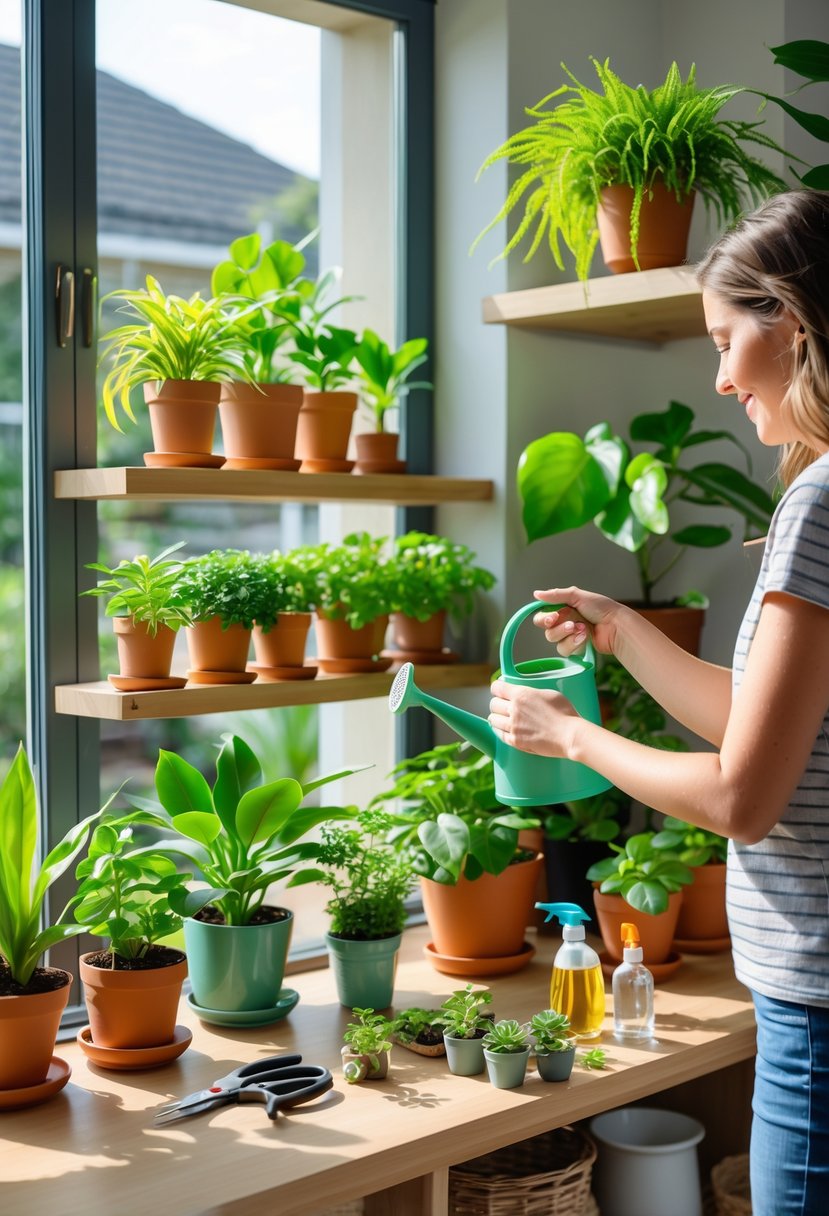
To grow healthy indoor plants, focus on giving them the right amount of light and water. You also need good soil and pots that fit your plants well. Adding the correct nutrients at the right time will ensure your plants stay strong.
Optimizing Light and Water for Indoor Plants
Most indoor plants need bright, indirect light. Place them near windows that get plenty of natural light but avoid direct sunlight, which can burn leaves. If natural light is limited, use grow lights to provide the right spectrum and intensity.
Water your plants only when the top inch of soil feels dry. Overwatering can cause root rot, so check the soil moisture before watering. Use pots with drainage holes to let excess water escape. Remember, different plants have different water needs; succulents need less water, while tropical plants might require more humidity and moisture.
Soil Selection and Potting Best Practices
Choose potting soil made for indoor plants, which is usually light and well-draining. Avoid heavy garden soil since it can hold too much water and suffocate roots. For succulents, use a cactus mix that drains quickly.
Pick pots just a little bigger than the plant’s root ball. Too much space can keep the soil wet for too long. Make sure every pot has drainage holes to prevent standing water. When repotting, gently loosen the roots and remove dead or damaged parts before planting.
Fertilizing and Nutrient Routines
Feed your plants with a balanced, water-soluble fertilizer every 4-6 weeks during the growing season, usually spring and summer. Follow the instructions carefully to avoid overfeeding, which can harm plants.
Different plants require different nutrients. For example, leafy plants need more nitrogen, while flowering plants need phosphorus. Use fertilizer formulas designed for your specific plant type. In winter, reduce feeding since most indoor plants grow slower or go dormant.
Creative Home Gardening Ideas With Indoor Plants
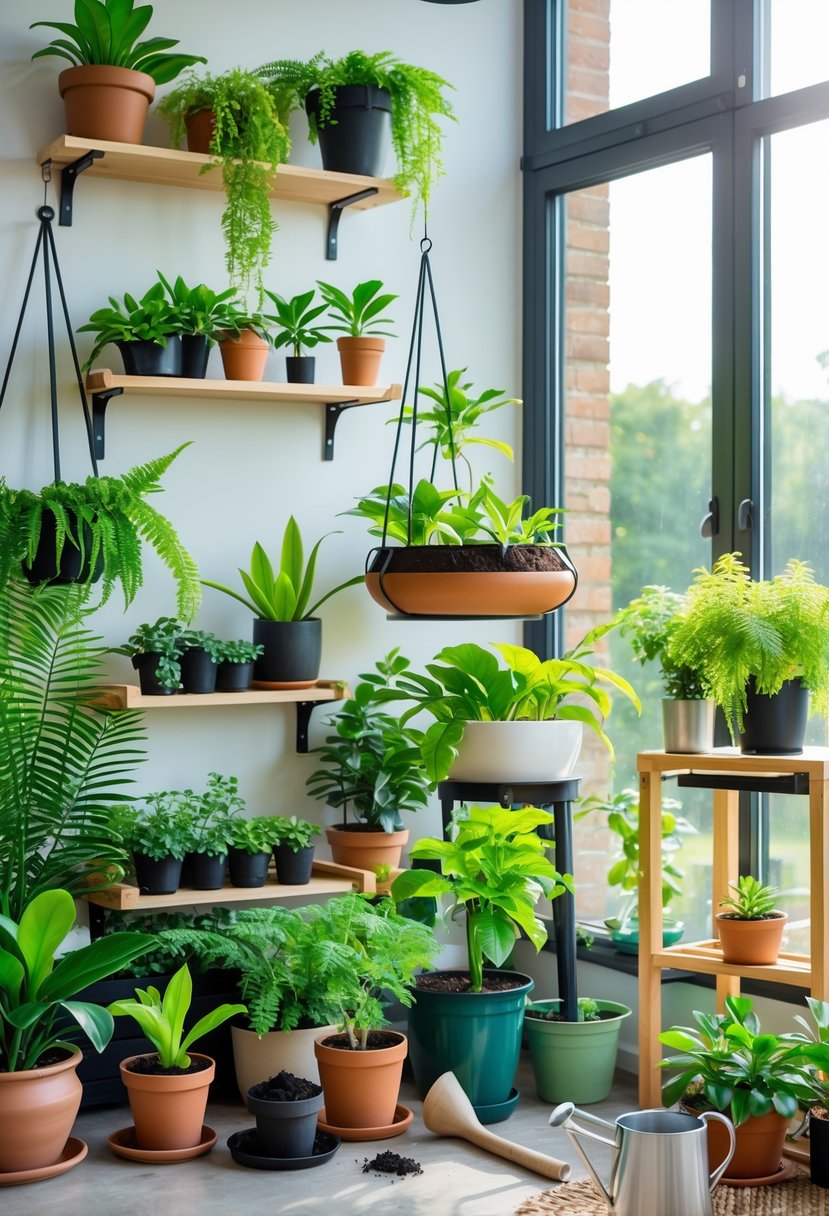
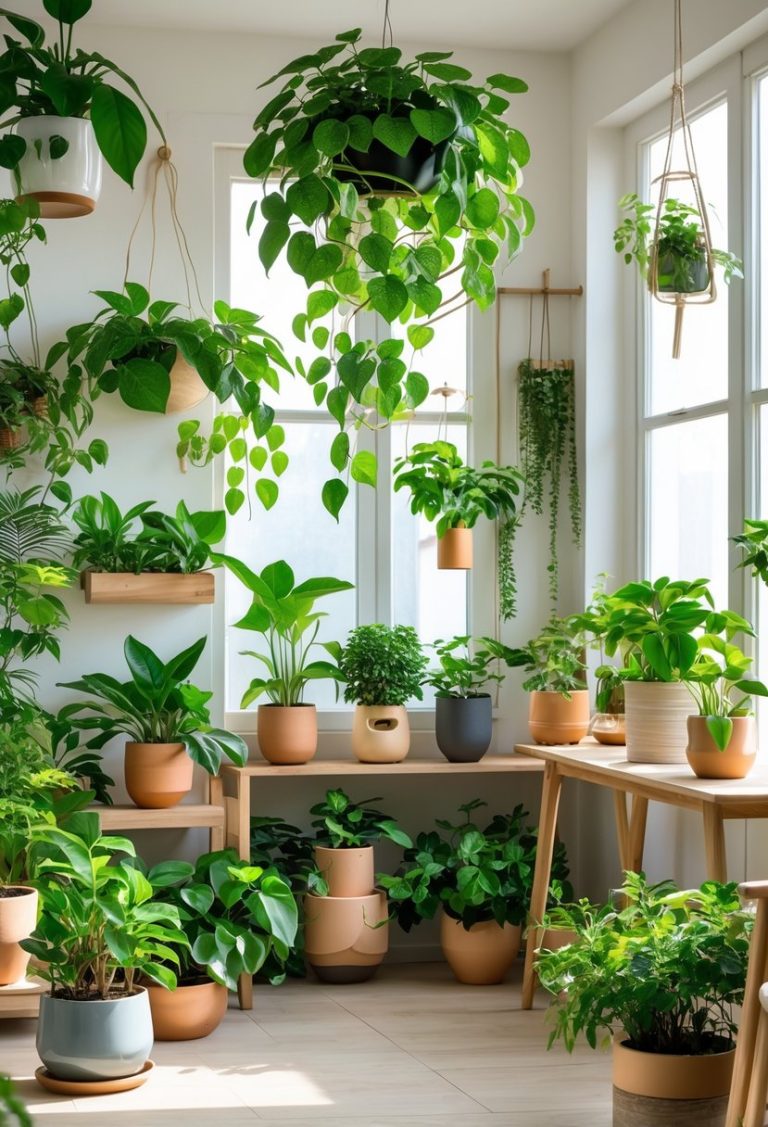
You can make the most of your indoor space by using plants in unique and practical ways. Whether you want to save room or add style, there are many options to display plants that look good and stay healthy.
Vertical Garden and Wall-Mounted Plant Displays
Vertical gardens let you grow multiple plants without using floor space. You can install wall-mounted planters, hanging pockets, or shelves to hold pots. These are perfect for small rooms or areas with little floor room.
Choose plants that do well in vertical setups, like pothos, ferns, or succulents. Make sure your wall gets enough light or use grow lights. Vertical gardens can also act as natural air filters.
You can create patterns or mix different plant types for visual interest. Use strong hooks or brackets, so the plants stay secure over time.
Clever Potting and Container Arrangements
Using creative containers helps you use space well and keeps plants healthy. Group plants of similar water and light needs together in trays or combined pots. You can use containers of different colors and textures for style.
Look for stackable pots or tiered stands. Small pots on windowsills or shelves can brighten your kitchen or bathroom. Use pots with drainage holes to avoid overwatering damage.
You might also try unusual containers like teacups, old tins, or glass jars. These add a personal touch and make your indoor garden feel special.
Integrating Indoor Plants Into Home Decor
Indoor plants can fit smoothly with your home’s style. Use plants with shapes or colors that match your furniture or walls. Tall plants make good corner fillers, while small plants on nightstands or desks add life to the room.
Choose scented plants like lavender or jasmine in bedrooms for their calming effects. You can also use decorative planters that match your decor style, from rustic clay pots to modern ceramic ones.
Placing plants near windows brings natural light and highlights your home’s best features. You can even combine plants with artwork or mirrors to create creative displays.
Caring for Indoor Plants Year-Round
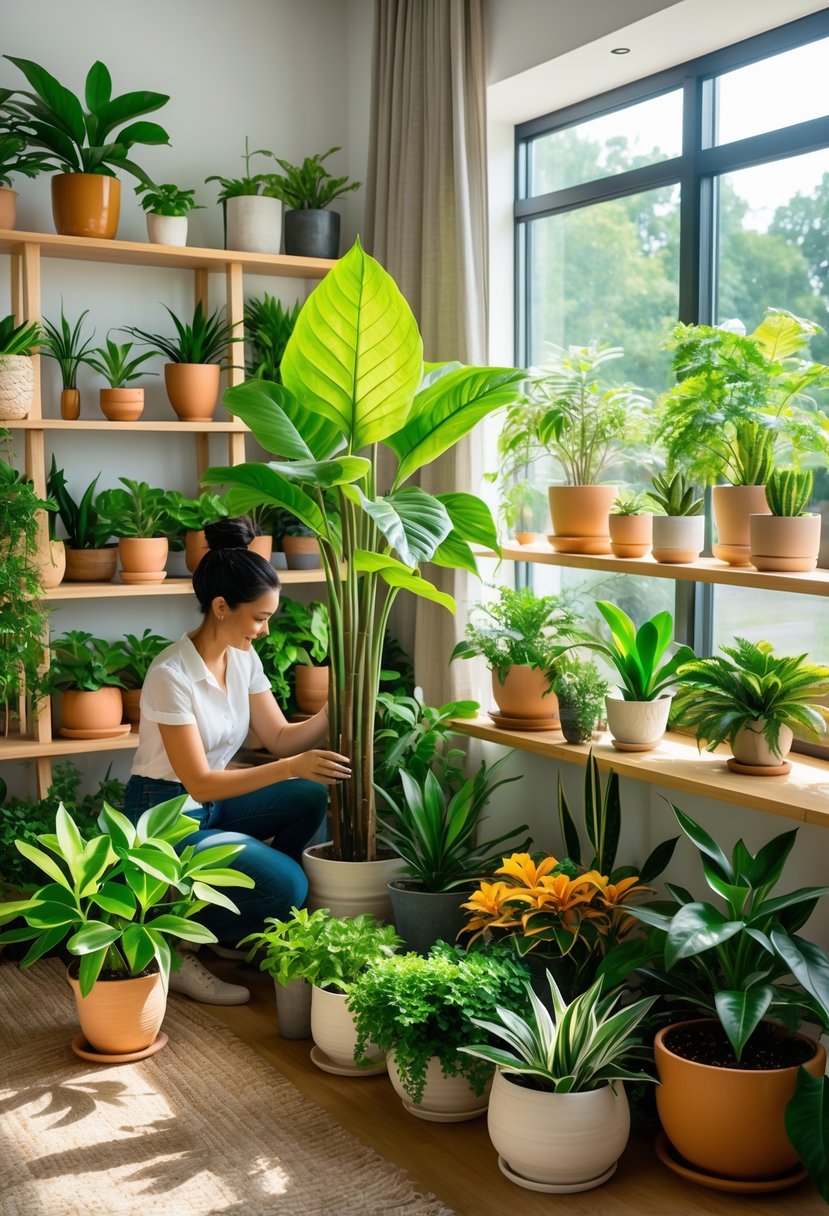
To keep your indoor plants healthy, you need to control their size and shape while preventing or fixing common problems. Proper care involves techniques like pruning and managing pests or diseases.
How to Manage Plant Growth and Pruning
Regular pruning helps your plants grow strong and stay attractive. Remove dead or yellow leaves to stop disease and improve air flow.
Trim overgrown branches to keep the plant balanced and prevent crowding. Use clean scissors or pruning shears to avoid spreading bacteria.
When pruning, cut just above a leaf node or stem junction. This encourages new shoots to grow.
Adjust pruning frequency based on plant type and growth rate. Fast-growing plants may need trimming every few weeks, while slow growers only a few times a year.
Dealing With Common Indoor Plant Problems
Watch for pests like spider mites, aphids, and mealybugs. These can cause yellowing, wilting, or sticky residue. Use insecticidal soap or wipe leaves with soapy water to remove bugs.
Overwatering is a frequent issue. Check soil moisture before watering. Let soil dry slightly between waterings to avoid root rot.
If leaves are brown or dry, increase humidity. You can place a water tray nearby or use a humidifier.
Poor light can cause slow growth or leggy plants. Rotate your plants regularly to ensure even light exposure. Consider using grow lights if natural light is limited.
Sustainable and Eco-Friendly Indoor Gardening
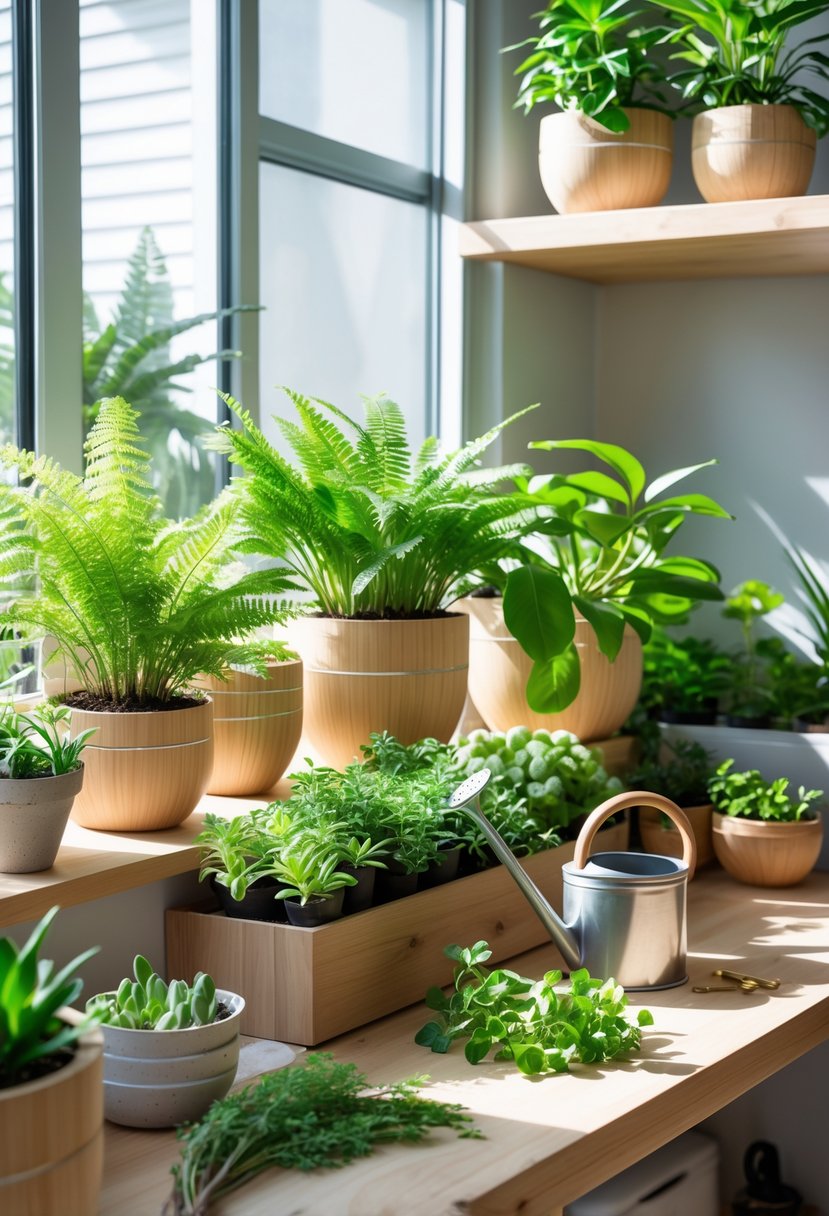
You can make your indoor garden eco-friendly by using materials you already have and avoiding harsh chemicals. This helps reduce waste and protect your plants and indoor environment.
Upcycling and Repurposing Plant Containers
Using old containers for your plants is a simple way to cut down on waste. You can turn jars, cans, or even broken pots into new planters. Make sure to clean containers well and add drainage holes if needed.
Recycled containers save money and reduce the need for buying plastic pots. You can also decorate these containers to match your home style. Using natural materials like wood or clay is better for the environment than plastic.
Try grouping plants in trays or using small containers for seedlings. This saves space and resources. By reusing items you already have, you create a greener indoor garden.
Natural Pest Control and Organic Solutions
Avoid chemicals by using natural methods to keep your plants healthy. You can mix water and mild soap to spray on pests like aphids. Neem oil is another safe option for controlling bugs.
Introduce beneficial insects such as ladybugs if your indoor garden is near a sunlit area. These bugs eat harmful pests without chemicals.
Keep plants clean by wiping leaves, checking for pests regularly, and removing dead parts. Healthy plants are less likely to get sick. Using organic compost and natural fertilizers helps maintain soil health without harming your home or plants.
Frequently Asked Questions
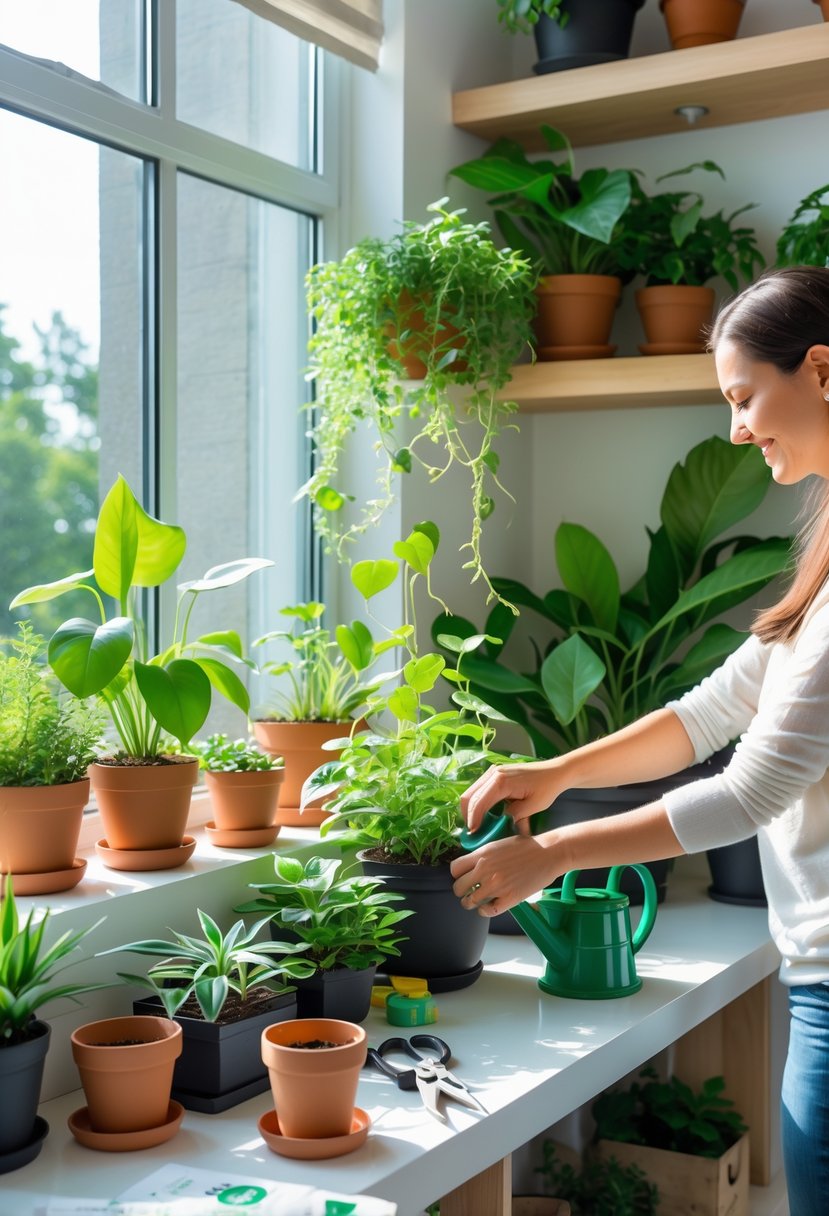
You can use vertical space and natural light to make the most of a small indoor garden. Growing vegetables indoors requires choosing the right plants and proper care. Creative designs help plants fit well with your home style. Some simple DIY projects let you grow veggies easily inside. Modern indoor gardens often mix technology and style. Certain herbs grow best indoors and need specific watering and light.
How can I maximize my small living area for indoor gardening?
Use shelves or wall-mounted planters to free up floor space. Place plants near windows to get enough sunlight. You can also use hanging pots or tiered stands to increase planting area without clutter.
What are some effective techniques for starting an indoor vegetable garden?
Choose fast-growing veggies like lettuce, spinach, or radishes. Use containers with good drainage and quality potting soil. Keep the plants near a sunny window or under grow lights for 12-16 hours a day. Water when the soil feels dry to the touch but avoid overwatering.
What creative mini indoor garden designs are compatible with home interiors?
Try small terrariums or glass containers for a clean look. Use stylish pots matching your decor colors. Vertical gardens or compact herb boxes work well on kitchen counters or small tables. Group plants in odd numbers for visual balance and variety.
Can you provide some DIY ideas for cultivating vegetables indoors?
Recycle jars or tin cans as small planters with holes punched for drainage. Create a simple hydroponic system using a water container, air pump, and net pots. Use wooden crates or pallets to build stackable growing boxes that fit narrow spaces.
What are some modern trends in designing an indoor garden for contemporary homes?
Incorporate smart watering systems and LED grow lights for convenience. Use geometric plant holders or minimalist planters in metal or concrete. Mix plants with decorative stones or moss for texture. Open shelving displays plants like living art.
Which herbs are best suited for an indoor herb garden, and how should they be cared for?
Basil, mint, parsley, and chives grow well indoors. They need 6-8 hours of sunlight or grow lights. Water when the top inch of soil is dry. Trim regularly to encourage new growth and avoid flowering too soon.