DIY Hanging Herb Garden: Creative Indoor and Window Solutions
A DIY hanging herb garden lets you grow fresh herbs in a small space without taking up your counters or floor. You can create one using simple materials like pots, shoe organizers, or even recycled items. This type of garden works well indoors or outdoors and helps keep your herbs within easy reach for cooking.
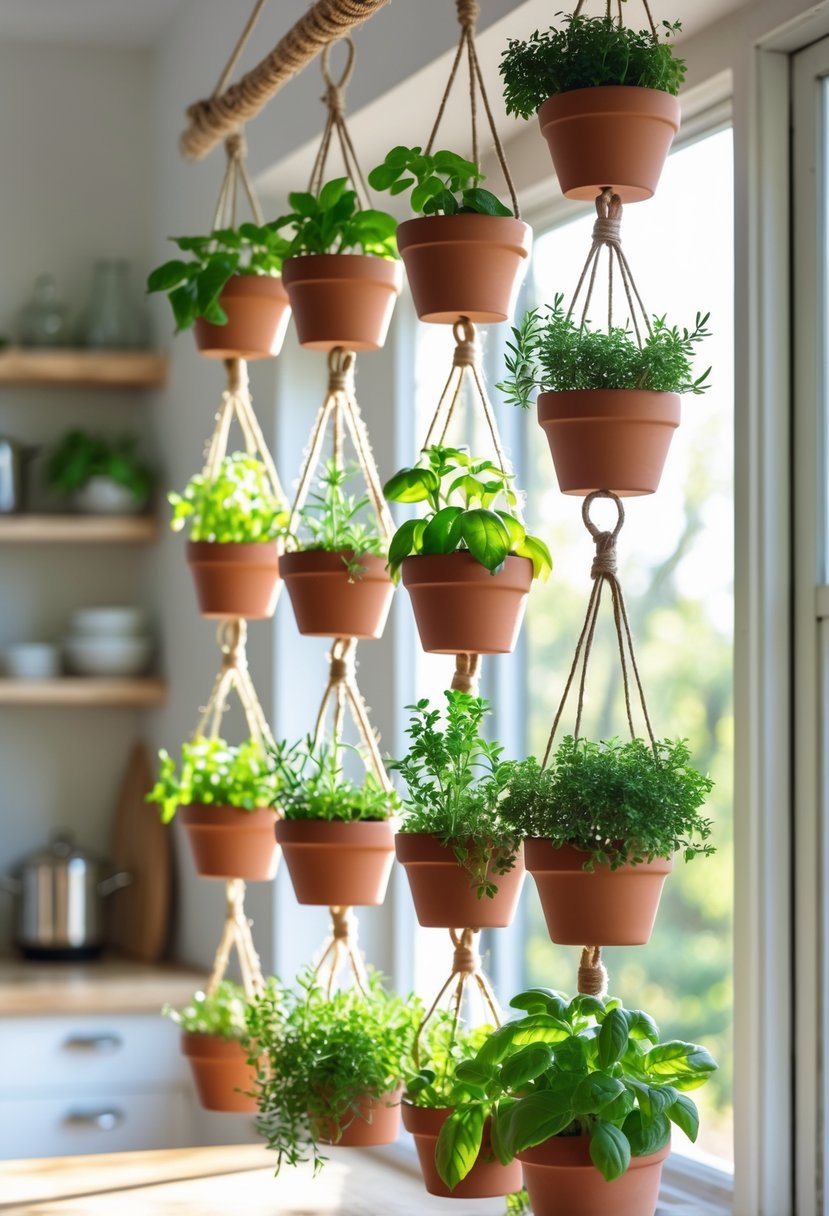
You don’t need much experience to build a hanging herb garden. With some basic tools and an idea of where to place it for sunlight, you can have a living green display that fits your space and style. Hanging gardens also add a natural touch to your home décor while making growing herbs practical and fun.
There are many creative ways to arrange your plants, from vertical walls to upside-down containers. By choosing the right setup, you can tailor your garden to your available space and keep your herbs healthy and thriving all year.
Key Takeways
- Select a spot with enough light to keep herbs healthy.
- Use affordable and easy-to-find materials for your garden.
- Customize your hanging herb garden to fit your space and style.
Choosing the Right Location for Your Hanging Herb Garden
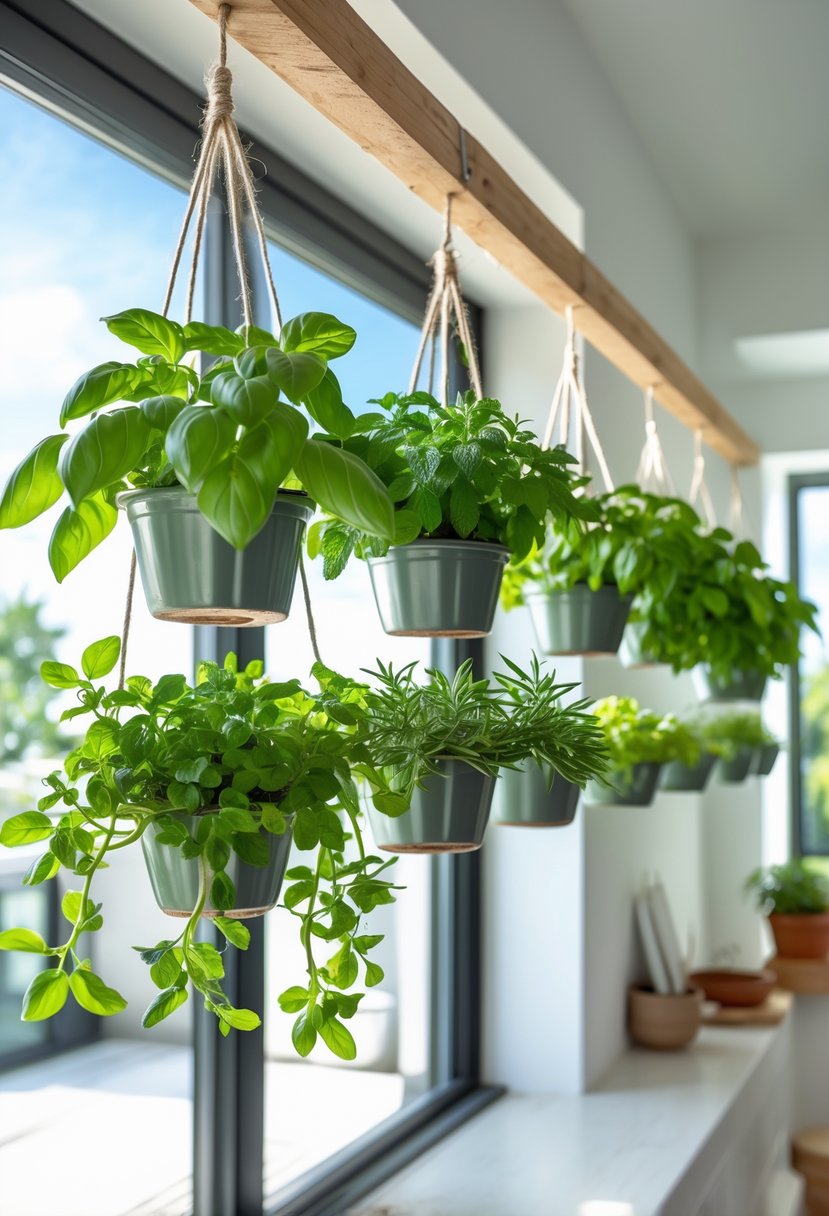
Picking the right spot for your hanging herb garden is vital for healthy plants. You need to think about light, space, and easy access for care. This will help your herbs grow strong and make your garden easy to maintain.
Maximizing Natural Light
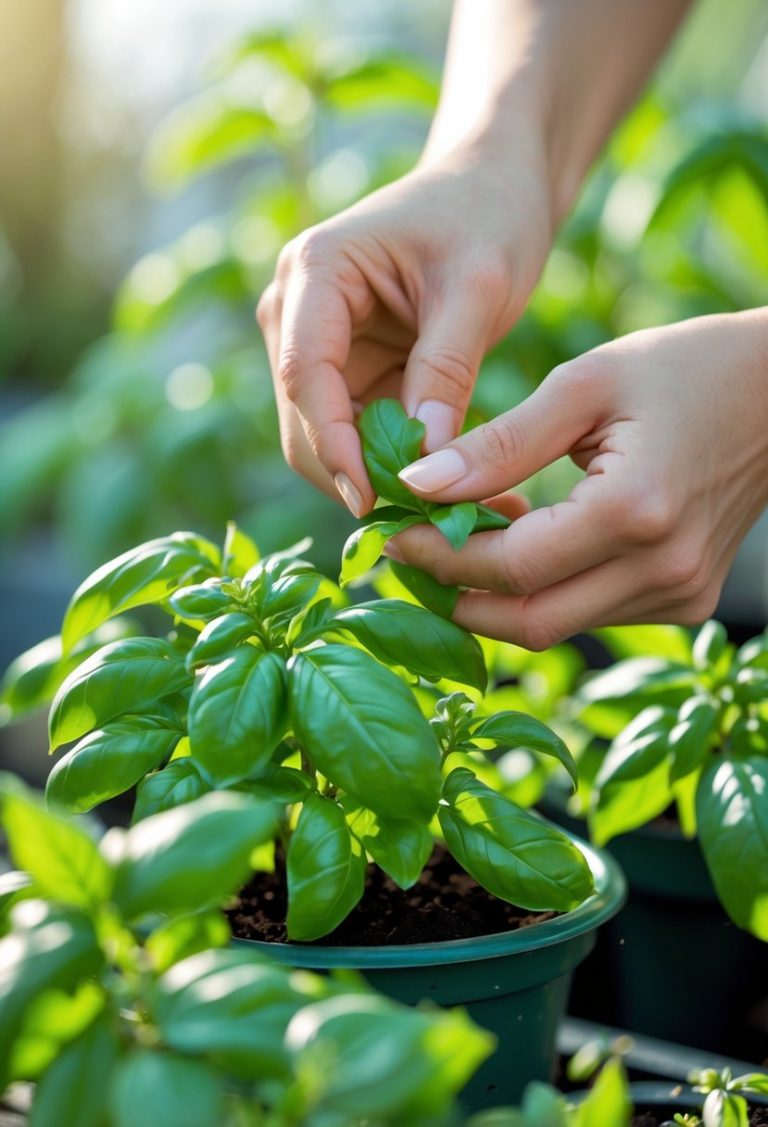
Herbs need plenty of sunlight to thrive. Choose a location that gets at least 6 hours of direct sunlight each day, especially for sun-loving herbs like basil and rosemary.
If you plan to hang your garden outside, spots on a fence or near a garage wall work well, as long as they aren’t in harsh midday sun that could dry out the plants.
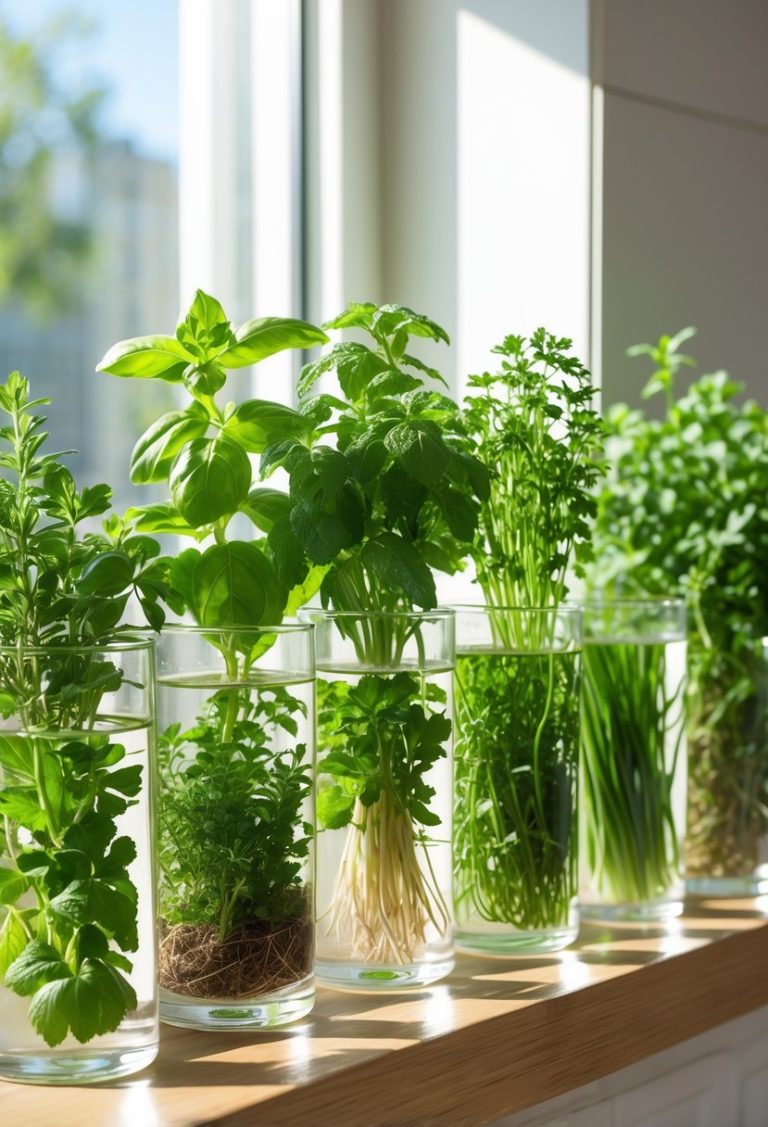
Indoors, placing your garden near a bright window is best. Avoid dark corners or shaded areas that won’t provide enough light, which can stunt growth and cause herbs to become leggy.
Ideal Indoor Spaces
When setting up a hanging herb garden indoors, pick a room with good airflow and natural light, such as kitchens or sunrooms. These spaces tend to provide the right environment for growth and easy harvesting.
Make sure the spot is accessible so you can water and tend to your herbs without trouble. Hanging near your cooking area helps you grab fresh herbs quickly.
Avoid overly humid or drafty areas like bathrooms or near heating vents, as these conditions can hurt plant health.
Selecting Suitable Windowsills
If you want a hanging window herb garden, use windowsills that face south or west to get the most light. These directions offer the best natural sunlight for most herbs.
Make sure the window area is sturdy enough to support your hanging setup. Use secure hooks or brackets to prevent accidents.
Consider the temperature near the window. Herbs like warmth but can suffer if the area experiences strong drafts or too much heat from direct sun hitting glass for long periods.
Essential Materials and Tools
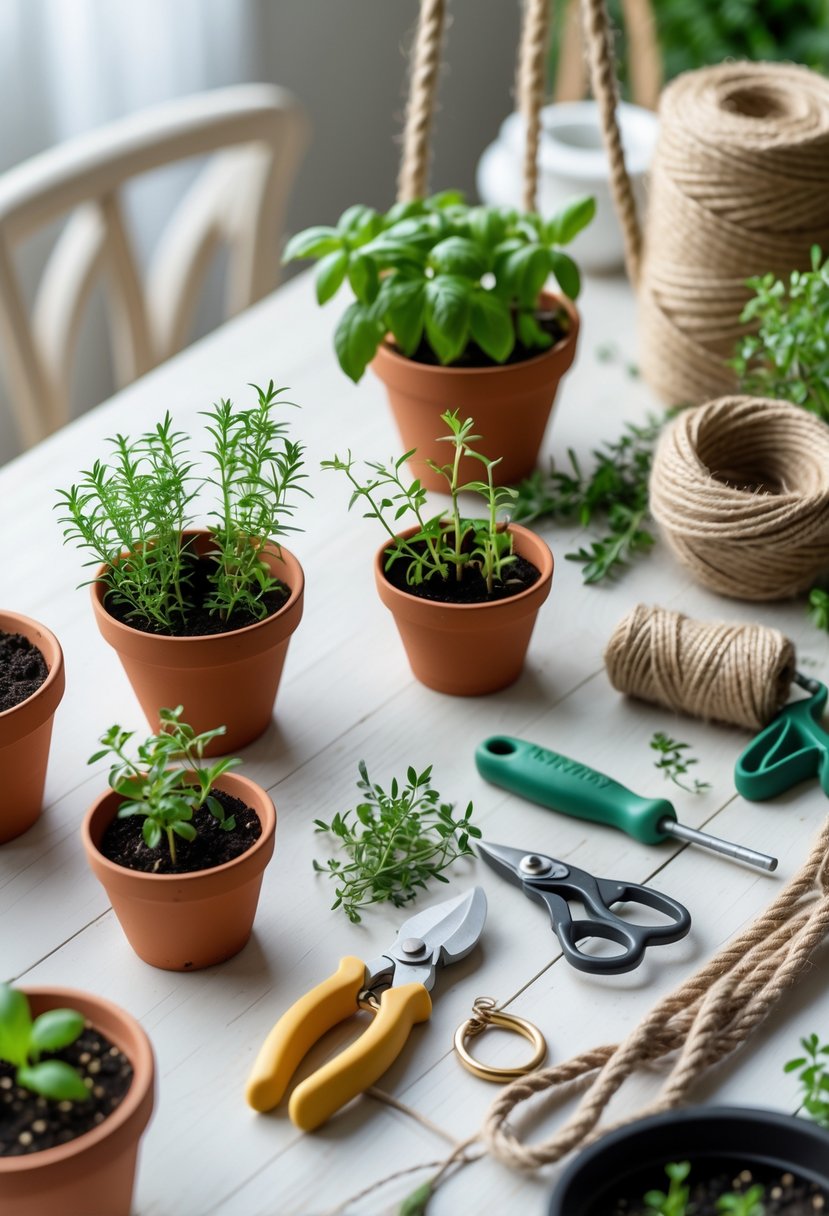
To build a successful hanging herb garden, you need the right containers, mounting hardware, and herb choices. Each element plays a key role in supporting plant health and ensuring your garden fits well in your space.
Recommended Containers and Planters
Choose containers that are sturdy and fit your growing space. Ceramic pots are durable and attractive but can be heavy. If you want something lighter, plastic containers are easy to handle and clean. Avoid containers that hold too much water to prevent root rot.
Wicker baskets offer a rustic look but need a liner to keep soil in place and avoid water leaks. The planter should have good drainage holes to keep herbs healthy.
Size matters. Select pots that match the root size of your herbs; too big can cause water retention, too small can crowd roots.
Mounting Hardware Options
Secure mounting hardware ensures your garden hangs safely and adjusts easily. S-hooks are simple to use and work well if you have sturdy overhead supports.
Chains allow height adjustments and hold heavier containers. If you want style alongside function, macramé hangers are a strong choice that also add a decorative touch.
Make sure to use anchors or hooks rated for the weight of your filled pots. Avoid hardware that rusts easily if your garden will be outdoors or in humid areas.
Choosing the Best Herbs for Hanging Gardens
Pick herbs based on light conditions and how much care you can give. For sunny spots, herbs like basil, oregano, and lemon balm thrive because they need full sun.
If your space is shadier, consider mint, chives, or thyme. These tolerate less light but still grow well.
Focus on herbs you use often to keep your garden practical. Also, choose herbs with similar water and temperature needs to make maintenance easier.
Step-by-Step Guide to Building a DIY Hanging Herb Garden
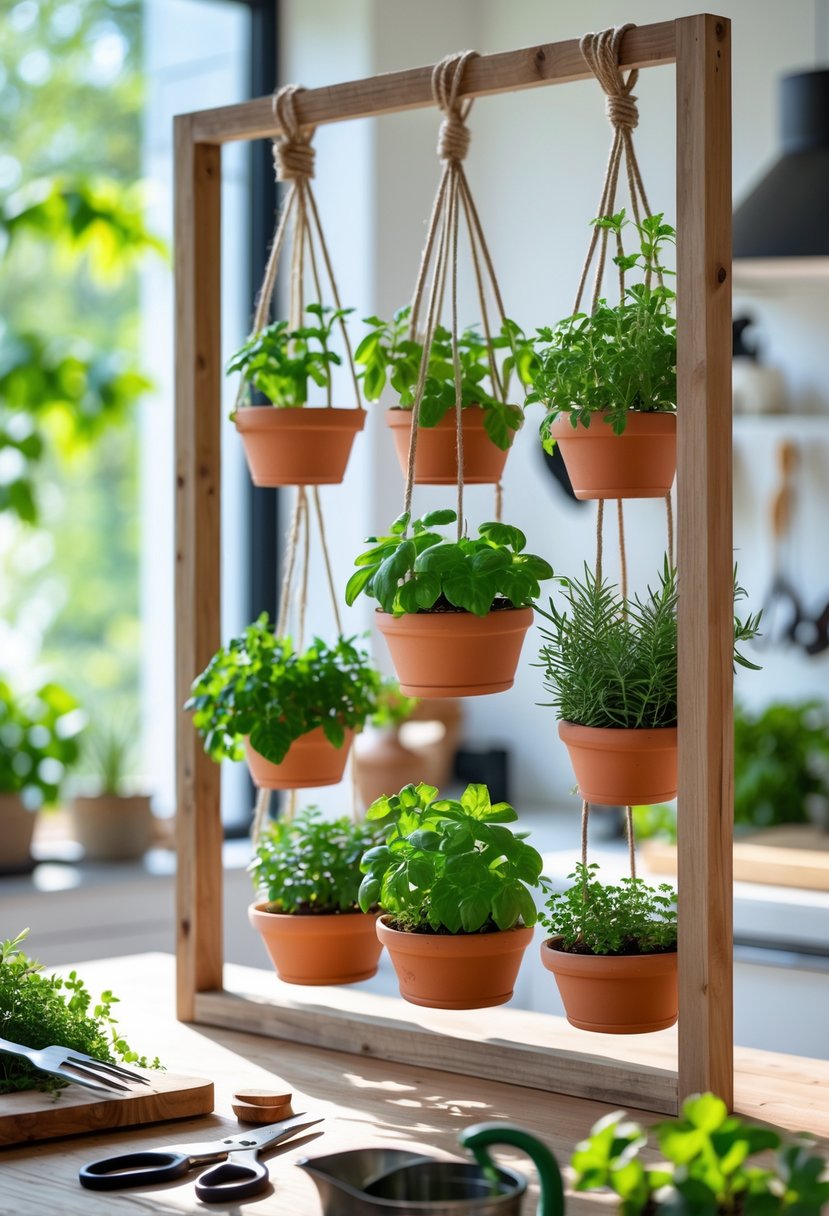
You will need to carefully plan your space, build a sturdy structure, choose and arrange your herbs well, and make sure watering and drainage are handled properly. Each part is important to keep your herb garden healthy and convenient.
Planning and Measuring Your Space
Start by deciding where you want your hanging herb garden. Common spots include kitchen windows, balconies, or near a source of natural light indoors. Measure the available space so you know the size of the garden you can fit.
Consider how much sunlight the area gets. Herbs like basil and mint need plenty of light, usually 6-8 hours a day. Check if there’s room to hang your garden at a height that is easy to reach for watering and harvesting.
Take note of the nearby wall or ceiling structure. It must be strong enough to support the weight of plants, soil, and the container. Use a tape measure and a level to mark the exact spot before buying materials.
Assembling and Installing the Structure
Choose your container carefully. Options include baskets, wooden boxes, or recycled pallets with holes for hanging. Make sure your container has drainage holes or add some yourself to prevent water buildup.
Gather tools like hooks, chains, screws, and a drill. Attach a strong hanging system such as ceiling hooks or a sturdy wall bracket. Ensure it can support up to 10-15 pounds to hold soil and plants safely.
Securely hang the container so it won’t tilt or fall. Double-check the height and angle to ensure herbs get enough light and you can access each plant easily. Adjust the hanging chains if needed for balance.
Planting and Arranging Herbs
Choose herbs that fit your cooking needs and space conditions. Popular indoor herbs for hanging gardens include basil, mint, parsley, and cilantro. Group plants with similar light and water needs.
Fill the container with high-quality potting soil meant for indoor plants. Avoid regular garden soil as it may not drain well. Plant each herb leaving enough space between them — usually 2-4 inches depending on plant size.
Arrange taller or sun-loving herbs in the back or center, and smaller or shade-tolerant ones around the edges. This helps each herb get the right amount of light and airflow to grow well.
Watering and Drainage Solutions
Water management is crucial. Check soil moisture daily by touching the soil surface. Water when the soil feels dry about an inch deep, but avoid overwatering, which can lead to root rot.
Make sure your container’s drainage holes are not blocked. Use trays or saucers underneath to catch extra water if you’re indoors. Remove excess water to prevent mold or pests.
Consider self-watering containers or add a small drip irrigation system if you want easier watering. Use a watering can with a narrow spout to target soil rather than leaves, helping prevent fungal problems.
Creative DIY Hanging Herb Garden Ideas
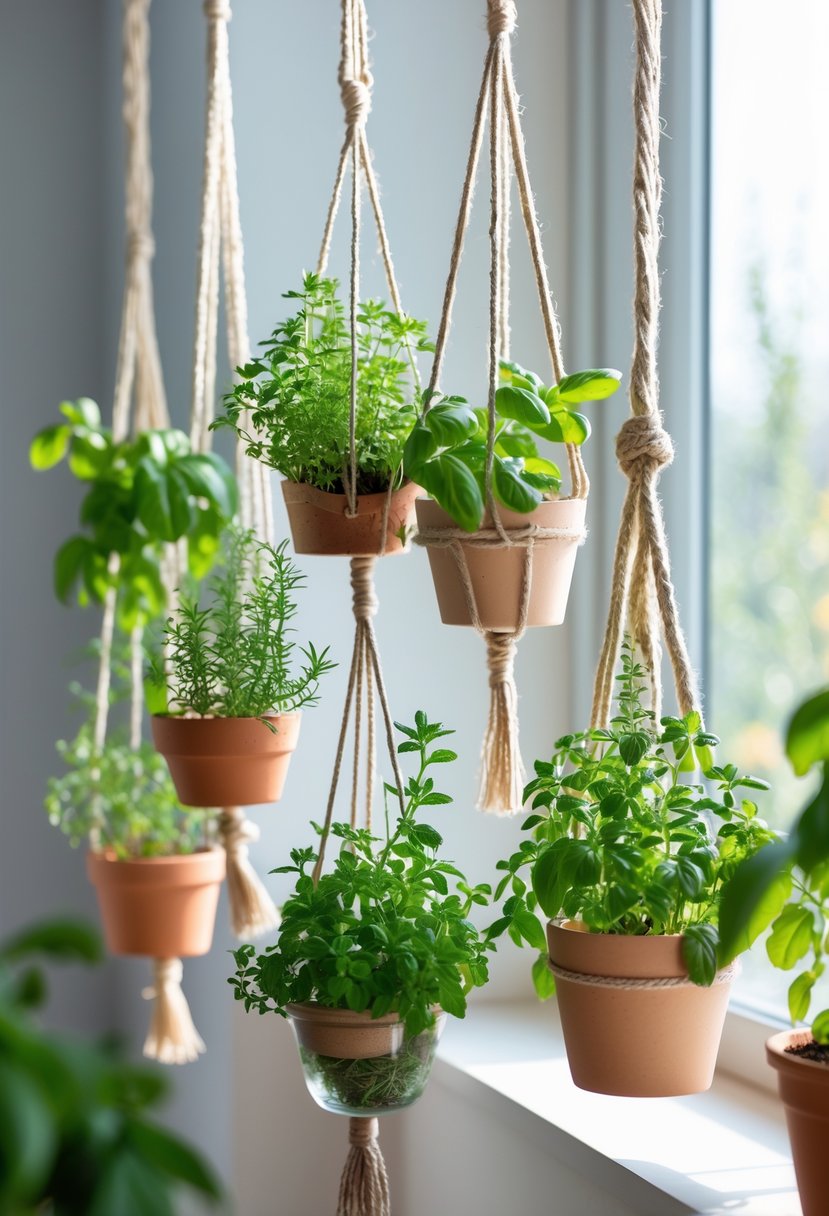
You can create a hanging herb garden in different ways that fit your space and style. Some designs use vertical space, while others reuse everyday items to hold your herbs. These ideas help you maximize small areas and keep fresh herbs close to your kitchen.
Vertical Wall Gardens
A vertical wall garden lets you grow many herbs using little floor space. You can attach small pots, planters, or containers directly to a wooden frame, metal grid, or pallet.
Mount the garden near a sunny window to ensure your herbs get enough light. Use sturdy hooks or nails to secure each pot.
You can plant herbs like basil, thyme, and parsley vertically, making it easy to pick fresh leaves while cooking. This setup keeps your herbs organized and accessible.
Hanging Mason Jar Arrangements
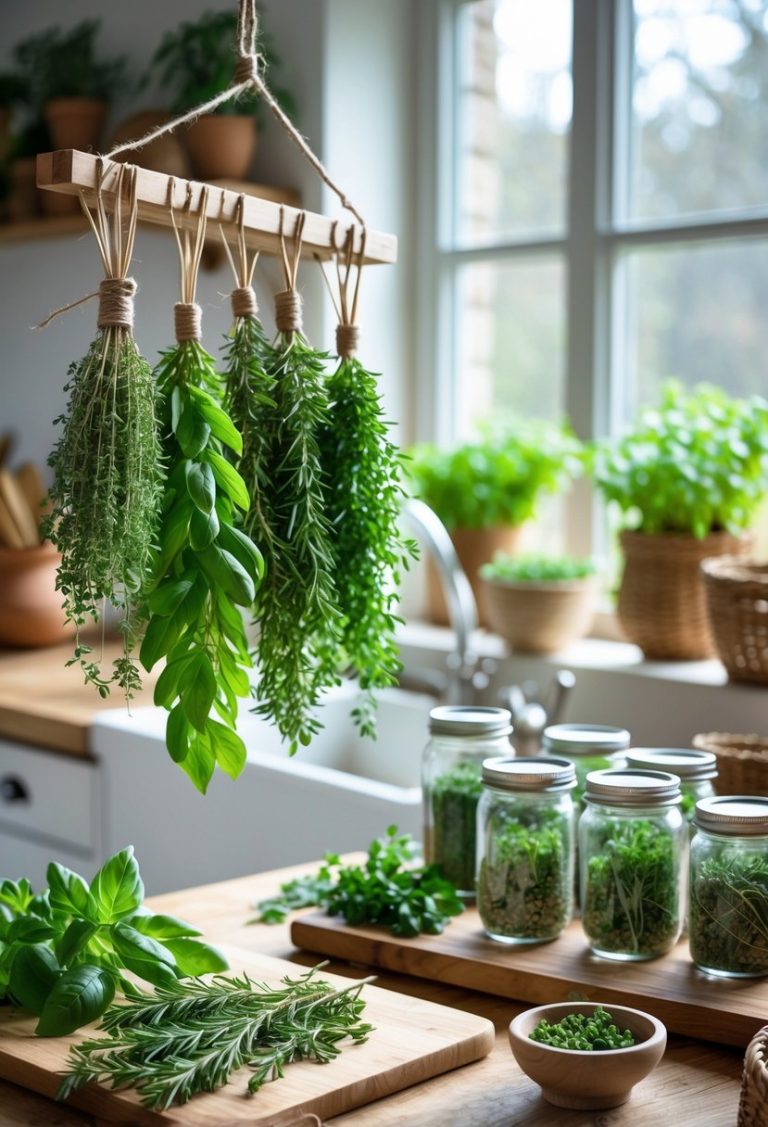
Using mason jars is a simple, stylish approach to your hanging herb garden. You can attach jars to a wooden board or hang them with metal wire or ropes.
Each jar acts as a small pot, perfect for individual herbs such as mint, cilantro, or chives. Label jars for easy identification.
Place your jar arrangement near a bright window to give herbs plenty of sunlight. Mason jars also hold water well and make watering easier since you can remove them for care.
Upcycled Pallet and Shoe Organizer Designs
Reusing old pallets or shoe organizers is a cost-effective way to build a hanging herb garden. Pallets can be mounted vertically on a wall, with small pockets or containers fixed inside the slats to hold herbs.
Shoe organizers with pockets can hang on doors or walls and serve as planters for various herbs. Both options save space and reduce waste by repurposing materials.
Make sure the pallets or organizers are sturdy and treated if needed. Position the garden in a sunny spot, like near a kitchen window, to help your herbs thrive.