DIY Hanging Basket Plant for Shade: The Complete Guide
Creating a hanging basket for a shady spot is easier than you might think, and it can add life to parts of your yard that don’t get much sun. The key is to choose plants that thrive in low light, like Streptocarpella, Vinca Vine, and Creeping Jenny, which work well together to create a full, vibrant look. With the right selection, your basket can stay colorful and healthy all season.
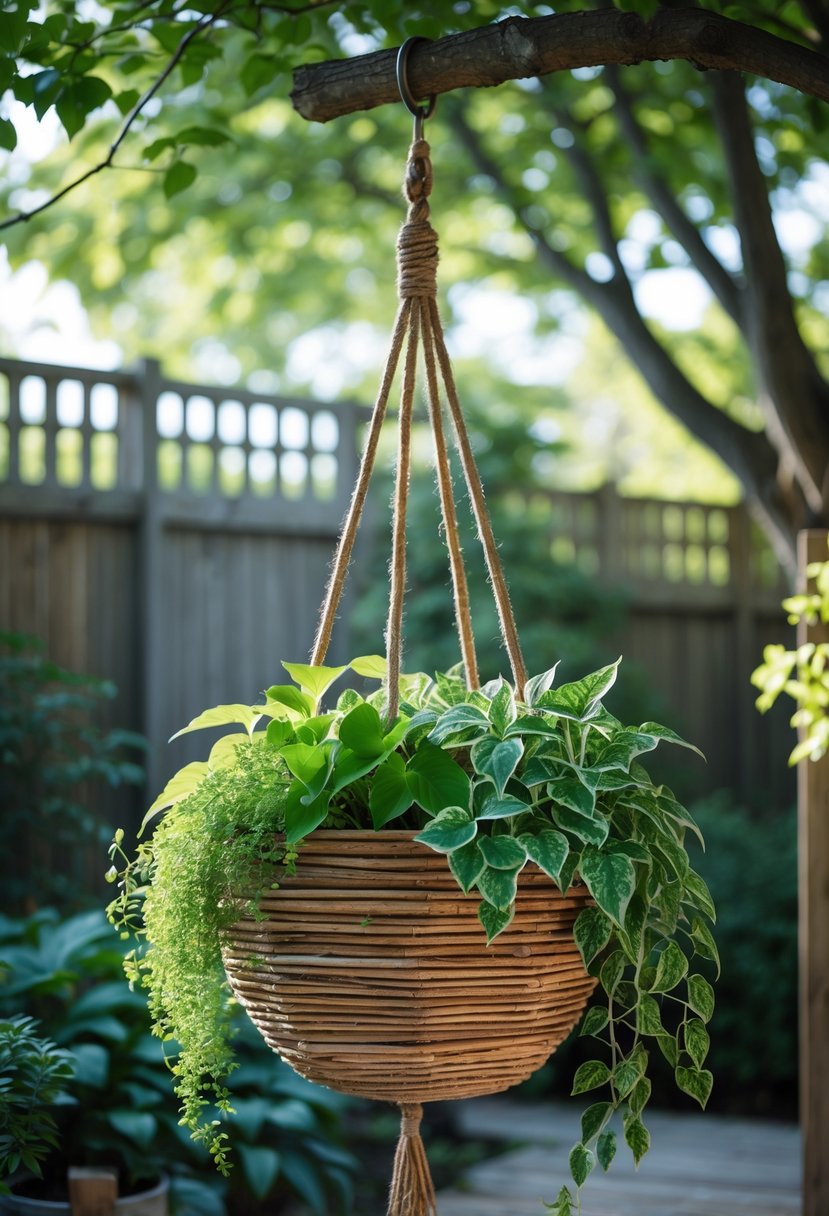
You don’t need fancy supplies or years of experience to make a great shade-loving hanging basket. A simple 10-inch basket, good potting mix, and a few plants can bring a fresh new feel to your porch, deck, or garden. Watching the plants grow over time is also part of the fun and makes your outdoor space more inviting.
Planning Your DIY Hanging Basket for Shade
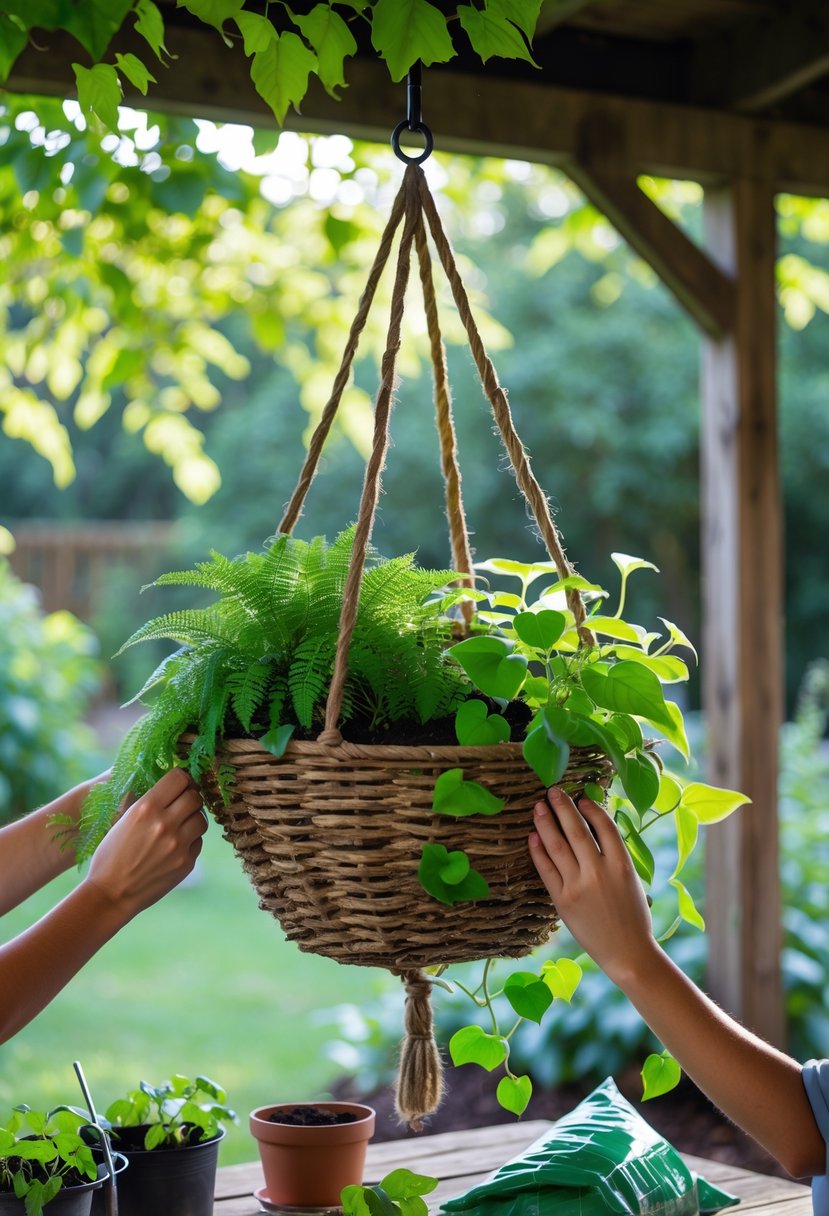
To create a successful hanging basket for a shady porch or garden spot, focus on choosing the right basket and liner, understanding the shade in your space, and selecting materials that hold moisture well. These steps help ensure your plants thrive and your basket looks good all season.
Choosing the Right Basket and Liner
Start by picking a basket that fits the style of your space and supports your plants well. Wire baskets are strong and allow good airflow. Wooden or slatted baskets add a natural look but need a liner to hold soil and moisture.
For liners, use materials that keep soil in place but allow water to drain. Landscape fabric or coconut coir liners work well. Avoid plastic liners unless there are drainage holes to prevent waterlogging.
Make sure your basket is large enough for the roots of your selected plants but not so big that it’s heavy when filled with soil and water. A well-chosen basket and liner combination helps maintain healthy roots and prevents soil from falling out.
Understanding Shade Levels in Your Space
Not all shade is the same. You need to identify whether your hanging basket will be in full shade, partial shade, or dappled shade.
- Full shade means no direct sunlight. Choose plants that need almost no sun.
- Partial shade gets a few hours of direct or filtered sun. This allows more plant choices.
- Dappled shade means sunlight filters through leaves. Plants here get variable sun during the day.
Match your plants to the shade level. This keeps them healthy and prevents poor growth. Check your porch or garden area at different times to see how much light it really gets.
Selecting Moisture-Retaining Materials
Shade areas tend to stay cooler and hold moisture longer, but hanging baskets drain fast. Using moisture-retaining materials is important to keep plants hydrated.
Add sphagnum moss around the soil surface or between basket slats. Moss locks in moisture and slows drying. Use a quality multi-purpose compost rich in organic matter to hold water without becoming soggy.
Regular watering is essential, but these materials reduce how often you need to water. They also make sure roots don’t dry out quickly, helping shade-loving plants thrive in your DIY hanging basket.
Best Plants for Shaded Hanging Baskets
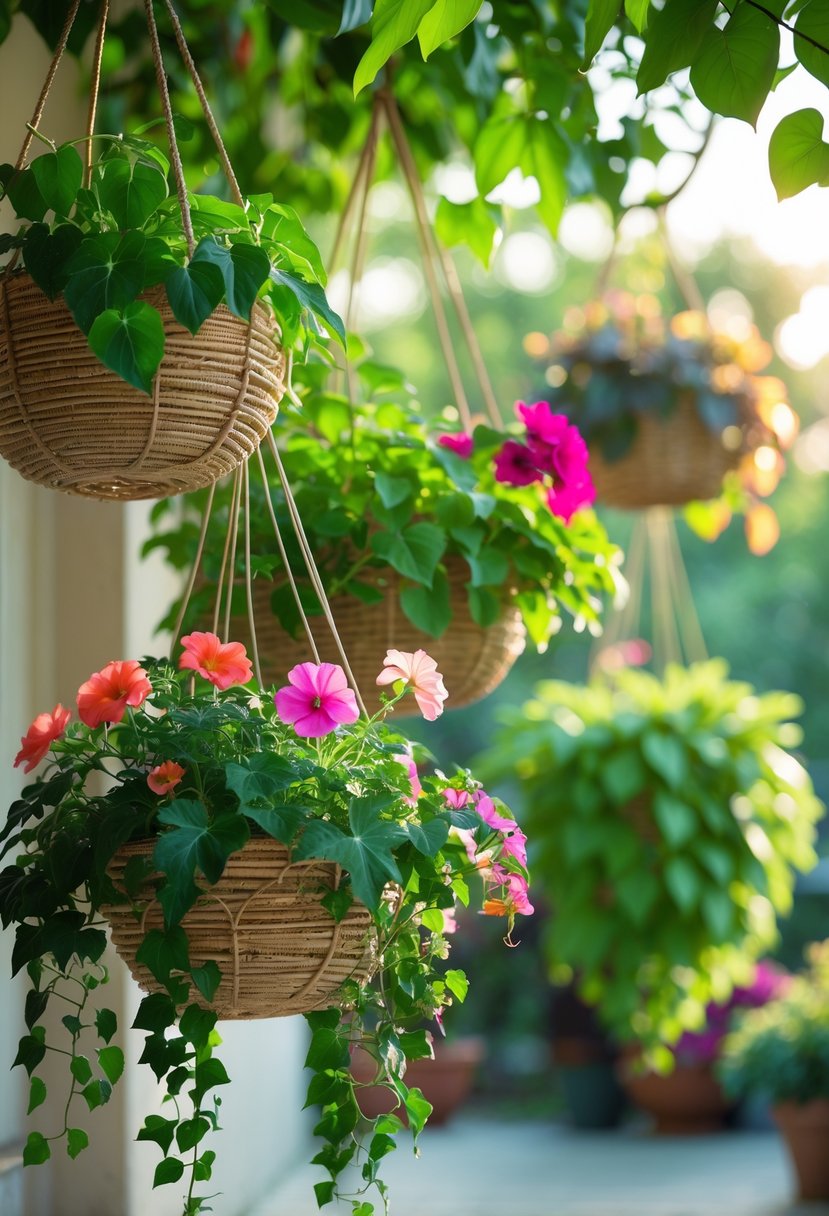
Choosing plants for shaded hanging baskets means focusing on species that thrive with little sunlight while still offering color and texture. Your options include flowering plants that brighten shade, trailing and leafy plants that add charm, and even edible plants suited for low light.
Top Flowering Plants for Shade
For colorful blooms in the shade, consider impatiens, fuchsias, and begonias. Impatiens are hardy, with bright flowers in pink, red, or white. They prefer moist soil and indirect light.
Fuchsias add elegance with dangling, bell-shaped flowers. They do well in cooler shady spots and attract hummingbirds.
Begonias offer wide color ranges in both foliage and flowers. They prefer partial to full shade and need well-draining soil.
Other shade-tolerant bloomers like lobelia and calibrachoa add delicate blue or purple flowers. These plants also like moist soil and some air circulation to prevent mildew.
Ideal Trailing and Foliage Choices
To create texture and fullness, use trailing plants such as creeping jenny, English ivy, and vinca. Creeping jenny has bright, small leaves that spill elegantly over basket edges.
Ferns like the Boston fern or Kimberly Queen fern add soft, arching fronds that improve greenery without flower demands. They need regular watering but adapt well to shade.
Other options include coleus, prized for vibrant leaf colors and patterns, which thrives in shade with moderate watering.
Trailing plants give your basket a lush look while keeping care simple and watering needs consistent.
Edible Options for Shady Spots
You can grow some edible plants in shaded hanging baskets too. Strawberries tolerate partial shade and produce small, tasty fruit with regular watering.
Herbs like mint and parsley grow well with less sun and fit nicely in baskets.
Tomatoes usually need sun but certain cherry varieties can survive in dappled light if watered carefully.
If you want plants that bring both beauty and utility, these edible choices offer a practical, fresh option while still enjoying a shaded environment.
Planting and Arranging Your Shade Basket
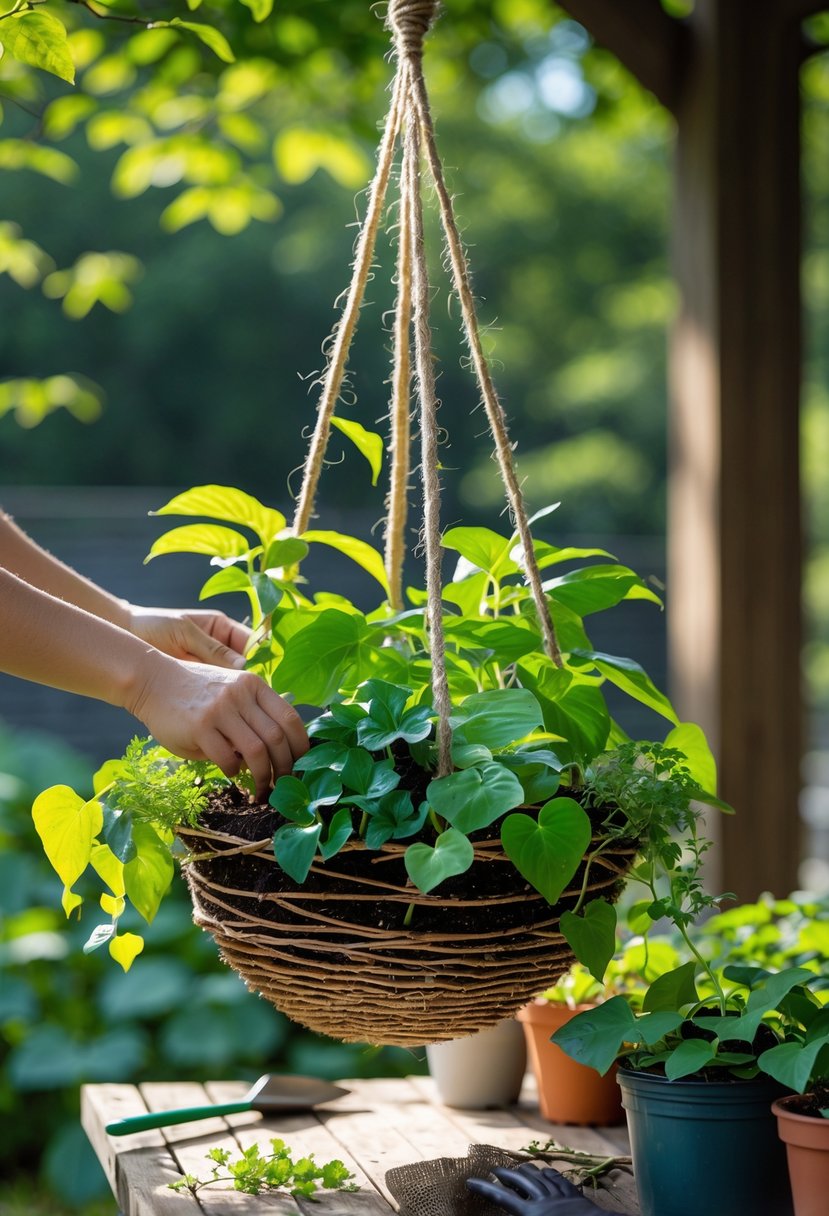
You need to prepare your hanging basket carefully to ensure good drainage and healthy growth. Arranging plants with different shapes and colors helps create balance and fullness. Water-saving steps will keep your plants hydrated without constant watering.
Preparing and Layering Potting Soil
Start by checking your hanging basket for drainage. If it has a plastic liner, poke small holes so excess water can escape. Good drainage prevents root rot.
Add a layer of sphagnum moss at the bottom to help retain moisture and improve aeration. Then fill the basket about three-quarters full with a quality potting soil designed for container plants. This soil holds moisture but still drains well, which is important for shade plants.
Leave room at the top so you can add soil after placing your plants. Mix in a slow-release fertilizer if you want to provide nutrients over time. This supports steady plant growth throughout the season.
Arranging Plants for Color and Growth
Place your largest plant, like a Streptocarpella, in the center of the basket as a focal point. It adds height and fills the middle space.
Next, arrange trailing plants like Creeping Jenny around the edges at intervals (for example, at 2 o’clock, 6 o’clock, and 10 o’clock). These spill over the sides nicely.
Fill in gaps with Vinca Vine or similar plants spaced evenly around the basket. Their green leaves brighten shade spots and add texture without being too tall.
Make sure plants have space to grow and don’t crowd each other too tightly. This helps air flow and prevents leaf diseases.
Incorporating Water-Saving Techniques
Start with moist soil to help plants settle in. Add a layer of mulch or sphagnum moss on top to reduce evaporation and keep soil cool.
Water your basket deeply until water runs out the bottom holes. This encourages roots to grow downward and stay healthy.
Use slow-release or water-soluble fertilizer weekly to keep plants nourished without overwatering. Watering early in the morning helps reduce fungal problems.
Check your basket often. Because shade areas dry slower, avoid watering on a fixed schedule and only water when the soil feels dry about an inch below the surface.
Caring for Your Shaded Hanging Basket
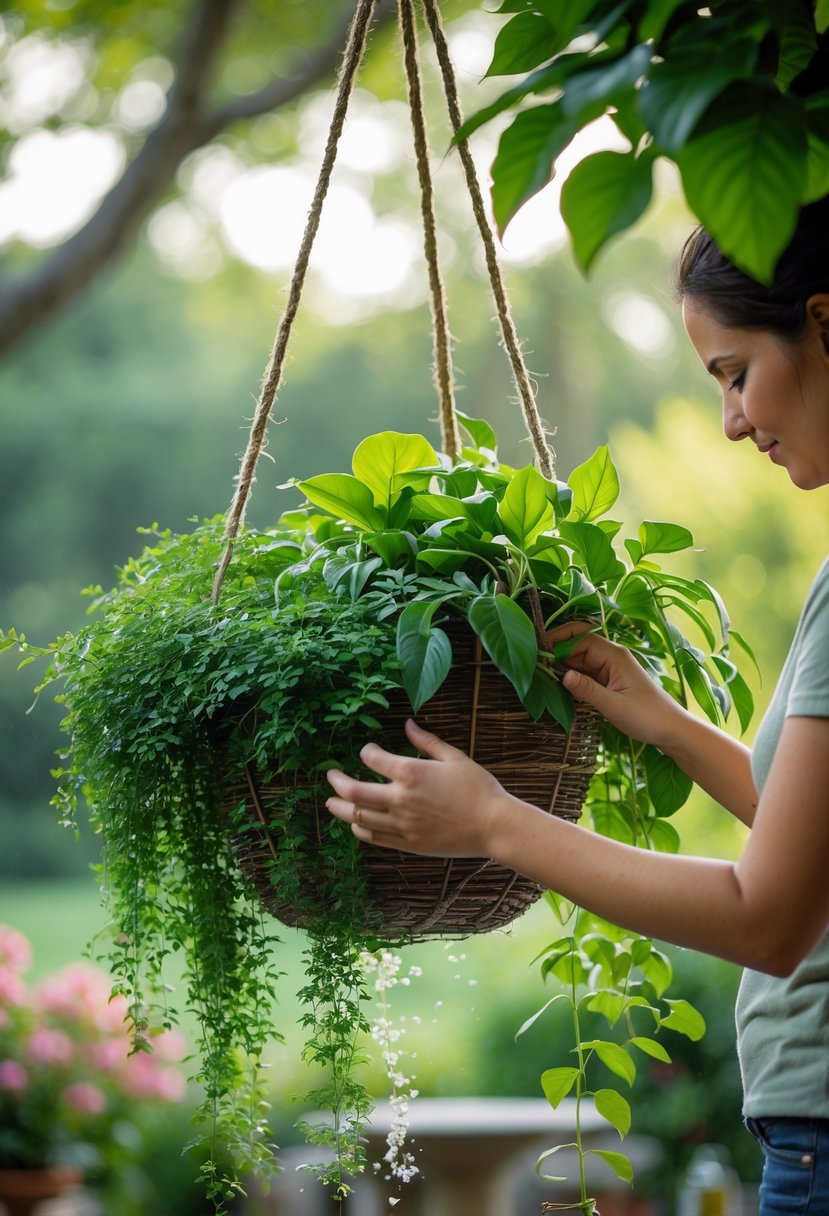
To keep your shaded hanging basket healthy, you need to focus on watering, feeding, pruning, and adjusting care with the seasons. Each of these steps helps your plants thrive despite limited sunlight.
Watering and Feeding Tips
Your shaded hanging basket will need consistent moisture. Check the soil regularly and water when the top inch feels dry. Avoid letting the soil stay soggy, as this can cause root rot.
Use a watering can with a gentle flow to avoid disturbing the soil. Hanging baskets dry out faster because they hang in the air, even in shade. Water deeply to make sure roots get enough moisture.
Feed your plants with a diluted water-soluble fertilizer once a week during the growing season. This supports slow growth and keeps flowers healthy. You can also mix slow-release fertilizer into the potting soil at planting time to provide nutrients over several weeks.
Pruning and Maintenance
Regular pruning keeps your hanging basket tidy and encourages fresh growth. Remove dead or wilted leaves and spent flowers to prevent disease and improve air circulation.
Pinch back leggy stems to promote bushier growth. This also helps your plants fill out the basket evenly and look full.
Check your basket for signs of pests or disease weekly. Spot any problems early to control them quickly. Dead or yellow leaves should be trimmed away to avoid spreading issues.
Seasonal Adjustments for Shade Baskets
Shade-loving plants in hanging baskets will change needs depending on the season. In spring and summer, focus on regular watering and feeding as plants actively grow.
As fall approaches, cut back the plants to slow growth and reduce watering. Stop feeding once growth tapers off.
In winter, protect your hanging baskets from frost by moving them to sheltered areas. Water sparingly to keep roots from drying out but avoid overwatering when plants are dormant.
Adjusting care like this will help your shaded basket survive year-round.