
Vertical Herb Garden: 25 Creative DIY Ideas with Expert Tips for Success
A vertical herb garden is a smart way to grow fresh herbs in small or limited spaces. It allows people to use walls or other vertical surfaces to maximize space while keeping herbs within easy reach. This method works well both indoors and outdoors.

Vertical herb gardens provide an efficient and attractive way to grow a variety of herbs in any setting. They can be customized to fit different styles and needs, making fresh herbs more accessible for cooking and gardening enthusiasts.
1) Use wooden pallets as a vertical herb planter

Wooden pallets provide a simple and affordable structure to build a vertical herb garden. They are easy to find and can be repurposed, which helps reduce waste.
To create the planter, plants can be placed in sections formed by the pallet’s slats. Adding boards inside creates small boxes to hold soil and herbs.
It is important to prepare the pallet by sanding it to remove rough edges. Treating the wood with paint or stain can protect it from moisture and outdoor weather.
Drainage is a key factor. Making sure water can flow out prevents plants from getting too wet. This keeps roots healthy and avoids rot.
A pallet herb garden saves space by growing plants upward instead of outward. It works well on balconies, patios, or small yards.
Using pallets is a practical way to grow a variety of herbs, such as basil, thyme, and parsley. It also creates a neat and organized garden display.
2) Install wall-mounted planter pockets
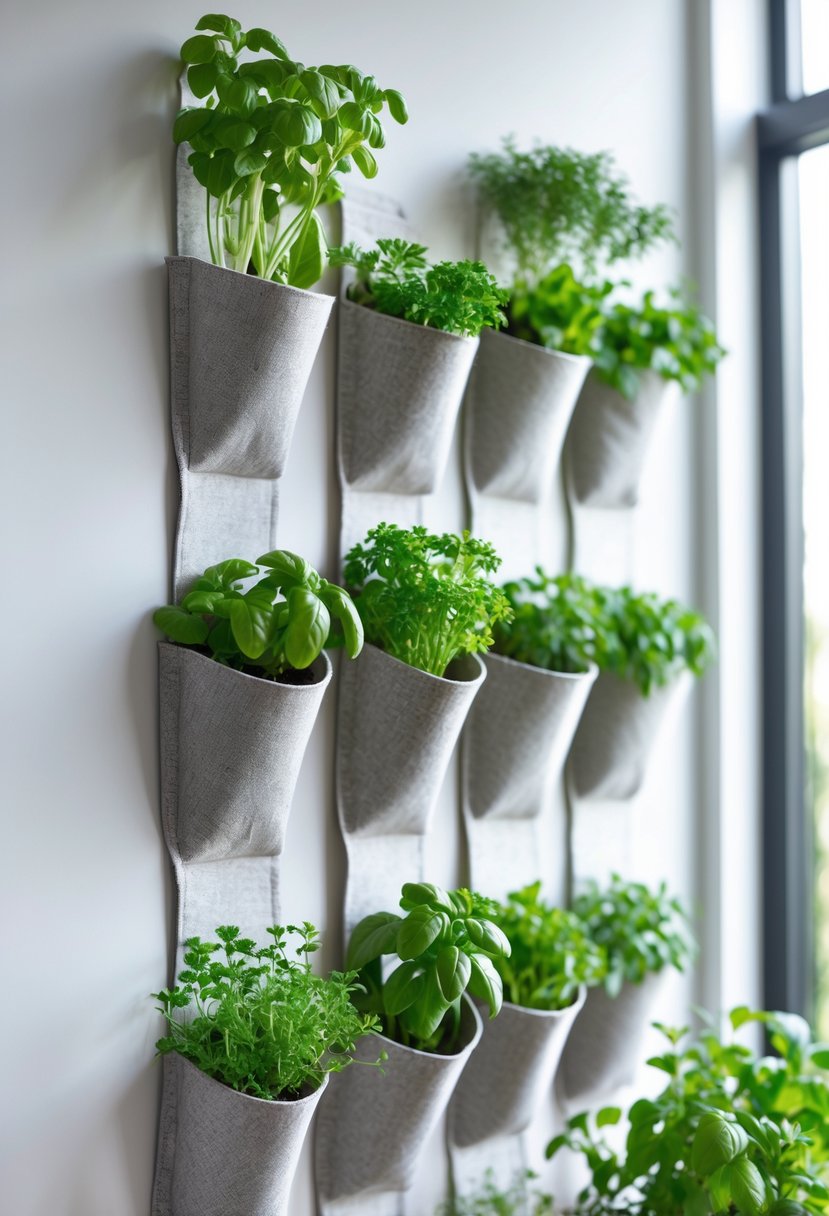
Wall-mounted planter pockets are a smart way to add herbs without taking up floor space. They are usually made from fabric or felt and have multiple compartments for individual plants. This setup works well indoors and outdoors.
The pockets can be hung on any sturdy wall. They are lightweight, easy to install, and keep plants organized. Gardeners can mix different herbs in each pocket for easy access when cooking.
These pockets allow good air circulation and water drainage, which helps herbs grow healthy. They also create a visually appealing green wall that adds texture to any room or patio.
Maintenance is simple. Gardeners just need to water regularly and trim herbs to keep them fresh. Wall-mounted pockets can be moved or changed out as needed, offering flexibility in garden design.
3) Create a hanging herb garden with mason jars

Using mason jars to build a hanging herb garden is a simple and space-saving idea. The jars can be attached to a wooden board or metal frame with wire or clamps. This makes it easy to hang the garden on a wall inside a kitchen or balcony.
Mason jars are clear, so they let light in and allow people to see the roots as the herbs grow. This helps to monitor water levels and root health. It also creates an attractive, clean look in small spaces.
The jars do not need drainage holes, which makes them ideal for indoor use. To avoid overwatering, adding a small layer of pebbles or charcoal at the bottom helps keep the roots healthy. Popular herbs to grow this way include basil, mint, and parsley.
This type of garden keeps fresh herbs within easy reach while cooking. It also adds a decorative, natural touch without taking up floor space. With minimal materials and simple steps, it is a practical option for anyone wanting a small indoor herb garden.
4) Repurpose rain gutters for herb planters
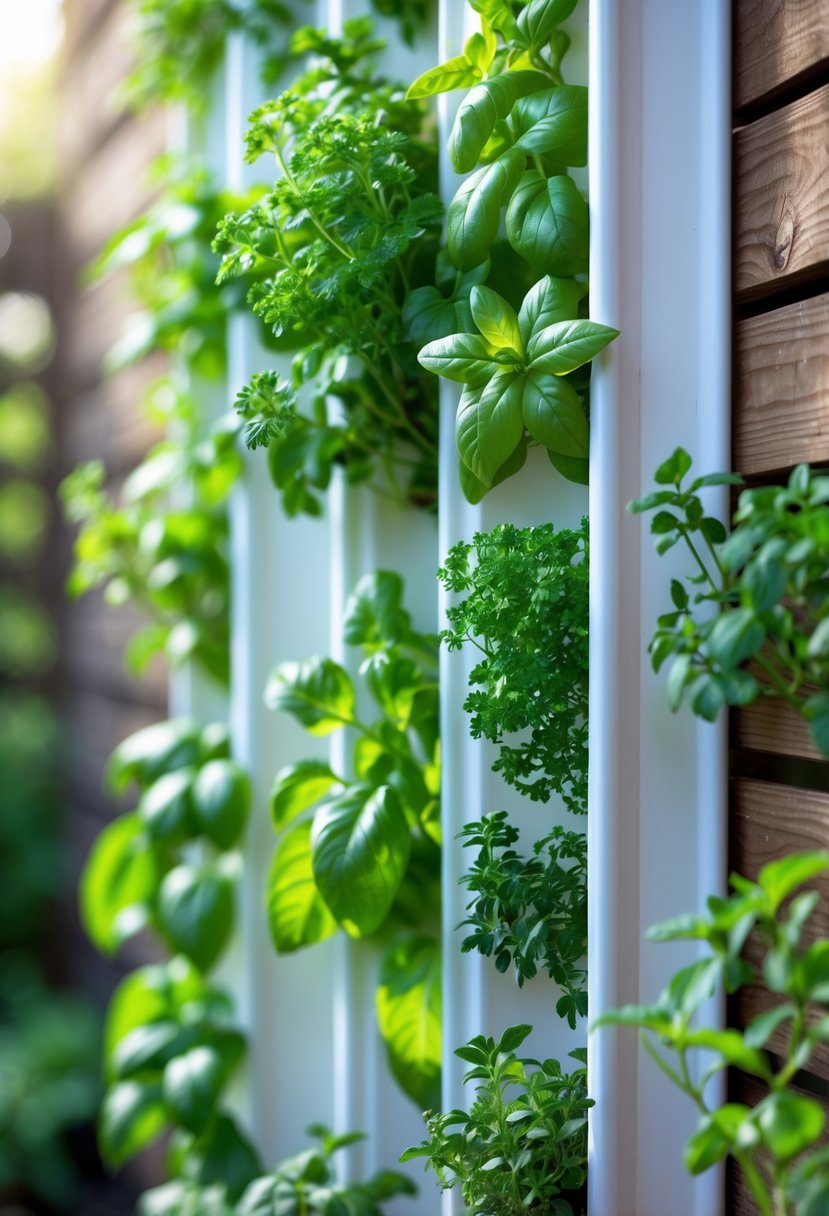
Using rain gutters as herb planters is a smart way to create a vertical garden. Gutters are long and narrow, which makes them great for growing small plants like herbs.
They can be attached to walls, fences, or mounted in a frame to save space. This setup works well in small yards, balconies, or indoors near a window.
Rain gutters are sturdy and weather-resistant, so they hold up well outside. They also have drainage holes or can be easily drilled to prevent water buildup.
People often reuse old gutters, which saves money and cuts down on waste. If new gutters are used, plastic or metal options are both suitable for planting.
Herbs like basil, thyme, parsley, and mint grow well in these gutters. They need shallow soil, making gutters perfect for their root space.
Position the gutters where the herbs will get enough sunlight. Regular watering and occasional fertilizing keep the plants healthy.
This method is simple, practical, and fits many living situations. It allows gardeners to grow fresh herbs in limited spaces without much fuss.
5) Build a tiered vertical shelf for herbs

A tiered vertical shelf is a practical way to organize multiple herb plants in a small space. It uses several shelves stacked vertically, allowing easy access to each herb while keeping them neatly arranged.
The design can lean against a wall or stand on its own. Materials like wood or metal work well and can be adapted to fit indoor or outdoor areas.
The shelves should have enough space for pots and good drainage. This helps prevent water buildup that can harm the plants.
Building a tiered shelf allows gardeners to group herbs by type or sunlight needs. It also makes watering and harvesting more efficient.
Plans for making these shelves are often available online, providing clear steps and measurements. These guides help ensure the structure is stable and sized properly for herb pots.
6) Use a ladder shelf for herb display

A ladder shelf is a great way to show off herbs while saving space. It offers multiple levels, so many plants can fit in a small area. This makes it perfect for balconies, kitchens, or patios with limited room.
People can use old wooden ladders or buy new ones made for gardening. Each step or shelf can hold pots or containers with different herbs. This keeps the plants organized and easy to access.
The vertical design also helps herbs get better sunlight. Since the plants are stacked, none of them get blocked from light. This encourages healthy growth for all the herbs on the ladder shelf.
A ladder shelf can be moved easily. It is lightweight compared to other garden setups. This allows the gardener to change the location based on sunlight or weather conditions.
Adding labels to each herb pot on the ladder helps identify them quickly. It also makes the display look neater and more planned. Using a ladder shelf is a simple, effective way to grow many herbs in a small space.
7) Mount a pegboard with small pots

A pegboard is a useful and flexible way to create a vertical herb garden. It can be mounted on a sunny wall inside or outside. The holes make it easy to hang small pots using hooks or rings.
The pegboard allows for simple rearrangement. As herbs grow or new plants are added, pots can be moved to fit spacing needs. This makes it easy to care for each herb in the best way.
Small pots are ideal because they are light and fit well on the pegboard. It also keeps the garden organized and tidy. This setup saves space while still allowing plenty of plants to grow.
The pegboard material can be metal, wood, or plastic. It should be sturdy enough to hold the pots and soil weight. Choosing a size that fits the available wall space helps make the garden fit the area well.
This method works especially well in kitchens or balconies where space is limited. It provides fresh herbs close at hand and adds a touch of green to the room.
8) Construct a vertical garden frame with wire mesh

A wire mesh frame is a simple and effective way to build a vertical herb garden. It provides a sturdy base for pots or planting pockets to hang on.
The mesh allows air to circulate around the plants, which helps prevent mold and keeps herbs healthy. It also supports climbing or spreading herbs like mint and oregano.
To build the frame, they can cut the wire mesh to the desired size. Then, attach it to a wooden frame or directly to a wall using hooks or nails. Metal clamps or hooks can secure pots to the mesh.
This setup saves space and makes it easier to water and harvest herbs. It is also budget-friendly since wire mesh is affordable and widely available.
Adding a wire mesh frame can create an organized look. It allows herbs to grow upward, freeing ground space in small gardens or balconies.
9) Make a pocket garden with felt fabric
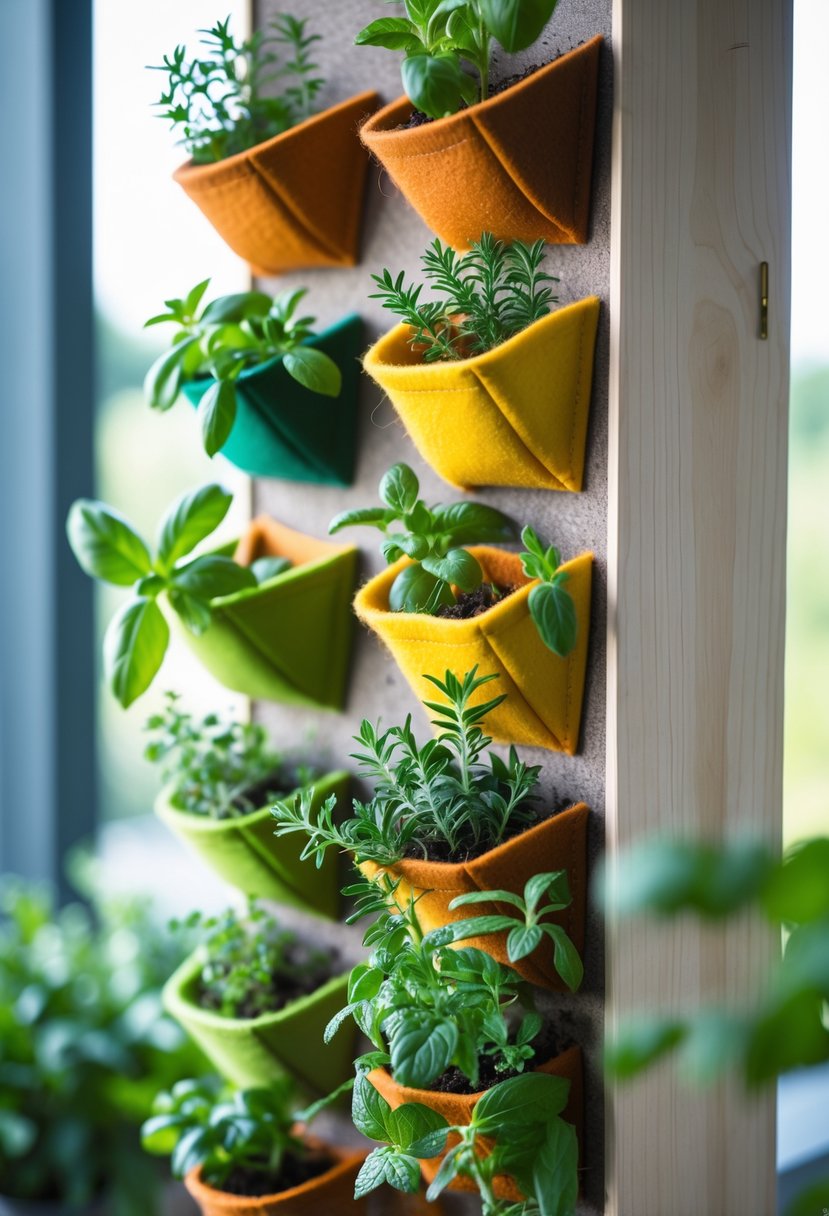
Using felt fabric for a vertical herb garden is simple and practical. Felt is lightweight and holds soil well, making it a good choice for pocket gardens. It also allows water to drain, preventing root rot.
They can create pockets by sewing or attaching pieces of felt to a sturdy backing. These pockets hold individual herb plants securely. Felt pocket gardens save space and work well on balconies or small walls.
To install, the pocket garden can be hung using hooks or screws. It is important to choose a location that gets enough sunlight for the herbs. Regular watering and checking drainage help keep plants healthy.
Felt fabric is also easy to customize in size and shape. This flexibility lets gardeners design a pocket garden that fits their space and style. It is a cost-effective way to grow several herbs vertically.
10) Attach pots to a wooden board with hooks

One easy way to create a vertical herb garden is to attach small pots directly to a wooden board using hooks. This method keeps the herbs organized and makes watering simple.
The wooden board should be sturdy and treated to resist moisture. Hooks can be screwed into the board at regular intervals to hold the pots firmly in place.
Small herb pots like those made of terra cotta or lightweight plastic work best. Choosing pots with a lip or rim helps them stay secure on the hooks.
The board can be mounted on a wall indoors or outside on a patio. It saves space and creates a neat display of your herbs.
Make sure each pot has drainage holes to avoid water buildup. Excess water can drain safely, protecting the plants’ roots from rot.
This setup is flexible. Herbs can be easily swapped out or replaced when needed, making it a practical option for anyone who likes to change their garden often.
11) Use stackable planter boxes
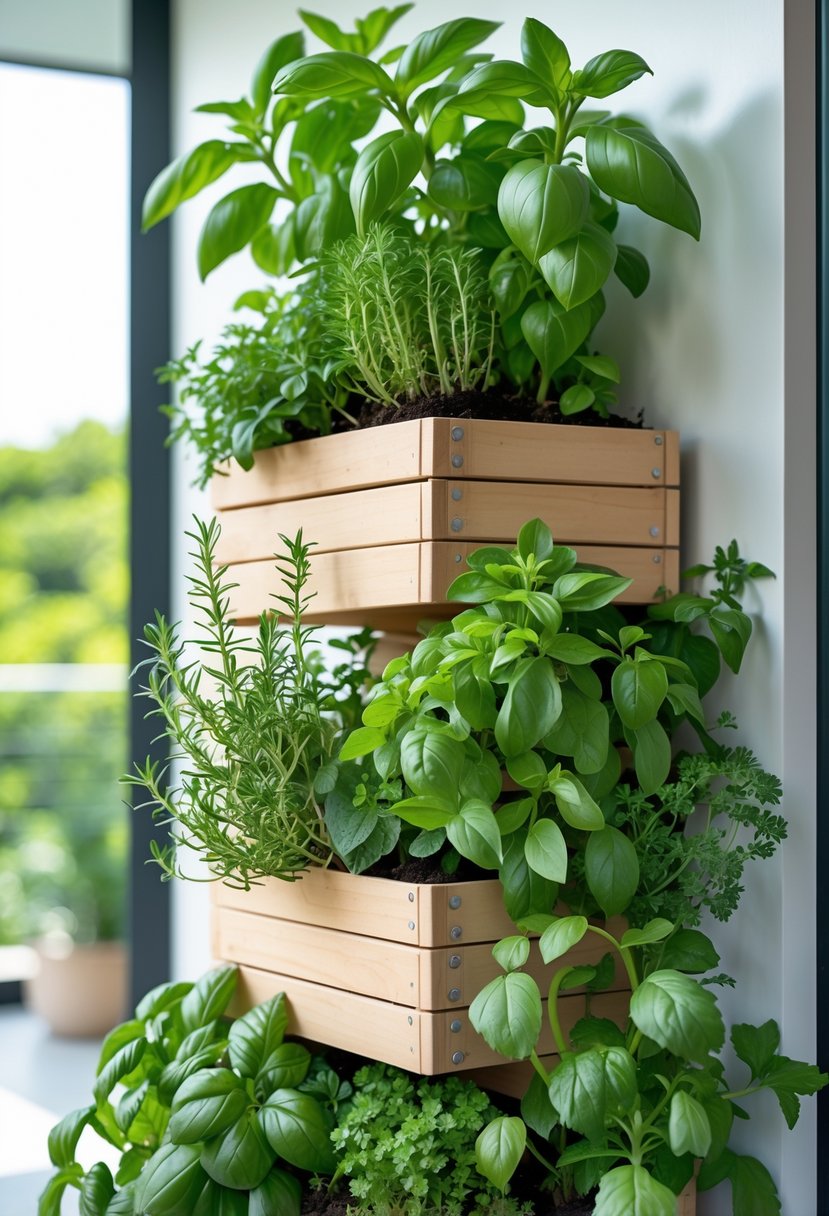
Stackable planter boxes are a practical way to build a vertical herb garden. They save space by allowing multiple layers of plants in a small area. This method works well for balconies, patios, or small yards.
These boxes can be made from wood, plastic, or metal. They often come with drainage holes to keep herbs healthy. Stackable designs make it easy to add or remove levels as needed.
People can arrange the boxes to ensure each herb gets enough sunlight. Placing taller plants on top prevents shadowing the ones below. This setup makes watering and caring for herbs simpler.
Stackable planter boxes also organize herbs neatly. This helps when harvesting, as plants are easy to see and reach. Overall, they offer a flexible and efficient way to grow fresh herbs year-round.
12) Grow herbs in a shoe organizer
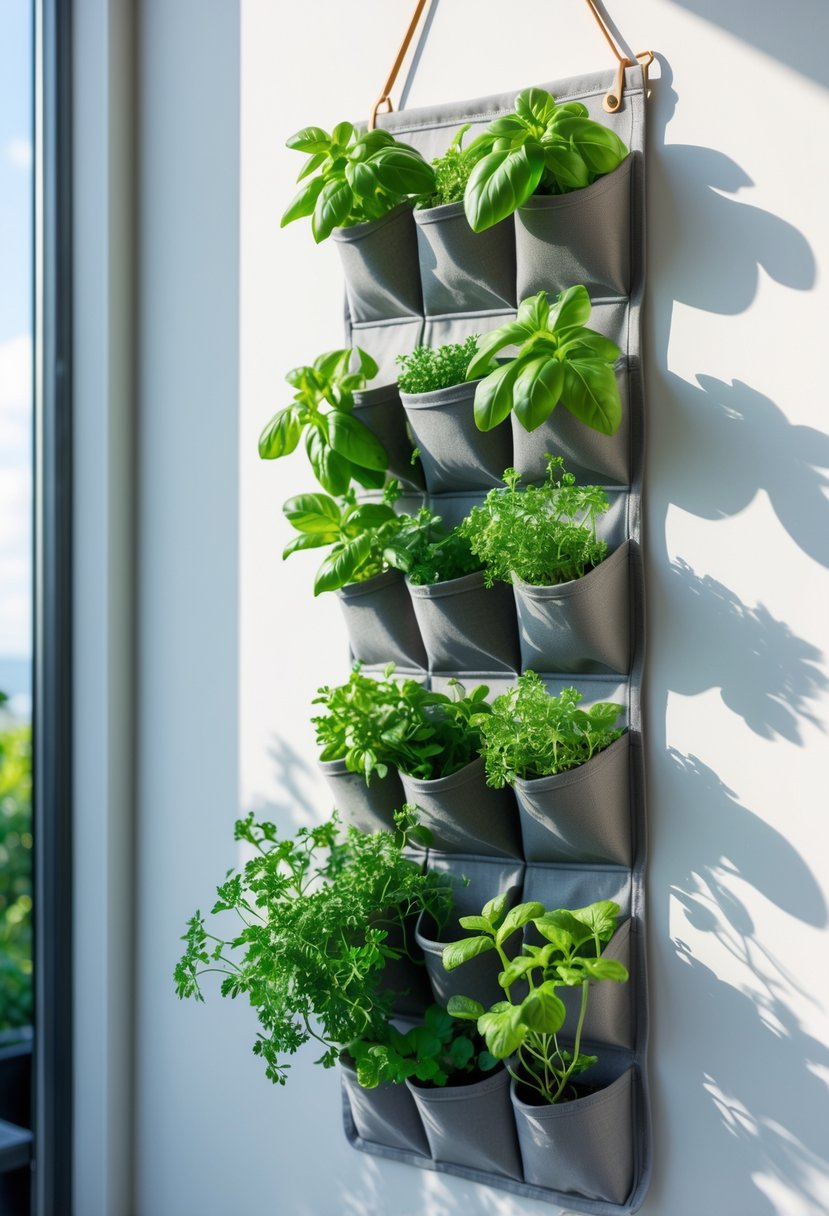
A shoe organizer can be an easy and space-saving way to grow herbs vertically. Each pocket acts like a small planter, perfect for holding soil and individual herbs. This makes it simple to grow many different herbs in a small area.
To set up, one needs a cloth shoe organizer, potting soil, and a way to hang it, such as hooks or nails. Herbs like basil, parsley, and thyme work well. It’s also a good chance to try less common herbs in separate pockets.
This method suits balconies, patios, or even indoor spaces with good sunlight. It keeps herbs organized and visible, making watering and harvesting easier. The shoe organizer’s pockets provide enough room for roots while saving floor space.
13) Transform a spice rack into a vertical herb garden

A spice rack can become a smart, space-saving herb garden. It offers a way to grow several herbs in a small area, perfect for kitchens or patios with limited space. This method keeps fresh herbs within easy reach while cooking.
To create this garden, remove any glass jars or containers from the rack. Replace them with small pots or containers for planting herbs. The rack’s shelves or tiers can hold different kinds of herbs, like basil, thyme, or mint.
Some use repurposed tomato cages or spinning racks to add movement or a unique look to the garden. This makes it easier to get sunlight to all plants by rotating the rack. It also adds a stylish, functional element to the garden setup.
Maintenance involves regular watering and placing the rack where it gets good natural light. This DIY project is practical and helps maximize gardening space indoors or in small outdoor areas.
14) Design a vertical garden with recycled wine crates

Using recycled wine crates is a creative way to build a vertical herb garden. These crates offer natural compartments that are perfect for planting various herbs. They add a rustic look and help save space in small gardens or balconies.
The crates can be stacked or mounted on a wall with hooks or brackets. This makes it easy to arrange the herbs at different heights. It also provides good drainage and airflow for healthy plant growth.
Wine crates are sturdy and lightweight. They allow gardeners to reuse materials, which is eco-friendly. The crates can be painted or left natural depending on the desired style.
This setup works well for growing small herbs like basil, parsley, and thyme. It keeps fresh herbs within easy reach, especially if placed near the kitchen. Using vertical space like this is a smart choice for limited outdoor areas.
15) Install a vertical garden planter on balcony railings

A vertical garden planter on balcony railings is an effective way to use limited space. It allows gardeners to grow herbs without taking up floor area. This method works well for small balconies or urban environments.
The planters usually attach directly to the railing with hooks or brackets. This keeps the containers secure and easy to access. Gardeners can choose lightweight containers to avoid putting too much weight on the railing.
Herbs like basil, mint, and parsley grow well in railing planters. They get enough sunlight and air circulation in this setup. Regular watering and good drainage are important to keep the plants healthy.
Vertical railing planters also improve balcony aesthetics. They add greenery and can create a natural screen for privacy. This practical setup supports a clean and organized garden space.
16) Use PVC pipes with cut holes for planting

Using PVC pipes is a simple way to create a vertical herb garden. It starts by drilling evenly spaced holes along the length of a 4-inch PVC pipe. These holes will hold small plants or herb seedlings.
After making the holes, half-inch PVC pipes can be cut to size and used for irrigation. These smaller pipes have holes to let water soak into the soil inside the larger pipe. This setup helps keep the plants watered without much effort.
The next step is filling the larger pipe with soil and inserting the herbs into the holes. The soil needs to be loose enough to support the roots. It is important to choose herbs that don’t need deep soil to grow well.
This method saves space and can be placed in small areas like balconies or patios. It also allows for easy access to the herbs while cooking or gardening. With proper watering and sunlight, herbs in PVC pipes can thrive and produce fresh leaves regularly.
17) Create a spiral herb garden tower

A spiral herb garden tower is a smart way to use vertical space. It arranges plants in a spiral shape, fitting many herbs in a small area. This design helps different herbs get the right amount of sunlight and drainage.
The tower should be placed in a spot with at least 5 hours of sunlight daily. In hot climates, some afternoon shade can protect sensitive herbs. It works well on rooftops, balconies, or terraces where space is limited.
Building the tower requires materials like stones, bricks, or wood to form the spiral base. Soil is added in layers, with herbs planted from the top down. Herbs that need drier soil go near the top, while those that like moisture stay near the bottom.
This garden style allows herbs to grow naturally and can be a beautiful focal point. It also makes watering and harvesting easier since the plants are all within reach.
18) Build a vertical herb garden using cinder blocks

Using cinder blocks to build a vertical herb garden is a practical way to save space. The blocks can be stacked in various patterns to create multiple planting areas. This allows for a small footprint while growing many herbs.
The hollow centers of cinder blocks are perfect for planting. They provide good drainage and enough room for herb roots. It is important to use potting soil and to ensure proper watering.
Cinder blocks are durable and can withstand outdoor conditions. They also offer a sturdy structure that can be customized in height and shape. This flexibility helps gardeners fit the garden into different spaces like balconies or small yards.
To add drainage, some people drill holes or rely on the natural gaps in the blocks. The blocks can be painted or left natural depending on the aesthetic desired. This method is a cost-effective way to build a functional herb garden.
19) Hang a vertical planter from a ceiling beam

Hanging a vertical planter from a ceiling beam is a smart way to save floor space while growing herbs. It uses vertical space, making it ideal for small kitchens, balconies, or patios.
The planter can be made from wooden boxes, metal containers, or recycled materials. It should have good drainage to keep the herbs healthy.
Secure hooks or strong chains are needed to attach the planter safely to the beam. Checking the beam’s strength is important to hold the planter’s weight.
This setup allows easy access to herbs while cooking. It also adds greenery at eye level, brightening the space without clutter.
Regular watering and sunlight are necessary. Position the planter where it receives enough natural or artificial light for the herbs to thrive.
20) Use magnetic planters on a metal wall

Magnetic planters are a simple way to add herbs to any metal surface. They stick directly to walls made of steel or other magnetic metals. This saves space and allows flexible plant placement.
These planters often come in small sizes, perfect for herbs like basil, thyme, or mint. They can be moved easily to catch sunlight or to change the garden layout.
Magnetic planters work well indoors or outdoors. They are especially useful on refrigerators, metal doors, or garden fences. This method requires little installation, making it quick and convenient.
Because they are lightweight, magnetic planters need to be filled with light soil and small pots to avoid falling off. Using self-watering magnetic planters can reduce the need for frequent watering.
Overall, magnetic planters provide a clean and modern look. They make it easy to create a vertical herb garden without damaging walls or using nails and hooks.
21) Incorporate an herb garden into a garden fence
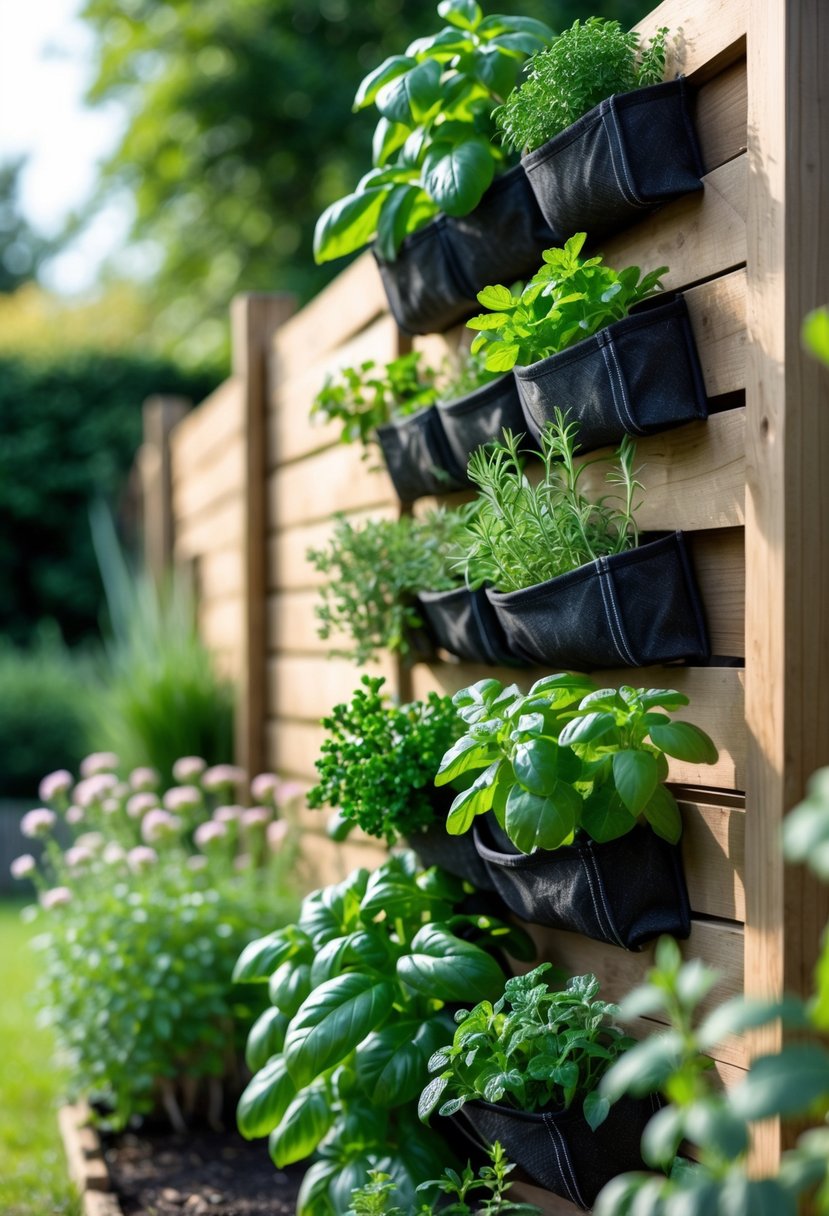
He can use a garden fence to create a vertical herb garden by attaching small pots or containers directly to the fence. This method saves space and keeps herbs easily accessible for cooking.
She should choose sturdy pots that drain well and can be securely fixed to the fence. Hanging pockets or small planters with hooks also work well for this setup.
They can arrange the herbs by height or type, placing sun-loving plants higher up. This creates an organized and healthy growing space.
Using a garden fence allows herbs to get good air flow and sunlight. It also turns a simple fence into a productive part of the garden.
Regular watering and checking for pests are important because pots can dry out faster than ground soil. With proper care, this setup can provide fresh herbs all season.
22) Install a vertical planter with self-watering system

A vertical planter with a self-watering system helps keep herbs healthy without daily watering. This setup slowly drips water into each planter, making sure plants get just the right amount. It saves time and reduces water waste.
These planters often have a reservoir at the back or bottom to hold water. Gravity pulls water down through the soil, allowing each plant to absorb moisture evenly. This design can prevent overwatering or underwatering.
Self-watering vertical gardens work well indoors or outdoors. They can be made from various materials like fabric pockets, plastic trays, or wooden boxes. Adding this system ensures herbs get consistent moisture, even when the gardener is busy or away.
23) Use a shoe rack repurposed for herbs

A shoe rack can be turned into a simple vertical herb garden. Its compartments provide individual spaces for different plants, making it easy to organize a variety of herbs.
This method saves space by using vertical height instead of floor area. It works well indoors or outdoors, as long as the rack gets enough sunlight.
To start, line each compartment with a small pot or plastic bag filled with soil. Then, plant herbs like basil, parsley, or thyme in each spot.
Hanging or placing the shoe rack near a window ensures the herbs receive the light they need. It also makes watering straightforward since each plant is separated.
This DIY idea uses common household items to create a practical and space-saving herb garden. It is a good option for people with limited room but who want fresh herbs handy.
24) Create a vertical garden using old window shutters

Using old window shutters to build a vertical herb garden is a smart way to recycle and add character to a space. The shutters provide a sturdy frame that can hold pots or small planters securely.
The user can attach small shelves or hang pots directly on the slats of the shutter. Painting or distressing the shutters can give them a rustic or vintage look that fits well in patios or indoor nooks.
This method works well in places with limited floor space like balconies or small gardens. The shutter can be leaned against a wall or hung vertically for easy access to fresh herbs.
It also allows growing several types of herbs close together, which saves space and keeps them organized. Using old shutters for vertical gardening is practical and visually appealing at the same time.
25) Build a trellis for climbing herbs
A trellis is a simple and effective way to grow climbing herbs vertically. It saves space and helps plants get better air circulation and sunlight.
Materials like wood, bamboo, or metal work well for a garden trellis. The trellis can be a lattice, fan-shaped, or obelisk depending on the space and style needed.
Climbing herbs such as thyme, oregano, or rosemary benefit from this support as they can grow upwards instead of spreading on the ground. This also makes harvesting easier.
Building a trellis is not difficult. It can be made by fastening wooden slats or using wire mesh. The structure should be sturdy enough to hold the herbs as they grow.
Using a trellis also helps keep the plants healthier by reducing contact with soil, which can prevent some pests and diseases. This makes vertical herb gardening more efficient.
Essential Considerations for Vertical Herb Gardens
Creating a vertical herb garden requires careful planning to ensure plants thrive. Key factors include choosing a suitable spot, selecting herbs that grow well vertically, and managing soil, watering, and light conditions properly.
Selecting the Right Location
The location should provide enough sunlight for the herbs. Most herbs need at least 6 hours of direct sunlight daily. A south-facing wall or balcony is ideal.
The spot must also offer good air circulation to prevent mold and pests. Avoid areas near strong wind or heavy rain, which can damage fragile plants.
Space is important. The area should support the vertical structure safely and allow easy access for watering and harvesting. A sturdy wall or fence is often best for mounting.
Optimal Herbs for Vertical Growth
Some herbs adapt better to vertical gardens than others. Light, compact herbs like basil, thyme, oregano, chives, and parsley work well. These plants don’t need deep soil and grow well in confined spaces.
Herbs with trailing habits, such as mint and creeping rosemary, add visual interest but need careful pruning to avoid overgrowth.
Avoid large or root-heavy herbs like fennel or dill, as they require more space and soil depth than vertical setups typically allow.
Soil, Watering, and Light Requirements
Use a lightweight, well-draining soil mix to prevent waterlogging. Soil should contain organic matter to retain moisture but still allow air flow.
Vertical gardens dry out faster than garden beds. Water regularly, checking soil moisture daily during hot weather. A gravity-fed watering system can help distribute water evenly.
Most herbs need full sun but can tolerate partial shade. Monitor plants for signs of too much or too little light, such as leaf yellowing or stunted growth. Adjust the location or add shade cloth if necessary.
Expert Maintenance Tips
Maintaining a vertical herb garden requires attention to pests and diseases as well as adapting care routines to changing seasons. Proper steps help keep herbs healthy and productive in a limited space.
Pest and Disease Management
Regular inspection is key to spotting pests early. Look for discolored leaves, small holes, or sticky residue. Common pests include aphids, spider mites, and whiteflies.
Using natural pest control methods is best. Neem oil or insecticidal soap can be sprayed directly on affected plants. Avoid harsh chemicals that may harm herbs.
To prevent disease, ensure good air circulation around plants. Overcrowding creates a damp environment that encourages mold and mildew. Remove damaged or dead leaves promptly.
Keeping soil well-drained and not overwatering also lowers disease risk. Healthy roots reduce susceptibility to root rot and fungal infections.
Seasonal Care Strategies
Adjust watering frequency with temperature changes. Herbs need more water during hot months and less in cooler seasons.
In winter, some herbs may benefit from moving to a sunnier spot or indoors to avoid frost. Using grow lights can help maintain growth when daylight is short.
Pruning is important for year-round health. Trim back leggy growth and harvest regularly to encourage bushier plants.
Fertilize sparingly with a balanced, diluted liquid fertilizer during the growing season to support development without overfeeding.
Frequently Asked Questions
Vertical herb gardens need careful planning with plant choice, materials, and placement. Watering methods and light access are key for healthy growth. Challenges like drainage and space require smart solutions.
How do I choose the right plants for my vertical herb garden?
They should pick herbs that fit well in small spaces and vertical containers. Basil, mint, chives, parsley, and rosemary grow well indoors year-round.
Light and watering needs matter. Choose herbs with similar care requirements to keep the garden balanced.
What materials do I need to create a DIY vertical herb garden?
Wooden pallets and tiered shelves are good sturdy choices. Wall-mounted planter pockets and repurposed rain gutters work well for narrow spaces.
Mason jars can be hung for a decorative touch. Proper containers with drainage holes help prevent water buildup.
What are the best practices for watering a vertical herb garden?
Water when the top inch of soil feels dry. Overwatering can cause root rot in vertical setups.
Using drip irrigation or a watering can make this easier. Watch for water drainage to avoid stagnant moisture.
How can I ensure adequate sunlight for my vertical herbs when growing indoors?
Place the garden near a south- or west-facing window for at least 6 hours of light.
If natural light is limited, use grow lights to supplement. Rotate plants to expose all sides evenly.
Can I grow a vertical herb garden indoors year-round?
Yes, with enough light and proper care. Indoor herbs like basil and parsley thrive if the temperature stays stable.
Regular pruning helps keep plants healthy and encourages new growth.
What are some common challenges with vertical herb gardening and how can I overcome them?
Water drainage issues can cause root problems, so containers with holes are essential.
Limited space can be solved by stacking planters or using wall-mounted holders. Pests can be managed with natural sprays or regular checks.


