9 Tactics To Grow Gardenias In A Pot For Lush, Thriving Blooms
Growing gardenias in pots can bring beauty and fragrance to your home or garden space. These plants need specific care to thrive, but with the right approach, you can enjoy their glossy leaves and creamy white blooms for months.
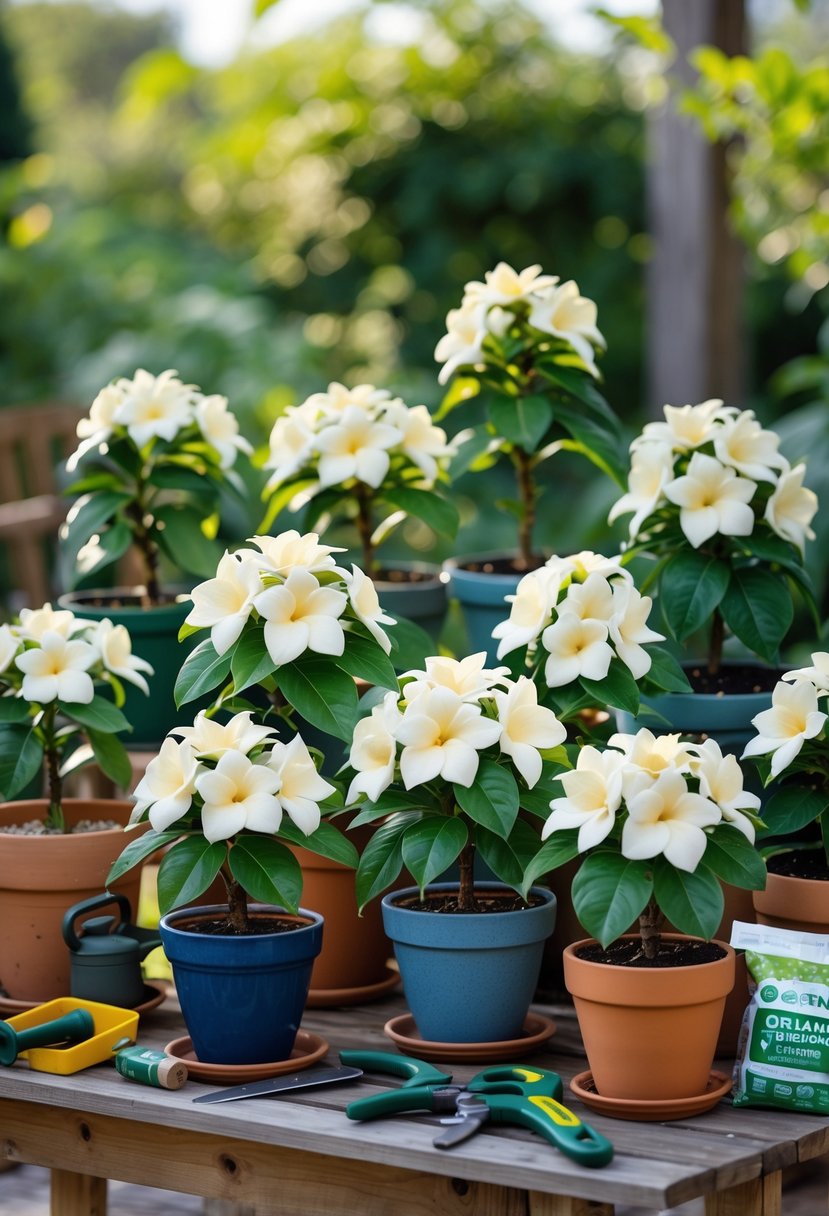
The key to successfully growing gardenias in pots is providing the right conditions that match their natural needs. This article will guide you through important steps to help your potted gardenias stay healthy and bloom well.
1) Choose a pot at least 12 inches in diameter with drainage holes
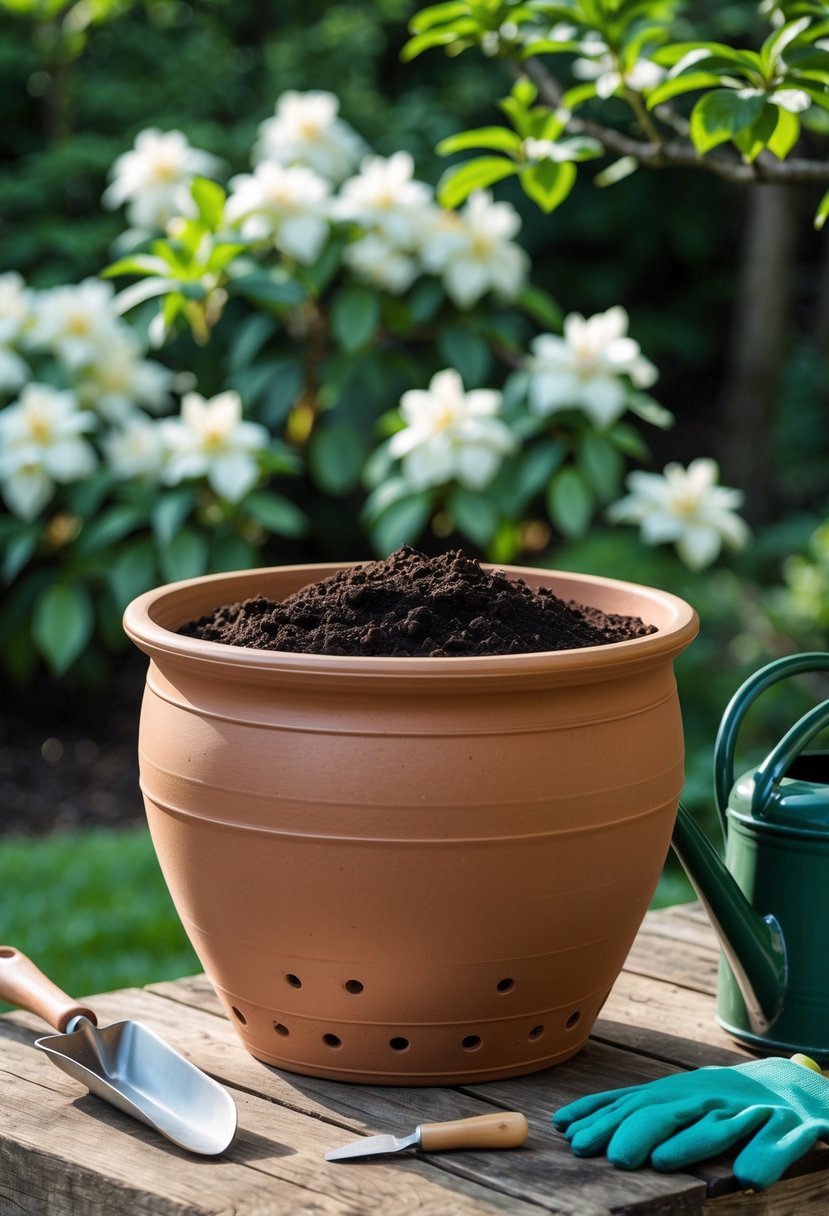
You should use a pot that is at least 12 inches wide. This size gives your gardenia enough room for its roots to grow properly.
Make sure the pot has drainage holes at the bottom. These holes prevent water from building up, which can harm the roots.
Avoid pots with small or clogged holes. Large drainage holes allow water to flow freely, keeping the soil healthy for your plant.
2) Use acidic, well-draining soil like African violet mix
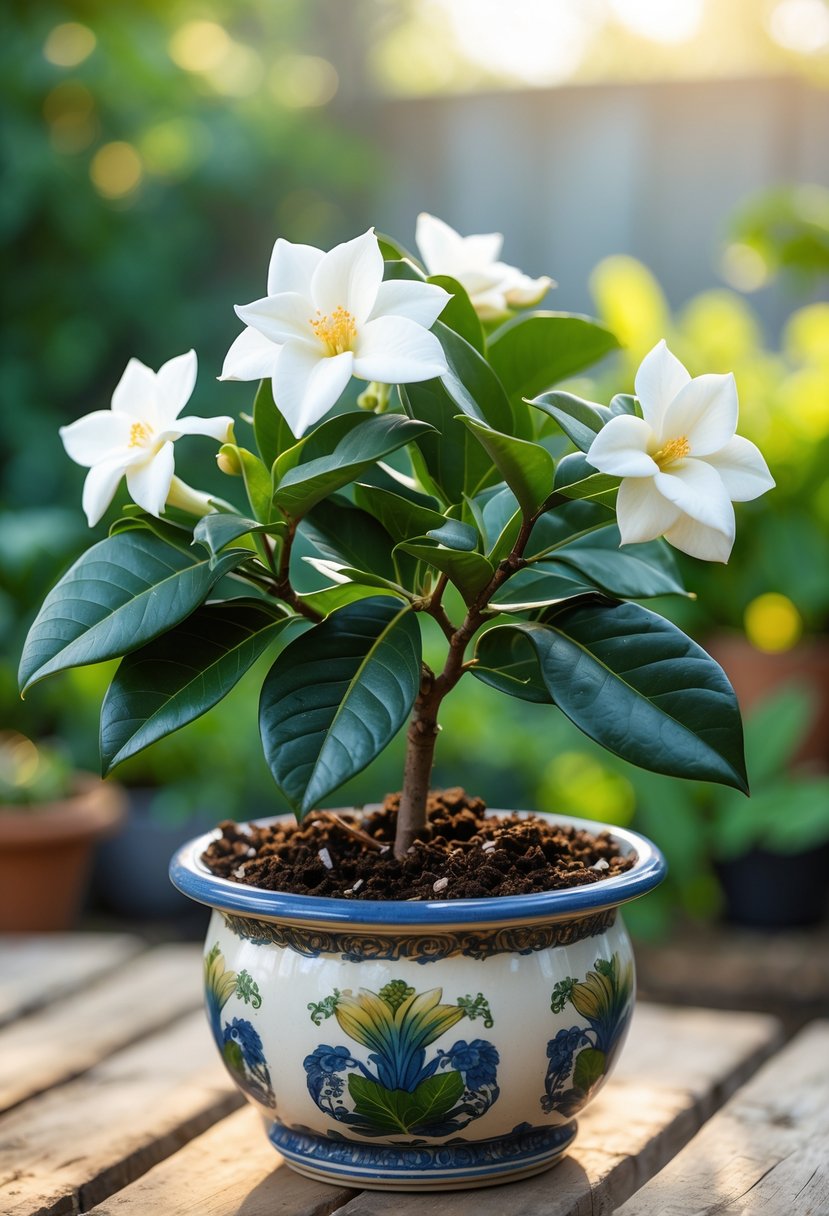
Your gardenia needs soil that stays moist but doesn’t hold too much water. Acidic, well-draining soil helps keep roots healthy and avoids sogginess.
African violet soil mixes work well because they are light, crumbly, and slightly acidic. These qualities help water drain quickly while keeping enough moisture for your plant.
You can find ready-made African violet mixes or create your own by adding perlite or vermiculite to regular potting soil. This keeps the soil airy and supports root growth.
3) Water consistently but avoid soggy roots
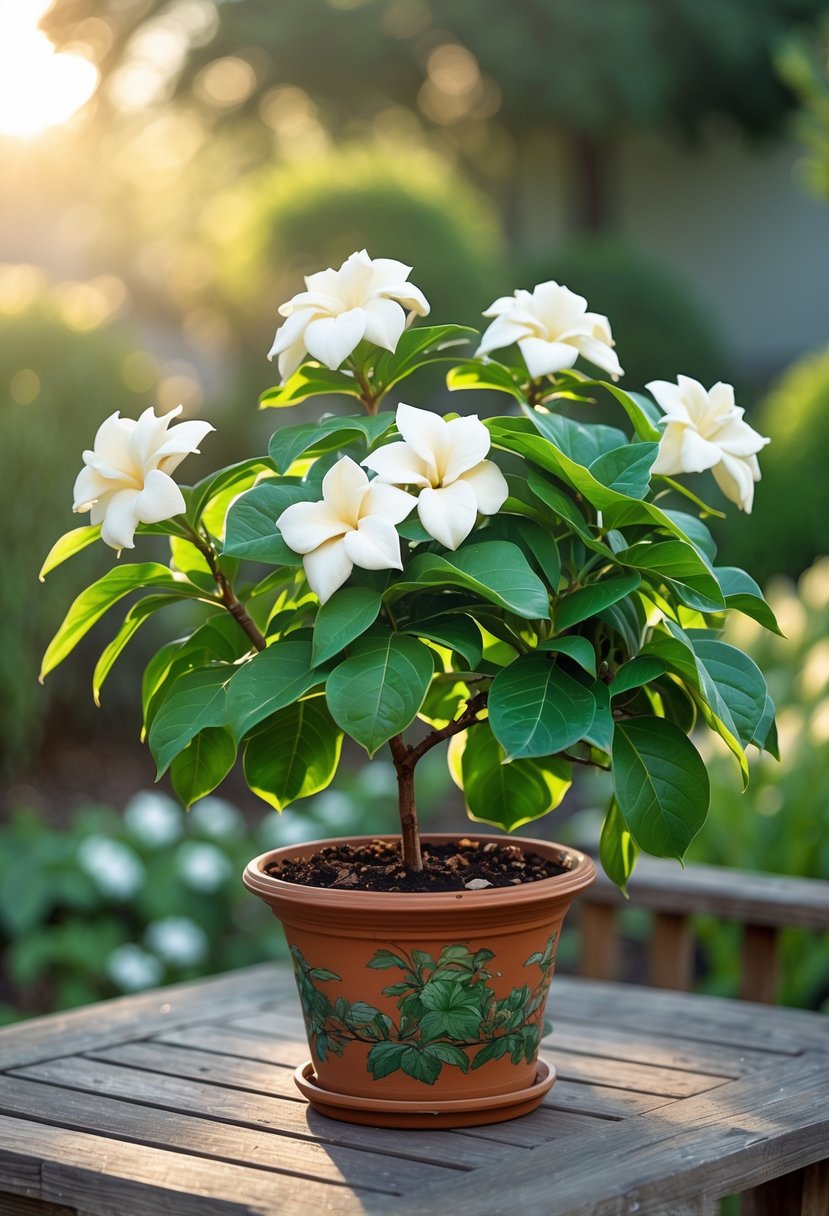
You need to keep the soil moist at all times but not wet. Gardenias dislike soggy roots, which can cause root rot.
Water deeply until you see drainage from the pot’s holes. This encourages roots to grow downward.
Check the soil regularly and adjust watering based on weather. In hot or dry times, water more often. Always water at the base to prevent leaf diseases.
4) Fertilize regularly with acid-loving plant fertilizer
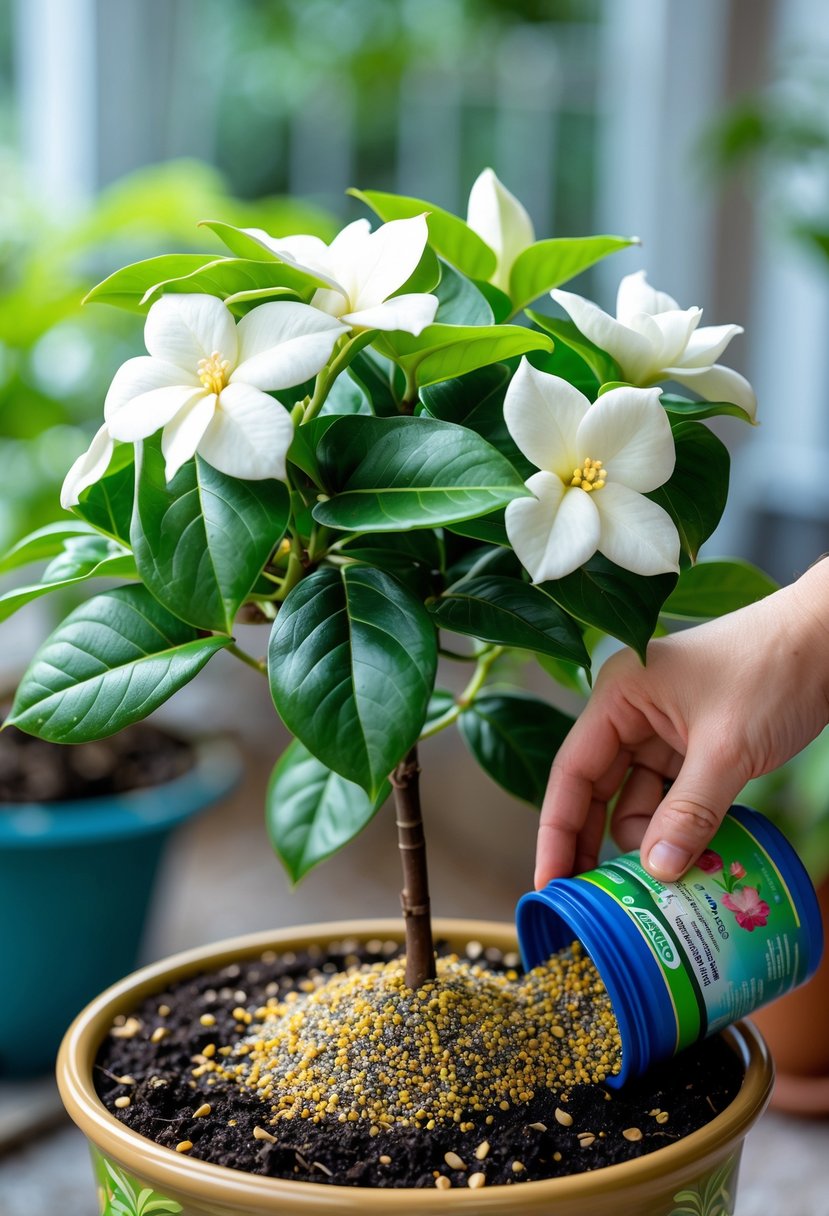
You should use a fertilizer made for acid-loving plants. Gardenias need a slightly acidic soil to absorb nutrients well.
Choose a fertilizer with balanced nutrients and added iron or copper to help leaves and flowers grow strong.
Feed your gardenias every 4 to 6 weeks during the growing season. Avoid fertilizers that are too alkaline, as they can harm your plant’s health.
5) Place the pot where the gardenia gets partial sunlight
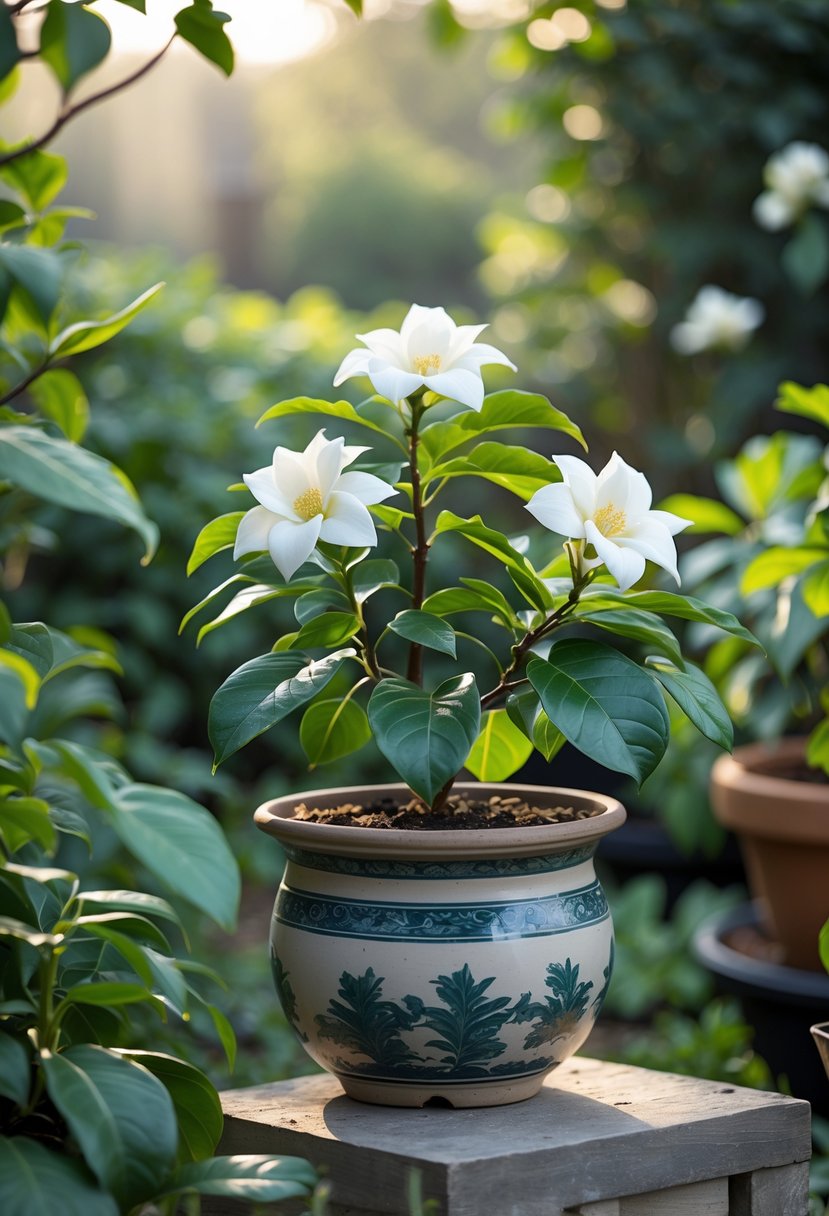
Place your gardenia pot where it can get bright, indirect light for most of the day. Morning sunlight is best because it is gentle and won’t burn the leaves.
Avoid harsh afternoon sun, which can cause leaf scorch and damage the plant.
A spot with some shade during the hottest part of the day helps your gardenia stay healthy. This balance supports good growth and flowering.
6) Maintain high humidity around the plant
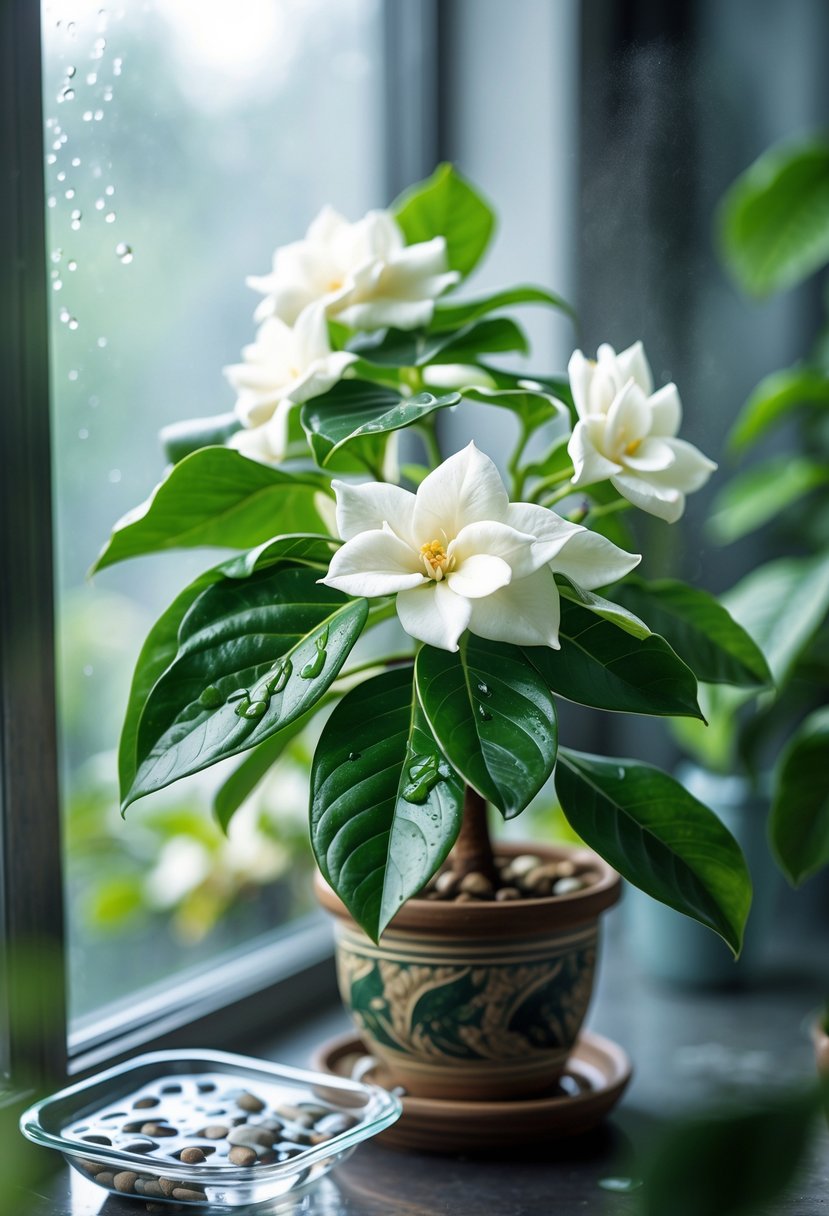
Your gardenia needs humidity levels around 50-60% to stay healthy. Dry indoor air can stress the plant and reduce blooming.
You can increase humidity by misting the leaves regularly. Another way is to place your pot on a tray filled with water and pebbles, making sure the pot does not sit directly in the water.
Using a humidifier nearby also helps keep the air moist, especially during dry seasons or in heated rooms.
7) Prune after blooming to encourage bushier growth
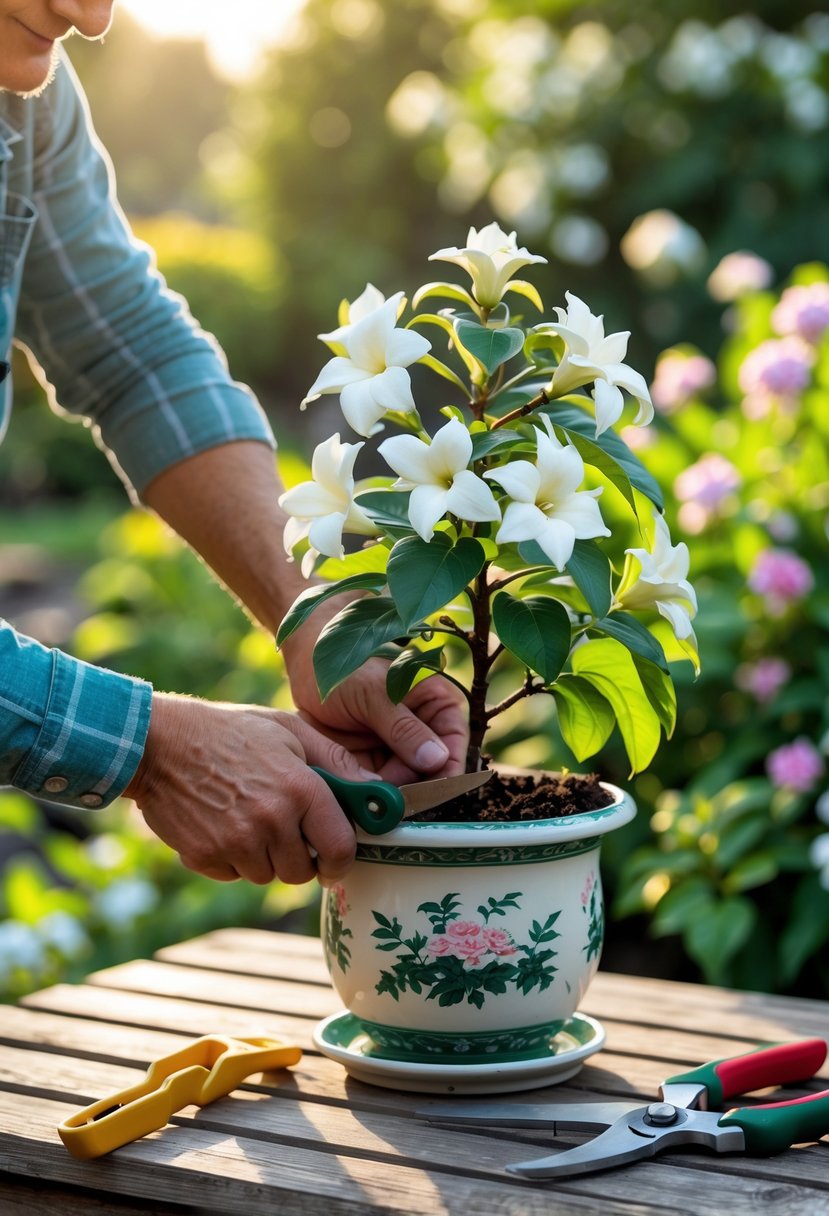
You should prune your gardenia right after it finishes blooming. This timing helps you avoid cutting off new flower buds that form later.
Use sharp, clean pruning shears to trim dead blooms and any long shoots that change the natural shape.
Cutting back the branches a little will encourage your gardenia to grow fuller and bushier. This keeps your plant healthy and more attractive.
8) Check soil pH and keep it between 5.0 and 6.0

You need to keep your gardenia’s soil pH between 5.0 and 6.0. This range is slightly acidic and helps your plant absorb nutrients well.
Use a soil pH test kit to check the soil regularly. If the pH is too high, add materials like peat moss or sulfur to lower it.
Maintaining the right pH keeps your gardenia healthy and growing in a pot.
9) Repot every 2-3 years to refresh soil and space roots
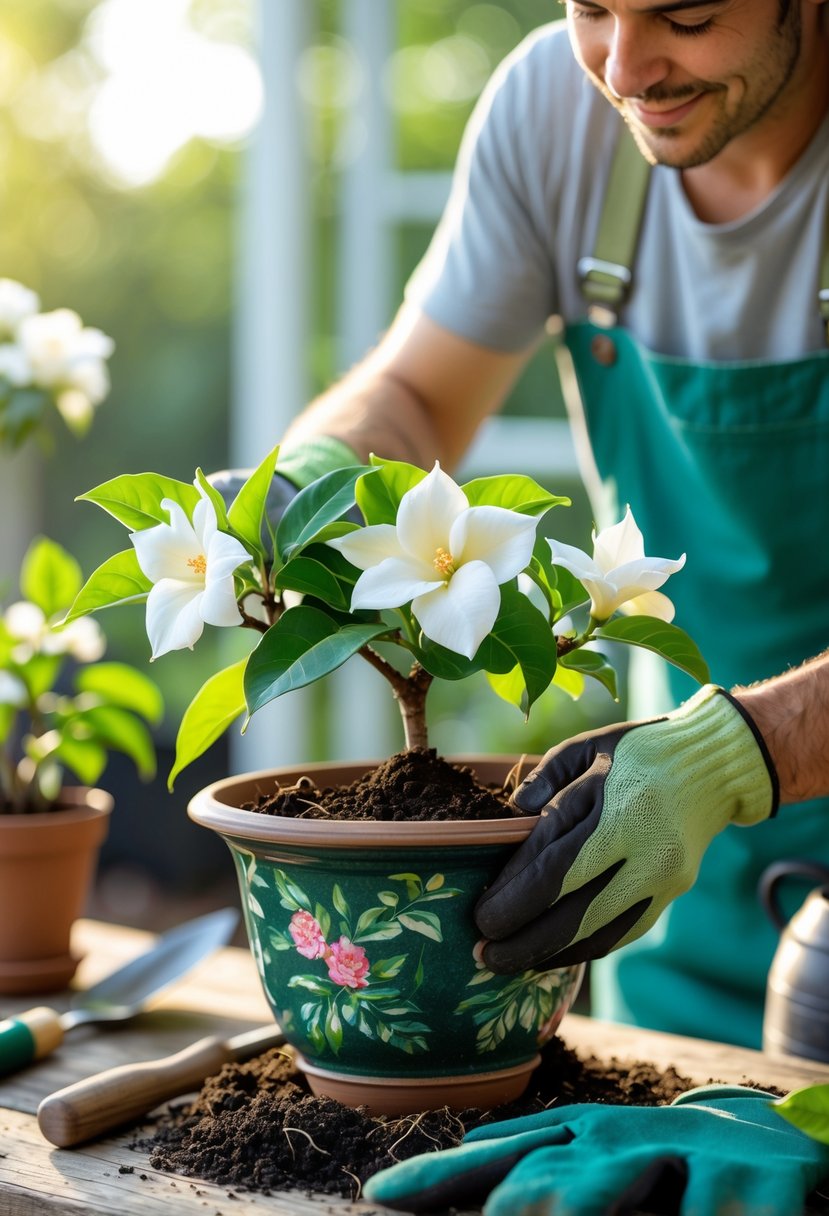
You should repot your gardenia every 2 to 3 years. This helps prevent the roots from becoming crowded or root-bound.
Fresh soil provides new nutrients that support healthy growth.
Choose a pot slightly larger than the current one and make sure it has drainage holes.
After repotting, keep the soil moist but avoid overwatering while the plant adjusts. This will help your gardenia stay healthy and grow well.
Ideal Potting Mix and Container Selection
Choosing the right container and soil is key to keeping your gardenia healthy. Your pot needs enough space for the roots and good drainage to stop water buildup. The soil should drain well but also hold some moisture, with a slightly acidic pH.
Choosing the Right Pot Size
Select a pot that is 2 to 4 inches larger in diameter than your gardenia’s root ball. This gives roots room to expand and helps the plant stay stable. A pot at least 12 inches wide is a good starting size for most gardenias.
Ensure the pot has drainage holes at the bottom. These holes prevent soggy soil, which can cause root rot. Avoid heavy or deep pots that hold too much water.
You can choose containers made of plastic, ceramic, or terracotta. Each type affects moisture differently, so watch your watering habits to match the container’s drainage ability.
Soil Composition for Healthy Growth
Use well-draining soil with a pH between 5.0 and 6.5 for best results. A mix of peat moss, perlite, and vermiculite works well. Peat moss lowers the pH, making the soil more acidic for your gardenia.
Avoid heavy garden soils that compact easily and stop air reaching the roots. You want soil that holds moisture but still lets excess water flow out.
Adding organic matter like compost can help keep moisture steady and provide nutrients. Choose a potting mix made for acid-loving plants or adjust a general mix by adding peat moss.
Maintaining Optimal Growing Conditions
To keep your gardenia healthy, focus on providing the right amount of sunlight, temperature, humidity, and airflow. These factors affect how well your plant blooms and stays disease-free.
Light and Temperature Requirements
Your gardenia needs bright, indirect sunlight. Aim for about 4 to 6 hours of morning sun or filtered light daily. Avoid direct afternoon sun, which can scorch the leaves.
The ideal temperature range is between 65°F and 75°F during the day. Night temperatures should not fall below 60°F. Sudden temperature changes or drafts can cause flower buds to drop.
If growing indoors, place your gardenia near a window with bright light but shield it with a sheer curtain. Outdoors, choose a spot with morning sun and afternoon shade.
Humidity and Airflow Considerations
Gardenias prefer high humidity, ideally around 50-60%. If your air is dry, use a humidifier or place the pot on a tray filled with water and pebbles. Mist the leaves occasionally to boost moisture.
Good airflow helps prevent fungal diseases. Avoid crowded spaces and keep the air moving gently around your plant. Do not place your gardenia near air conditioners or heaters that produce dry air.
Remember, consistent humidity and airflow support strong growth and more blooms.