9 Low-Maintenance Plants for Mini Ponds That Thrive with Minimal Care
Creating a mini pond can add a peaceful and beautiful feature to your outdoor or indoor space. Choosing the right plants is key to keeping your pond healthy and visually appealing without a lot of work.

Low-maintenance plants help you build a balanced ecosystem that requires less care while supporting clean water and wildlife. This article will guide you through nine plants that thrive in small ponds and make your water garden easier to manage.
1) Dwarf Water Lettuce
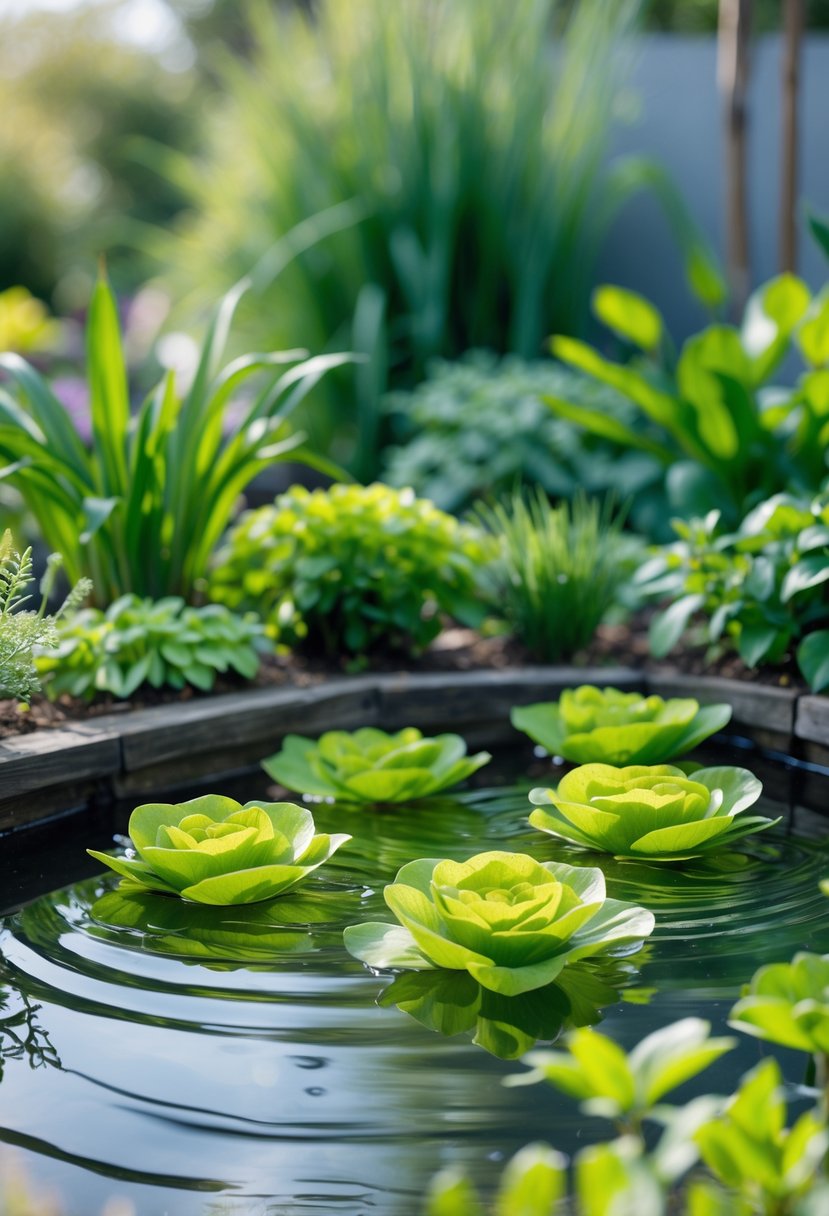
Dwarf water lettuce is a floating plant that fits well in mini ponds. You don’t need to plant it in soil because it floats on the water surface. This makes it very easy to care for.
It grows well in both still and slow-moving water. You should provide at least 12 inches of water depth and 4 to 6 hours of sunlight daily for good growth.
This plant helps keep your pond clean by absorbing excess nutrients, which can reduce algae growth. It also offers some shade to your pond, helping to protect fish and other aquatic life.
Be aware that dwarf water lettuce can grow quickly under the right conditions. You might need to thin it out sometimes to keep the balance in your mini pond.
2) Taro
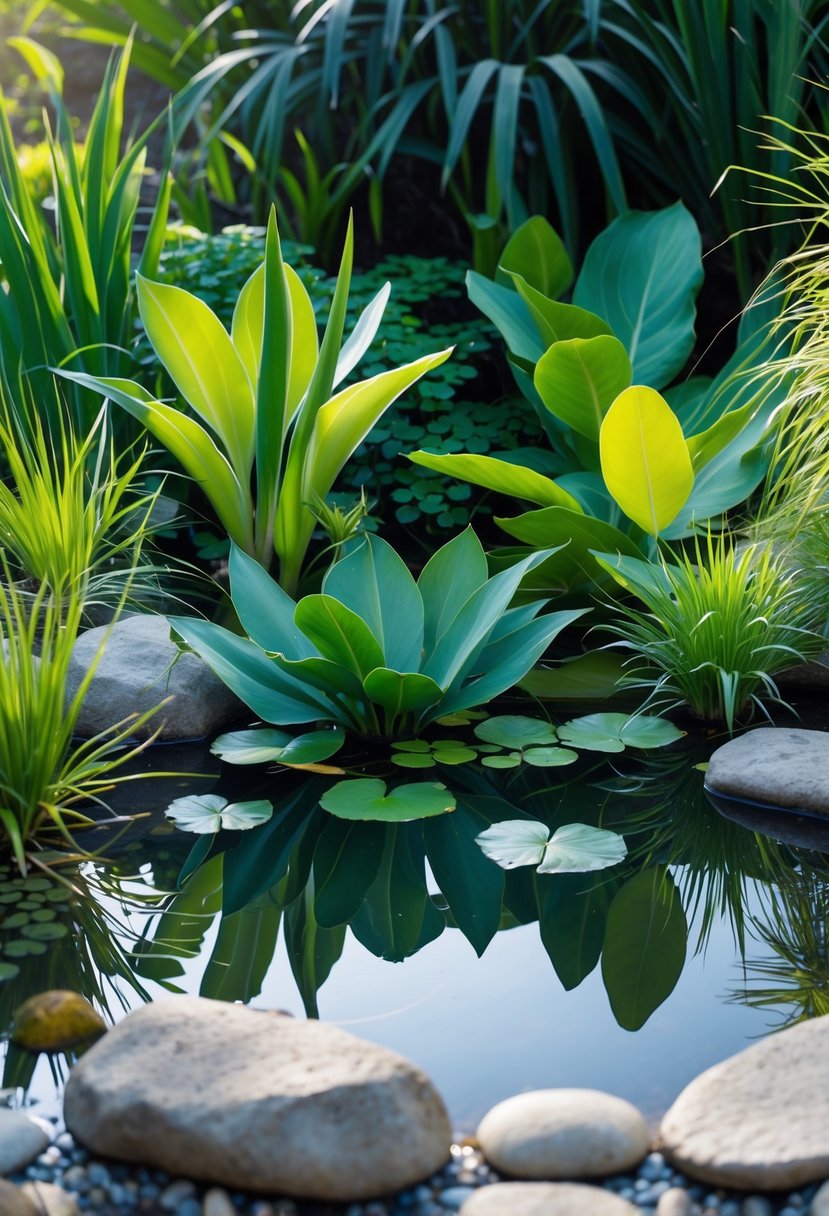
Taro is a great choice for your mini pond if you want bold, tropical-looking leaves. Its large, heart-shaped foliage adds a strong visual impact without needing much care.
You can plant taro in shallow water or wet soil near the pond’s edge. It thrives in moist conditions and can tolerate low light.
Taro also helps improve water quality by filtering nutrients through its roots. It grows quickly but won’t require constant trimming.
During colder months, protect your taro from frost by moving it indoors or providing some cover. This plant fits well in both outdoor and indoor water gardens.
3) Water Hyacinth

Water hyacinth is a floating plant that works well in mini ponds. It grows quickly and helps clean the water by absorbing excess nutrients.
You don’t need soil or pots to plant it. Just place it on the water surface, and it will spread on its own.
The plant produces small lavender flowers, adding a nice touch to your pond. However, it can grow fast, so you may need to thin it out to keep it from taking over.
Water hyacinth also provides shade, which helps control algae growth in your pond. It is easy to care for, making it a low-maintenance choice.
4) Arrowhead
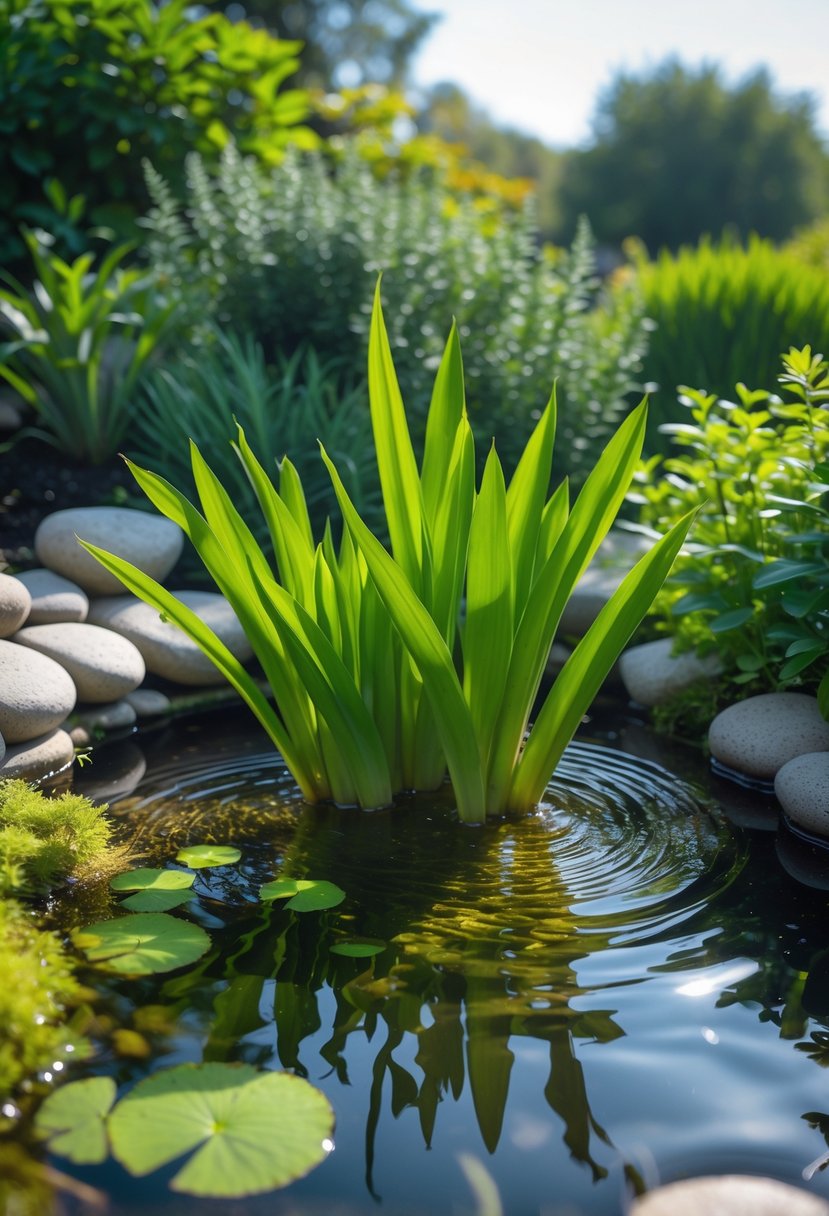
The Arrowhead plant is a great choice for mini ponds. It has arrow-shaped leaves that are dark green with patterns of brownish-yellow. This plant adds a nice touch of color and texture to your water garden.
You should plant Arrowhead in shallow water, about 6 inches to 2 feet deep. It grows best in rich, moist soil with good drainage.
Arrowhead needs 4 to 6 hours of direct sunlight daily but can tolerate some shade. It is easy to care for and helps create a natural look in your pond.
5) Pennywort

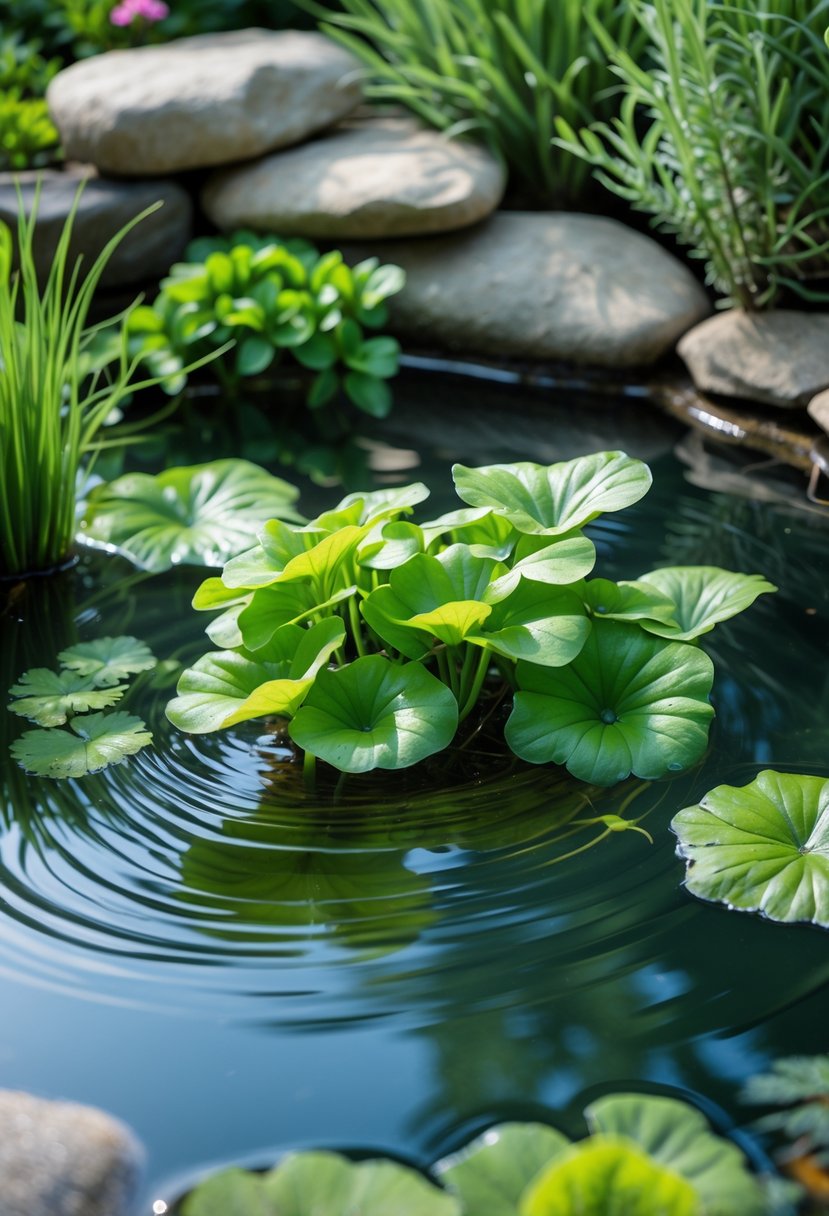
Pennywort is a low-maintenance plant that works well in mini ponds. It has round, flat leaves that float on the water’s surface, giving your pond a neat, green look.
This plant grows quickly and spreads easily. You only need to trim it occasionally to keep it from taking over your pond.
Pennywort can handle different light levels, but it does best in moderate sunlight. It also helps keep the water clean by absorbing nutrients.
If you want a simple plant that adds beauty without much work, pennywort is a good choice for your mini pond. It also provides shelter for small pond animals like snails and insects.
6) Hornwort
Hornwort is a great choice for your mini pond. It grows quickly and helps keep the water clear by using excess nutrients that could feed algae.
You don’t need to plant hornwort in soil. It floats freely or can be anchored, making it easy to manage. Just trim it regularly to keep it from spreading too much.
This plant adds oxygen to your pond, which benefits fish and other aquatic animals. It also provides shelter for pond life with its dense, bushy stems.
If you start with hornwort, expect some needle loss in the first few weeks. Remove any debris to keep your pond clean. Overall, it’s a tough, low-maintenance plant that supports a healthy pond environment.
7) Dwarf Cattail

Dwarf Cattail is a small aquatic plant that grows well in mini ponds and containers. It usually reaches about 2 feet tall, making it perfect for limited spaces. You will see slender green leaves and round brown flower spikes in late summer.
This plant prefers shallow water or moist soil, up to 5 inches deep. It can handle sun or partial shade, so it fits many pond settings. Dwarf Cattail spreads through runners and can be divided in spring to keep it healthy.
You don’t need much care for Dwarf Cattail. Just plant it in a container or pond edge and let it grow. It helps soften hard pond edges, giving a natural look while supporting pond habitats.
8) Water Lily (Nymphaea)
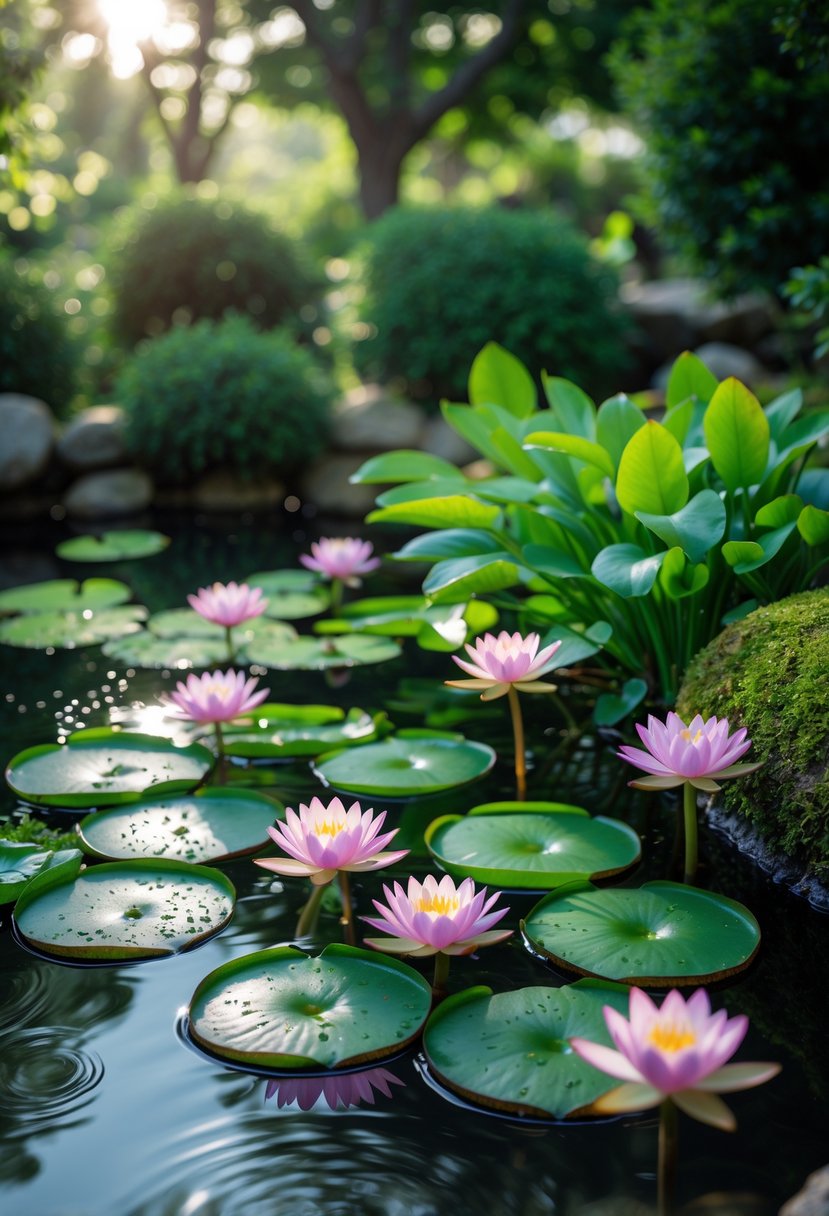
Water lilies are a popular choice for mini ponds. They come in dwarf and miniature varieties that fit well in small containers or tubs. These plants need full sunlight to grow healthy and produce vibrant flowers.
You should plant them in 6 to 18 inches of water. Avoid placing them with large fish like koi, but small goldfish are fine. Use fertilizer tablets monthly to support growth.
Water lilies also help keep your pond clear by shading the water and reducing algae. They are low maintenance but do require regular care like removing dead leaves and watching for pests.
9) Duckweed
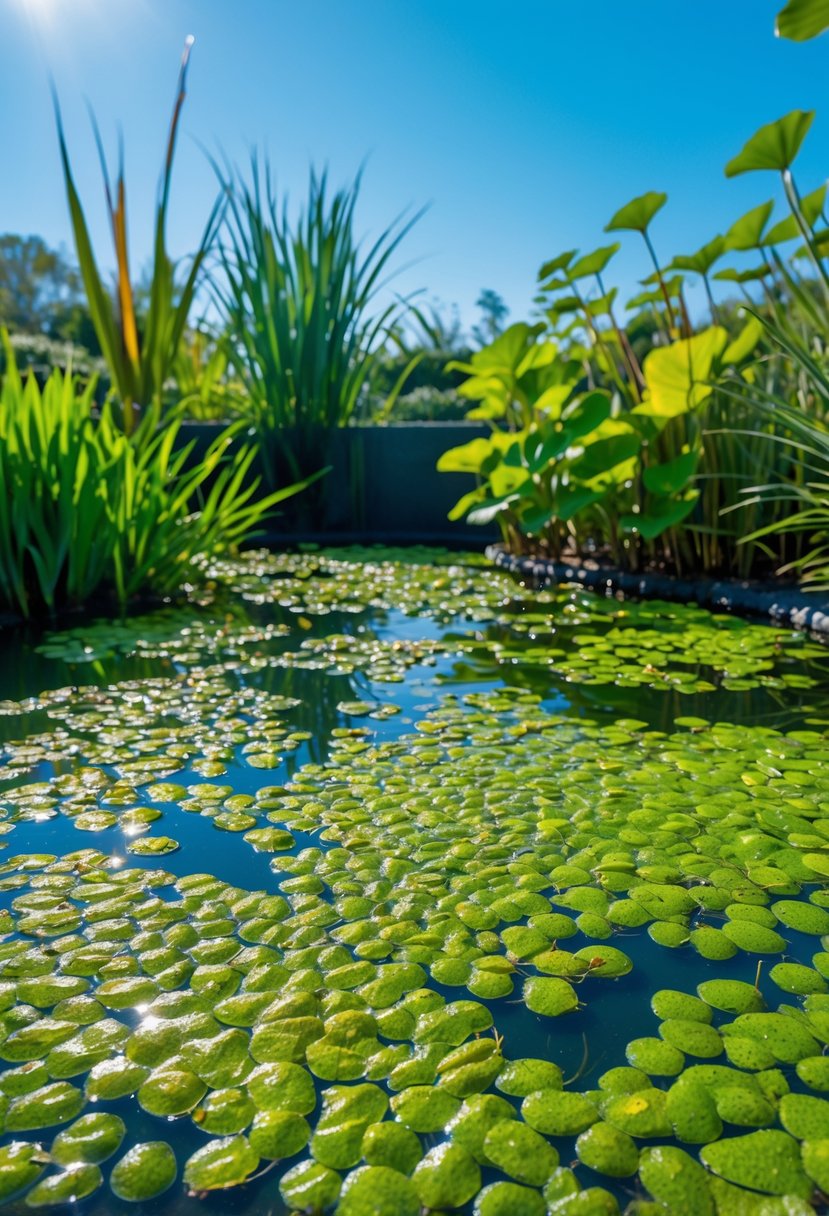
Duckweed is a tiny floating plant that grows quickly on the surface of your mini pond. It has small, bright green leaves that can form a dense cover over the water.
This plant helps shade the pond, which can reduce algae growth. It also absorbs extra nutrients, improving water quality.
Duckweed is easy to care for. It needs little maintenance, making it a good choice for a low-maintenance pond setup.
You can use duckweed to provide shelter for small pond animals. Its rapid growth means you may need to thin it out sometimes to keep your pond balanced.
Choosing the Right Environment
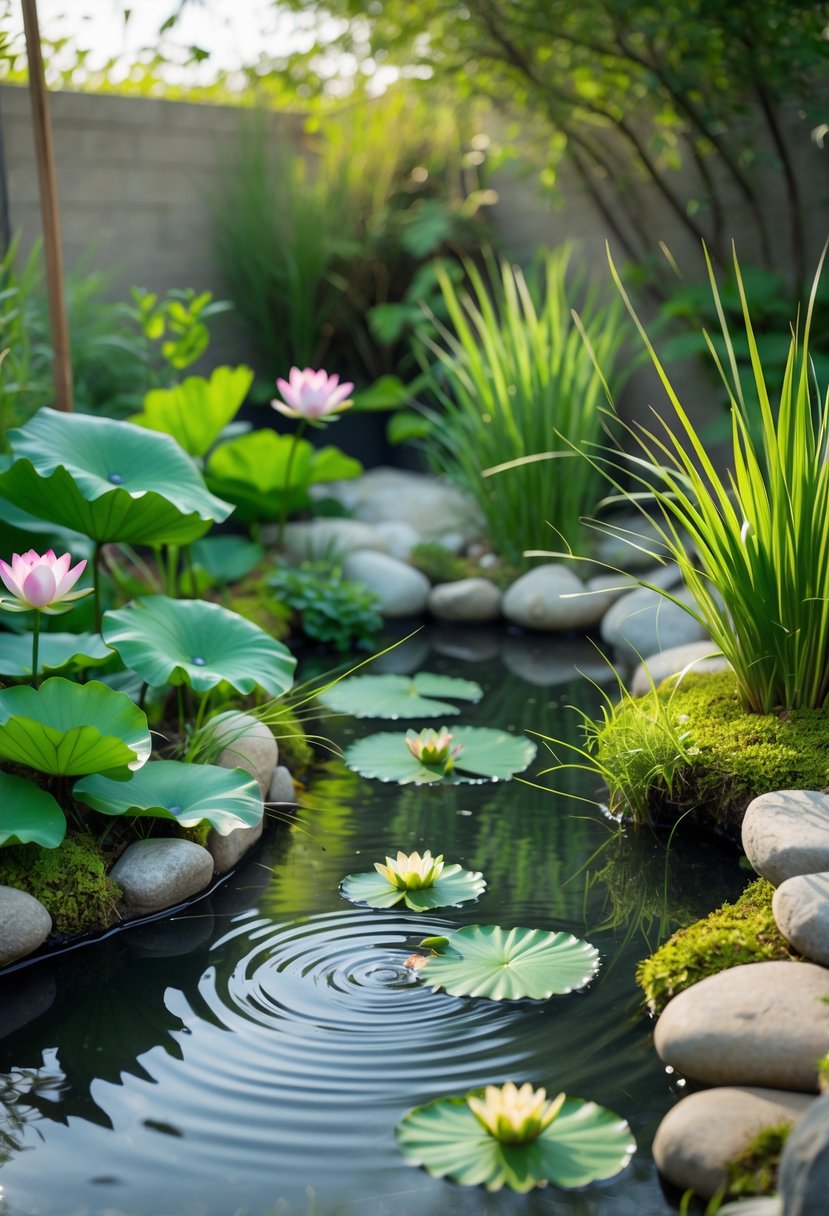
Your mini pond will thrive if you focus on maintaining good water quality and managing sunlight exposure. These are key to keeping your plants healthy and your pond balanced.
Water Quality Basics
Clean and clear water supports healthy plant growth. You need to maintain the right pH, which is usually between 6.5 and 7.5 for most aquatic plants. Avoid extremes that can damage plant roots or stunt growth.
Frequency of water changes matters. Replace about 10-20% of the water weekly to remove excess nutrients and prevent algae growth. Use a gentle filtration system or add beneficial bacteria to keep water balanced.
Watch for debris like fallen leaves or dead plants. Remove these quickly to prevent decay that lowers oxygen levels. Proper aeration helps, so consider adding submerged plants that release oxygen into the water.
Sunlight and Shade Considerations
Most mini pond plants need around 4 to 6 hours of sunlight each day. Too little light can make plants weak and thin. Too much direct sun, especially over 8 hours, can lead to algae blooms and overheating.
Floating plants and marginal plants help manage sunlight by casting shade. You can also position your pond near a spot that gets morning sun but is shaded in the afternoon to avoid intense heat.
Observe your pond throughout the day to track sunlight patterns. This helps you select plants that suit your pond’s specific light levels. For example, water lilies thrive in full sun, while some ferns prefer partial shade.
Ongoing Care for Mini Pond Plants
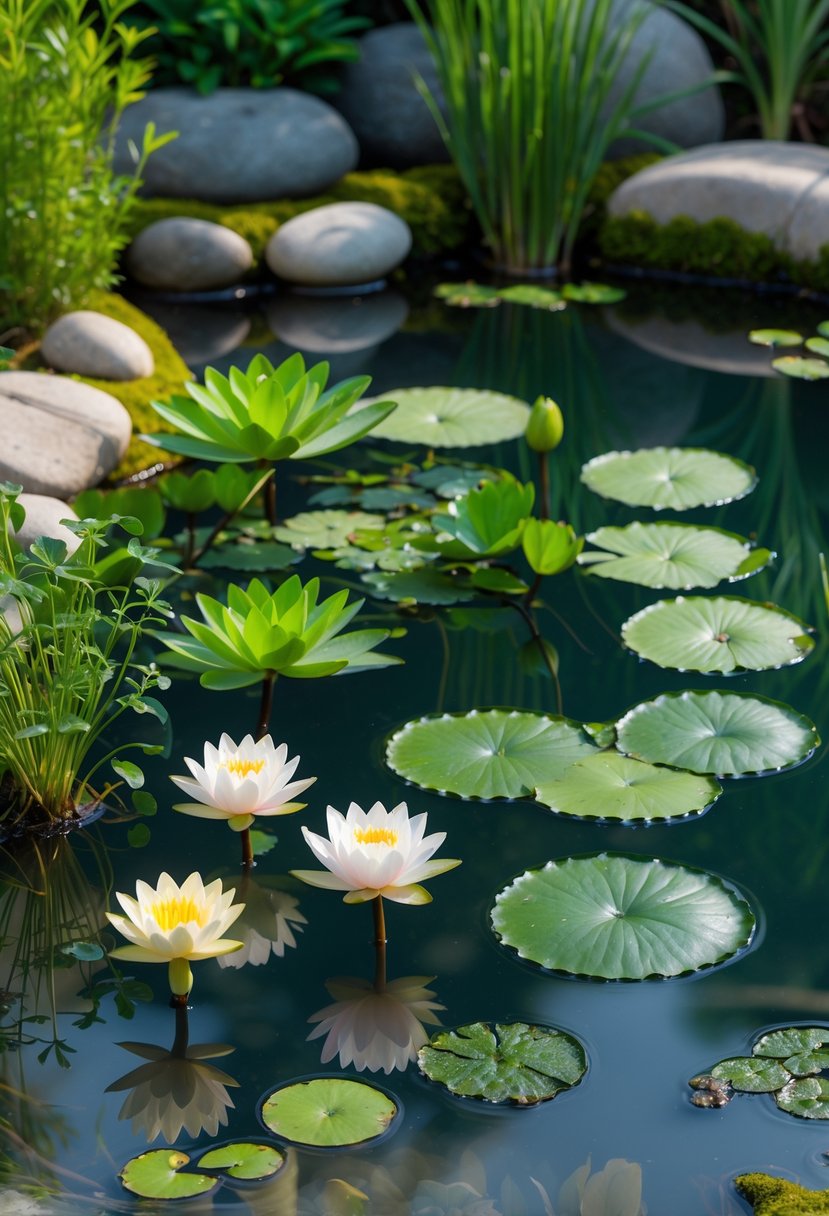
Taking good care of your mini pond plants means feeding them properly and keeping algae under control. Both help maintain healthy plants and clear water without extra work.
Simple Feeding Strategies
Feed your mini pond plants with slow-release aquatic fertilizer tablets. Push the tablets into the soil near the roots every 4 to 6 weeks during the growing season.
Avoid overfeeding, which can cause algae growth. Use fertilizer made for water plants to prevent harm to fish and beneficial pond organisms.
If you have floating plants, fertilize the water directly but sparingly. Monitor plant growth to adjust feeding, cutting back if leaves turn yellow or water becomes cloudy.
Managing Algae Naturally
Algae can quickly take over a small pond, making water green and harming plants. You can control algae by adding floating plants like water lettuce or duckweed. These block sunlight that algae need to grow.
Another tip is to use a small water pump or fountain to keep water moving. Moving water limits algae buildup and helps oxygenate the pond.
Remove visible algae by hand regularly. Avoid chemical algaecides, which can upset the balance of your pond’s ecosystem.