17 Stunning Container Pond Ideas with Fish for Small Spaces and Gardens
Creating a container pond with fish is a great way to add beauty and calm to your small garden or outdoor space. You don’t need a large yard to enjoy the peaceful sound of water and the charm of aquatic life. With the right design, a container pond can become a striking feature that fits perfectly in limited areas.
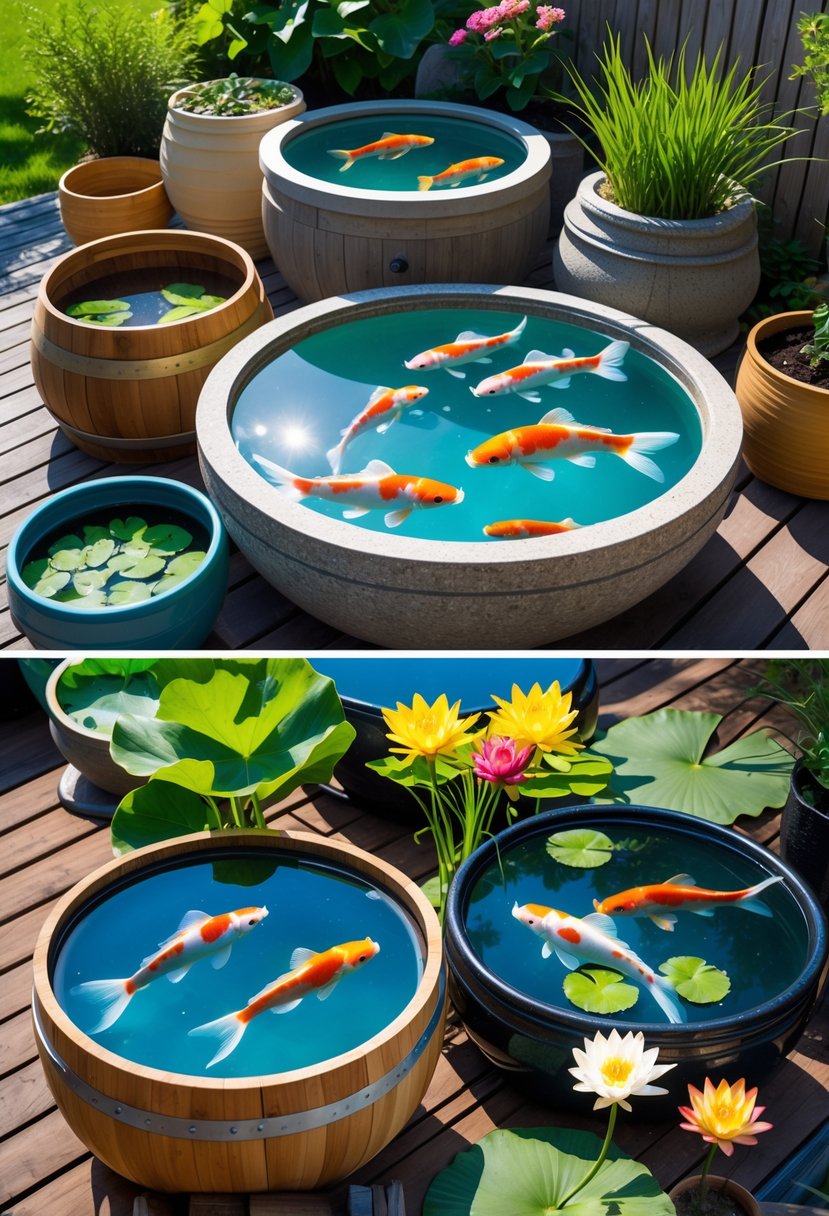
These 17 stunning container pond ideas will help you make the most of your small space while bringing nature closer to you. Whether you want colorful fish, lush plants, or a simple water feature, these ideas offer practical and attractive ways to enhance your garden environment.
1) Copper Container Pond with Mini Waterfall
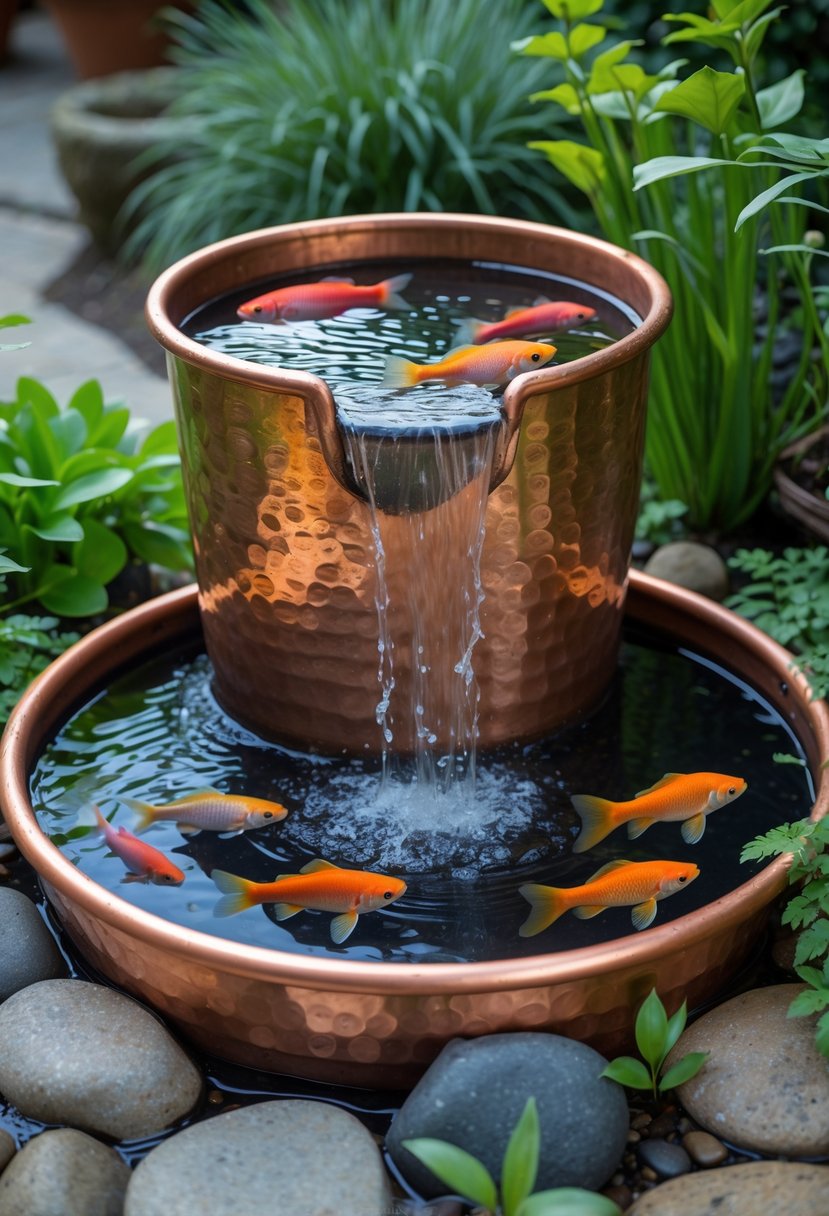
You can create a stylish pond using a copper container. Copper adds a warm, natural look that fits well in small garden spaces.
Adding a mini waterfall gives your pond soothing sound and movement. It helps keep the water clean by improving circulation.
You can include small fish and aquatic plants to bring life and color. This setup works well on patios or balconies where space is limited.
2) Square Wooden Planter Fish Pond
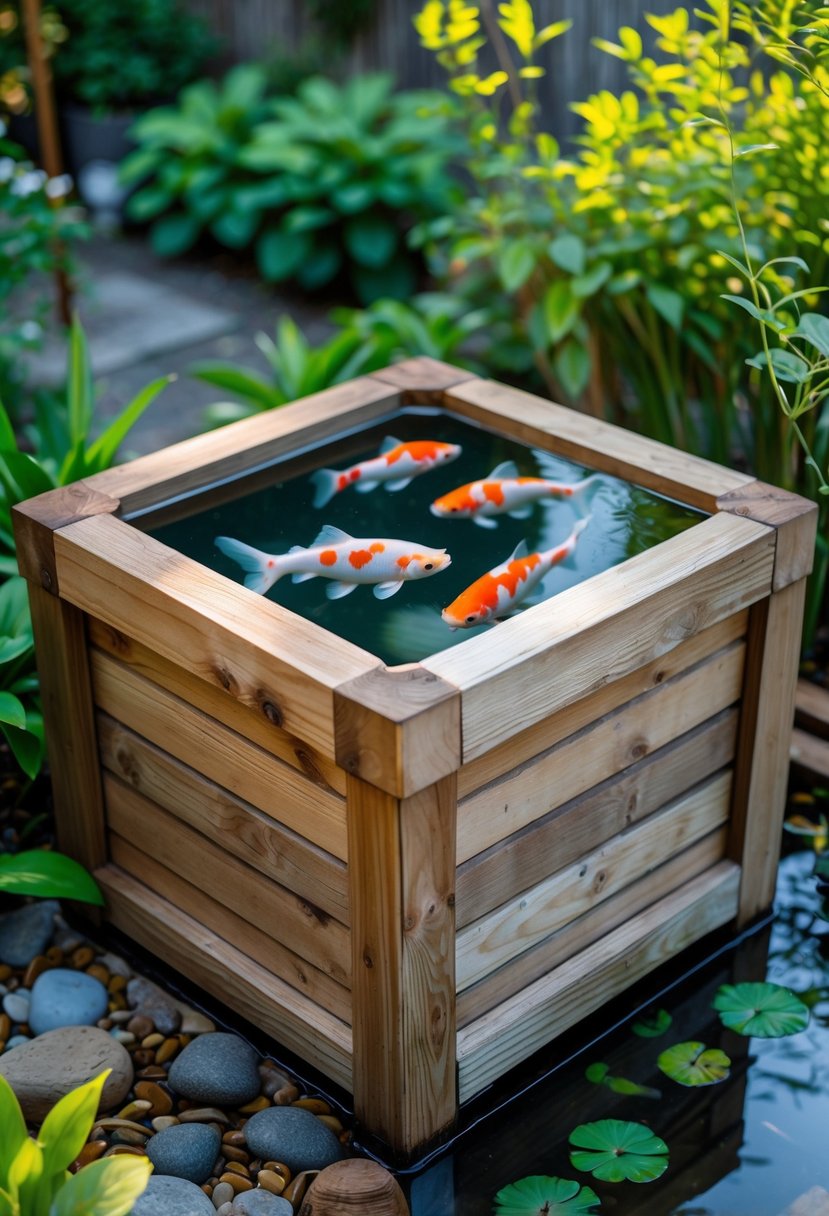
You can create a simple and stylish fish pond using a square wooden planter. This shape fits neatly in small spaces like patios or balconies.
Wood is sturdy and natural, adding warmth to your outdoor area. Make sure to line the planter well to hold water and protect the wood.
Adding small fish and floating plants will bring life and calm to your pond. It’s an easy way to enjoy water features without needing a large garden.
3) Rustic Stone Basin Pond
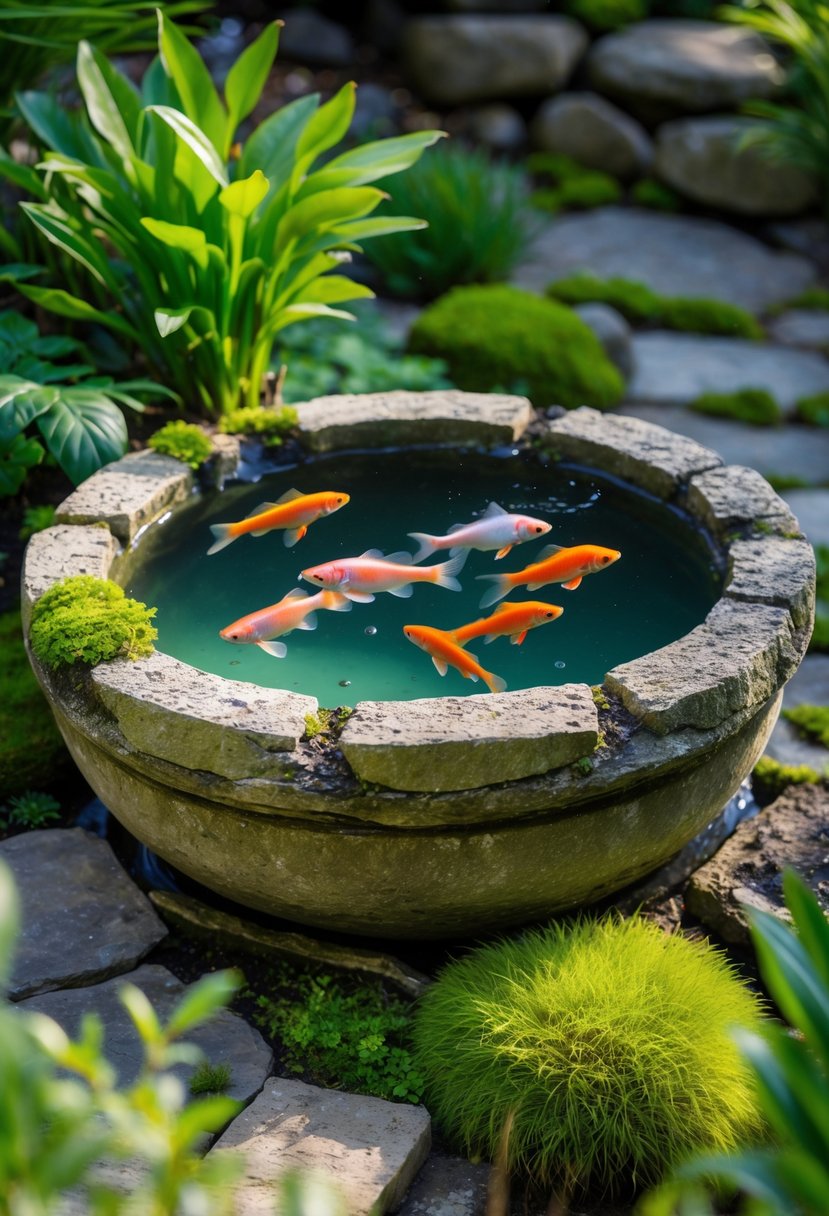
You can create a simple, natural pond using a rustic stone basin. Choose a basin made from weathered stone to add a timeless look to your garden.
Fill it with water and add small fish like minnows or koi. Include aquatic plants to help keep the water clean and provide shade.
The stone keeps water cool and blends well with garden rocks or plants. This pond style fits well in both modern and rustic outdoor spaces.
4) Recycled Barrel Pond with Koi
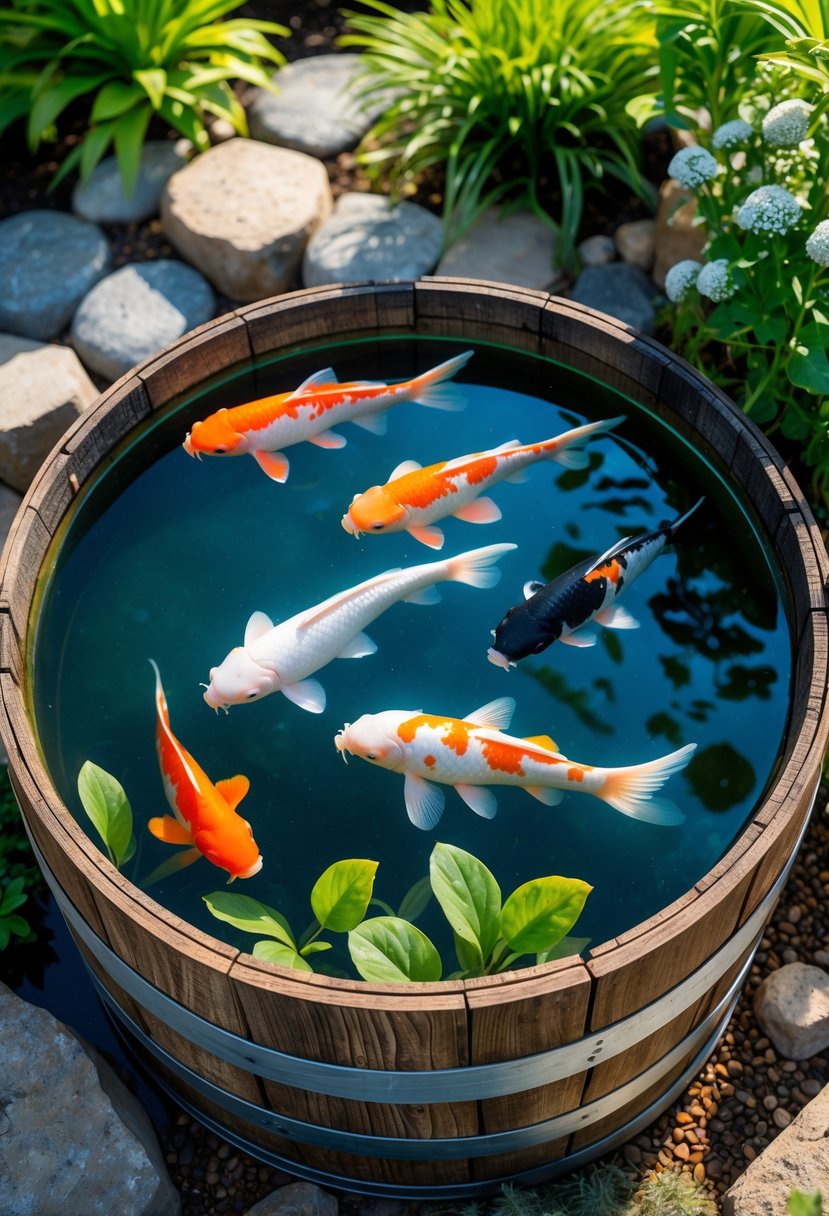
You can create a small koi pond using a recycled whiskey barrel. The deep basin offers enough space for a few koi fish to swim comfortably.
Adding a small solar-powered fountain helps keep the water moving, which is important for the health of your fish.
Floating plants like water lilies give shade and improve water quality by adding oxygen. This setup fits well in small outdoor spaces while adding a rustic look.
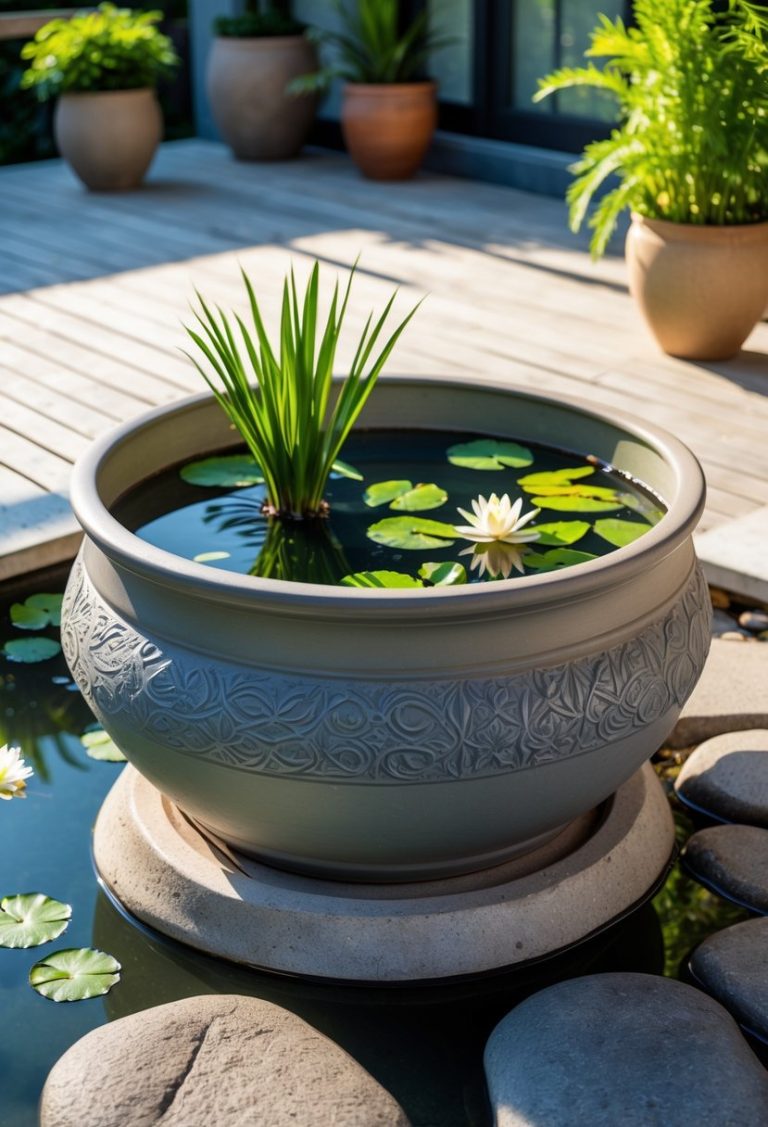
5) Tall Ceramic Urn Pond
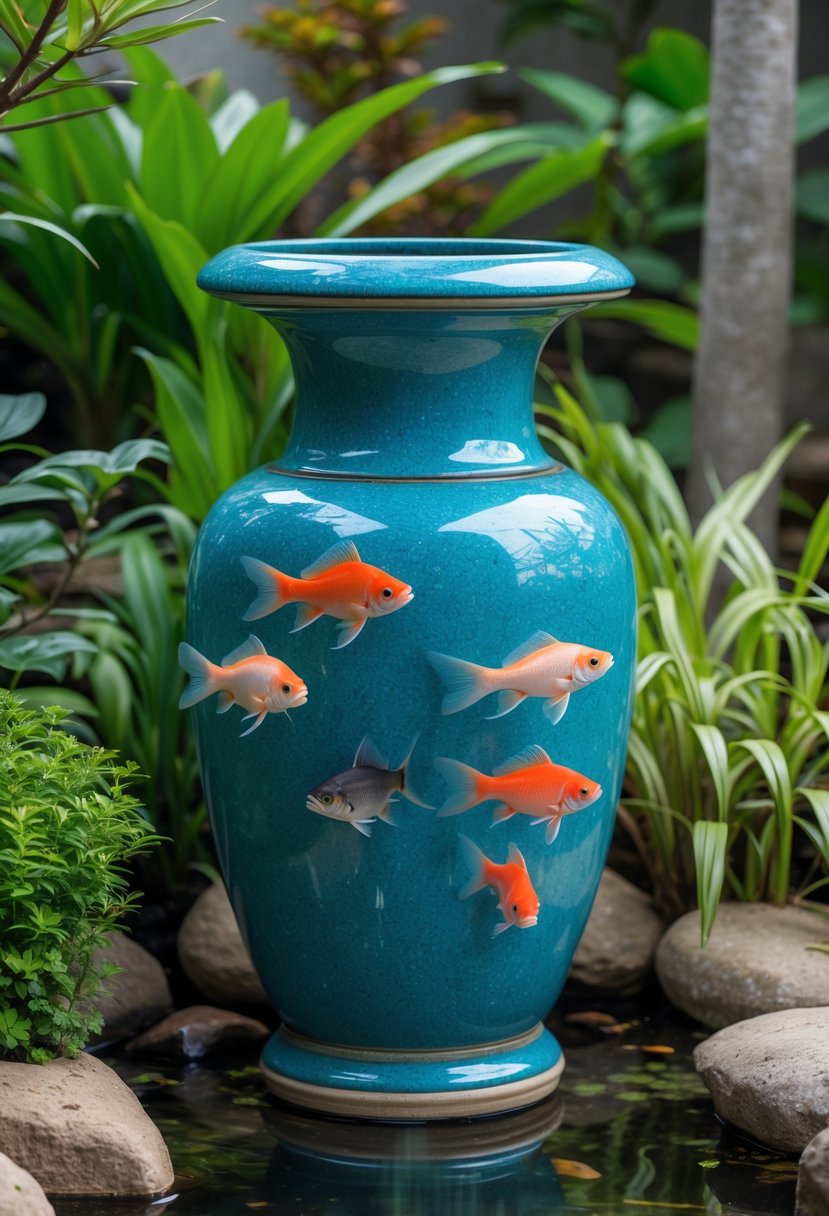
A tall ceramic urn can make a stylish container pond for your small garden. You can fill it with water, add small fish, and place aquatic plants like floating lilies.
This type of pond takes up little space but adds height and interest. Make sure the urn is watertight or lined to hold water.
Regular cleaning and water changes help keep your fish healthy. It’s an easy way to add a water feature without needing much room.
6) Geometric Concrete Container Pond
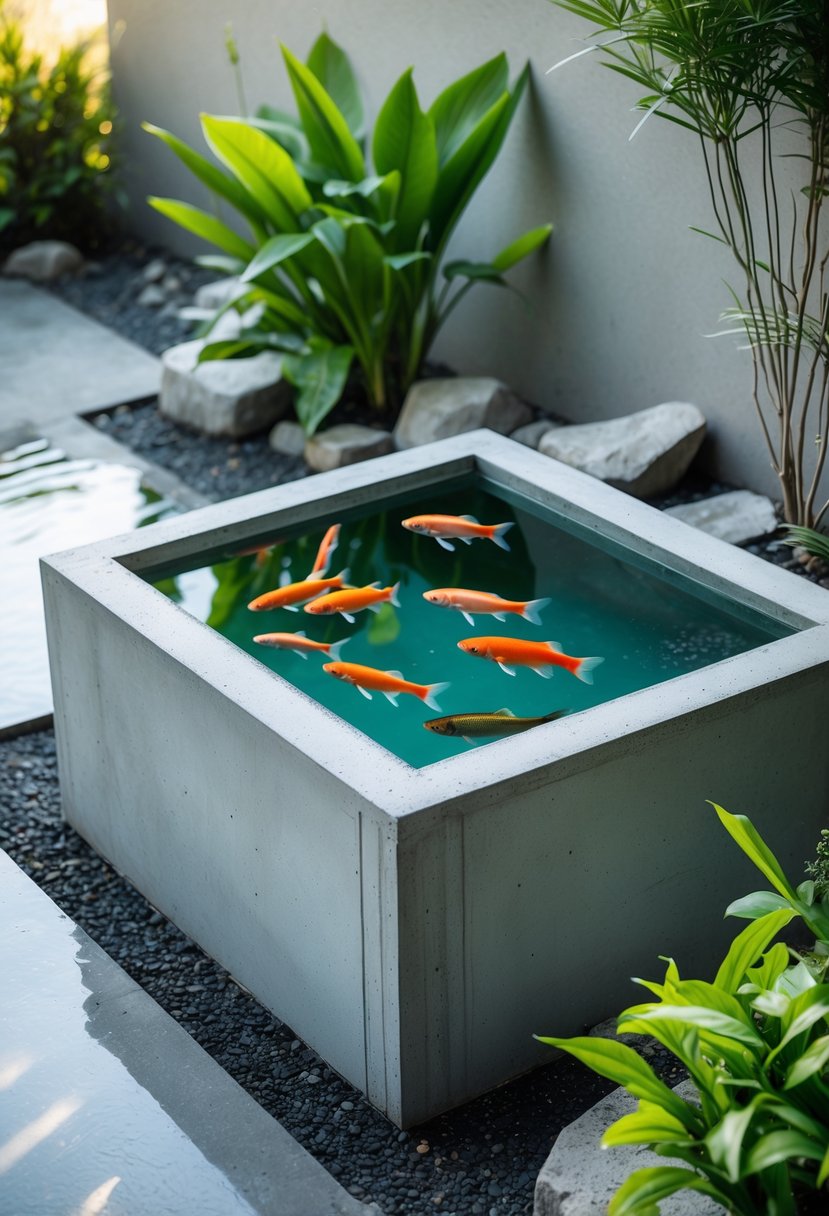
You can use concrete containers with sharp, clean lines for a modern pond design. These geometric shapes add a structured look to your garden or patio.
Concrete holds water well and can be molded to fit your space. You can decorate it with small fish and aquatic plants to create a calm, stylish area.
This type of pond works well on patios or decks where space is tight but design matters. It is durable and easy to maintain.
7) Tiered Container Pond with Aquatic Plants
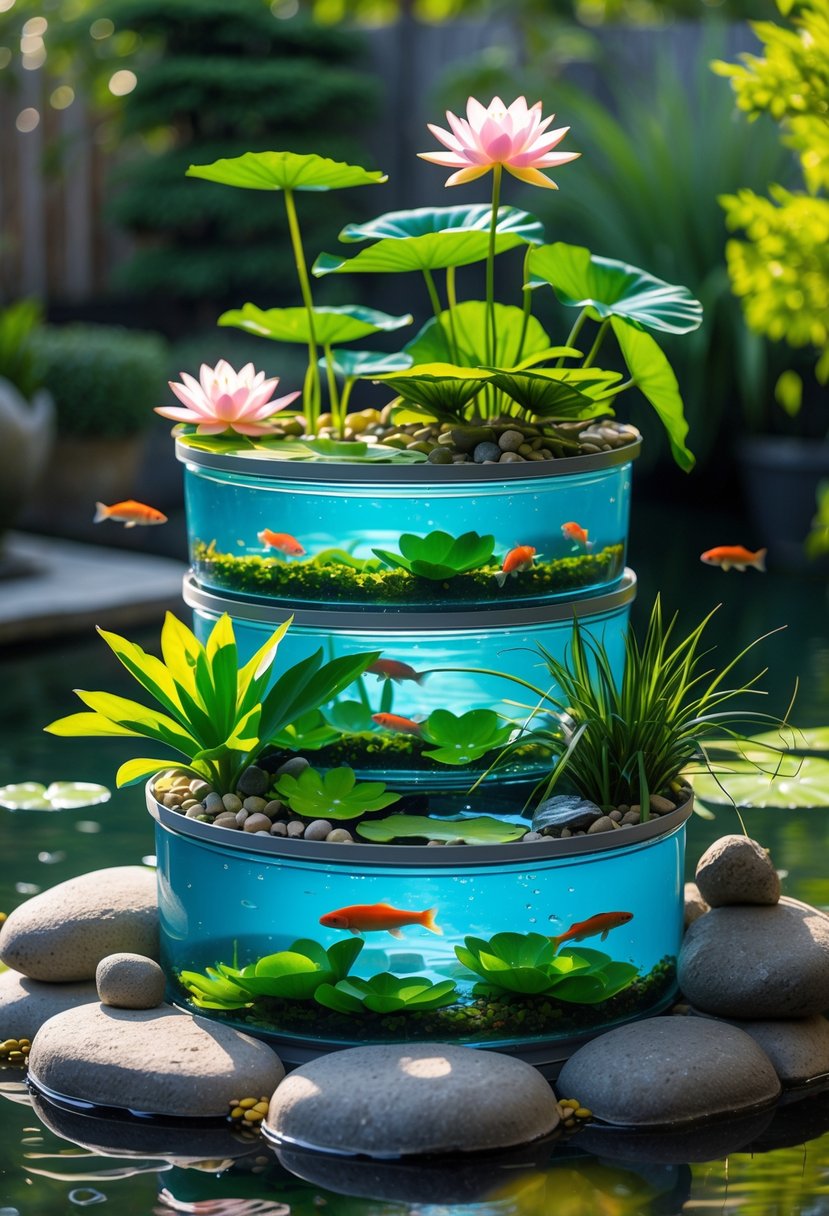
You can create a tiered container pond by stacking pots or basins at different heights. This design lets water flow gently from one level to the next, adding soft movement to your pond.
Plant aquatic plants like lilies or reeds in each container to improve water quality and provide shelter for your fish. The tiers also make it easy to reach and care for your plants. This setup fits well in small spaces and adds a natural look to your garden.
8) Self-Wicking Container Pond
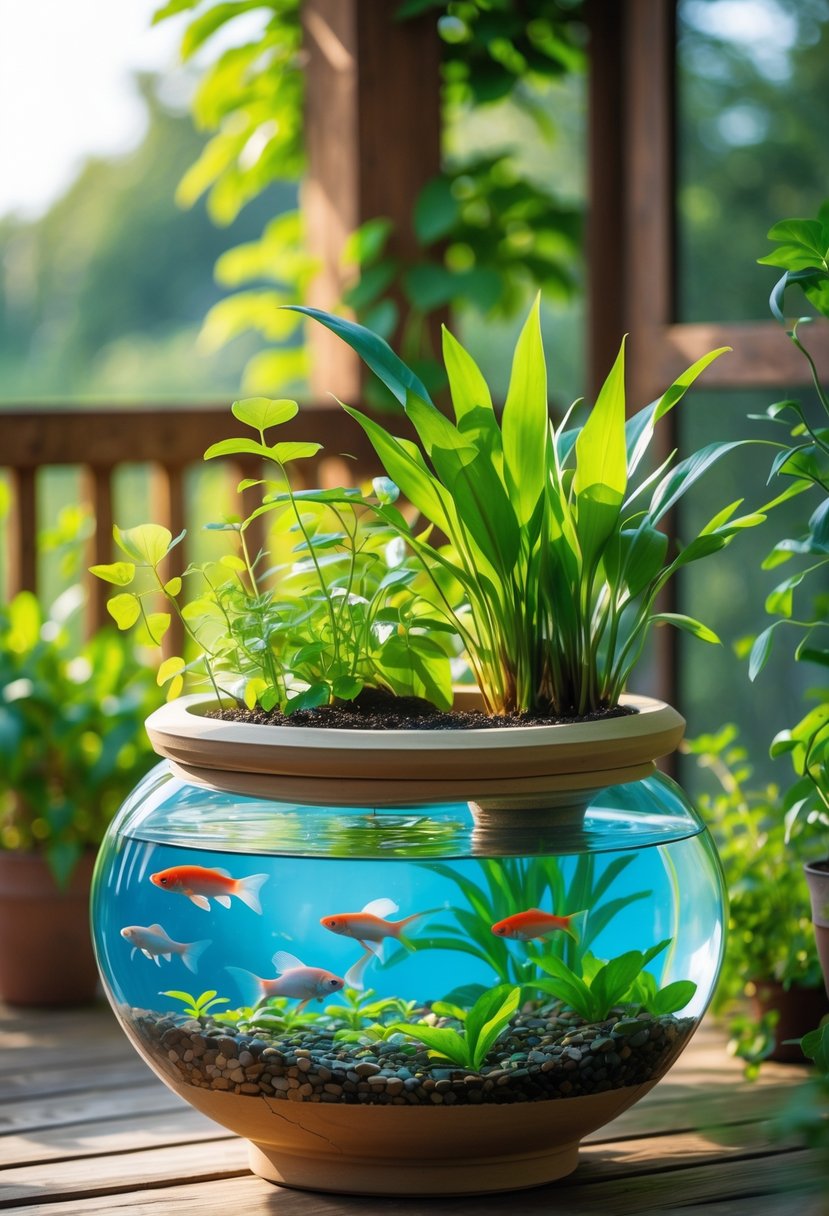
A self-wicking container pond uses a special soil setup that draws water up to plants automatically. This means you won’t need to water your plants often.
You can add small fish to the pond, which helps keep the water clean. The water stays balanced because the system keeps it moist without overfilling.
This type of pond is low maintenance, perfect if you want a simple water feature with plants and fish in a small space.
9) Square Slate Pond with Floating Lilies
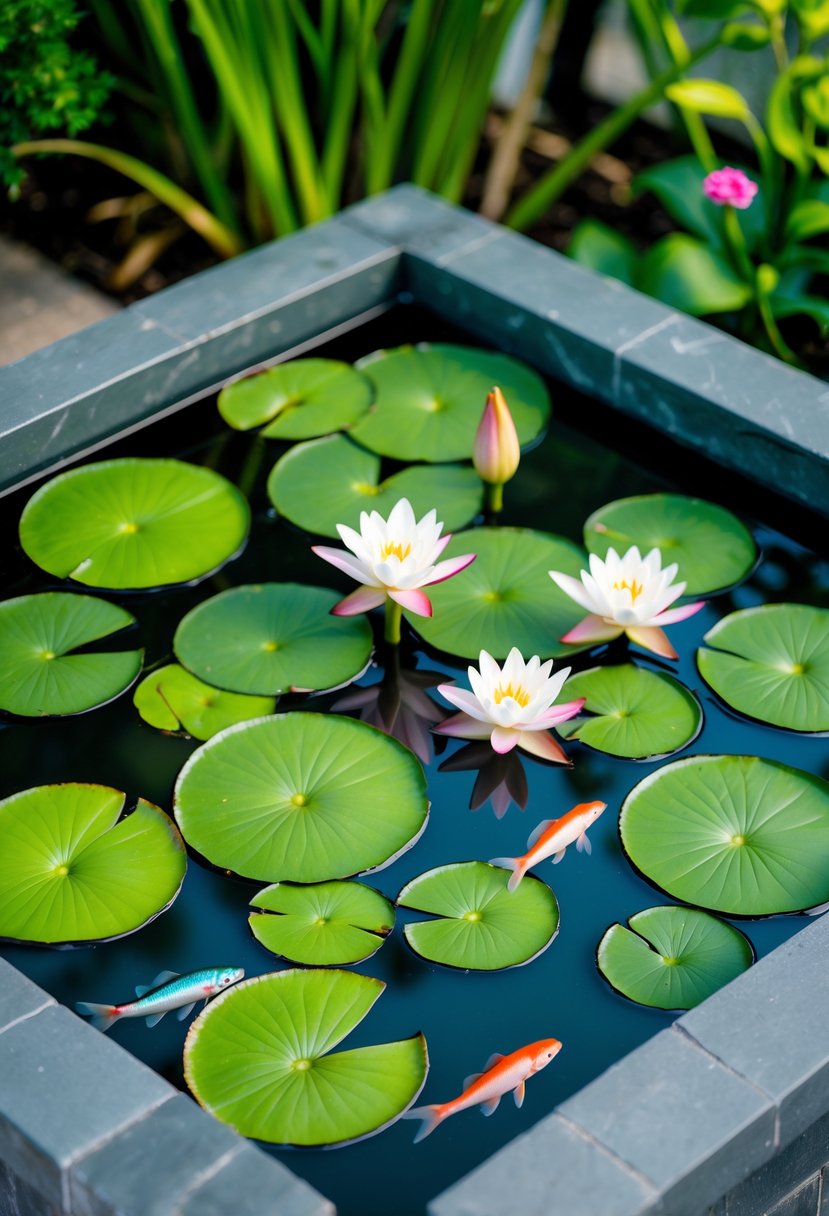
You can create a clean, modern look with a square slate container pond. The natural dark color of slate contrasts nicely with the green leaves of floating lilies.
Floating lilies add beauty and provide shade to help keep water cool. This helps create a comfortable environment for your fish.
Place the pond in a spot with partial shade to maintain stable water temperature. Adding small gravel at the bottom makes cleaning easier and helps fish hide.
10) Vintage Metal Tub Pond
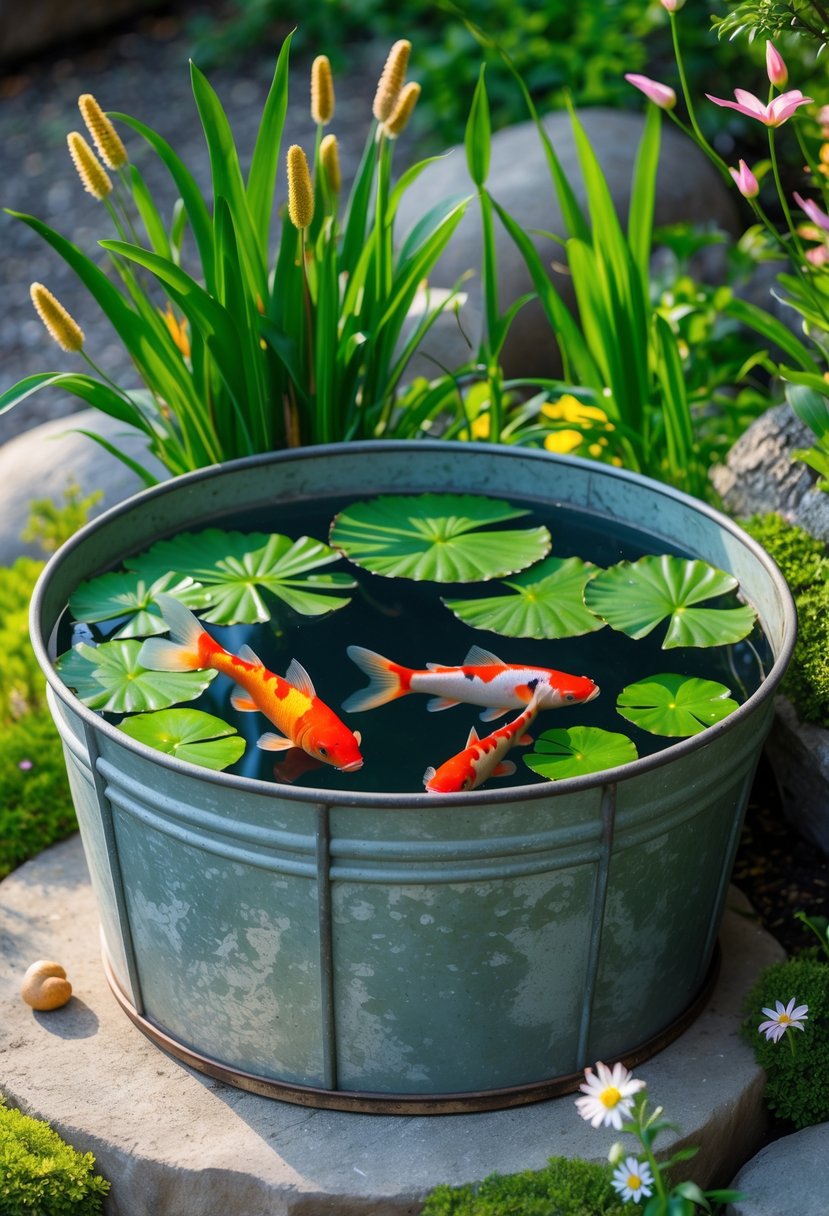
You can turn an old metal tub into a charming pond for your small garden. Make sure the tub is watertight or lined to hold water.
Add aquatic plants and small fish to create a peaceful environment. This type of pond is low-maintenance and fits well in tight spaces like patios or balconies.
The rustic look of the metal tub adds character to your outdoor space. Keep the water clean to maintain a healthy environment for your fish and plants.
11) Rectangular Galvanized Planter Pond
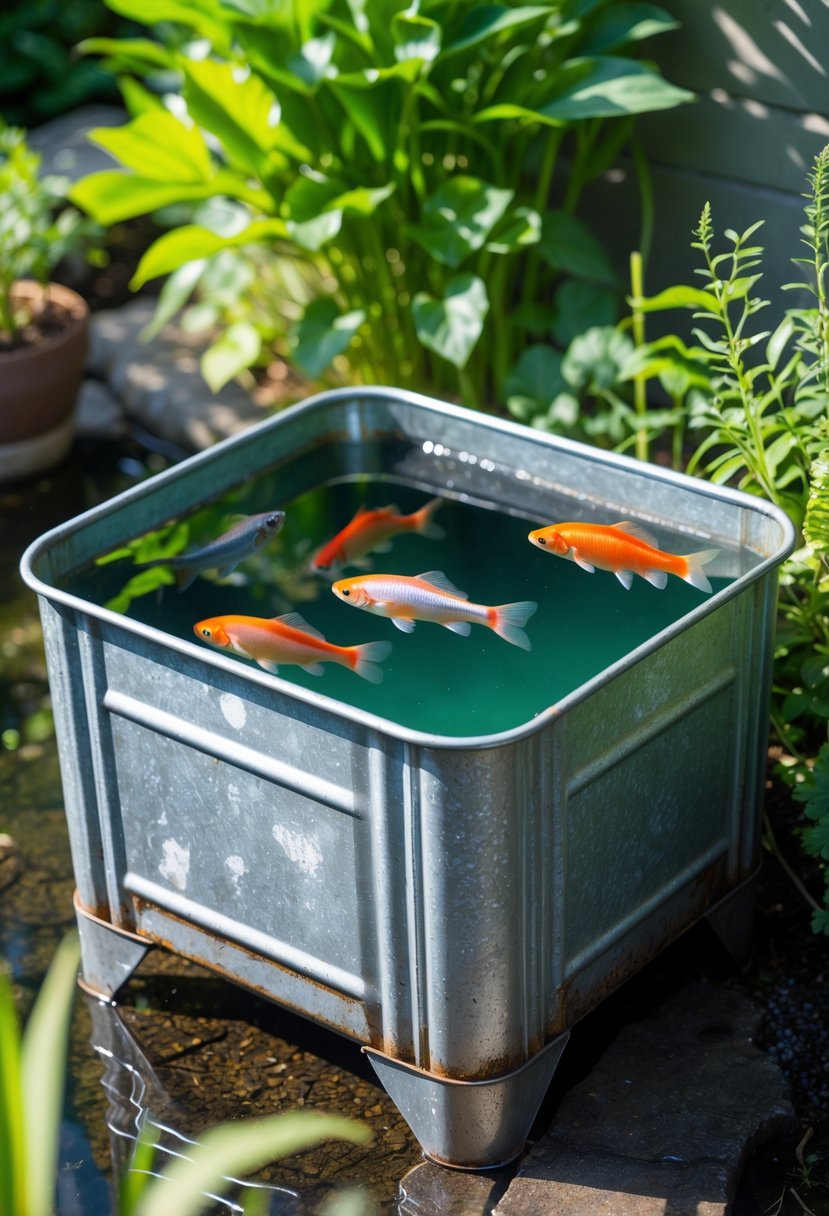
You can use a rectangular galvanized planter to create a simple and stylish pond. Its shape fits well in narrow spaces or along walls.
This type of pond holds enough water for small fish and aquatic plants. It is durable and resistant to rust, making it a practical choice.
You don’t need to dig; just place it on a stable surface. Add a liner if needed, fill it with water, and include your favorite fish or plants.
12) Compact Bamboo Pond with Goldfish
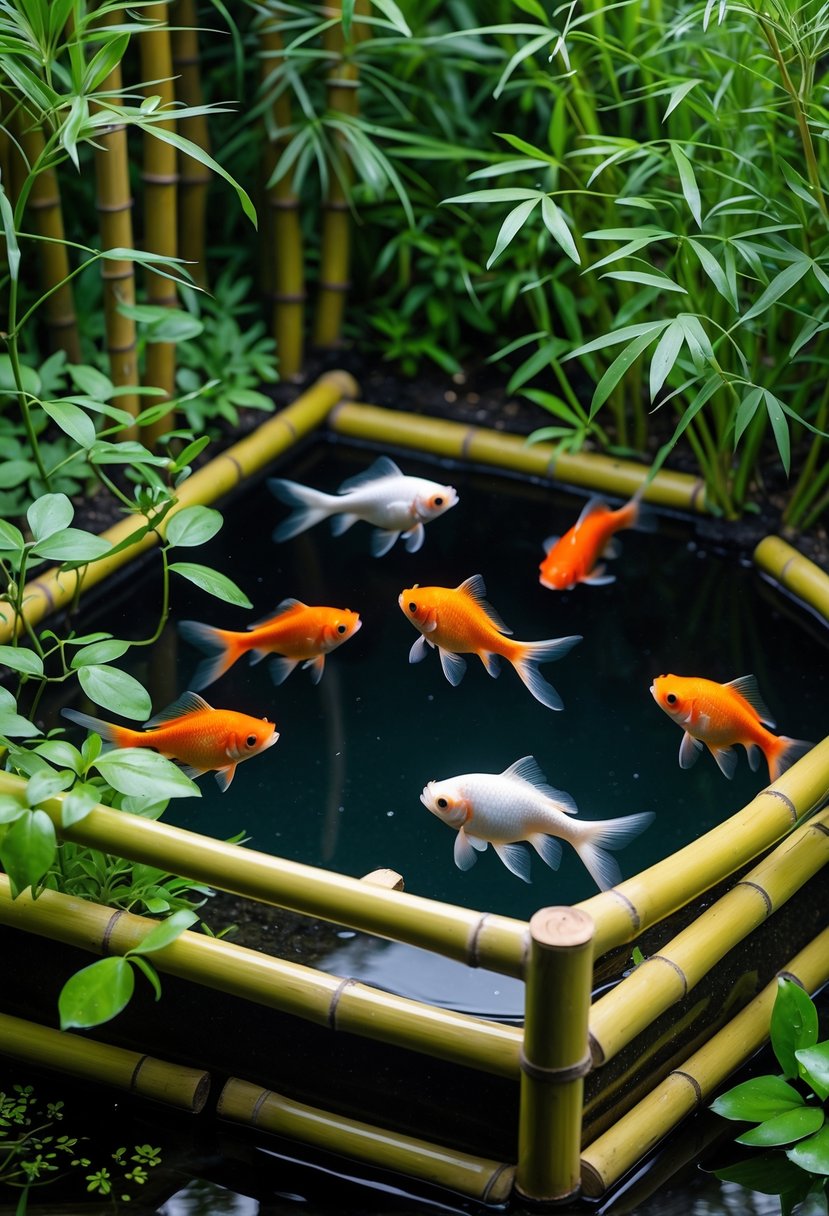
You can create a calm and natural look with a compact bamboo pond. Bamboo containers are lightweight and fit well in small spaces like patios or balconies.
Adding goldfish brings color and life to your pond. Make sure to keep the water clean and provide enough shade to protect your fish.
This type of pond needs regular care but offers a peaceful, simple water feature for small gardens.
13) Modern Black Fiberglass Pond
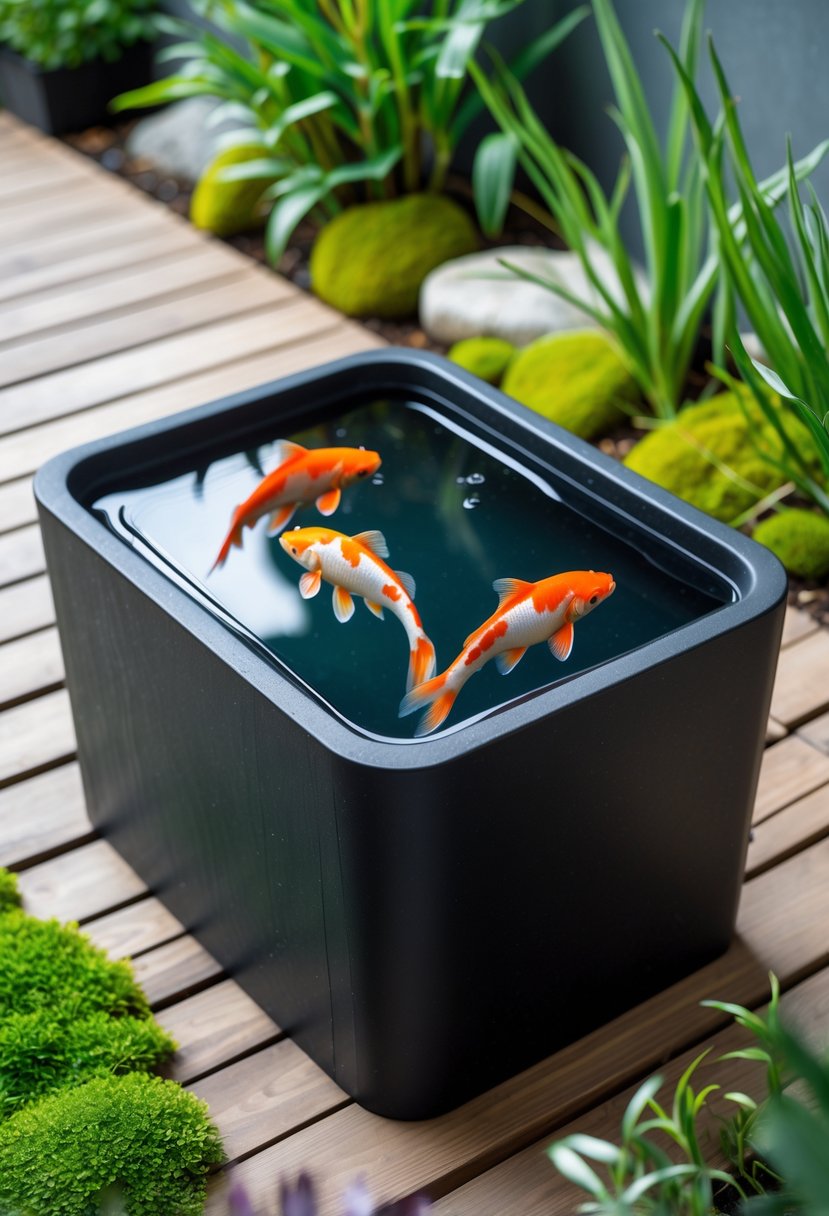
You can add a sleek look to your garden with a modern black fiberglass pond. Its smooth finish fits well in small spaces and looks stylish with simple plants.
The pond is lightweight, making it easy to move or adjust. You can add colorful fish to create a lively contrast with the black surface.
This type of pond is low maintenance and durable. It works well if you want a clean, modern water feature without taking up much room.
14) Colorful Mosaic Tile Pond
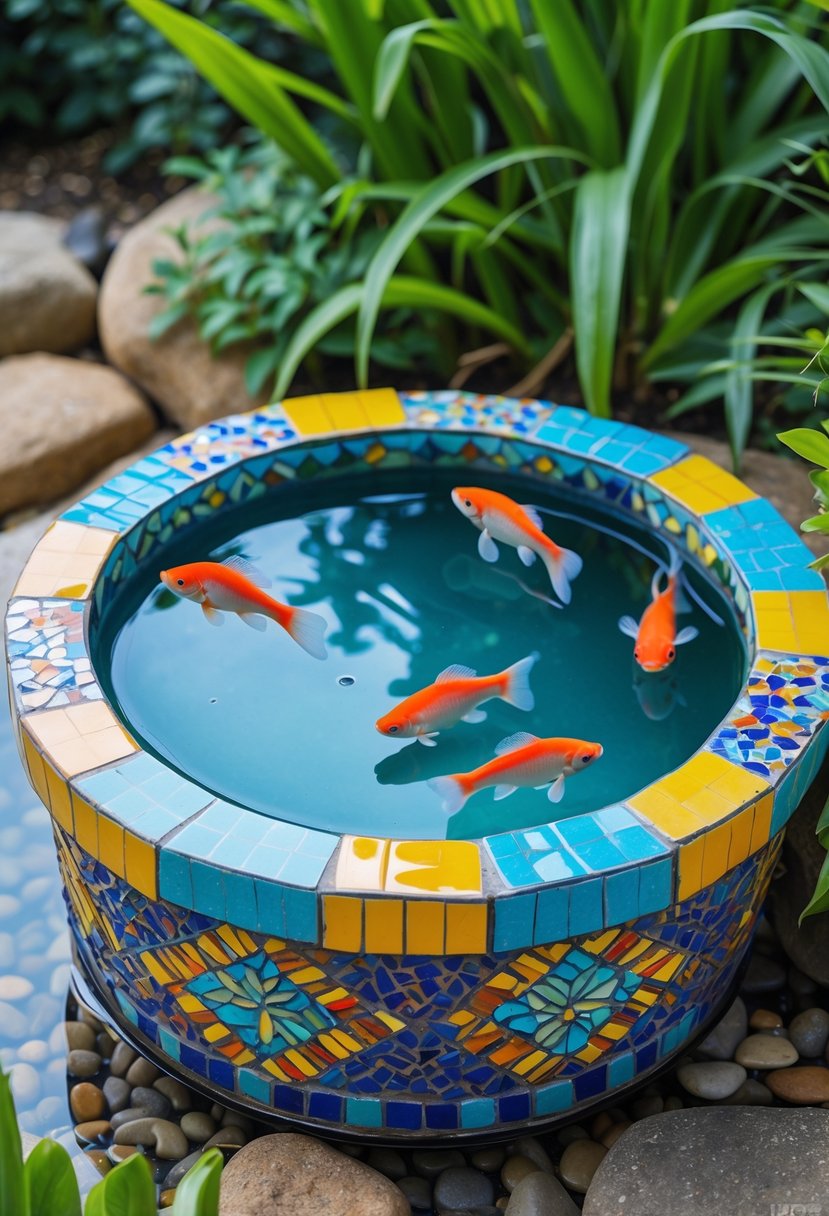
You can create a striking container pond using colorful mosaic tiles. These tiles add texture and bright patterns to the pond’s edges and floors.
The colors make your pond stand out and give it a polished, artistic look.
Choose tiles that are water-resistant and safe for fish. This helps keep your pond beautiful and healthy for your aquatic pets.
15) Miniature Rock Garden Pond
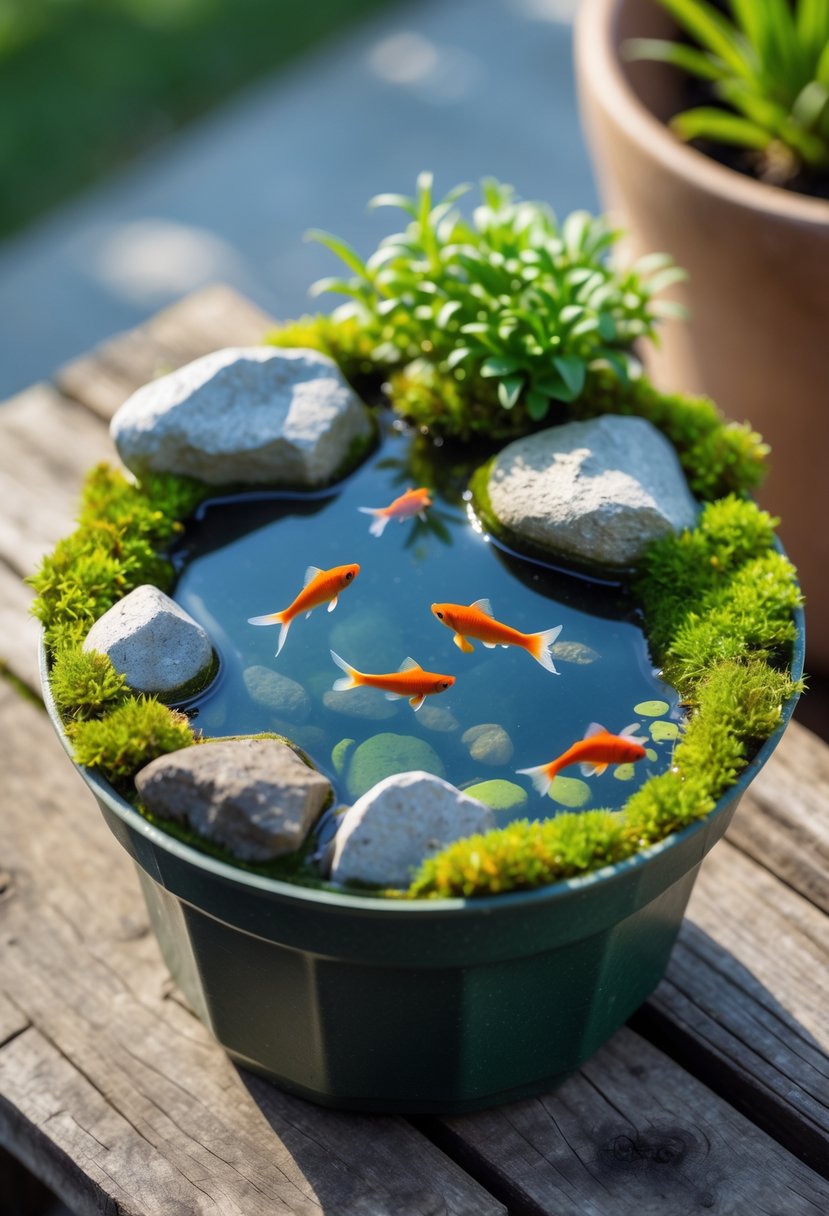
You can create a miniature rock garden pond by using a small waterproof container. Arrange smooth stones and gravel inside to mimic a natural pond floor.
Add a few water plants around the edges to give your pond a fresh look. Small fish like minnows work well in this type of pond because they need little space.
This setup fits well in tight spaces like balconies or patios. It adds a peaceful water feature without taking up much room.
16) Oval Terra Cotta Fish Pond
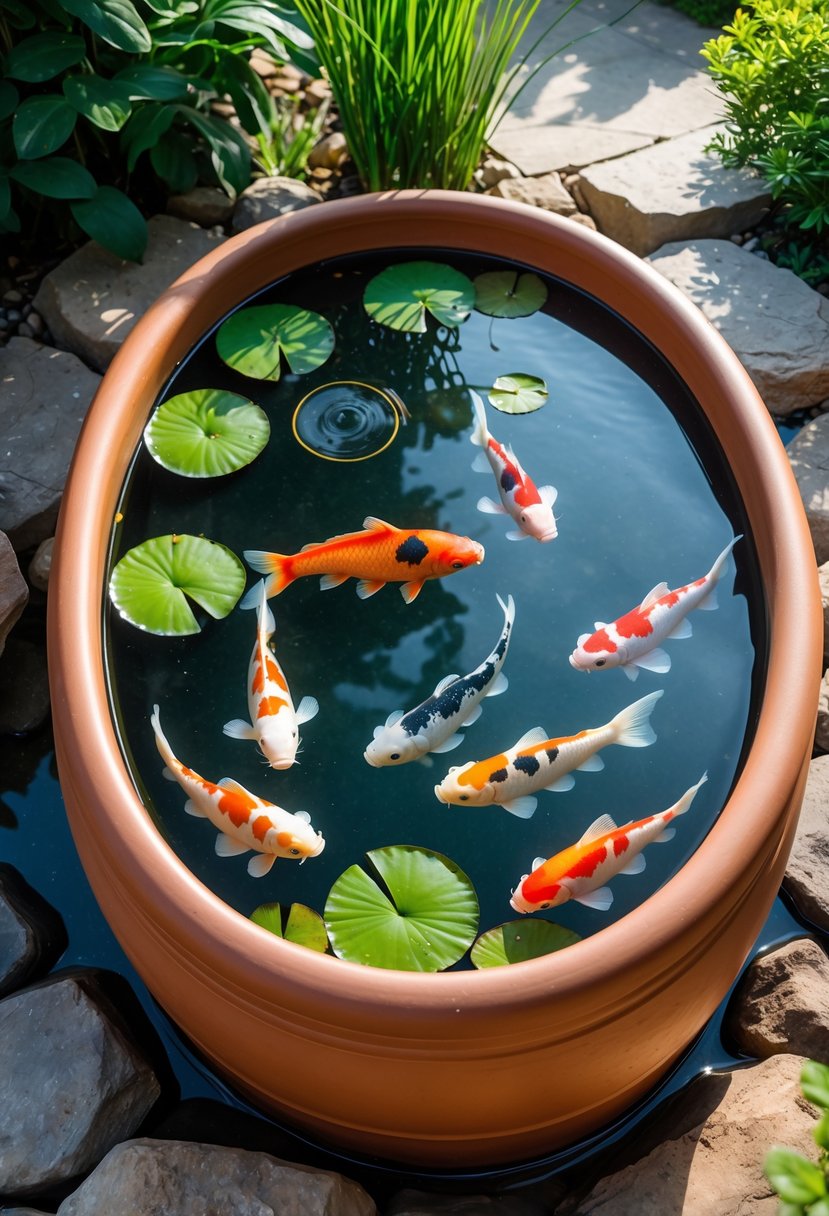
You can create a simple and attractive fish pond using an oval terra cotta pot. These pots are natural and breathable, which helps maintain healthy water for your fish.
Place aquatic plants around the edges to add greenery and provide shelter for your fish. The size is perfect for small spaces like balconies or patios.
This style works well for small fish like guppies or minnows. It’s easy to maintain and adds a natural touch to your outdoor area.
17) Small Indoor Aquarium Planter
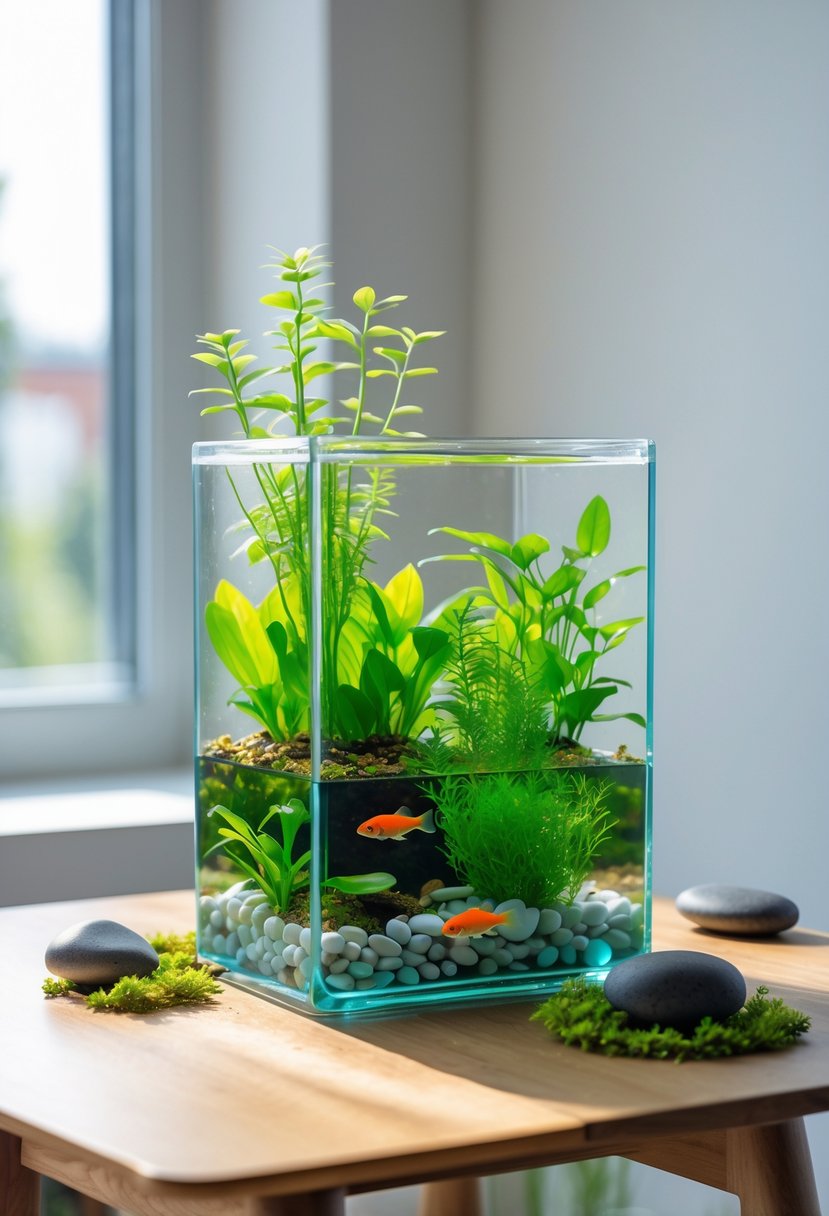
You can create a small indoor aquarium planter that combines water, plants, and fish in one container. This setup fits well on desks, shelves, or windowsills.
It uses aquatic plants that help keep the water clean and adds natural beauty.
Choosing small fish like bettas or guppies works best. This container pond requires minimal space but still brings life to your indoor environment.
How to Maintain a Healthy Container Pond
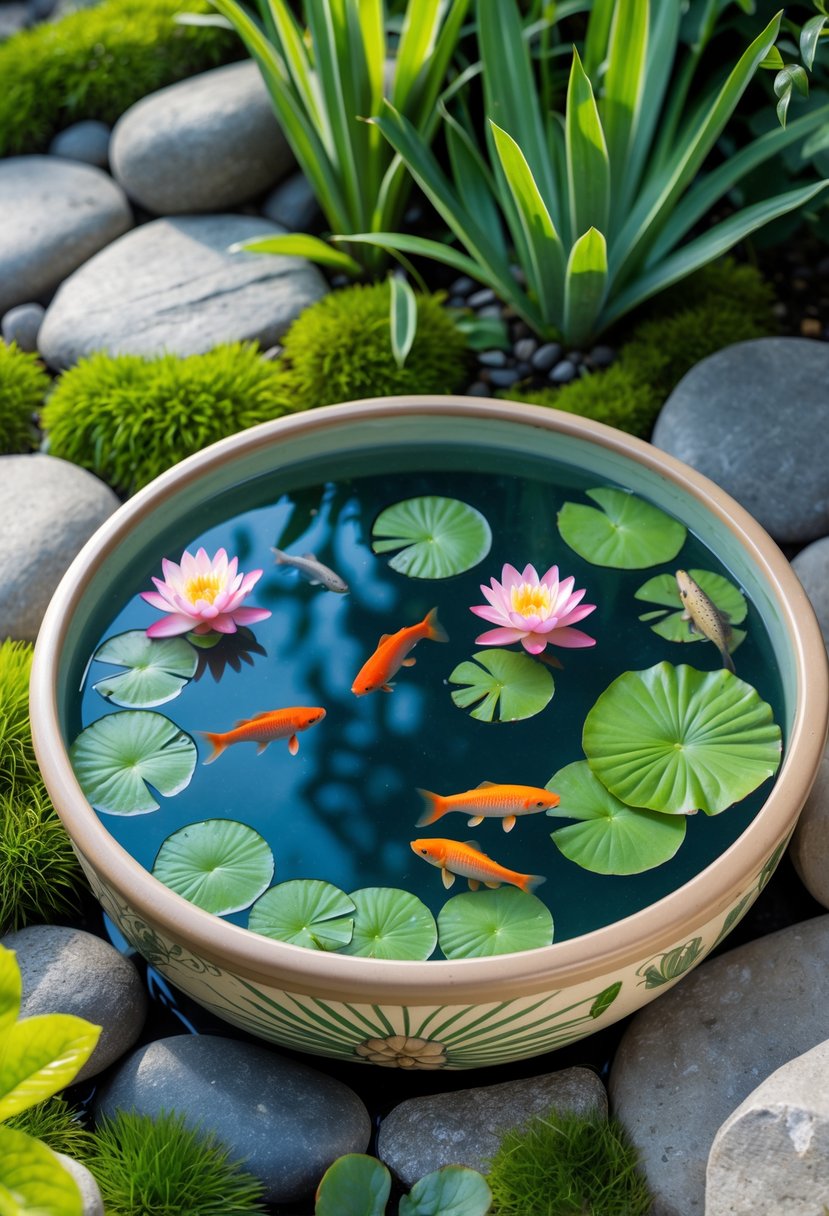
Keeping your container pond balanced means focusing on clean water, proper fish care, and controlling algae or pests. Each part is important to give your fish a healthy space and keep your pond looking great. Regular attention and simple steps are key to a thriving container pond.
Water Quality Tips
You should test your pond water regularly to check pH, ammonia, and nitrite levels. Aim for a pH between 6.5 and 8.0, which suits most pond fish like goldfish or koi. Change about 10-20% of the water every week to keep toxins low and oxygen high.
Use a small pump or aerator to circulate water. Moving water stops stagnation and helps oxygen reach your fish and plants. Remove debris like dead leaves to avoid water pollution.
Avoid using tap water with chlorine or chloramine without treating it first. Use water conditioners to make it safe for fish. Keep your pond out of direct sunlight if possible to reduce temperature swings and algae growth.
Feeding and Caring for Fish
Feed your fish small amounts once or twice a day. Overfeeding leads to leftover food that pollutes the water. Choose sinking pellets or flakes made for pond fish. Watch fish behavior—if they swim slowly or stay at the bottom, water quality or feeding may need adjusting.
Keep an eye out for signs of illness like spots, slime buildup, or unusual swimming. Quarantine new fish before adding them to prevent disease spread.
Provide hiding places like aquatic plants or small decorations so fish feel safe. Avoid overcrowding; a good rule is one inch of fish per gallon of water.
Managing Algae and Pests
Algae can take over if your pond gets too much sun and nutrients. Use floating plants like water lilies to shade the water and block sunlight. Remove algae by hand or with a pond-safe algae brush.
Avoid chemicals that can harm fish. Instead, introduce algae eaters like snails or certain fish species if your container is large enough.
Check for pests like mosquitoes. A small fountain or water movement helps stop mosquito larvae. You can also use mosquito dunks that are safe for fish but kill larvae.
Regular cleaning and balancing nutrients keep algae and pests under control, preserving a clear and healthy pond.
Best Fish Species for Small Container Ponds
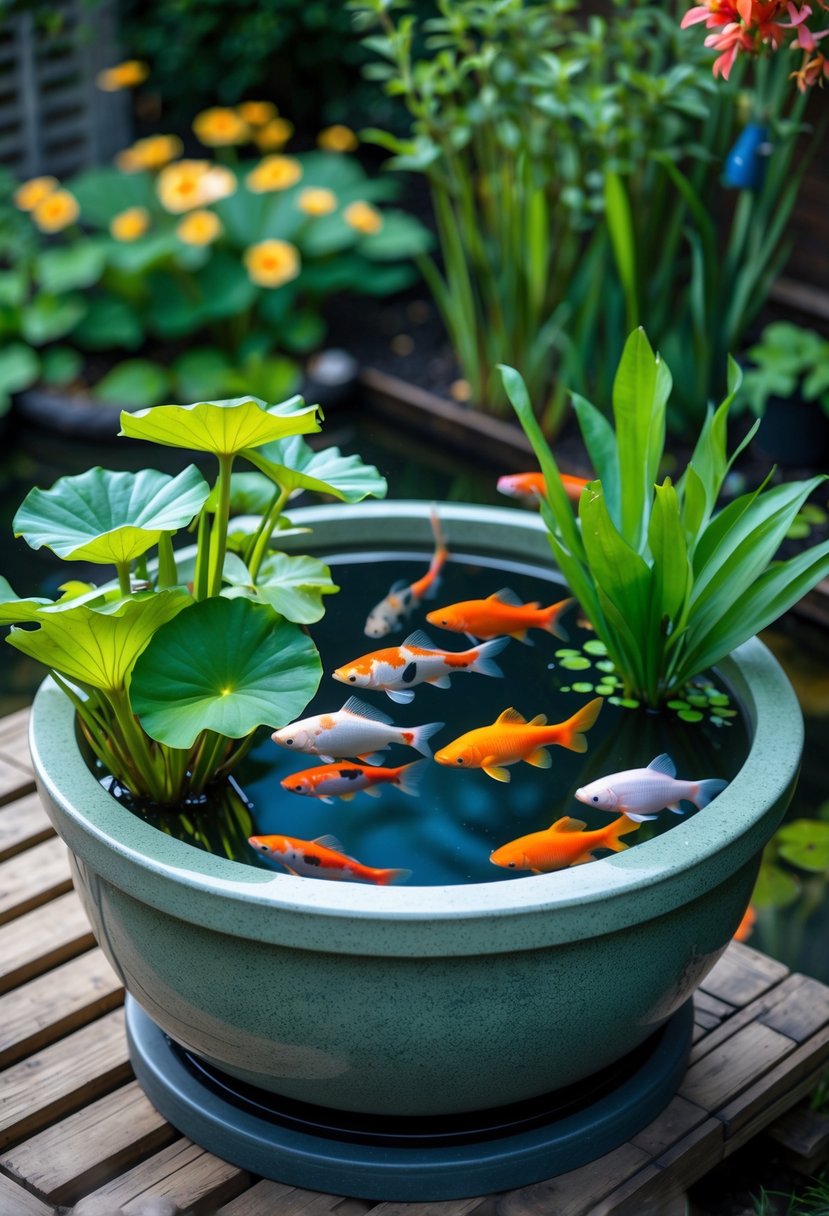
Choosing the right fish for your container pond means balancing size, behavior, and water needs. You need fish that thrive in limited space and can handle changes in temperature. It’s also important to think about how well the fish get along and what care they require through the seasons.
Selecting Compatible Fish
When selecting fish, look for small, hardy species that are suited to confined spaces. Avoid large or fast-growing fish like koi, as they quickly outgrow small ponds and can harm water quality.
Good options include:
- Goldfish: Small varieties like comet or fantail goldfish are popular choices. They tolerate a wide range of temperatures and are easy to care for.
- Minnows: Such as White Cloud Mountain minnows, which are hardy and peaceful.
- Mosquito fish: Small, tough fish that help control insects.
- Guppies: Colorful and active but require warmer water.
Make sure the fish species are compatible. Avoid mixing aggressive fish with passive ones to prevent stress or injuries. Overcrowding harms fish health, so keep your fish count low based on pond size.
Seasonal Considerations
Fish in small container ponds face more drastic temperature changes than in larger ponds. You must prepare for colder months, especially if your pond is outdoors.
- Use a pond heater or move fish indoors if temperatures drop below 50°F (10°C).
- Add floating plants to provide shade in summer and reduce algae growth.
- Keep the water clean; small ponds warm up faster, which can lower oxygen levels.
- Avoid feeding fish in cold weather when they are less active.
Fish like goldfish and minnows can survive cooler months if the water does not freeze completely. You may need to aerate the pond in winter to prevent ice from covering the surface.