16 Compact Vertical Vegetable Garden Designs for Small Spaces to Maximize Urban Gardening Potential
If you have limited outdoor space but still want to grow your own vegetables, vertical gardening is a smart solution. It helps you use walls, fences, or small corners to grow plants upward instead of spreading out.
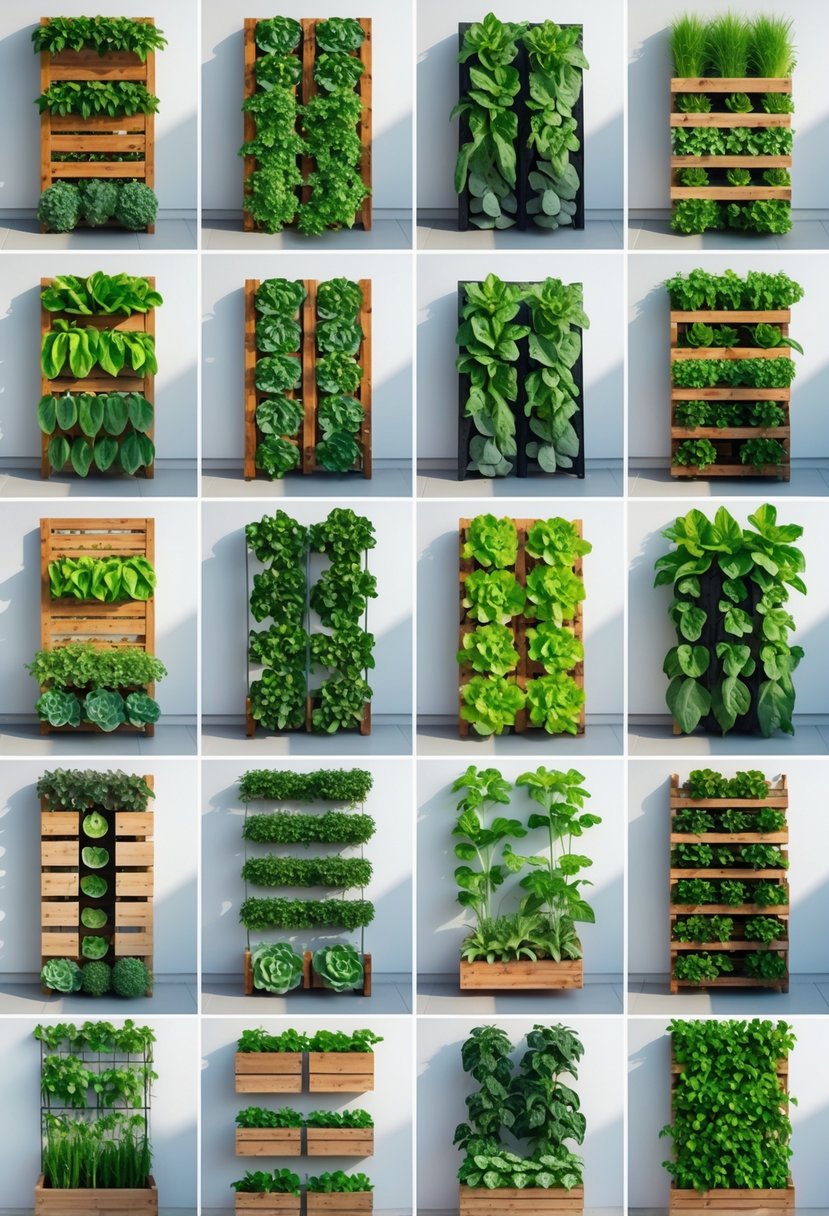
Vertical vegetable garden designs let you maximize your space while keeping your garden organized and easy to manage. These designs work well for balconies, patios, and tiny yards, allowing you to enjoy fresh vegetables even in tight areas.
1) Stacked Wooden Planter Boxes
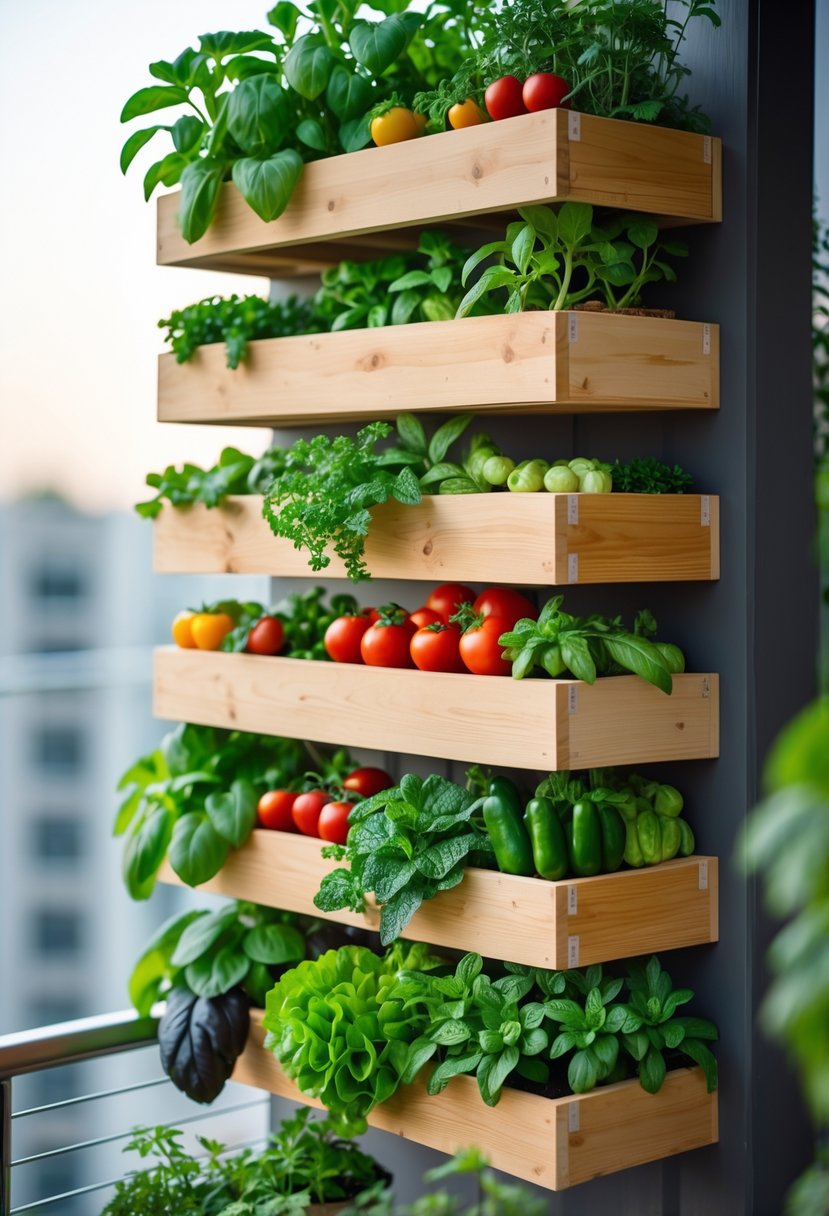
Stacked wooden planter boxes let you grow many plants in a small area by using vertical space. You can arrange the boxes in tiers to fit your balcony or patio. This setup helps each plant get enough sunlight and good air circulation.
You can build these boxes yourself or buy pre-made sets. They work well for herbs, leafy greens, and small vegetables. The wood also adds a natural look to your garden.
2) Hanging Pocket Planters
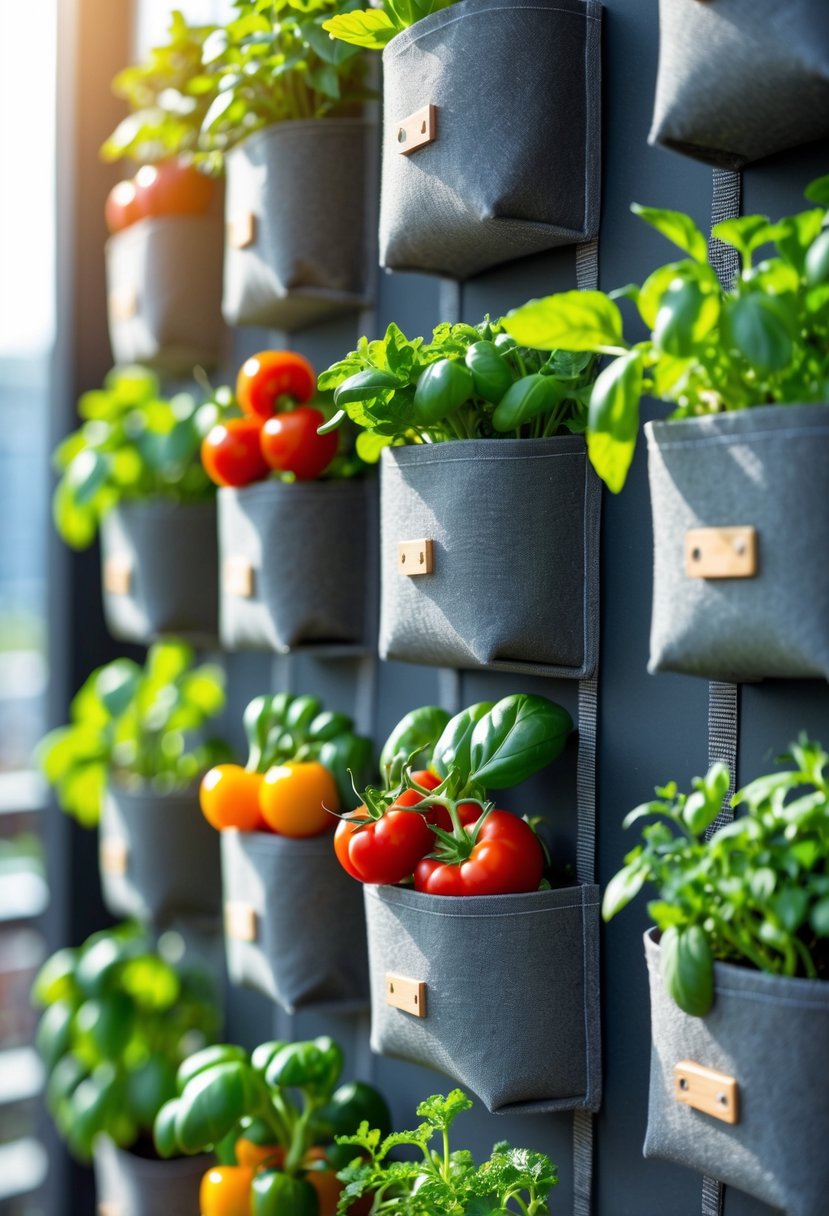
Hanging pocket planters are a smart way to save space while growing vegetables. They use fabric pockets that can hold many plants in a small area.
You can hang them on walls, fences, or doors. These planters offer good drainage and airflow, which helps plants stay healthy.
They work well for herbs, small vegetables, and even flowers. This method lets you use vertical space without needing extra floor room.
3) Pallet Vertical Garden
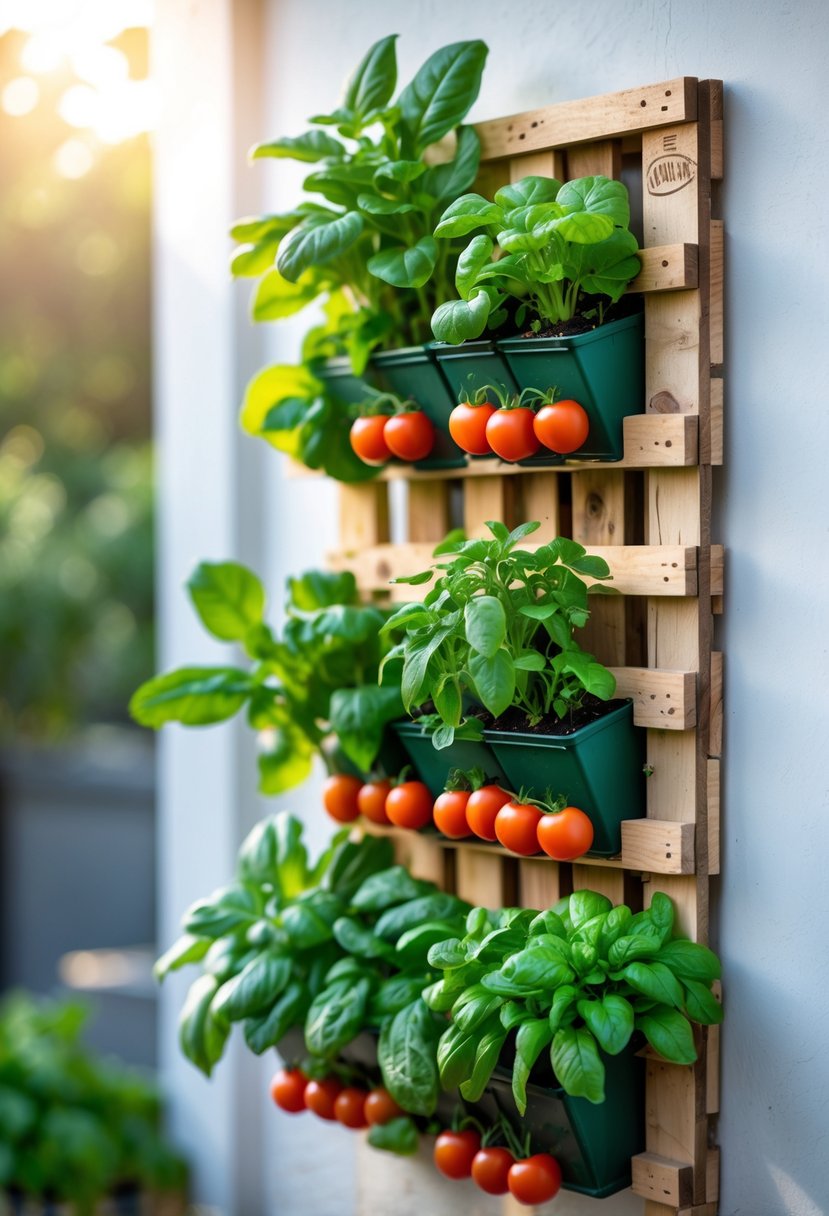
You can use an old wooden pallet to create a simple vertical garden. Stand it upright and fill the slats with soil.
This method saves space and is easy to manage. It works well for herbs, flowers, or small vegetables.
Pallet gardens add a natural look to your space and let you grow plants without taking up much ground area.
4) DIY PVC Pipe Planter Tower
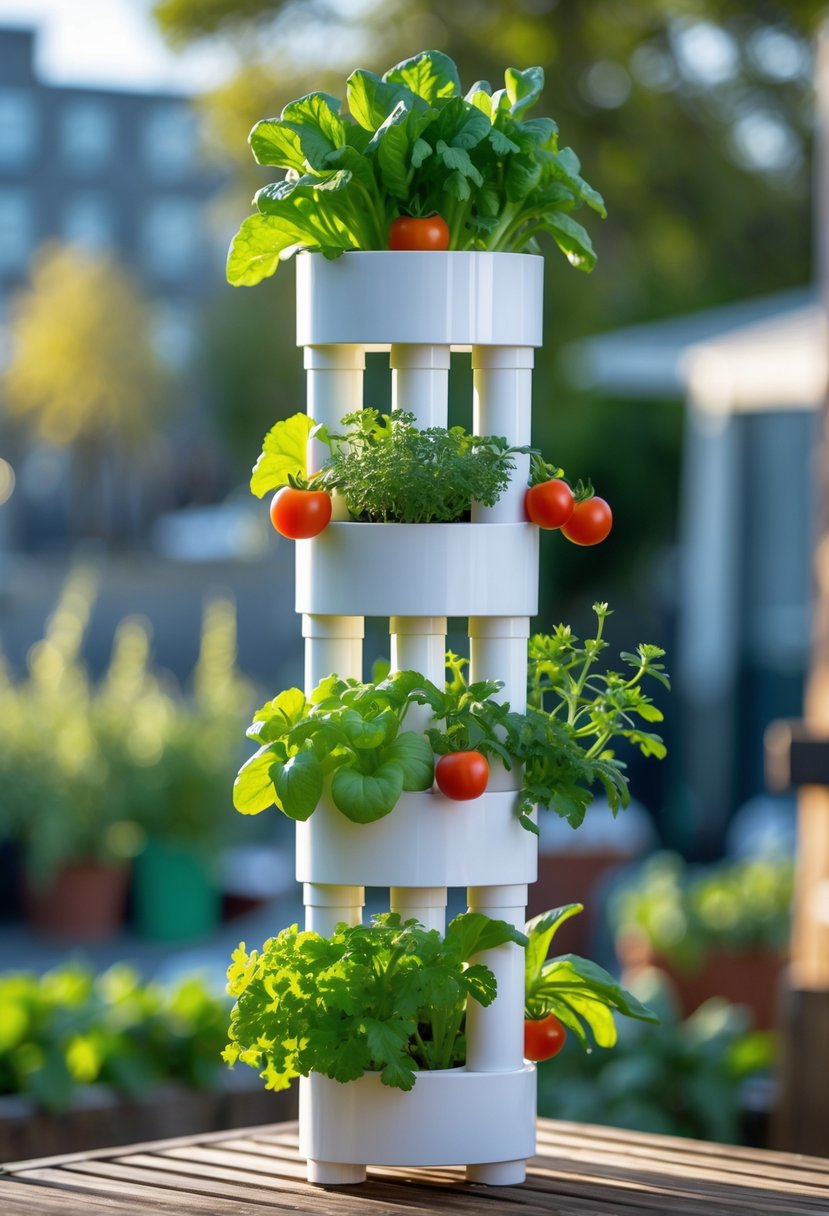
You can build a vertical garden tower using PVC pipes. Cut holes evenly along a tall PVC pipe to plant small vegetables or herbs.
This design saves space by stacking plants vertically. It works well on balconies, patios, or small yards.
You only need basic tools and recycled PVC pipes to create your own planter tower. It helps you grow more plants in less space.
5) Recycled Crate Garden Wall
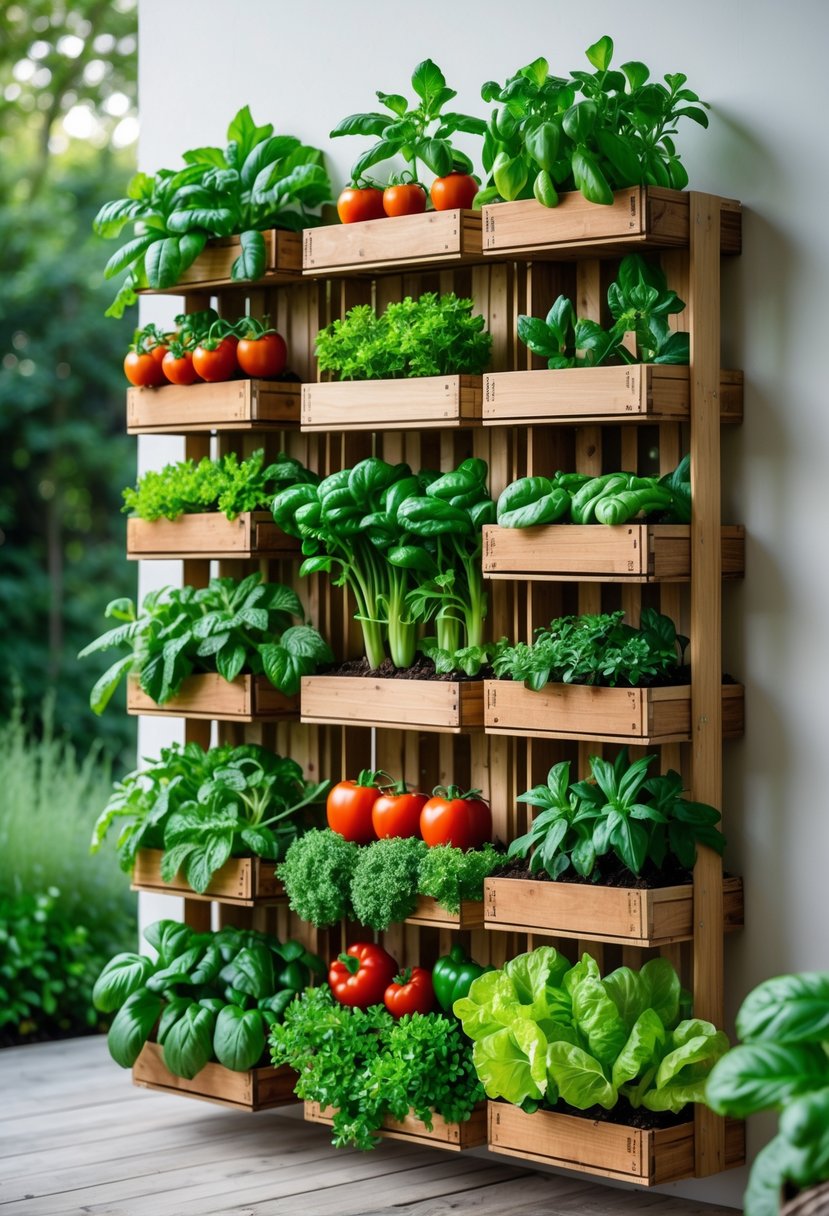
Using recycled crates for a vertical garden wall is a space-saving and eco-friendly option for small areas. You can stack and attach crates to a wall, creating several planting spots for herbs and small vegetables.
The crates offer good drainage and airflow, which helps plants grow well. Painting the crates adds color and protects the wood from weather. This design is simple to build and fits well on balconies or patios.
6) Trellis with Climbing Vegetables
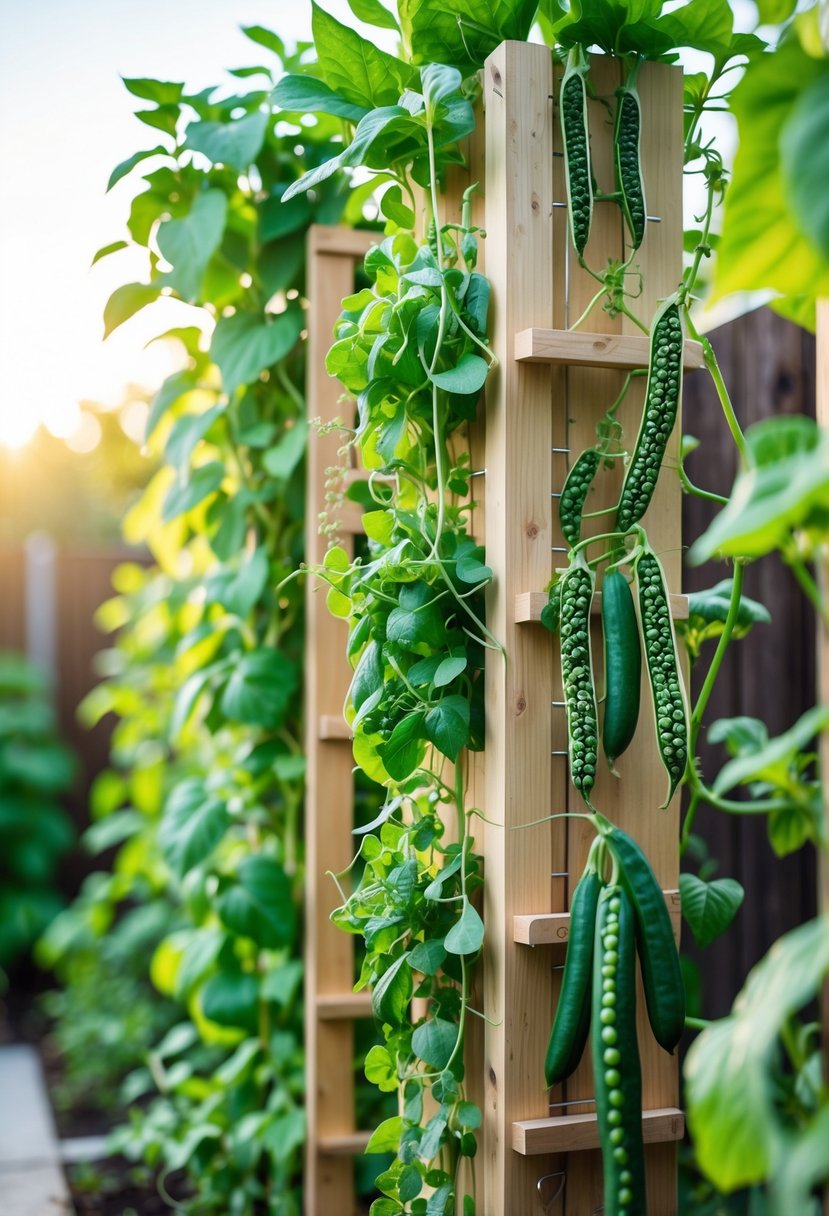
Using a trellis is a smart way to grow climbing vegetables in small spaces. You can lean a wooden or metal trellis against a wall or fence.
This gives your plants vertical space to grow, saving room in your garden.
Vegetables like beans, cucumbers, and peas do well on trellises. You can harvest more by training them upward instead of letting them spread out wide.
7) Step Ladder Herb Garden
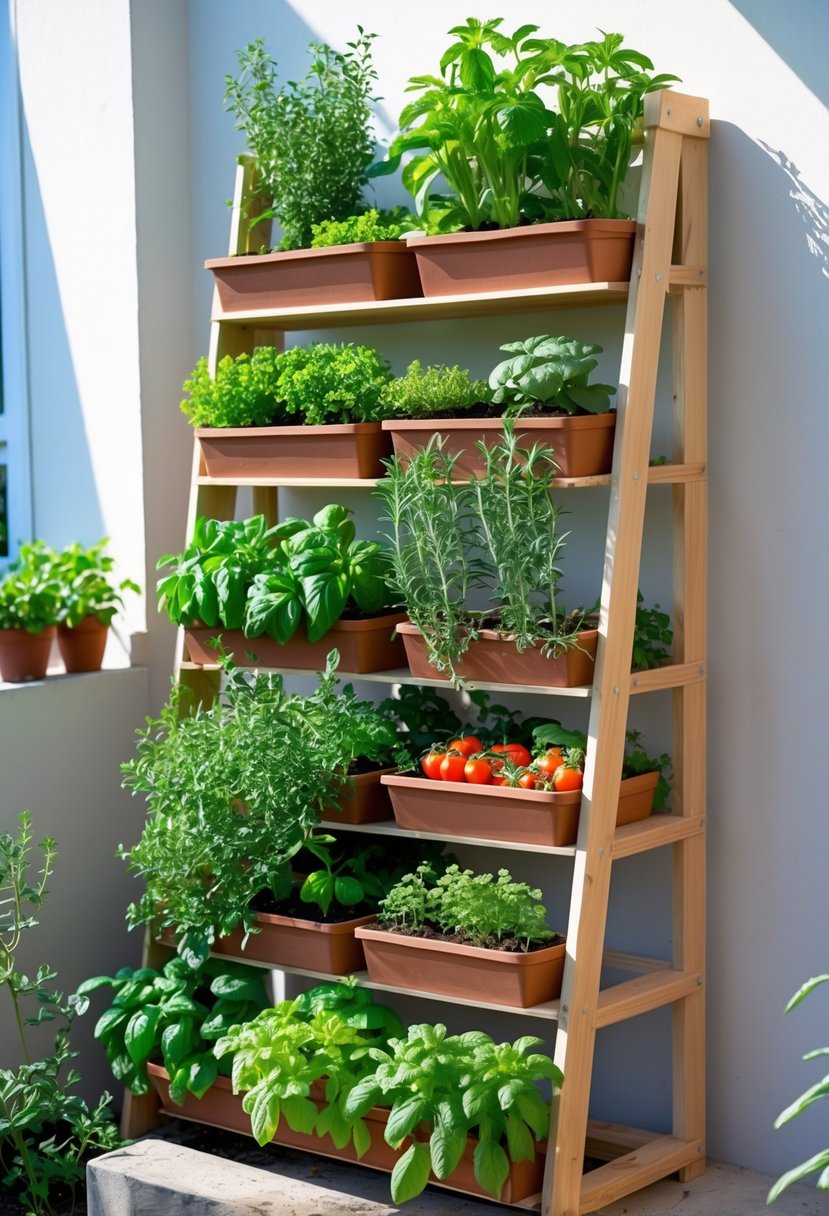
You can use a step ladder to create a vertical herb garden. Place pots or planters on each step to save floor space while growing several herbs.
Make sure your ladder is stable and secure before adding plants. Choose herbs that need similar sunlight and water to keep care simple.
This design fits well on small balconies or patios and adds a decorative touch to your space.
8) Modular Cube Planters
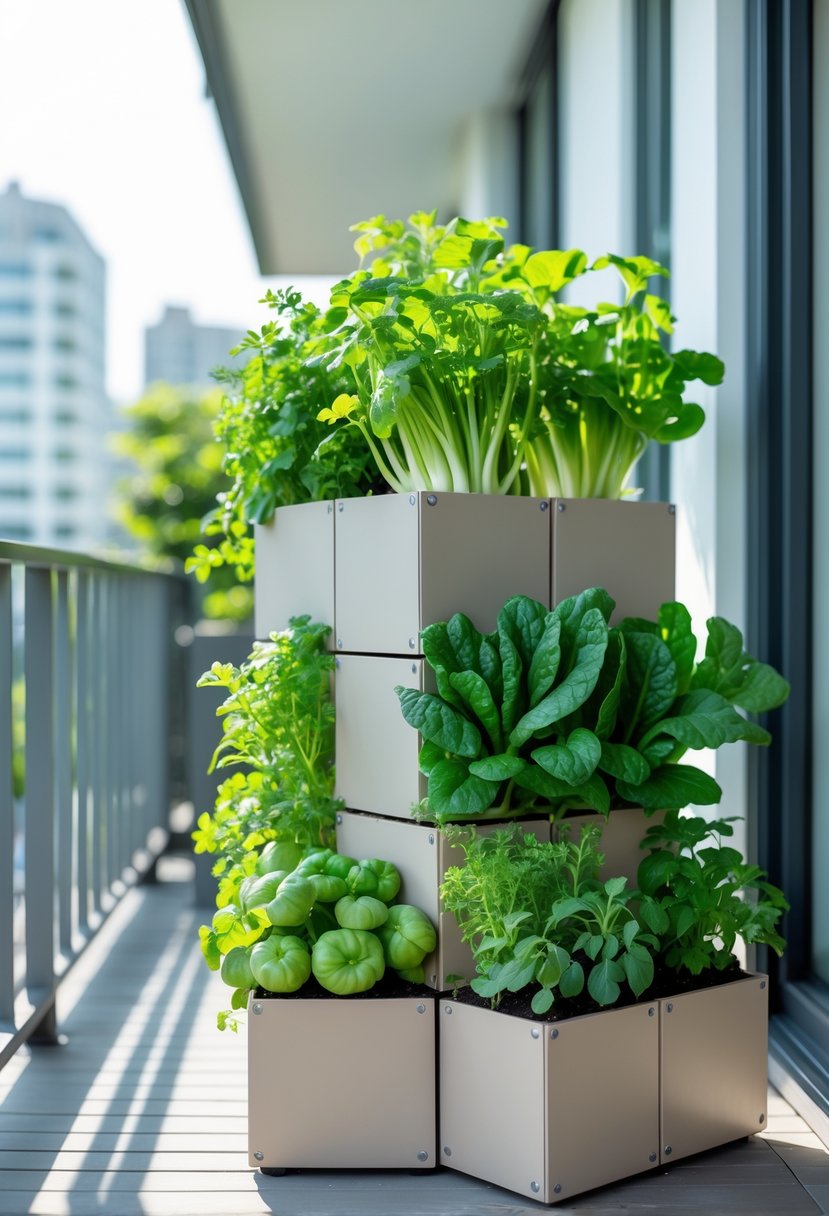
Modular cube planters let you build a custom vertical garden by stacking or arranging cubes as you like. This system fits well in small spaces like balconies or patios.
You can move and expand your garden easily by adding or removing cubes. Each cube holds soil and plants, making watering and maintenance simple.
This design helps maximize space while keeping your garden organized. It works for vegetables, herbs, and small flowers.
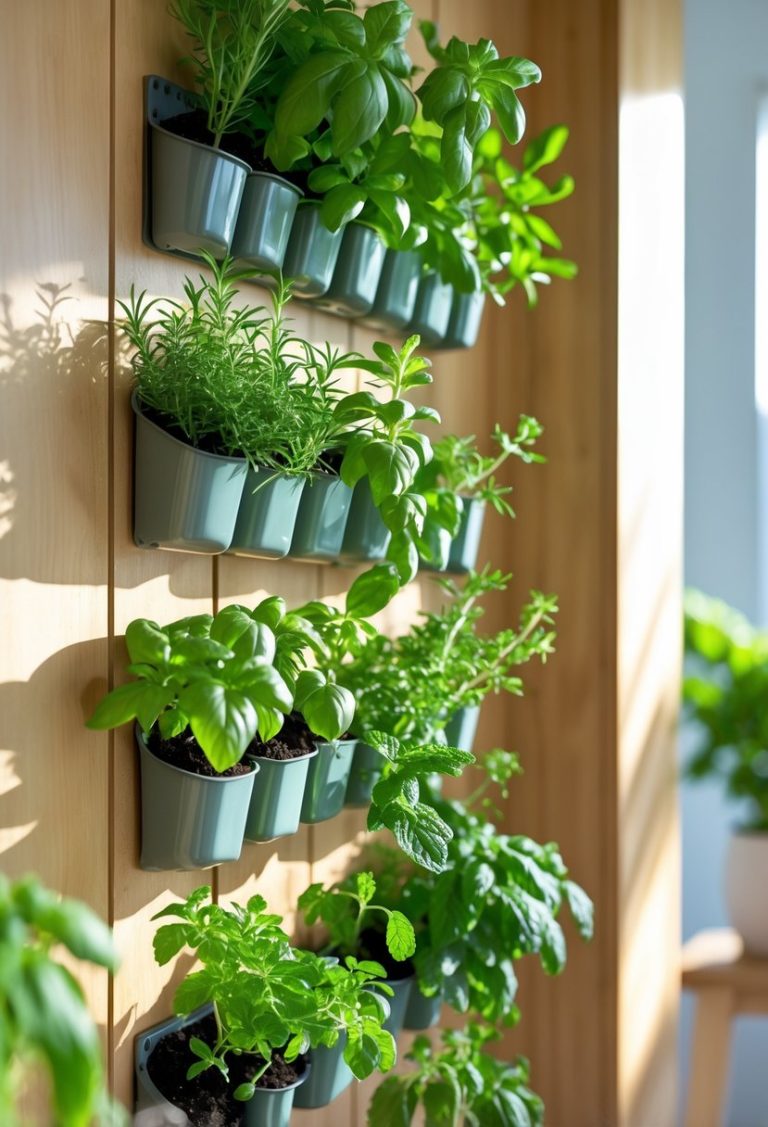
9) Wall-mounted Herb Garden
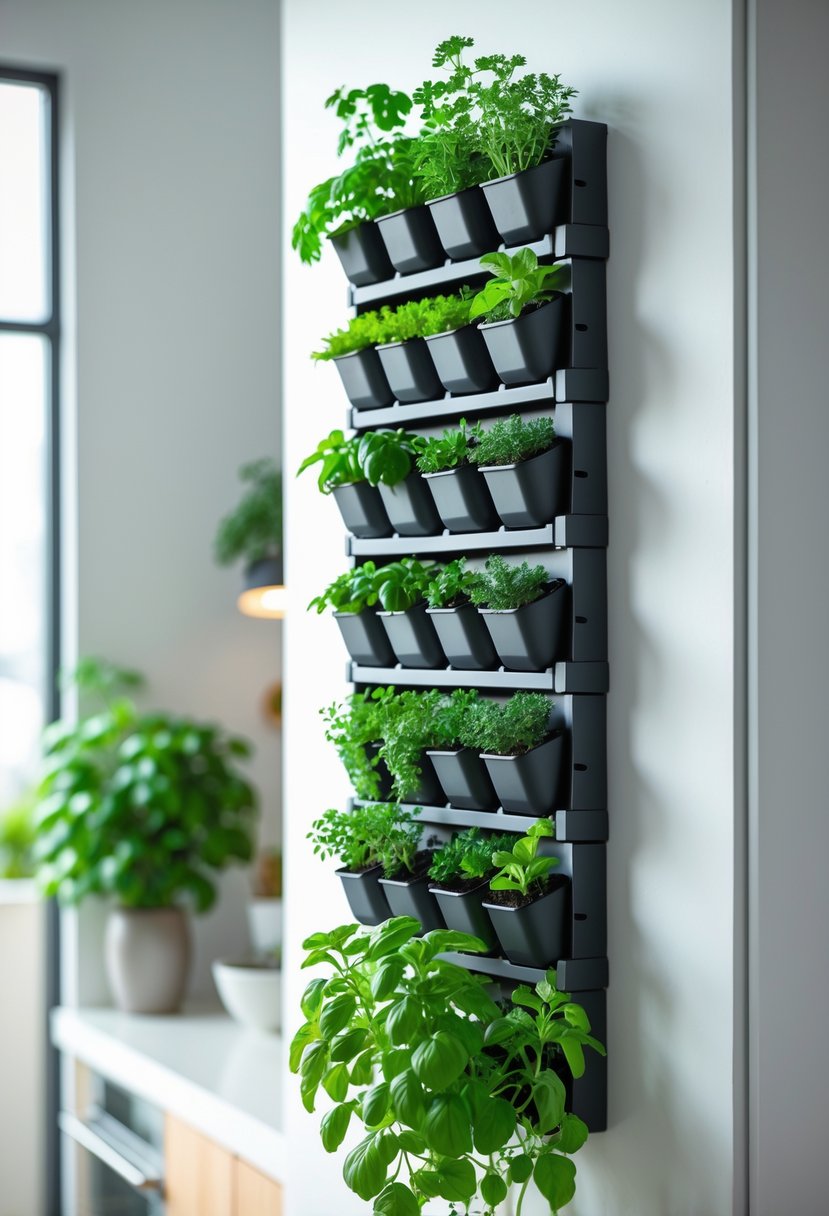
You can grow fresh herbs even in very small spaces by using a wall-mounted herb garden. These gardens save space by using vertical wall areas like a balcony or kitchen wall.
A wall-mounted setup keeps herbs close when you cook. It also frees up your counters. Choose a sunny spot for best growth. Your herbs will thrive with easy care and good light.
10) Rain Gutter Vegetables Planter
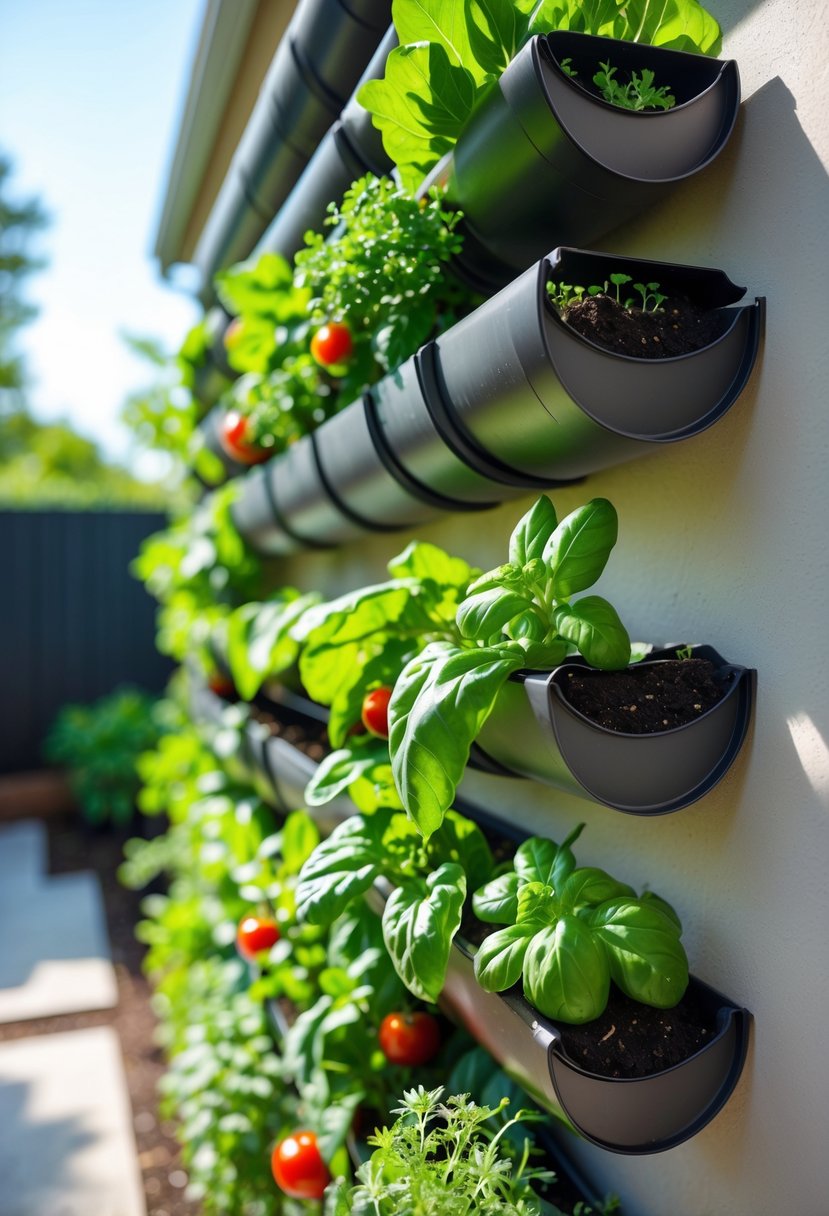
You can use old rain gutters as planters to save space and grow vegetables vertically. Attach them to a wall or fence to create rows for plants like lettuce, herbs, or small greens.
This setup takes up little room and allows good drainage. It’s simple to build and works well on patios, balconies, or small yards. You can move or adjust the gutters if needed.
11) Tiered Hanging Basket Garden
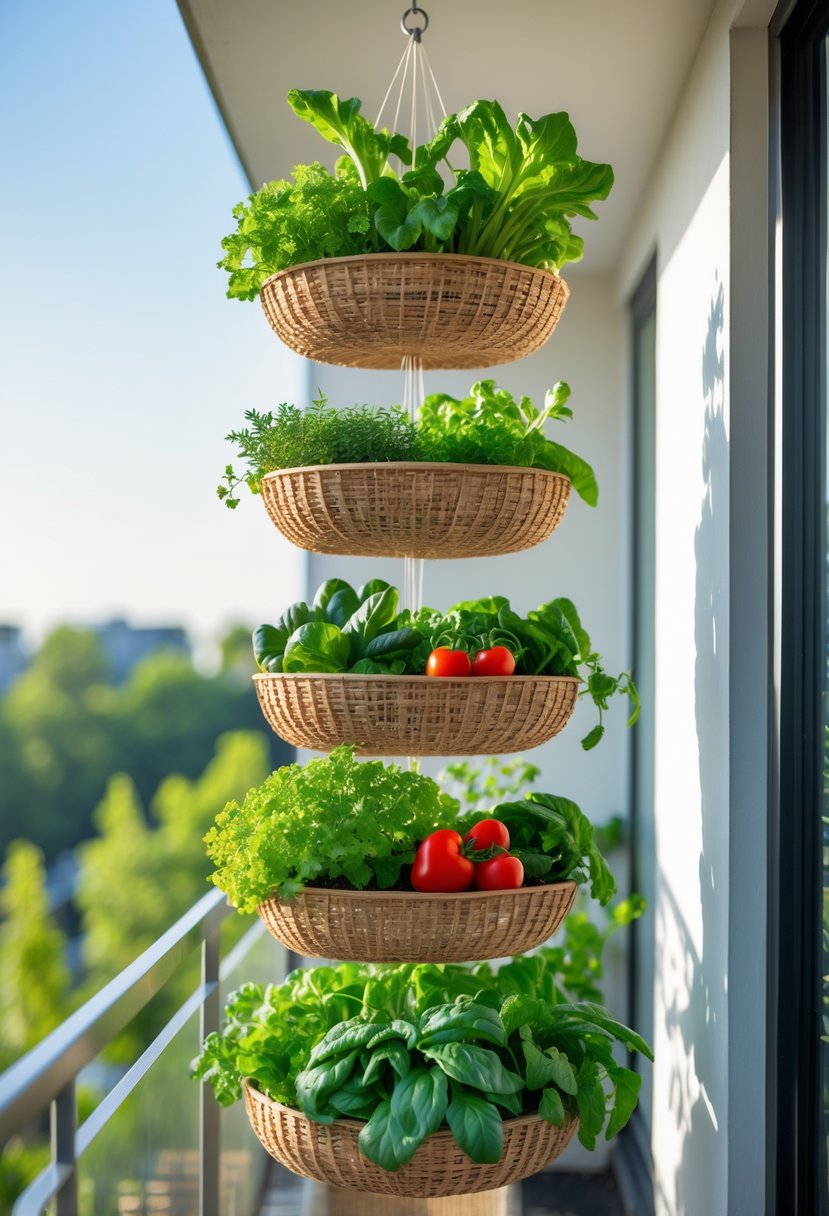
You can save space by using a tiered hanging basket garden. This design stacks several baskets vertically, giving you room to grow many plants in one spot.
It works well on balconies, patios, or near windows where sunlight reaches all levels. You can plant herbs, small vegetables, or flowers in each basket.
This setup also makes watering easy, as excess water drips down from the top to the lower baskets. It keeps your garden organized and compact.
12) Metal Grid for Hanging Pots
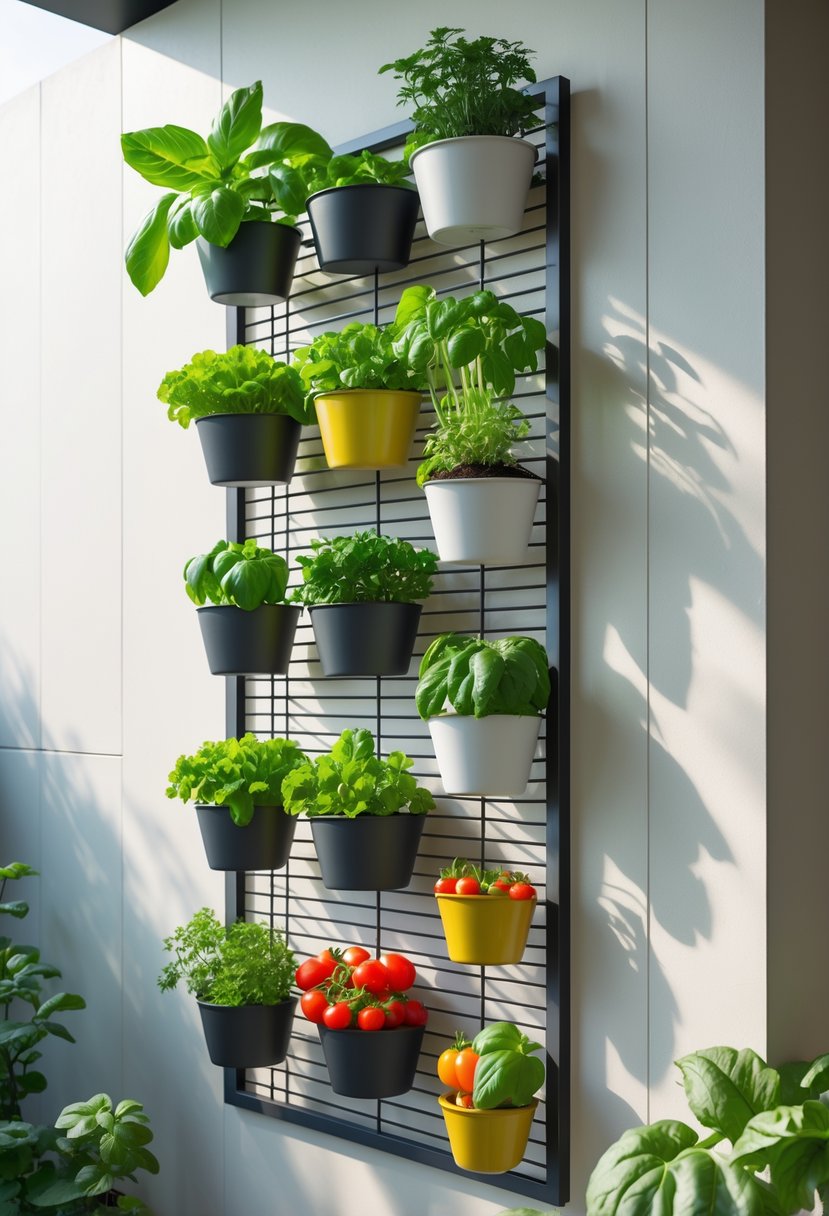
You can use a metal grid to hang pots and save floor space. The grid mounts easily on walls or fences, giving you a sturdy frame for your plants.
Hanging pots from the metal grid lets you grow herbs, small vegetables, or flowers vertically. This setup keeps your plants organized and visible.
Metal grids are strong and durable. They work well in small spaces like balconies or patios where space is tight.
13) Vertical Garden Frame with Shelves
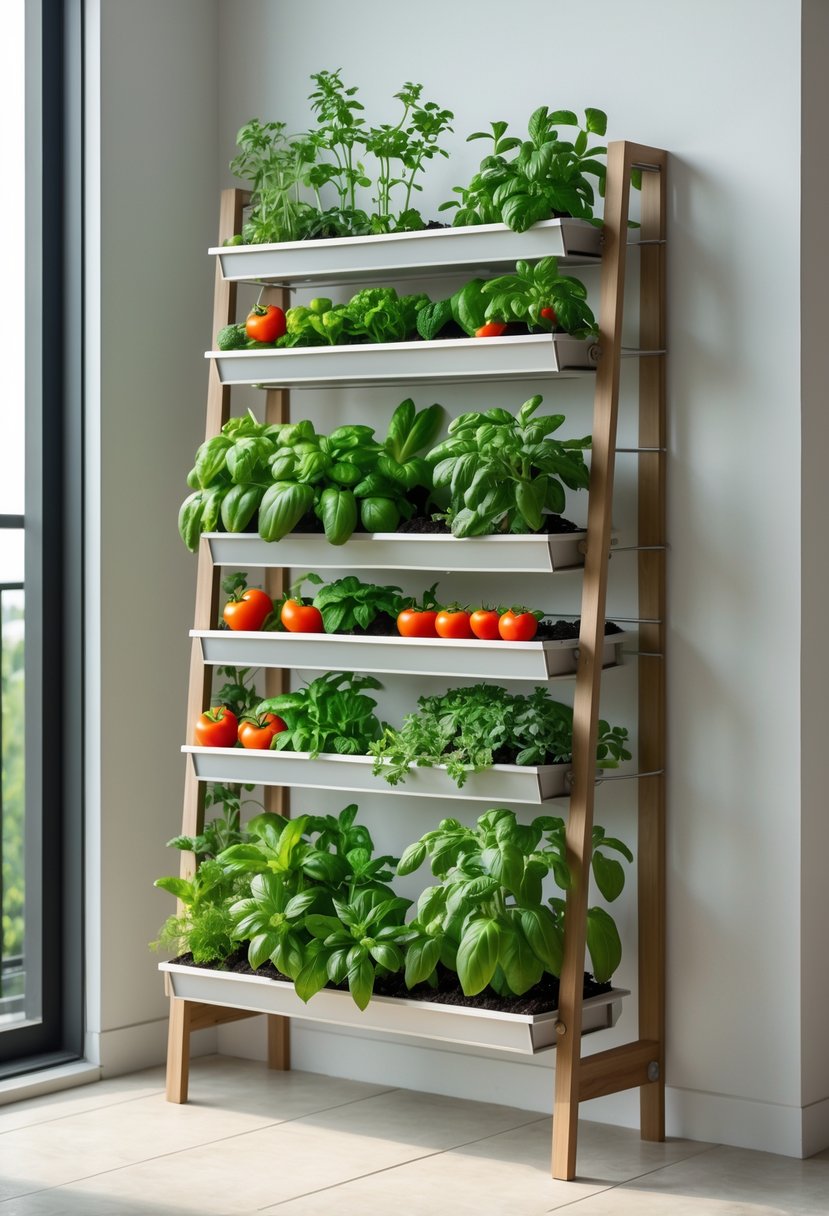
You can use a vertical garden frame with shelves to save floor space while growing many plants. The shelves let you organize different types of vegetables or herbs neatly.
This design works well on patios or balconies where space is tight. You can adjust the shelf heights to fit pots of various sizes. It helps keep your garden accessible and tidy.
14) Ladder-Style Plant Stand
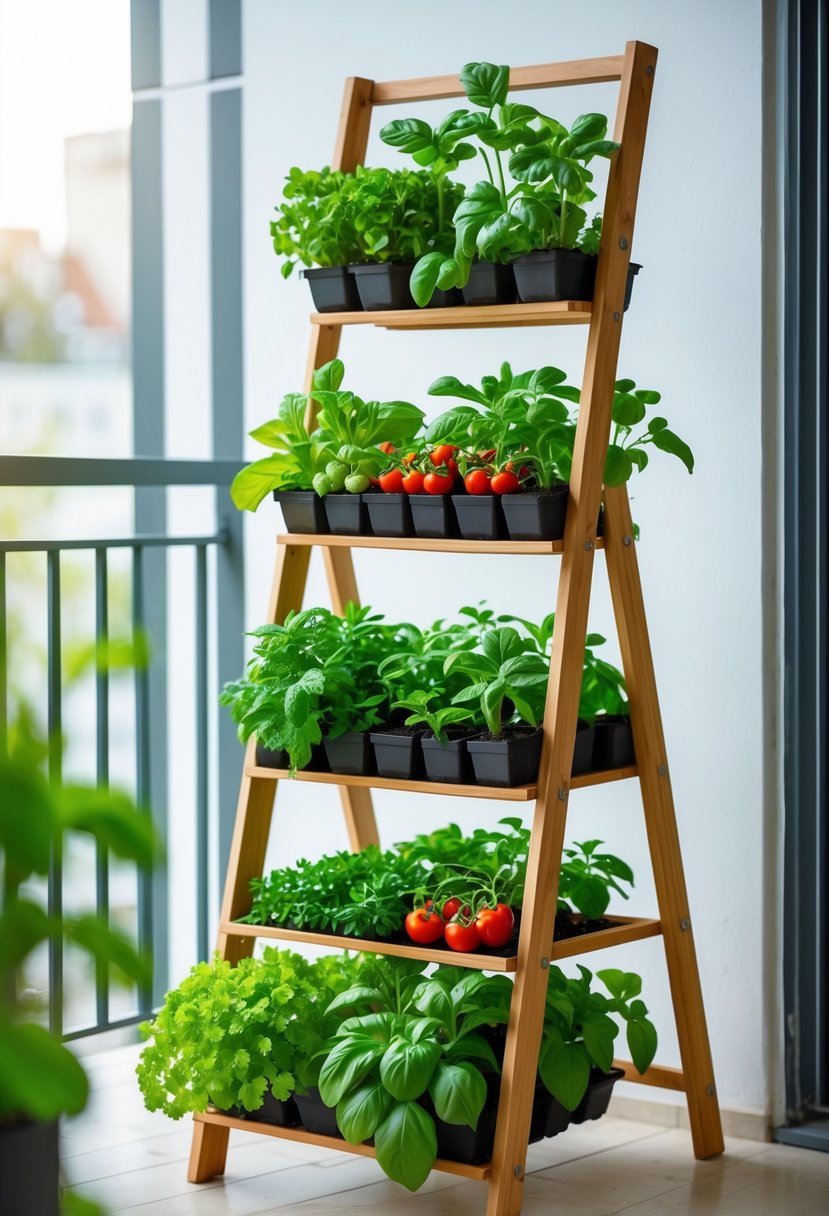
You can use a ladder-style plant stand to save space and grow more vegetables vertically. It leans against a wall, using multiple tiers to hold pots or containers.
This setup fits well in small balconies or indoors near a sunny window. It also allows you to move the stand easily to different spots if needed.
15) Hanging Shoe Organizer for Herbs
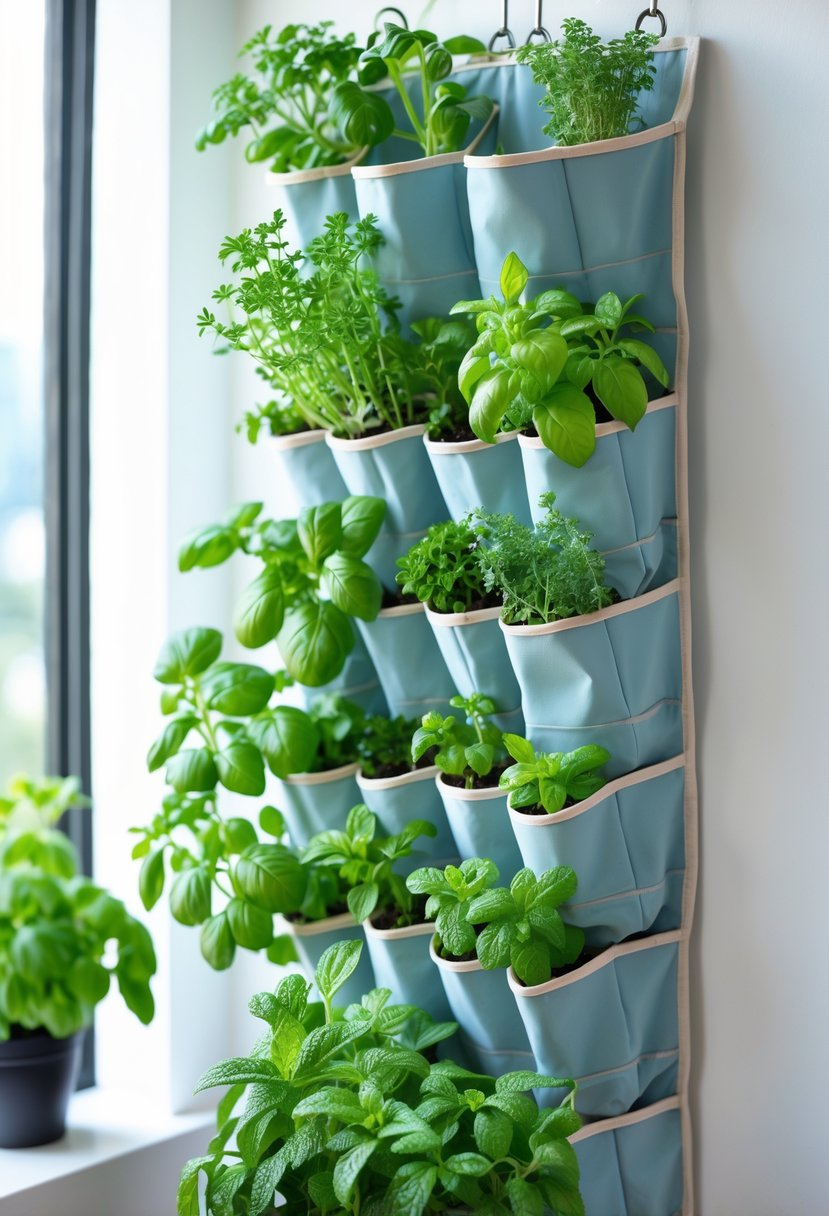
You can use a hanging shoe organizer to grow herbs in small spaces. Each pocket can hold soil and a small plant, creating a vertical garden that saves ground space.
This setup is light and easy to hang on a wall, fence, or door. It lets you keep fresh herbs close to your kitchen.
Caring for the plants is simple. Just water them regularly and make sure they get enough sunlight.
16) Hanging Mason Jar Garden
You can create a hanging garden using mason jars to save space. Attach jars to a wall or a wooden frame with hooks or wire.
This setup works well for small herbs like basil, thyme, or rosemary.
It keeps your plants within reach and adds a simple, neat look. Mason jars let you see the soil and roots, so you know when to water. This method is great for kitchens or small balconies.
How Compact Vertical Vegetable Gardens Work
Vertical vegetable gardens use height instead of ground space to grow plants. This approach saves room and makes growing easier in tight spots. You’ll learn about the main ideas behind vertical gardening, the benefits it brings to small areas, and the key parts you need to build one.
Core Principles of Vertical Growing
Vertical growing means stacking plants upward rather than spreading them out. You use structures like shelves, trellises, or stacked containers to hold the plants. This method lets you grow more in less ground space.
Plants are chosen for their size and growth habit. Compact varieties like dwarf tomatoes, bushy herbs, and climbing plants work best. You need to plan for enough sunlight, water, and air circulation for each level of the garden.
Water management is important. Usually, you set up systems that let water trickle down or drip through each layer. This saves water and feeds all plants evenly.
Benefits for Small Spaces
Vertical gardens make use of walls, fences, balconies, or narrow corners. You can fit a garden into places too small for traditional beds.
They increase your growing area by doubling or tripling the space you have. This means you can have more vegetables without needing a bigger yard or patio.
Vertical gardens also keep plants off the ground. This helps reduce pests and diseases by improving air flow. Plus, it makes garden care easier because you don’t have to bend down as much.
Essential Components and Materials
Your vertical garden needs a sturdy frame or support. Common materials include wood pallets, metal trellises, plastic shelves, or stacked crates.
Containers must hold soil and allow water drainage. Look for items like pots, planter boxes, or recycled bottles. Lightweight materials help keep the structure stable.
You’ll also want soil suited for vegetable growing and quality seeds or seedlings of compact vegetable types. Adding a drip irrigation system or self-watering planters can improve water delivery and save time.
Use screws, hooks, and ties to secure everything safely to walls or freestanding supports.
Tips for Maintaining Vertical Vegetable Gardens
To keep your vertical vegetable garden healthy, focus on giving plants enough sunlight and air, watering efficiently, and choosing the right soil and fertilizer. These steps will help your garden grow strong in a small space.
Maximizing Sunlight and Air Circulation
Place your vertical garden where it can get at least 6 hours of direct sunlight daily. Most vegetables need this amount to grow well. Avoid shaded corners or spots blocked by buildings or trees.
Make sure your garden allows air to move freely between plants. Good airflow prevents mold, mildew, and pests. Arrange plants so leaves don’t overlap too much, and avoid overcrowding.
If your space is tight, try rotating plants or trimming older leaves. This lets fresh air reach all parts of the garden and keeps plants healthy.
Efficient Watering Techniques
Vertical gardens dry out faster than traditional ones because they drain more quickly. Water your plants regularly but avoid overwatering. Check soil moisture by touching it before watering.
Drip irrigation or soaker hoses are good choices for watering vertical gardens. They deliver water directly to roots with less waste. If you hand-water, aim at soil, not leaves, to reduce disease risk.
Watering in the morning is best. It gives plants time to dry before evening, lowering chances of fungus or rot.
Optimal Soil and Fertilizer Choices
Use lightweight potting soil with good drainage in your vertical garden containers. Heavy soil can weigh down structures and hold too much water.
Look for soil mixes with ingredients like peat moss, perlite, or vermiculite. These keep soil loose and help roots breathe.
Choose fertilizers that release nutrients slowly. Slow-release formulas provide steady nourishment without harming plants.
You can also feed plants with liquid fertilizers every two weeks during the growing season. Follow package instructions to avoid overfeeding, which can damage roots or leaves.