15 Pallet Garden Ideas for Stylish and Sustainable Outdoor Spaces
Using wooden pallets for gardening is a smart way to save space and reduce waste. You can turn old pallets into planters, garden beds, or vertical gardens that fit even small outdoor areas. This approach lets you create a green space without spending much money or needing a lot of room.
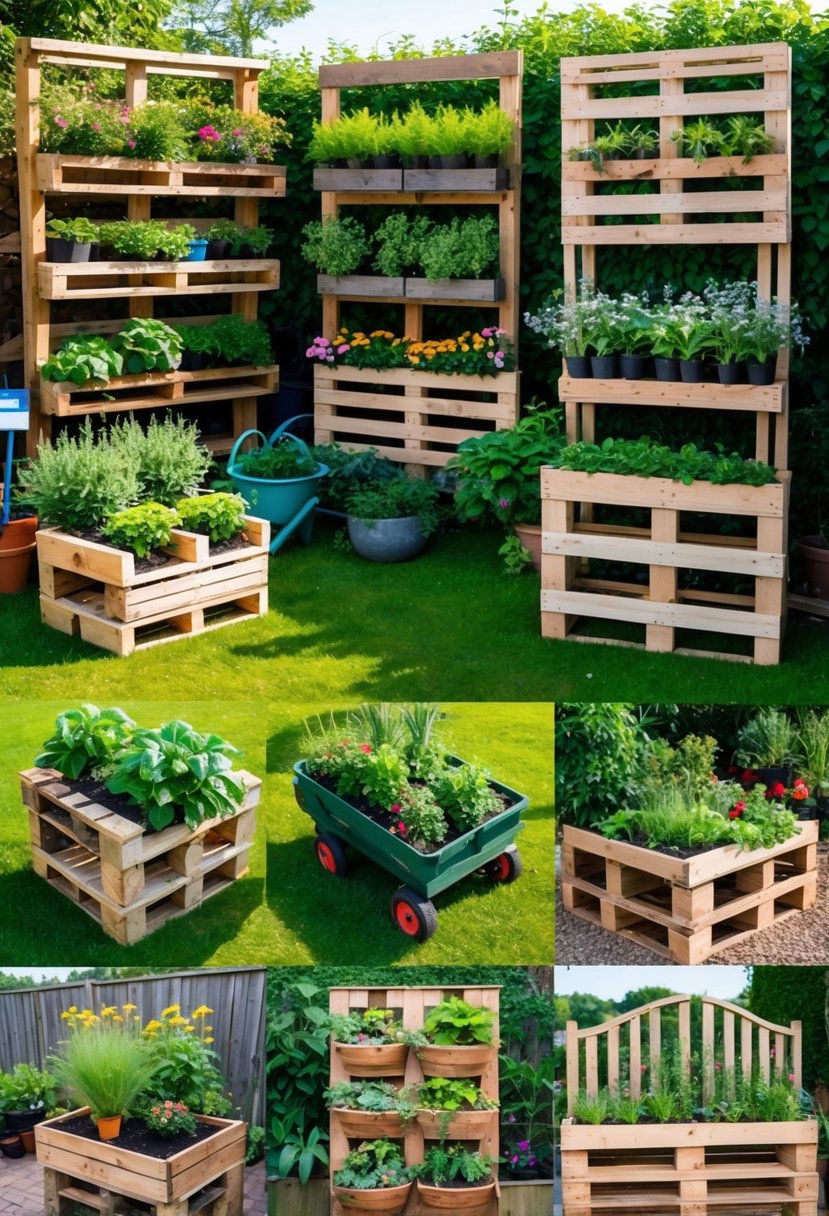
Pallet gardens offer easy and affordable ways to grow plants while making good use of materials you might otherwise throw away. They work well for growing herbs, flowers, or vegetables and can be customized to fit your style and space. With simple tools and some creativity, you can bring new life to your garden using pallets.
1) Vertical pallet garden for herbs and veggies
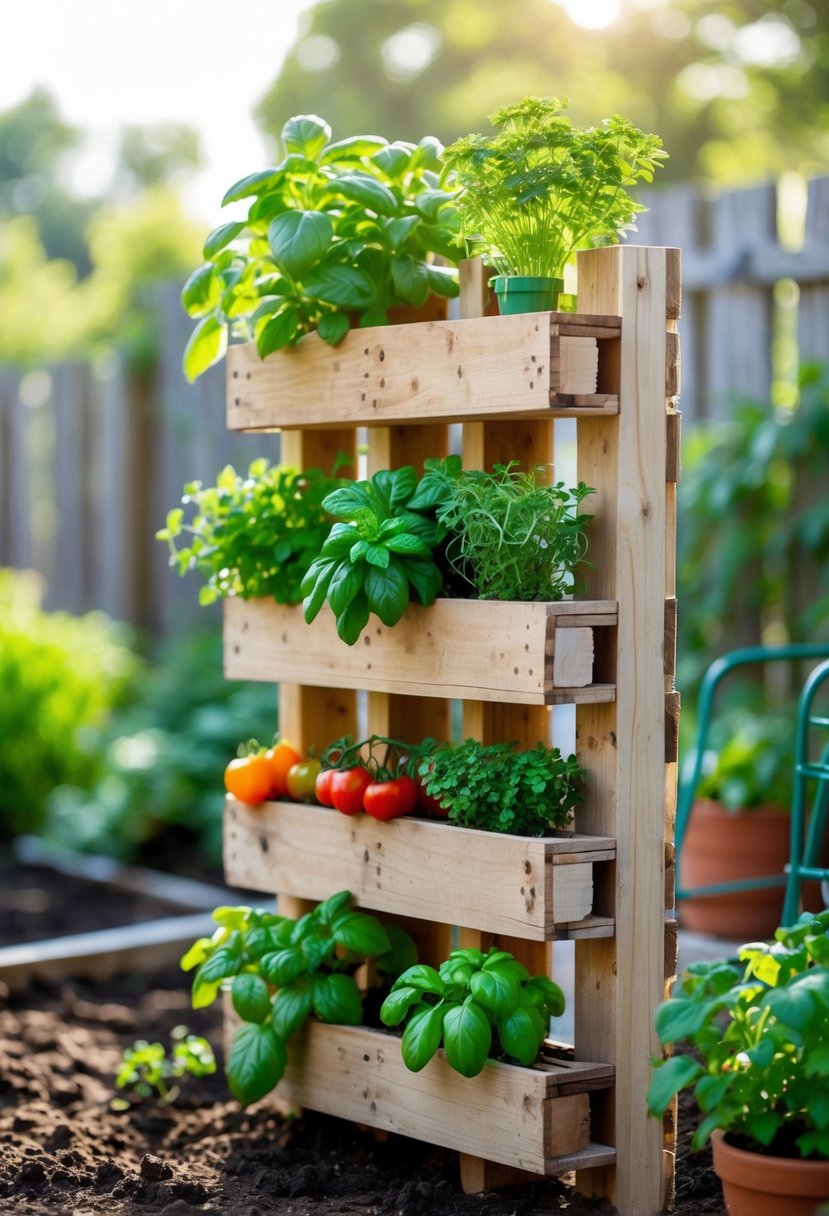
You can use a wooden pallet to grow herbs and vegetables vertically. This saves space by stacking plants instead of spreading them out.
Attach fabric or mesh to the back and shelves of the pallet to hold soil in place. Then, fill the pockets or gaps with soil and plant herbs like basil, mint, or thyme.
A vertical pallet garden works well on balconies, patios, or small yards. It keeps your plants organized and easy to access for watering and harvesting.
By using pallets, you also recycle old wood and create a low-cost garden solution. Make sure to place your pallet garden where it gets enough sunlight for your plants to grow.
2) Hanging pallet planter for flowers
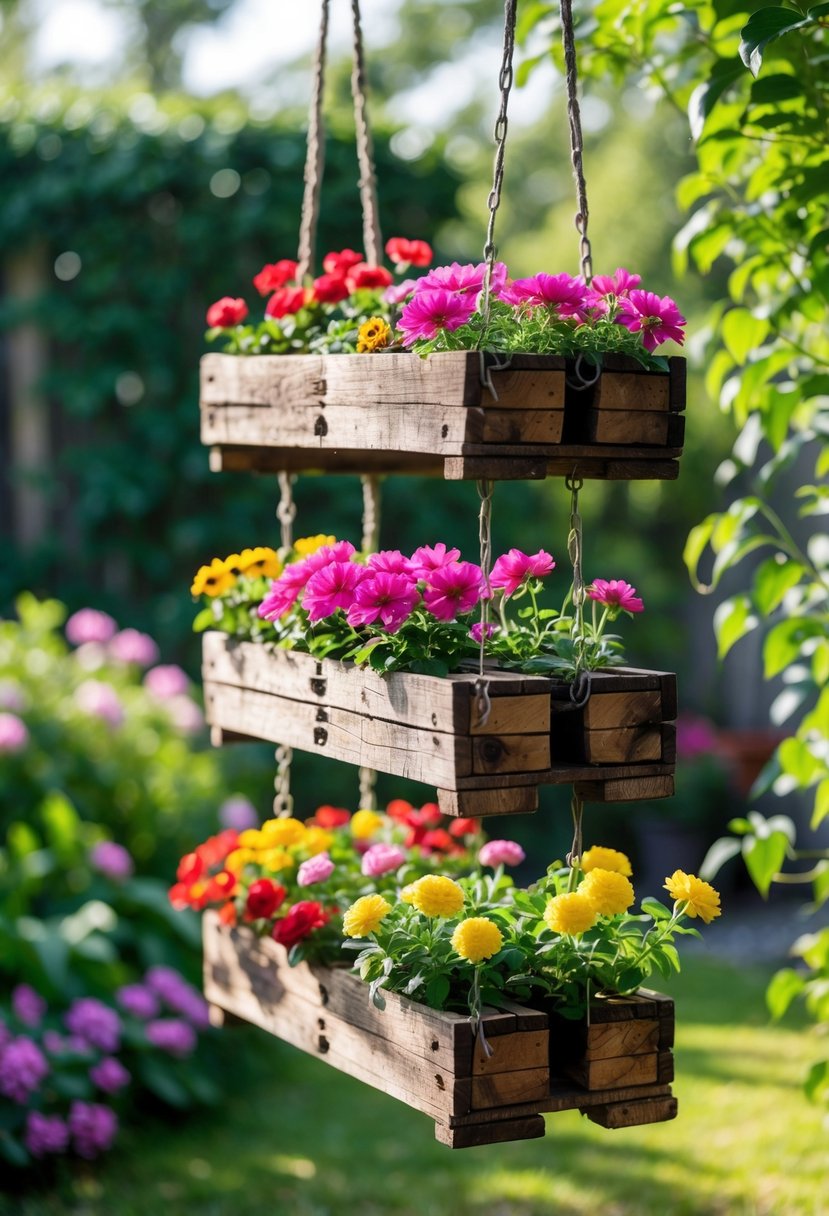
You can turn a wooden pallet into a simple hanging planter for flowers. Start by attaching small pots or containers to the pallet’s slats. Make sure to secure them tightly to hold the plants safely.
Hang the pallet on a wall or fence using strong hooks or ropes. This saves ground space and adds color to your outdoor area.
Choose flowers that do well in vertical setups, like petunias or pansies. Water your plants regularly and check that they get enough sunlight. This DIY project gives your garden a modern look without much work.
3) Rustic pallet flower bed
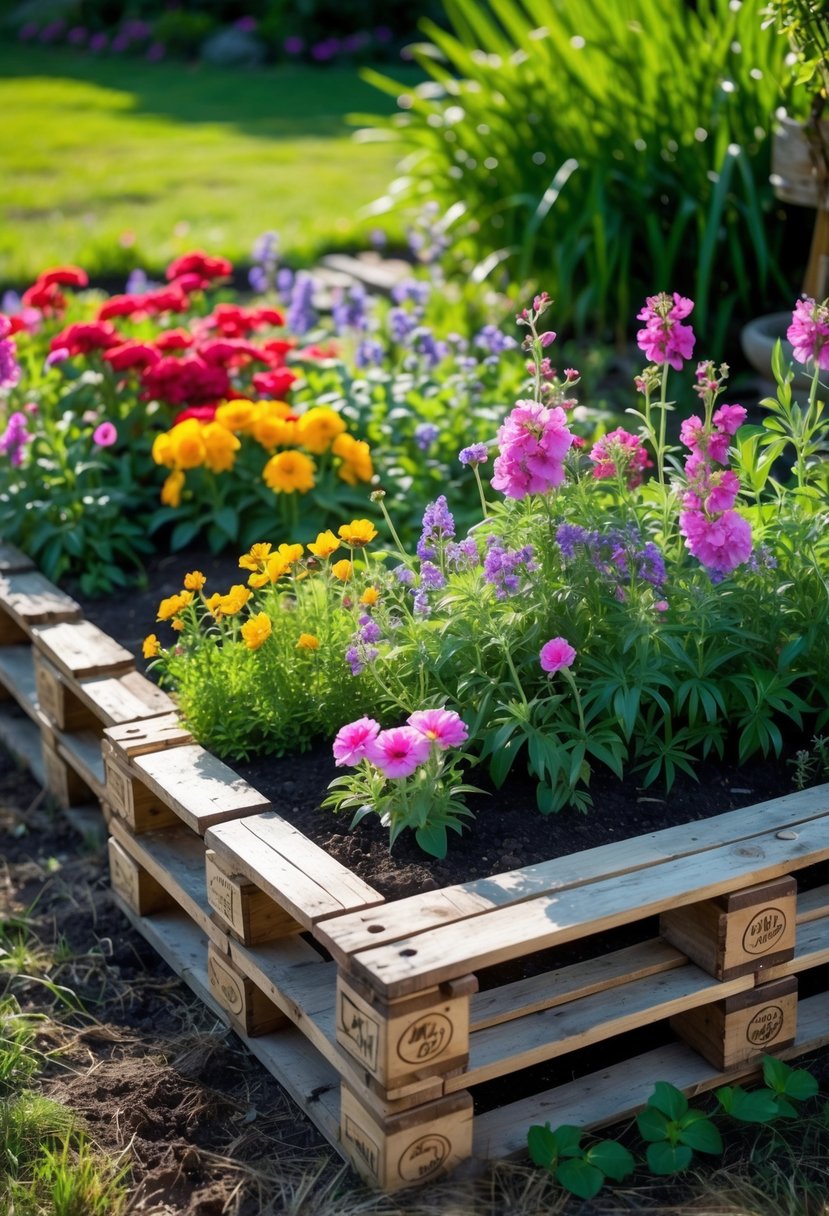
You can turn old pallets into a simple flower bed that adds charm to your garden. Arrange the pallets in a box shape and fill them with soil. This creates a raised bed that is easy to manage and keeps your plants organized.
The rustic wood gives a natural look that fits well with outdoor spaces. It also helps define your garden area without much effort. You can plant flowers, herbs, or small vegetables in this bed.
Make sure the pallets are safe for gardening and free from harmful chemicals. You might want to sand the wood to avoid splinters. This project is budget-friendly and works well even in small yards.
4) Pallet strawberry tower
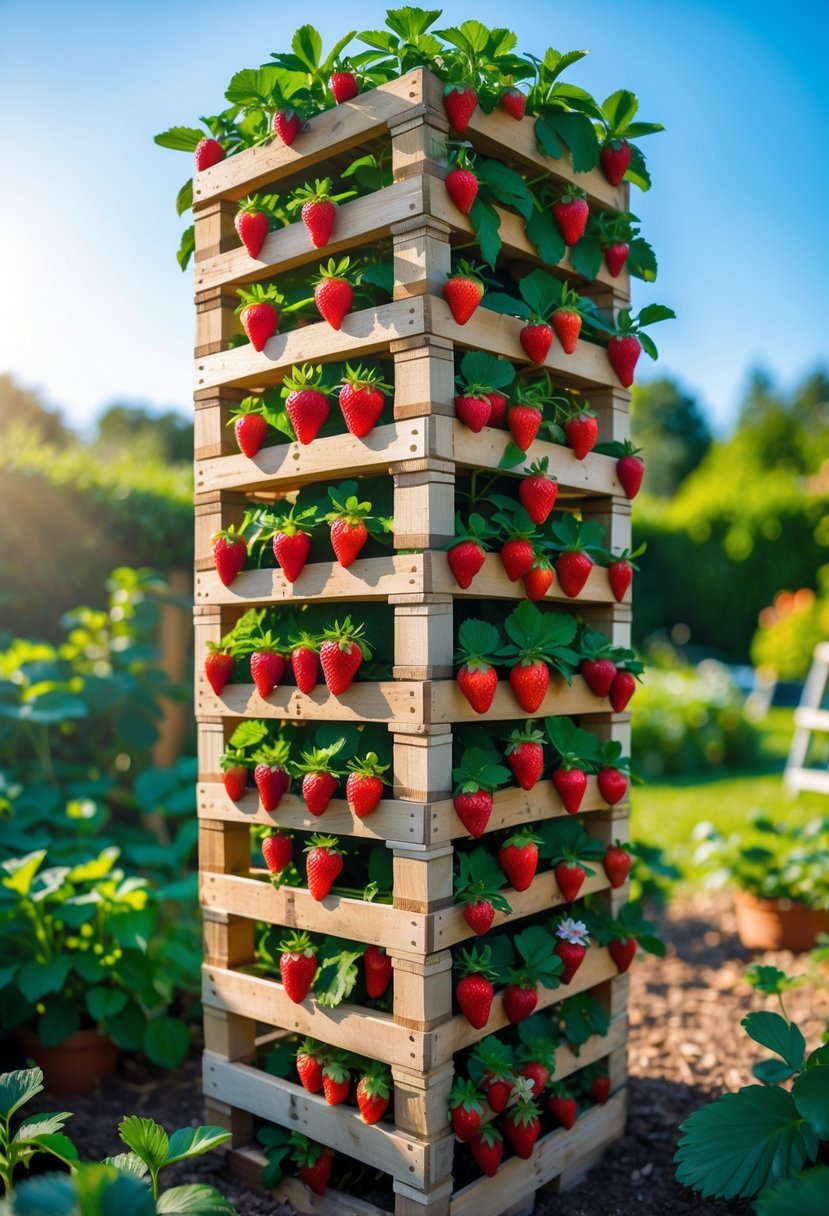
You can turn wooden pallets into a vertical strawberry tower to save space in your garden. Secure several pallets on top of each other to create multiple layers for planting. Fill the gaps with well-draining soil and plant strawberries in each layer.
Make sure to use garden fabric or a liner inside the pallet to keep the soil from falling out. Position your strawberry tower where it will get plenty of sunlight. This setup helps improve air circulation around the plants and makes harvesting easier.
5) DIY pallet compost bin
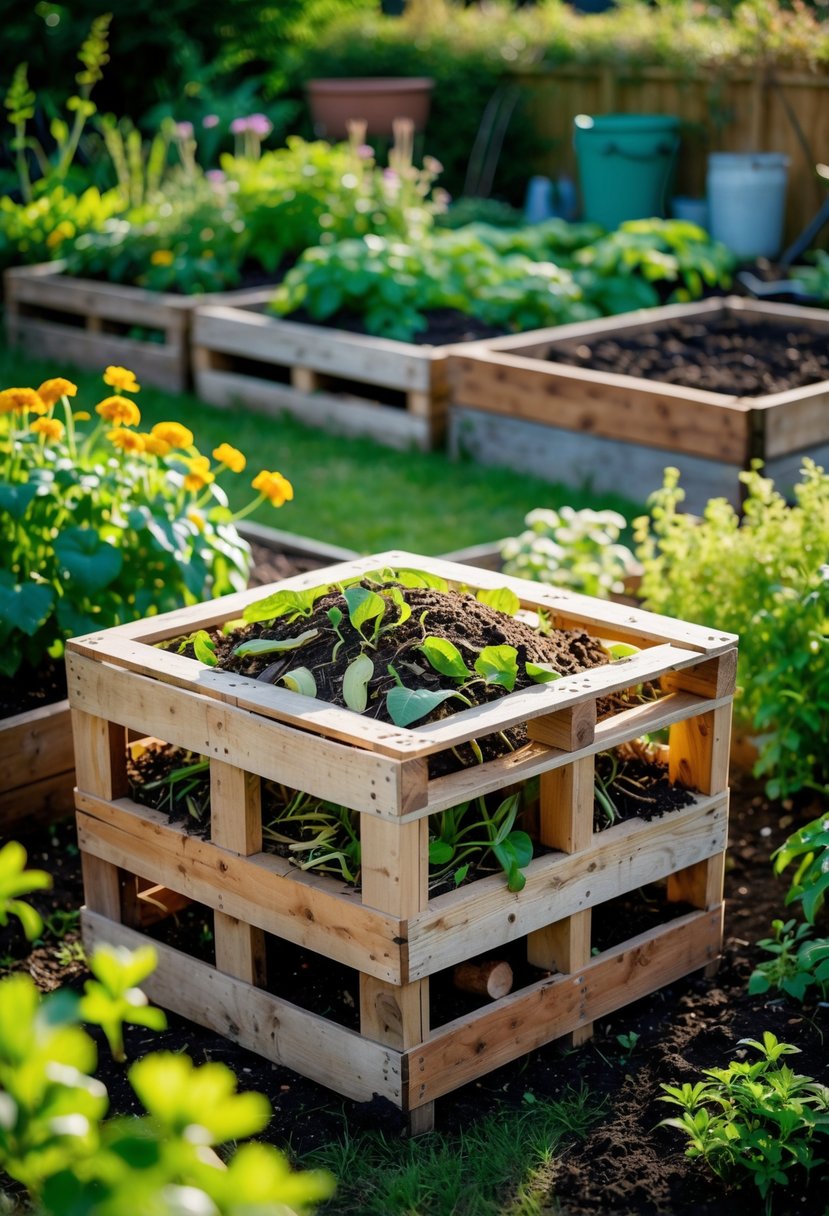
You can easily build a compost bin using old pallets. This is a low-cost way to turn your garden waste into useful soil. Pallets provide good airflow, which helps speed up the composting process.
Choose pallets that are strong and safe for outdoor use. Arrange them in a square or rectangle to form the sides of the bin. You can secure the pallets with nails or screws to keep the structure stable.
The size of the bin can be adjusted to fit your space. A pallet compost bin usually takes about ten minutes to build. Once set up, you can add your garden scraps and turn them into rich compost for your plants.
6) Raised garden bed from pallets
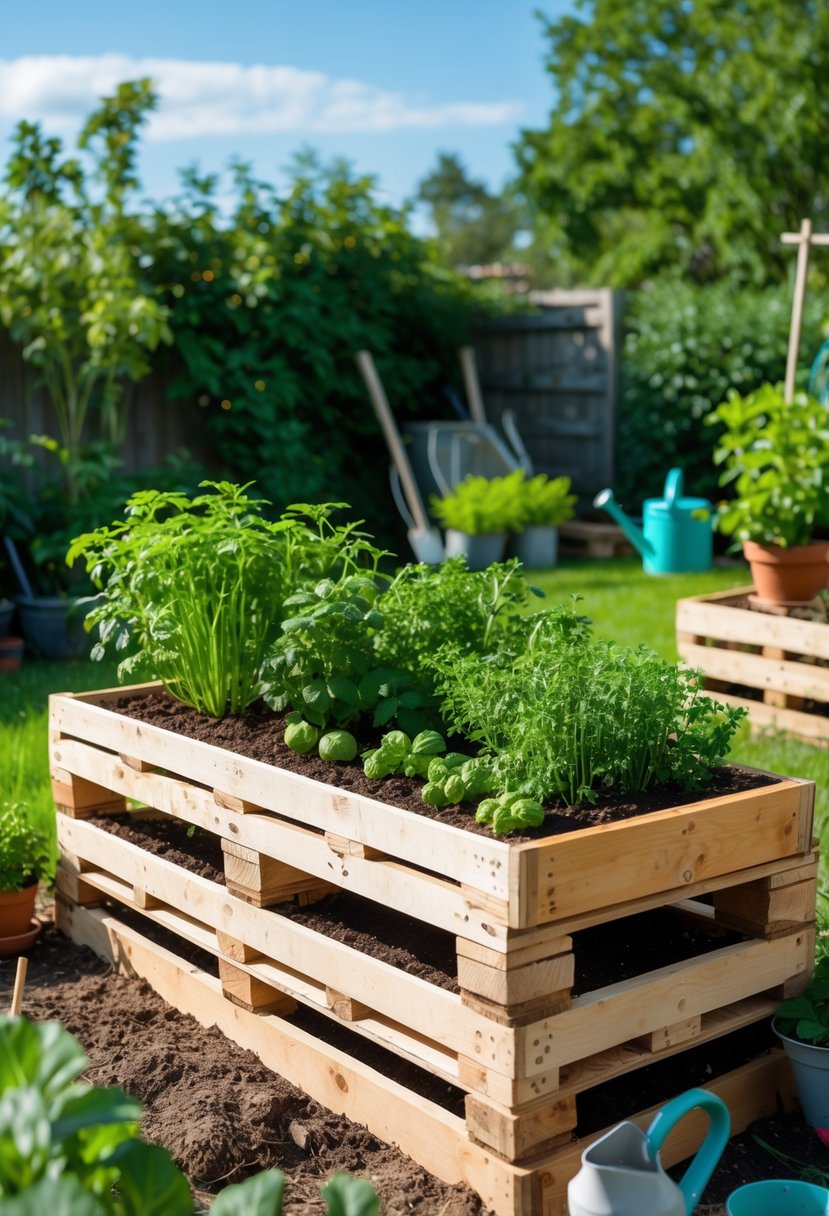
You can build a raised garden bed using wooden pallets. This is a low-cost way to create a sturdy planter that lifts your plants off the ground. Pallets help improve drainage and make gardening easier.
To start, find pallets in good condition without harmful chemicals. Break the pallets down and arrange the wood to form a box. Secure the pieces with screws or nails.
Once assembled, line the inside with landscaping fabric to protect the wood and keep soil in place. Fill the bed with soil and compost. Your raised bed will help reduce soil compaction and is easy to access while gardening.
7) Pallet trellis for climbing plants
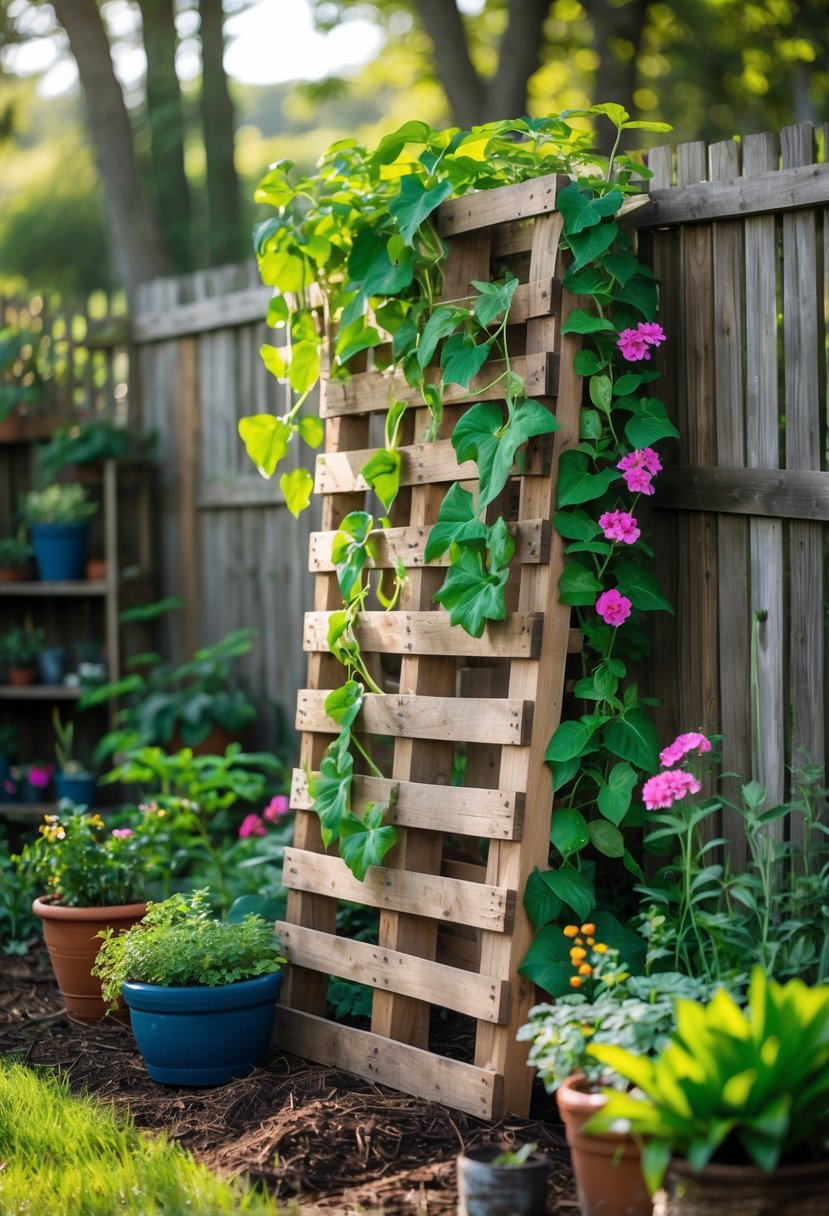
You can use wooden pallets as a simple trellis to support climbing plants like beans, cucumbers, and peas. Stand a pallet upright and secure it to your garden bed or fence.
This structure gives your plants room to grow vertically, saving space in your garden. It also helps keep the plants off the ground, which can reduce pests and rot.
If you want more flexibility, build a freestanding pallet trellis. This lets you move it around to catch the best sunlight or rearrange your garden easily.
Pallet trellises add a rustic look and can be made from recycled wood, making this a low-cost and eco-friendly option for your garden.
8) Succulent pallet wall
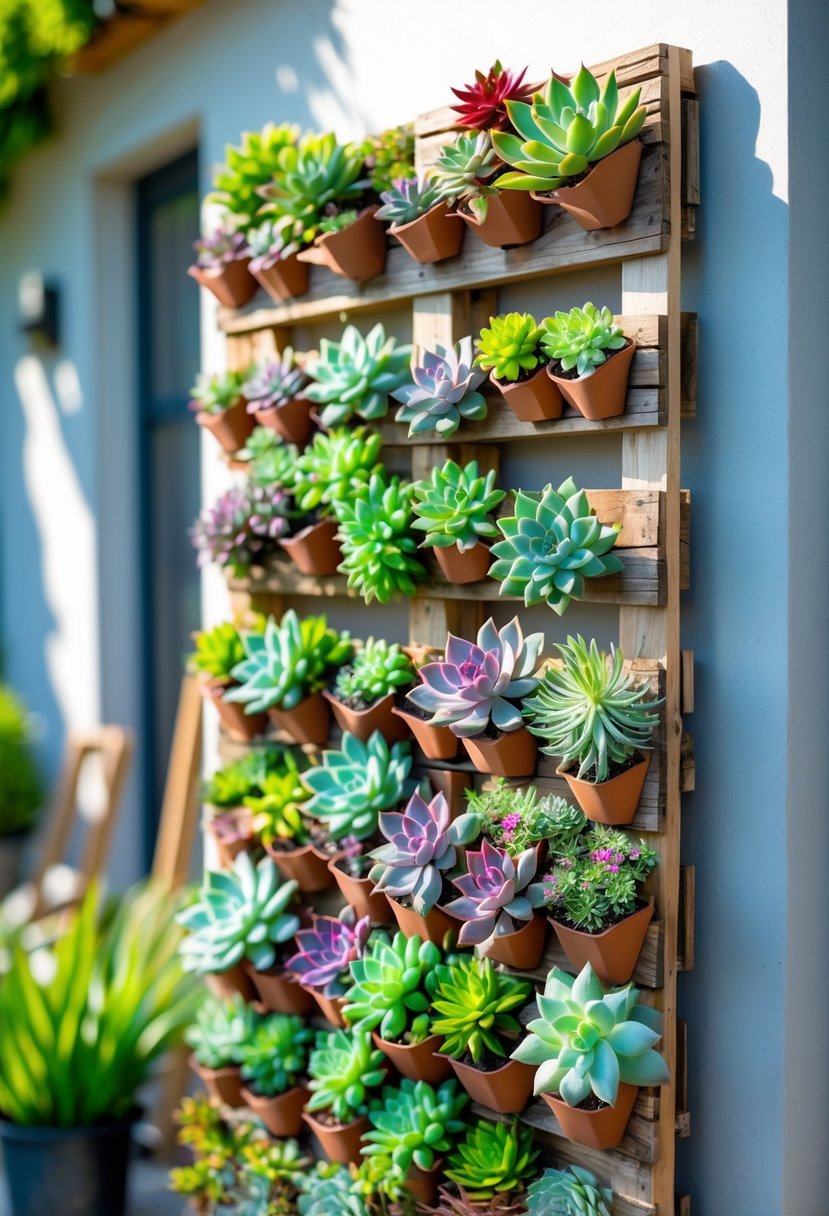
A succulent pallet wall is a great way to add greenery without taking up much space. You can use a wooden pallet to create a vertical garden by filling shallow pockets with different types of succulents. These plants need little water, making them easy to care for.
You can lean the pallet against a wall or hang it to save floor space. This arrangement also helps improve airflow between plants. Mixing various succulents adds texture and keeps your garden looking fresh all year.
This option works well for balconies, patios, or small yards. It offers a simple and stylish way to display plants while using recycled materials. You only need basic tools and minimal maintenance to build your succulent pallet wall.
9) Pallet planter boxes for annuals
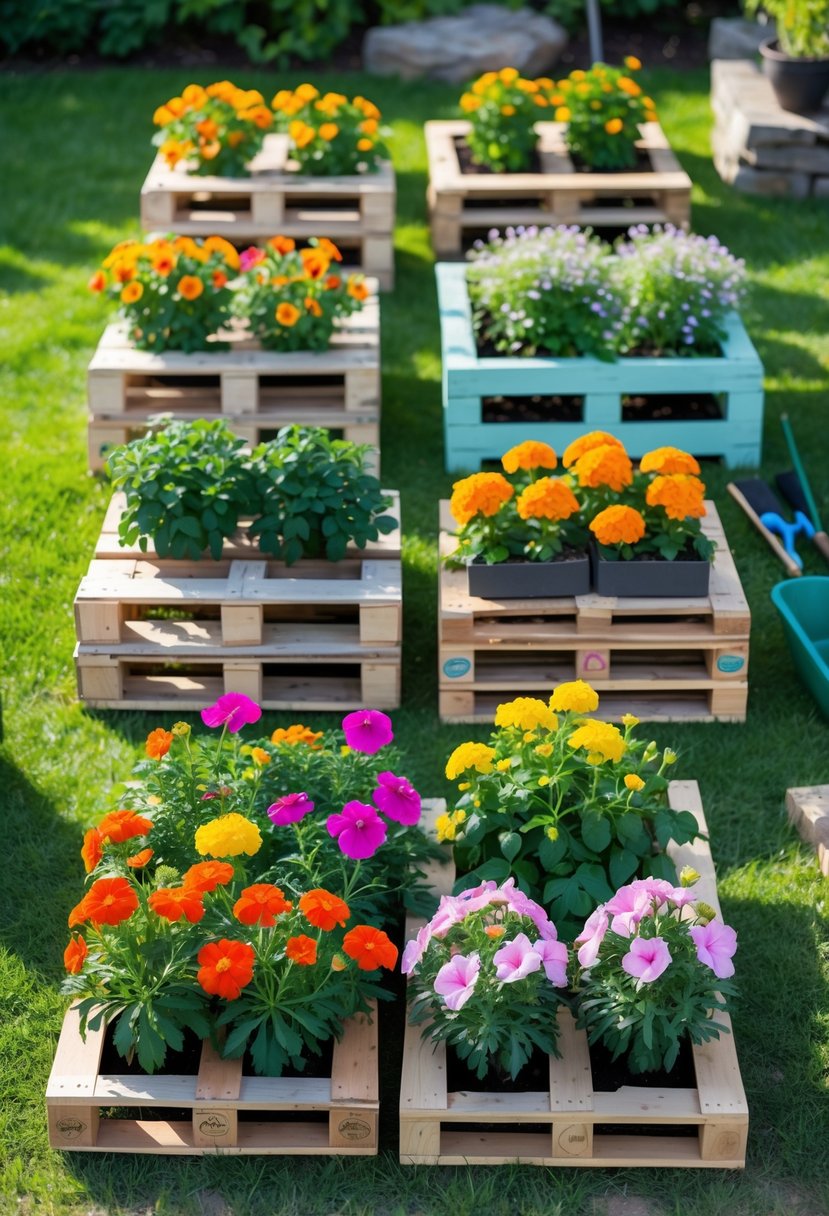
You can use pallet planter boxes to grow annual flowers easily. These boxes give your plants plenty of space to spread out. The wood pallets are strong and hold soil well.
Pallet planter boxes are great for changing plants every season. You can remove old annuals and plant new ones quickly. This keeps your garden looking fresh all year long.
Building these boxes is simple and affordable. You can customize the size to fit your space. Pallet wood is also eco-friendly since it reuses old materials.
Using planter boxes helps keep your garden neat. The raised design makes watering and care easier. Your annuals will get good drainage and sunlight in these boxes.
10) Multi-tiered pallet garden stand
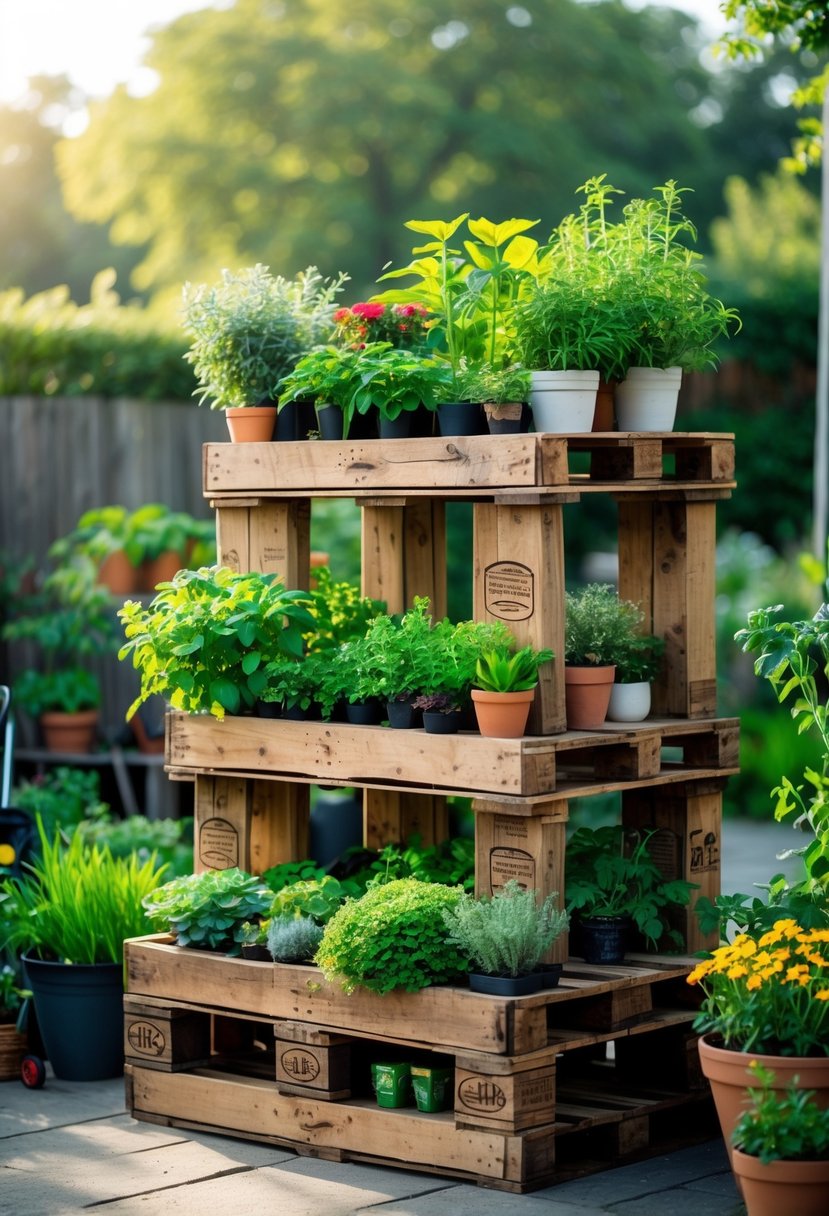
A multi-tiered pallet garden stand helps you grow more plants in a small space. By stacking pallets in layers, you create vertical room for herbs, flowers, or small vegetables.
This setup improves airflow around your plants and makes it easier to reach and care for each one. You can place it on a patio, balcony, or small backyard.
Using a sturdy wooden pallet is important to hold the weight of multiple plants. Adding wheels can make the stand mobile, so you can move it for better sunlight or cleaning.
The tiered design also adds visual interest by showing plants at different heights. This is a practical way to organize your garden while saving space.
11) Pallet swing garden seat
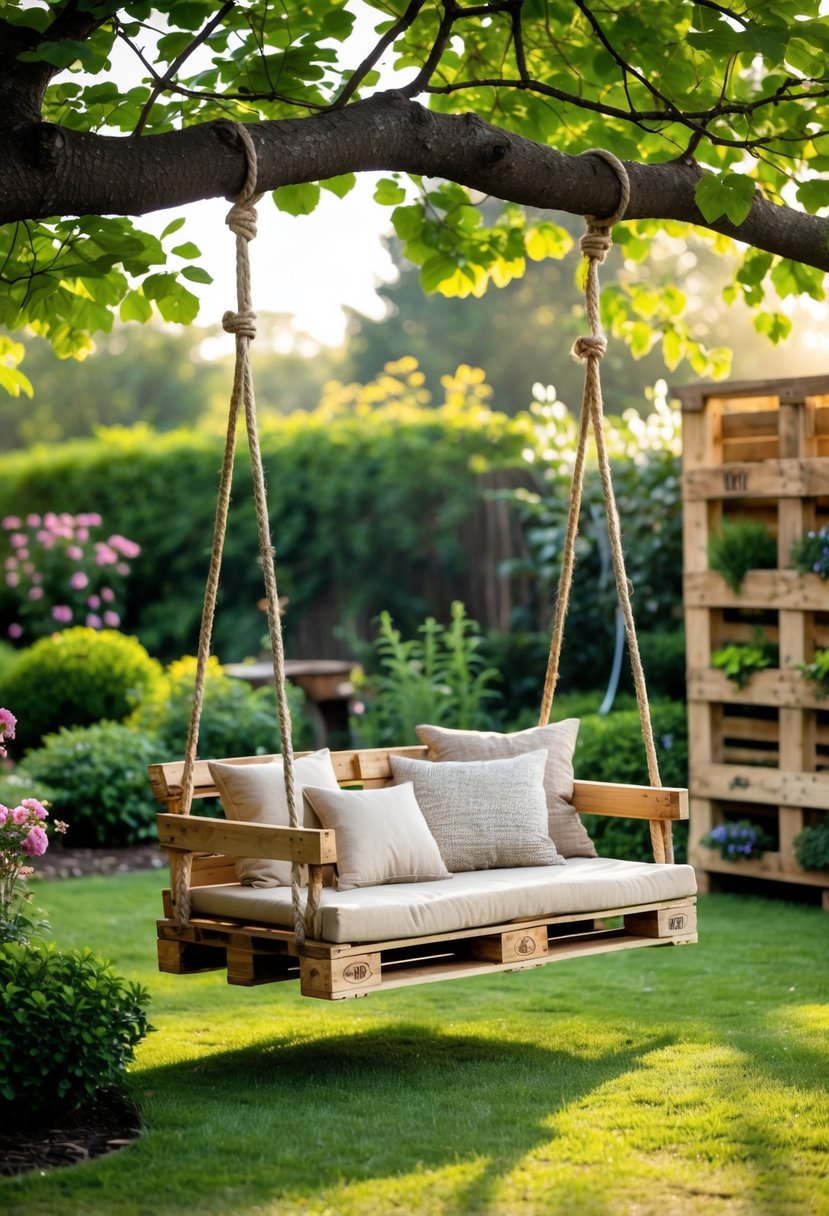
You can create a simple pallet swing seat using just wooden pallets and strong metal chains. The pallets form a sturdy base, and the chains allow you to hang it from a tree or a strong beam in your garden.
This seat offers a relaxed spot for you to enjoy the outdoors. Make sure the chains are securely fastened and the pallets are well-sanded to avoid splinters.
A pallet swing seat is a practical way to add seating without spending much. It can hold multiple people and fits well in most garden spaces.
12) Outdoor pallet lounge with integrated planters
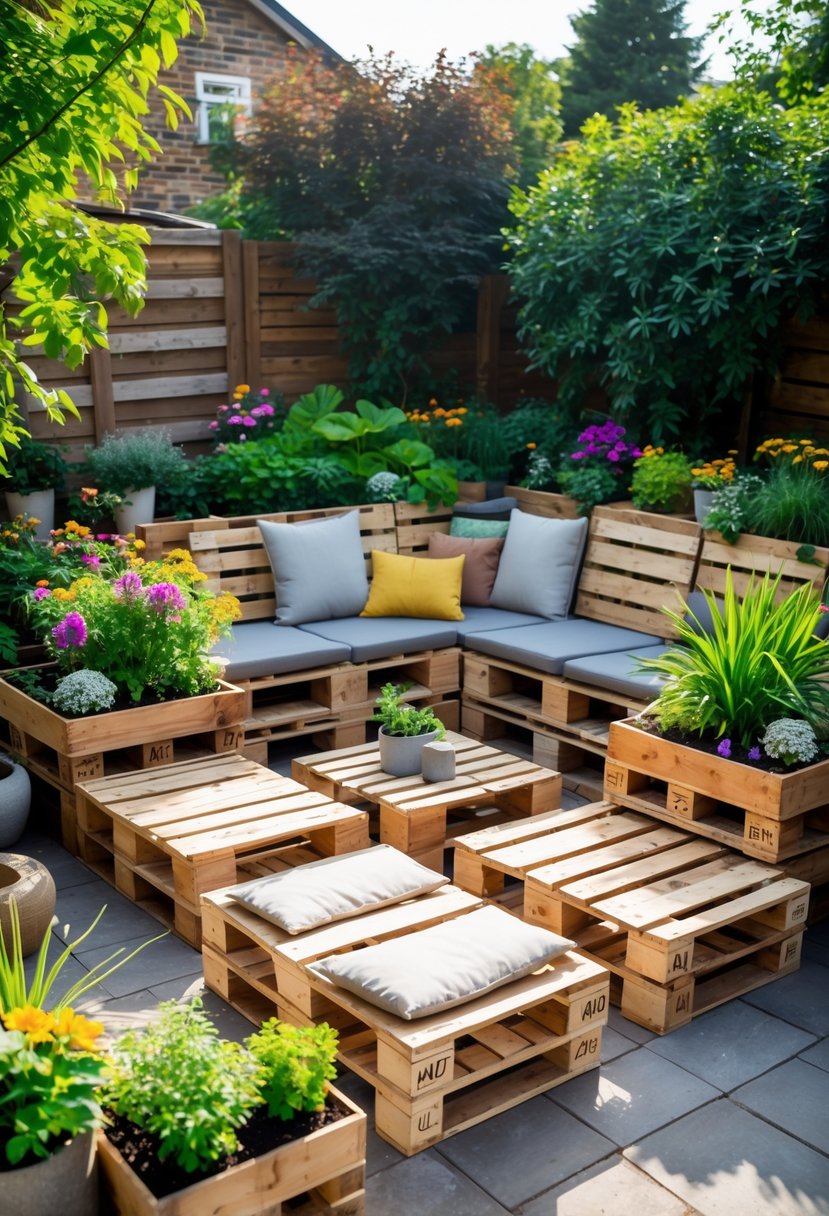
You can build a comfortable outdoor lounge using wooden pallets as the base and seating. Arrange the pallets to form benches or a sofa shape. Add cushions for a cozy sitting area.
Integrate planters into the design by leaving gaps or creating boxes on the sides or back. Plant flowers, herbs, or small vegetables in these built-in planters. This adds greenery without taking extra space.
This setup makes your lounge more inviting and connects your seating area with nature. It is also practical, saving room while doubling as a mini garden. Make sure the pallets are sturdy and treated for outdoor use to last longer.
13) Pallet cold frame for seedlings
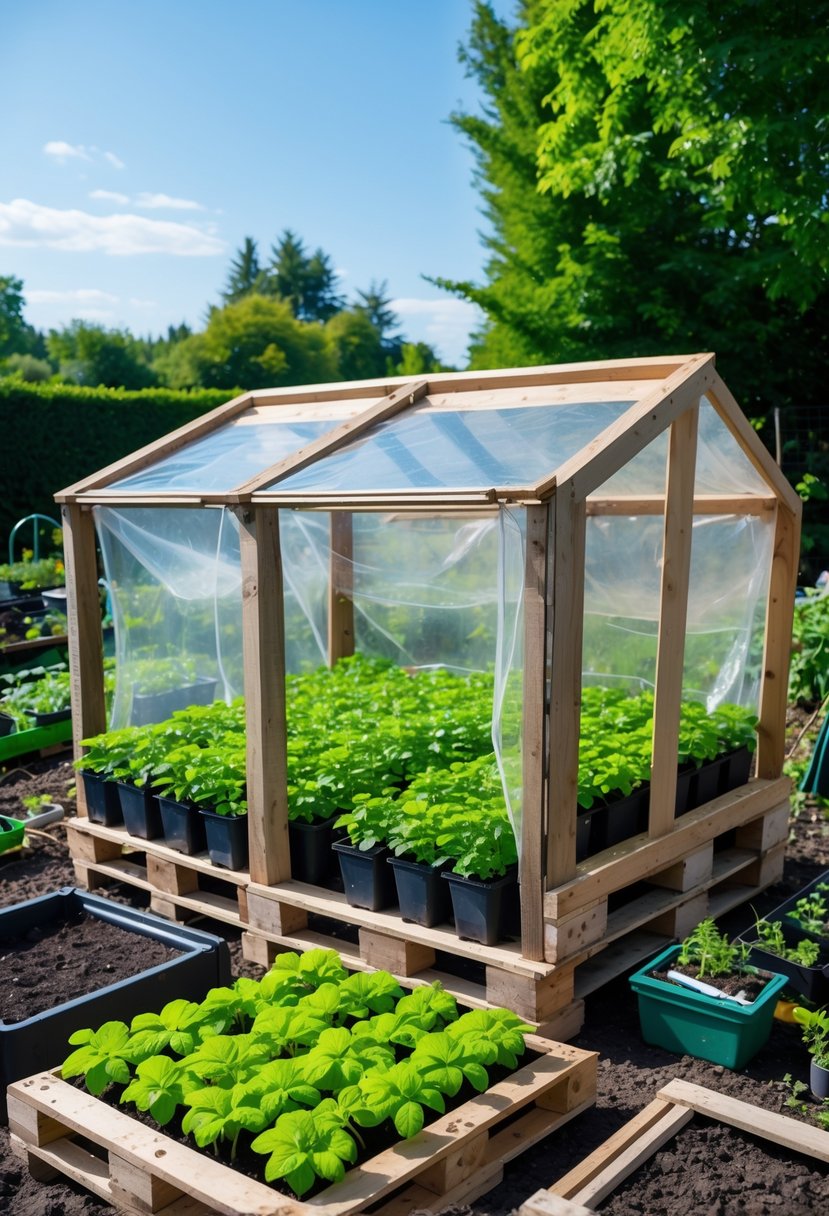
You can use pallets to build a cold frame that protects your seedlings from cold weather. This simple wooden frame with a clear top keeps plants warm and shields them from wind and rain. It helps extend your growing season by giving your seedlings a better start.
Building a pallet cold frame is cost-effective because pallets are easy to find and often free. You only need some basic tools to take apart the pallets and create a sturdy frame. Adding a transparent lid lets sunlight reach the plants while keeping heat inside.
You can place the cold frame directly on the ground or raise it for easier access. It works well for starting seeds in spring or protecting young plants in fall. This small structure helps you grow healthy seedlings in a controlled environment.
14) Pallet garden with vertical veggie patch
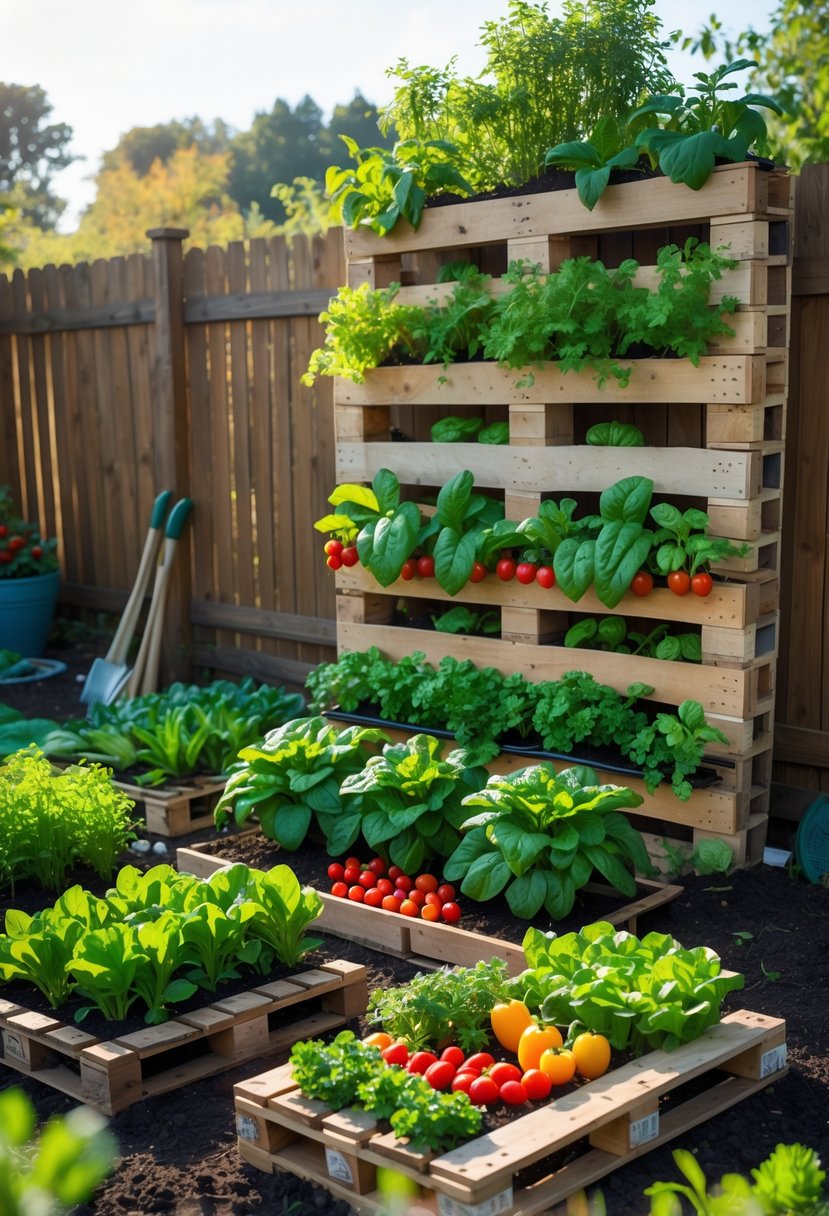
You can turn a wooden pallet into a vertical veggie patch to save space. This setup is perfect if you have a small yard, balcony, or patio.
Start by adding soil or small containers inside the pallet slats. Then, plant vegetables like lettuce, spinach, or herbs. These crops don’t need deep soil, so they grow well in this setup.
Make sure to place your pallet where it gets enough sunlight. Water your plants regularly to keep the soil moist.
This type of garden is easy to manage and helps you grow fresh vegetables even in tight spaces. It also keeps your garden organized and neat.
15) Pallet garden table with built-in planters
You can turn a wooden pallet into a sturdy garden table that also holds plants. This design saves space by combining a table and planter in one piece. It works well for patios or small gardens.
Built-in planters let you grow herbs, flowers, or small vegetables right on your table. You can customize the size and shape of the planter sections to fit your needs.
Using pallets keeps the project budget-friendly and adds a natural, rustic look to your outdoor space. It is also simple to move the table when needed.
Essential Tips for Successful Pallet Gardening
When starting with pallet gardening, focus on selecting safe pallets, preparing them properly, and placing your garden in the right spot. These steps help protect your plants and make your garden last longer.
Selecting the Right Pallets
Choose pallets made of sturdy, untreated wood. Avoid pallets that have chemical stamps, labels like “HT” (heat-treated) are generally safer than those marked “MB” (methyl bromide), which can be toxic.
Look for pallets without cracks, splinters, or broken boards to ensure durability. Pallets with smooth, even surfaces reduce the risk of injury and make planting easier.
If possible, buy or get pallets from reliable sources like garden centers or home improvement stores. Always check for signs of mold, stains, or odors that could indicate contamination.
Preparing Pallets Safely
Start by cleaning your pallet with a brush and soapy water to remove dirt and oils. Let it dry completely before use.
Sand all rough edges and splinters to prevent injury while working with your pallet garden.
Apply a non-toxic, water-based sealant or wood preservative to protect the wood from moisture and increase its lifespan. Avoid products with chemicals that could harm your plants.
If your pallet has nails or staples sticking out, remove or hammer them in to avoid accidents.
Choosing the Best Location
Place your pallet garden where it receives the right amount of sunlight for the plants you want to grow. Most herbs and vegetables need 6 to 8 hours of direct sun daily.
Ensure the location has good air circulation to prevent mold and mildew on your plants and pallet.
Consider the accessibility of your garden for watering and harvesting. A spot near a water source or on a patio makes maintenance easier.
Make sure the pallet is stable and secure, especially if you lean it against a wall or fence. Use brackets or supports if needed to keep it upright.
Pallet Garden Maintenance and Care
Caring for your pallet garden means controlling water, using the right soil and nutrients, and adjusting care with the seasons. Proper attention will help your plants thrive and keep your garden healthy.
Watering Strategies
Your watering routine depends on the plants you grow and the size of your pallet garden. Most plants need consistent moisture but avoid overwatering, as pallets can hold water, causing root rot.
Check soil moisture daily, especially in hot weather. Water deeply to reach roots but let the surface dry out between watering. Use a spray bottle or a watering can with a gentle flow to avoid washing soil away from the pallet slots.
If your garden is vertical, water from top to bottom so all levels get moisture. Consider adding drip irrigation or soaker hoses for even watering and to save time.
Soil and Fertilizer Recommendations
Use light, well-draining soil mixed with compost or organic matter to improve nutrition and airflow. Avoid heavy or clay soils that hold too much water and risk plant health.
For each type of plant, choose fertilizer that matches its needs. For example, use balanced fertilizer for vegetables and higher phosphorus for flowers to promote blooming.
You can apply slow-release fertilizers to reduce feeding frequency. Liquid fertilizers work well for quick nutrient boosts, especially in growing seasons.
Replenish soil nutrients every few weeks during active growth by adding compost or natural fertilizers to keep plants strong.
Seasonal Upkeep
Adjust your care routine as the seasons change to protect your pallet garden.
In spring and summer, water more often and monitor for pests. Trim dead leaves and prune to encourage healthy growth.
During fall, clear out old plants and add fresh soil if needed. Reduce watering gradually as temperatures drop.
In winter, protect your garden from frost by moving portable pallets indoors or covering them with frost cloths. Avoid watering too much, since plants need less moisture when dormant.