12 Foolproof Vegetables for Your Indoor Garden to Grow Year-Round with Ease
Growing vegetables indoors can be a great way to enjoy fresh produce no matter where you live or the time of year. You don’t need a big garden or outdoor space to start your own indoor vegetable garden. With the right choices, you can grow healthy plants right in your home.
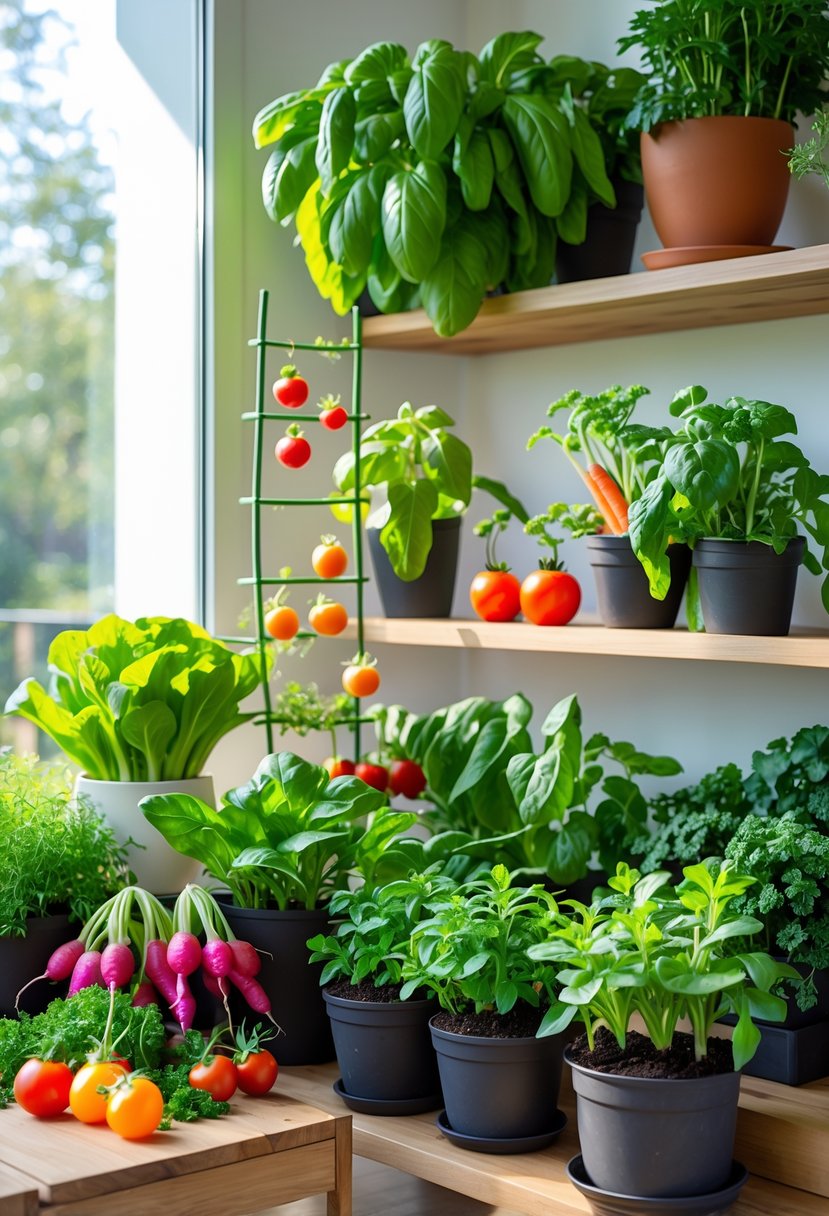
The key is picking vegetables that are easy to grow and care for inside. These vegetables will give you a better chance of success and make your indoor gardening experience more enjoyable. You can still have fresh vegetables without the hassle of outdoor gardening.
1) Lettuce
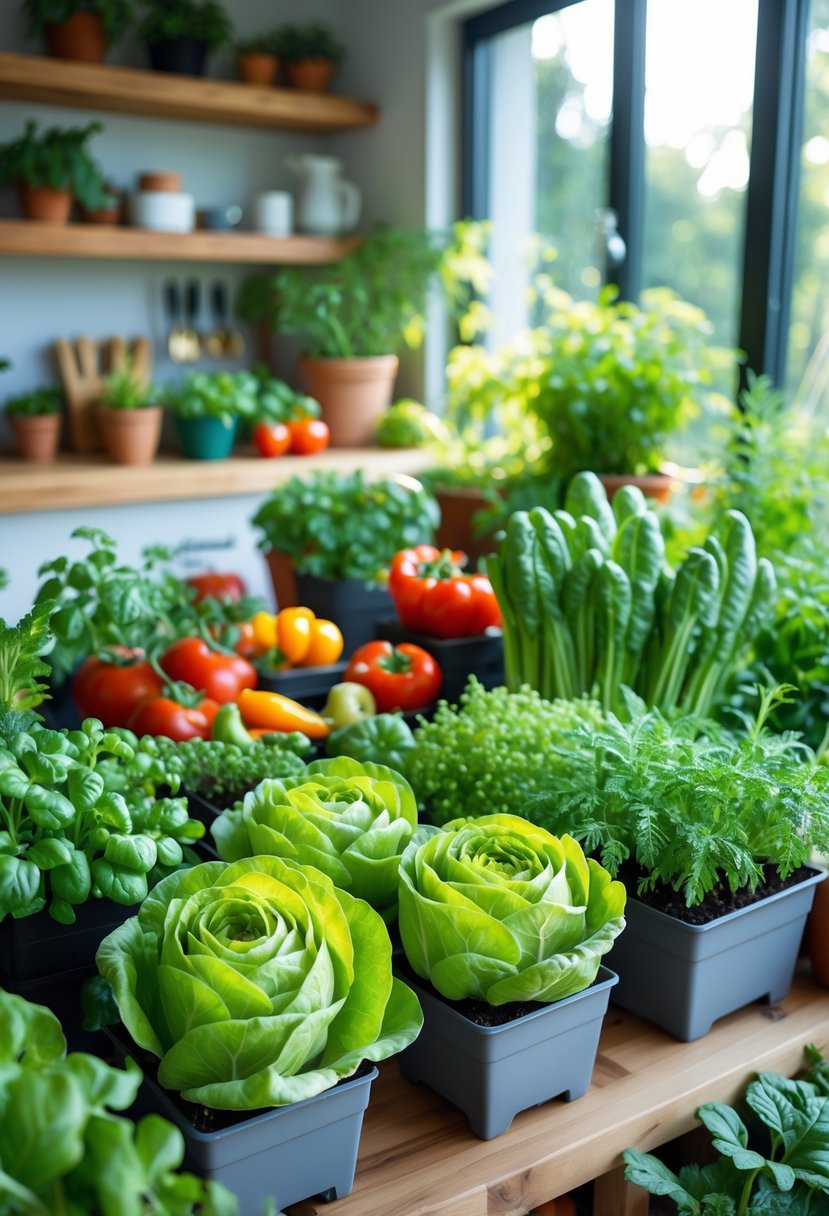
Lettuce is one of the easiest vegetables to grow indoors. It does not need much space, making it perfect for small containers on a windowsill or countertop.
You need to provide lettuce with bright, indirect light. A sunny spot or a grow light for about 12-14 hours a day works well.
Keep the soil moist but not soggy. Lettuce grows quickly, so you can start harvesting leaves in just a few weeks.
It prefers cooler temperatures, typically between 60-70°F (15-21°C). Avoid placing it near heat sources to prevent the leaves from wilting or turning bitter.
2) Cherry Tomatoes
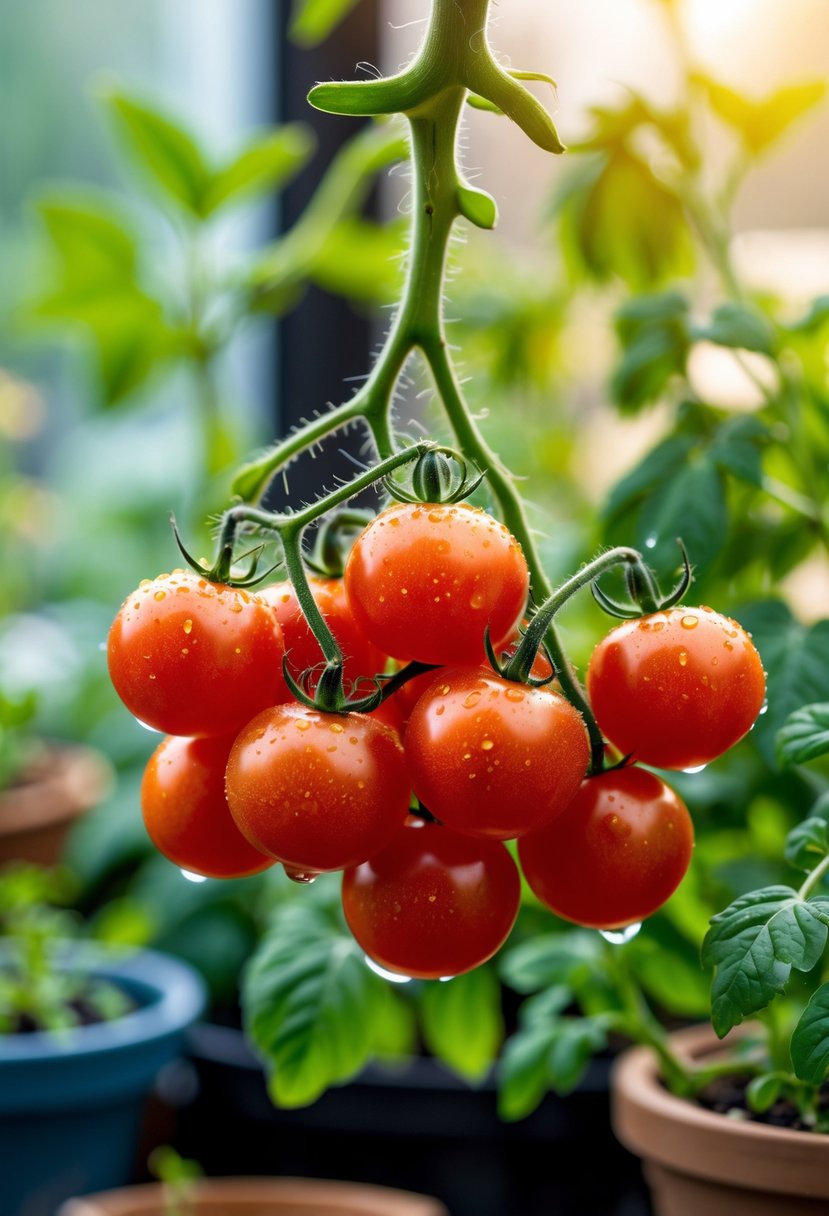
You can grow cherry tomatoes indoors easily. They do well in containers and don’t need much space, making them perfect for small areas like kitchens or balconies.
Use a pot about 12 to 14 inches wide with well-draining soil. Make sure your tomato plant gets at least 6 hours of direct sunlight daily or use a grow light.
Water your plant only when the soil feels dry on top. Be careful not to overwater to avoid root rot. Cherry tomatoes usually produce fruit in 2 to 3 months.
Choose compact varieties like ‘Tiny Tim’ or ‘Red Robin’ for easier indoor growth. They stay small but give you flavorful fruits.
3) Spinach
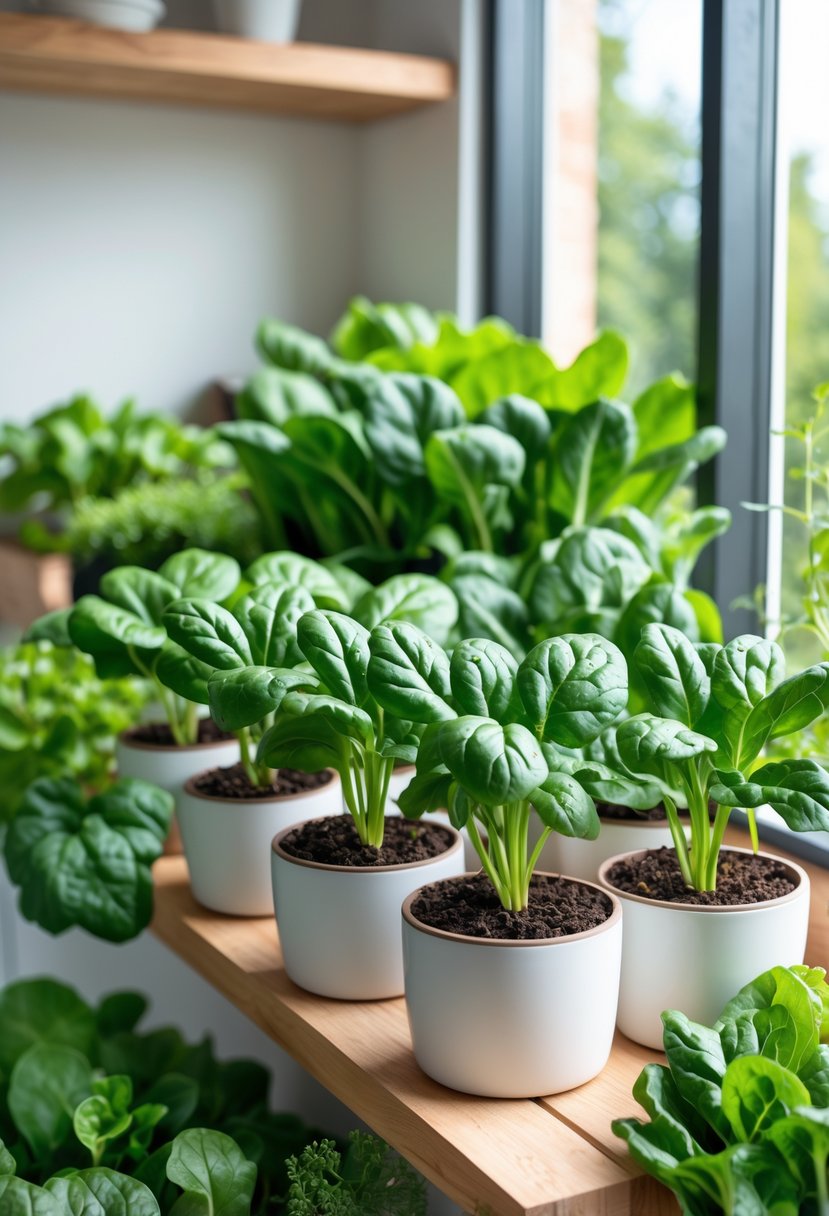
Spinach is a great vegetable to grow indoors because it does well in cooler temperatures. You can grow it year-round, as long as you provide enough light and keep the soil moist.
Choose a container with good drainage, and use a light soil mix to help roots grow well. Place your spinach where it can get at least 6 hours of light every day.
Indoor spinach grows faster than outdoor plants because you control the conditions. Watch for pests, but they are usually less common inside. You will have fresh leaves ready to harvest in a few weeks.
4) Green Beans
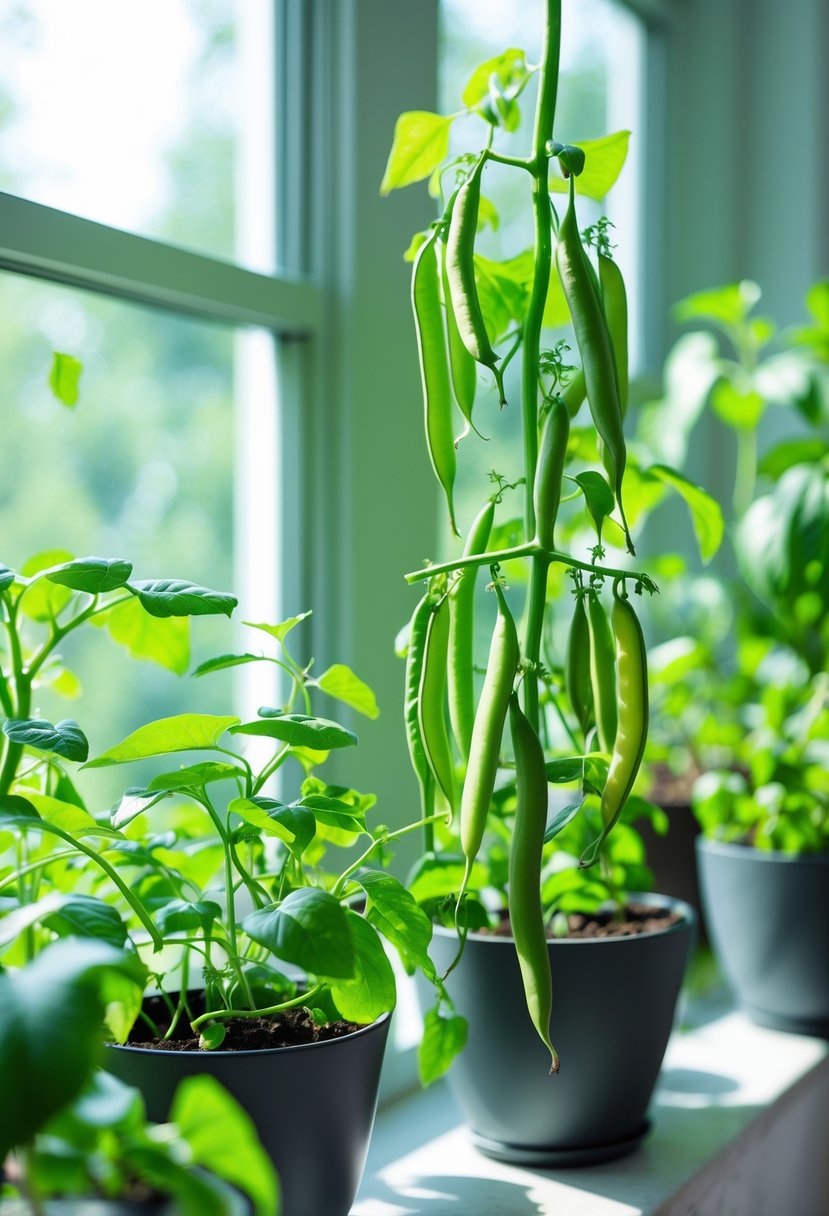
You can grow green beans indoors even if you don’t have outdoor space. Use a container with good drainage and fill it with quality potting soil.
Green beans need plenty of light, so place them near a bright window or use grow lights. Keep the soil moist but not soggy by watering regularly.
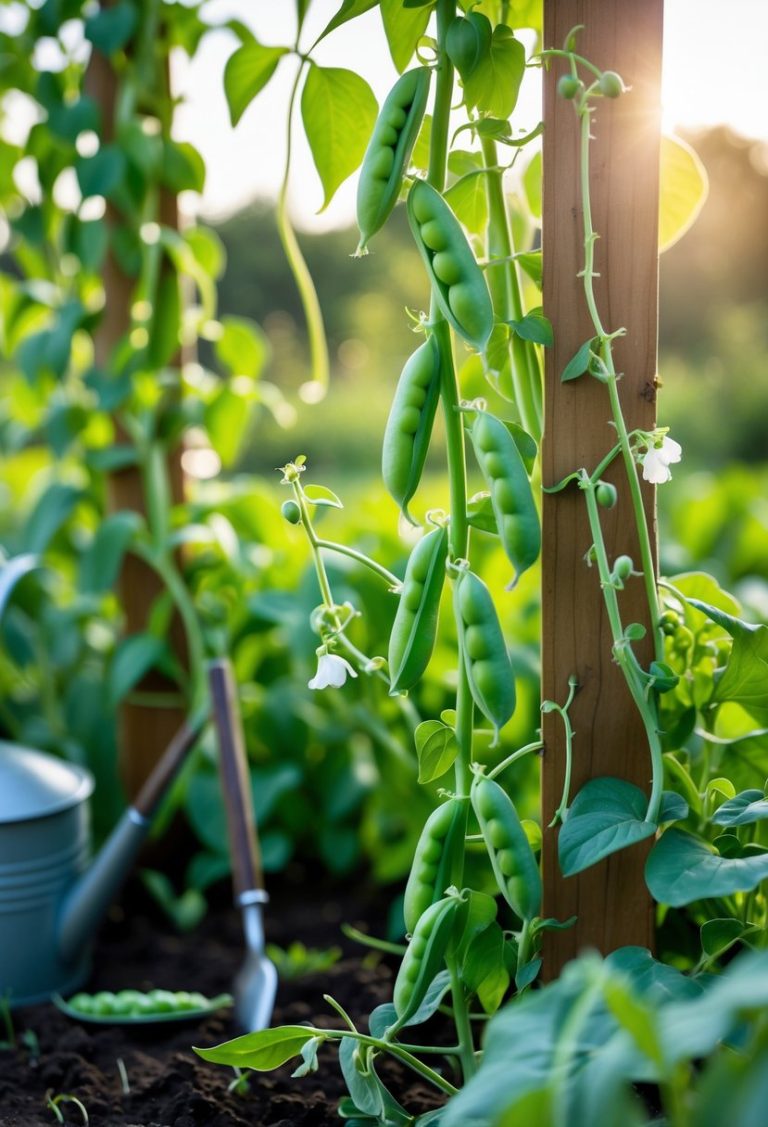
You’ll see sprouts in about one to two weeks. Give the plants some support, like a small trellis, since green beans like to climb.
With the right care, you can enjoy fresh green beans year-round without needing a garden outside.
5) Bell Peppers
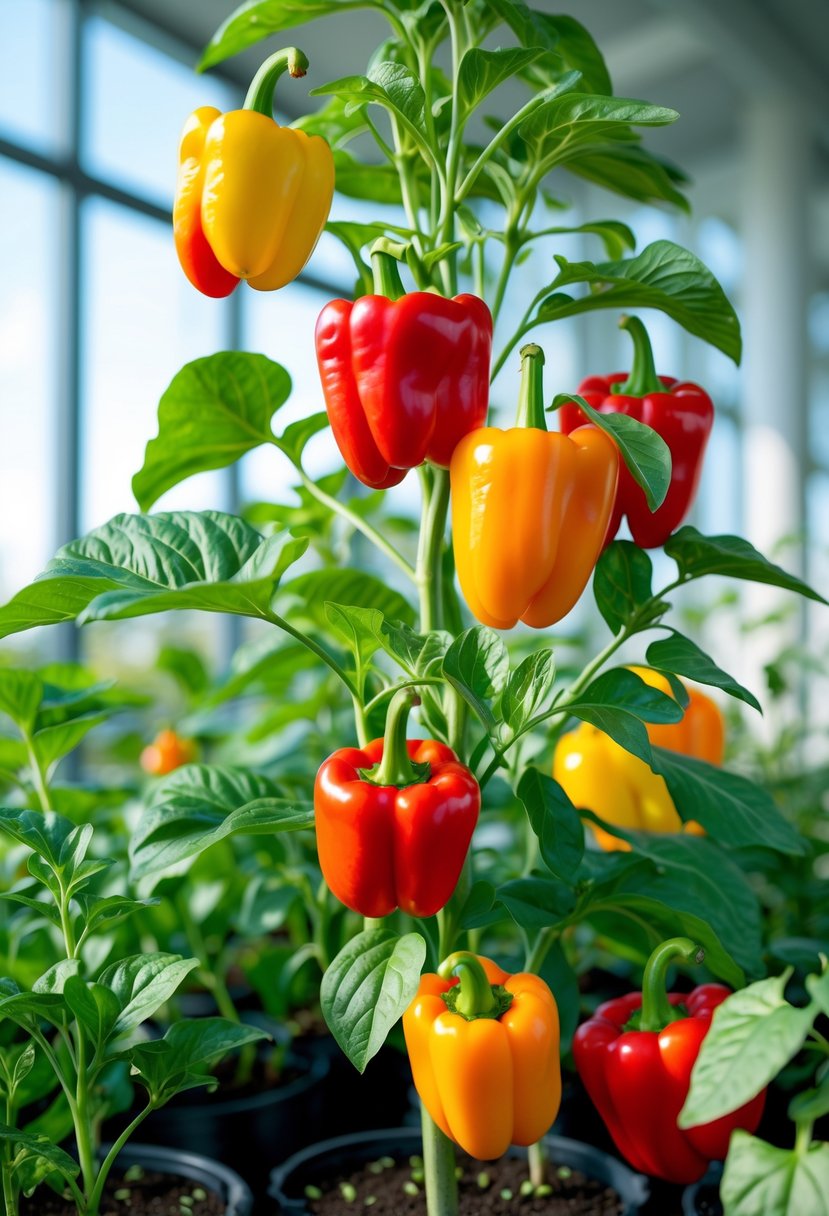
You can grow bell peppers indoors with the right care. They need plenty of light, ideally 10 to 12 hours a day, so placing them near a sunny window or using grow lights works well.
Choose a warm spot since bell peppers prefer temperatures between 70°F and 80°F. Make sure to water regularly, keeping the soil moist but not soggy.
Bell peppers grow well in containers with good drainage. You can harvest them when they turn their full color, usually green, red, yellow, or orange, depending on the variety.
Growing bell peppers indoors lets you enjoy fresh, crunchy vegetables year-round, even if you don’t have outdoor space.
6) Radishes
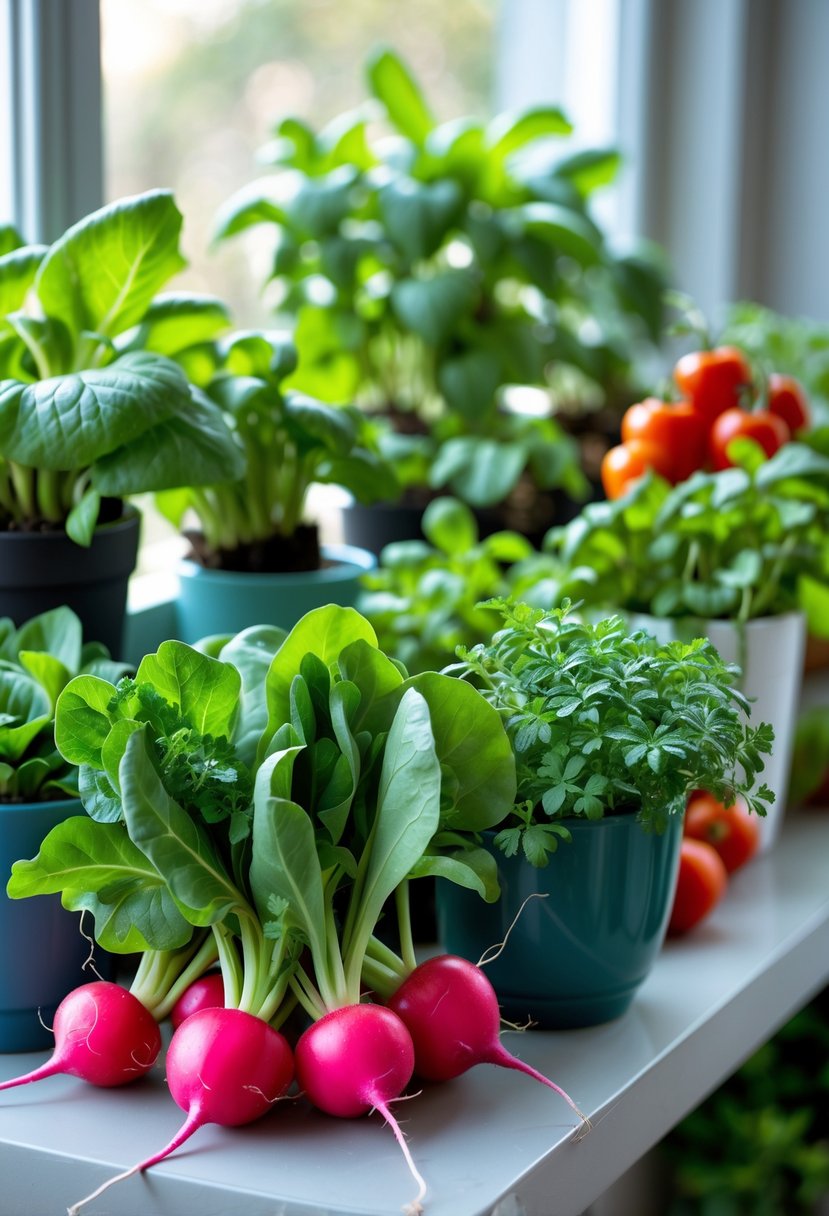
Radishes are a great choice for your indoor garden. They grow quickly, often ready to harvest in about a month. This makes them perfect if you want fresh vegetables fast.
You don’t need much space to grow radishes. Smaller, faster-maturing varieties work best indoors. They also do well in cooler spots inside your home.
To grow radishes successfully, give them plenty of light and keep the soil moist. You can harvest radish sprouts in just 1-2 weeks if you want a quick snack. Overall, radishes are easy to care for and a good way to start indoor vegetable gardening.
7) Carrots
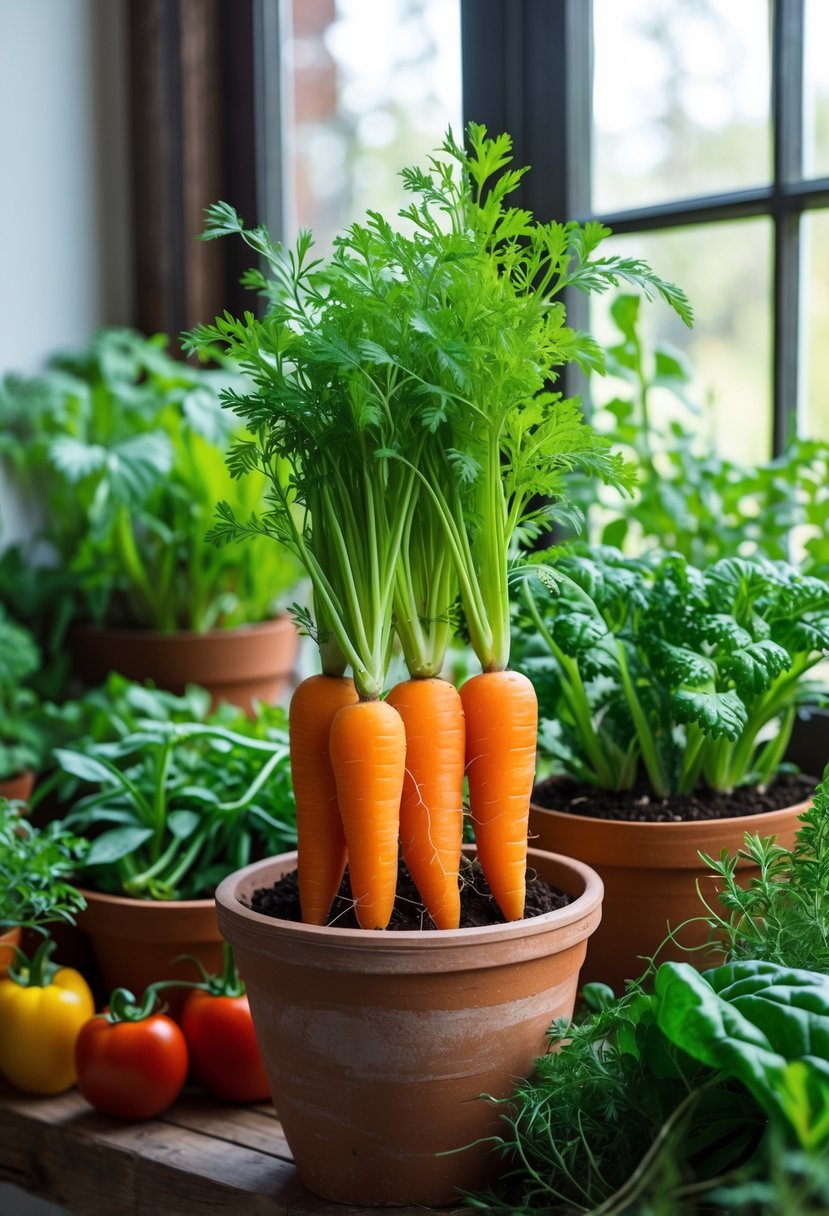
Carrots are a good choice for your indoor garden because they grow well in containers. You should use deep pots to give the roots enough space to grow straight and long.
Make sure you plant carrot seeds in loose, well-draining soil. Keep the soil moist but not too wet to avoid rot.
Carrots need moderate light, so placing them near a bright window or using a grow light can help. Growing carrots indoors takes patience because they need a few months to mature.
8) Kale
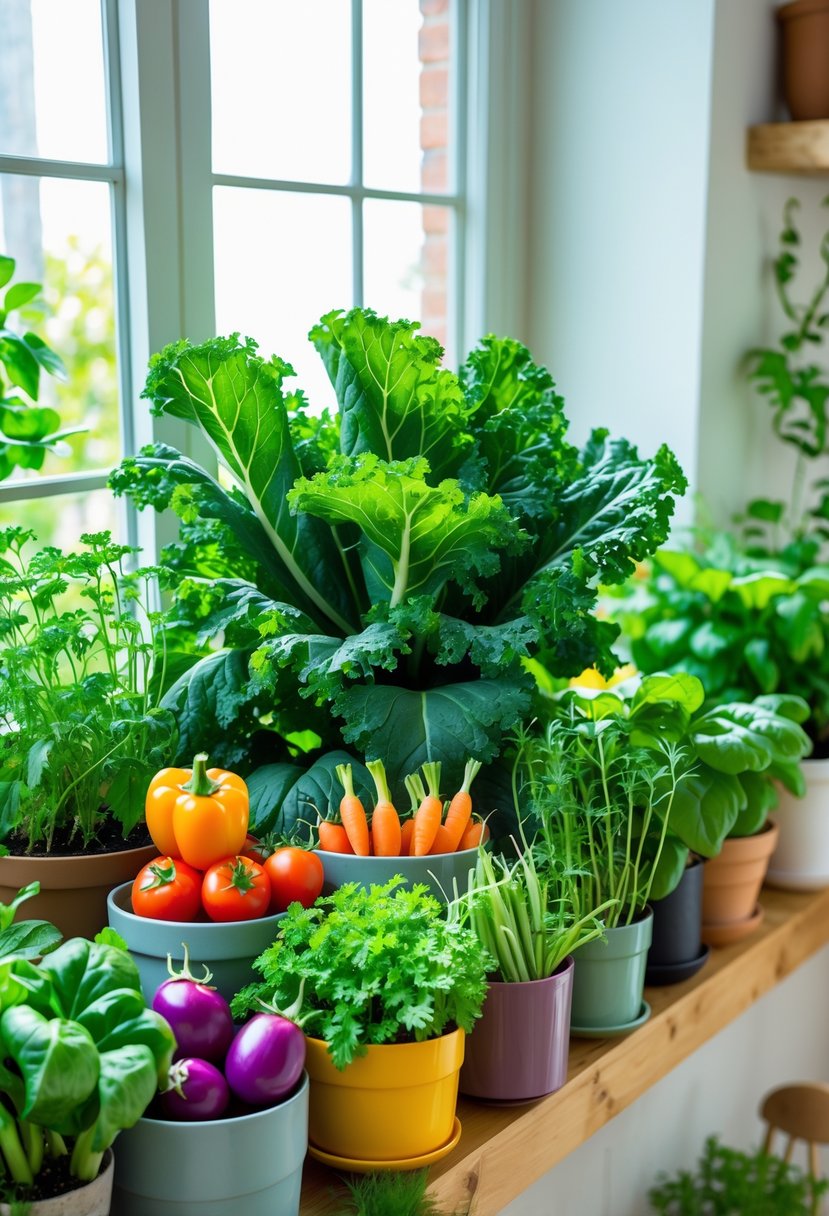
You can grow kale indoors with minimal effort. It adapts well to indoor conditions and grows quickly.
Kale needs bright light to thrive. You can use a grow light if natural sunlight is limited in your space.
Keep the soil moist but not soggy. Regular watering helps the plant stay healthy without overwatering.
Starting kale from seeds indoors is easy. Some indoor garden kits offer seeds, growing medium, and even built-in lights to make the process simple.
With proper care, you can harvest kale leaves year-round. Fresh indoor kale is a good way to add leafy greens to your diet anytime.
9) Herbs (Basil, Parsley, Cilantro)
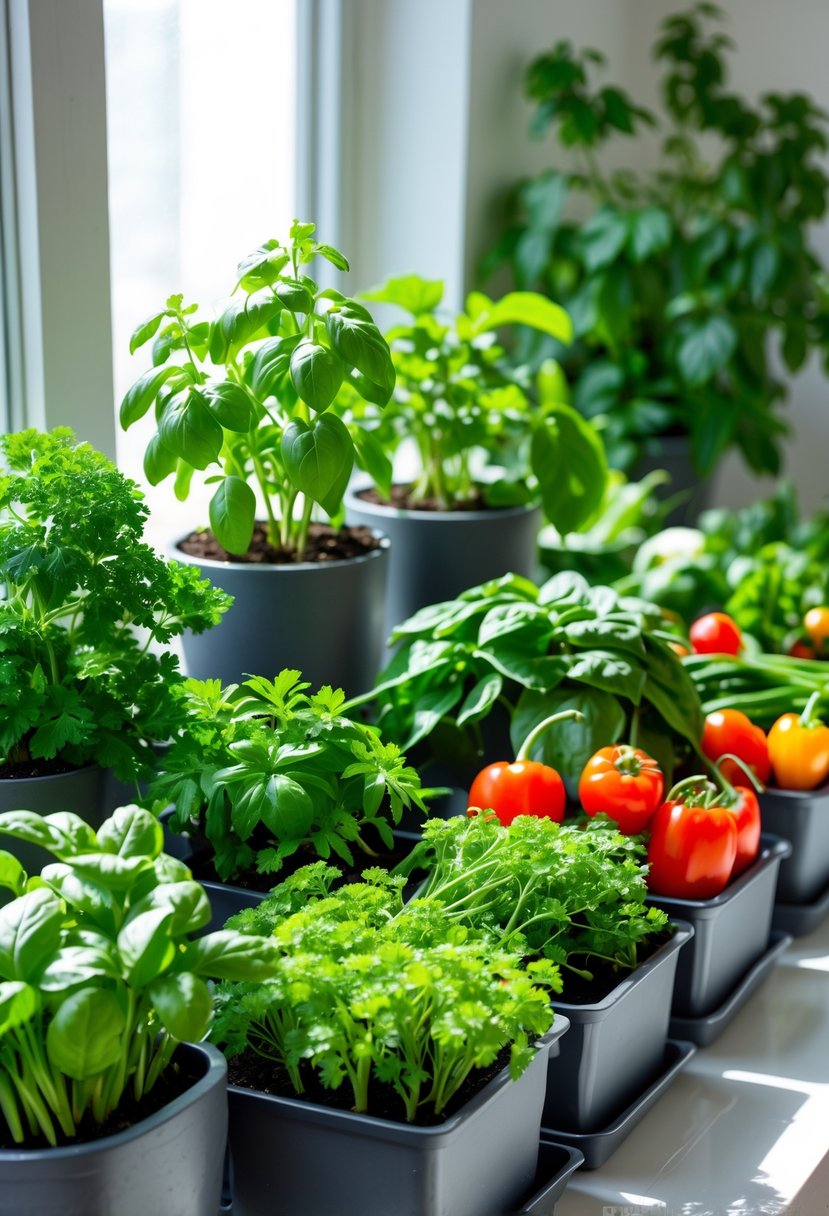
You can easily grow basil, parsley, and cilantro indoors with enough sunlight. Basil prefers warm temperatures and consistent moisture. It grows well in a pot with good drainage.
Parsley and cilantro like cooler conditions. They do well on a windowsill that gets indirect light. Regular trimming helps these herbs grow bushier and healthier.
Choosing compact varieties like curly parsley or spicy globe basil can save space. These herbs add fresh flavors to many dishes and are simple to maintain inside your home.
10) Green Onions
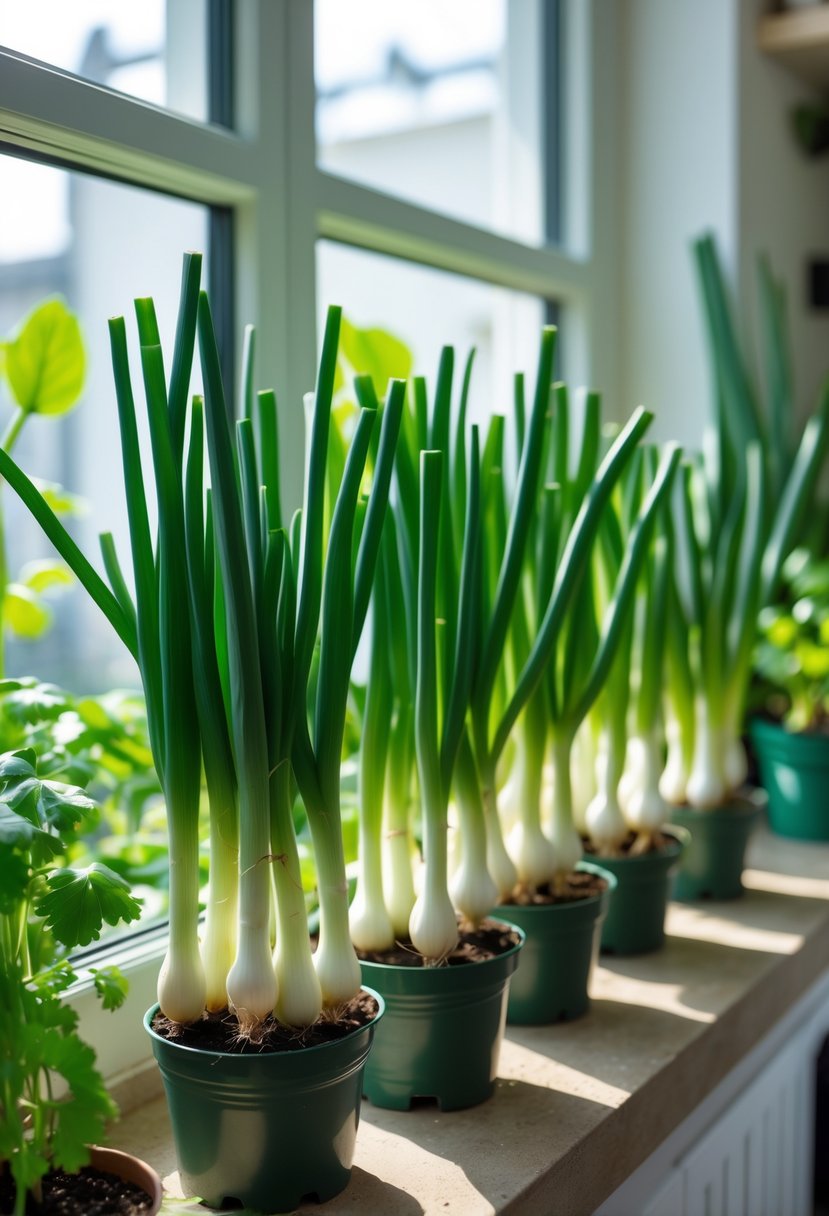
Green onions are easy to grow indoors and don’t need much space. You can use leftover roots from store-bought onions to start new plants. Just place the roots in a glass of water near a sunny window.
They need bright, indirect light to grow well. Change the water every few days to keep it fresh. Within a week, you’ll see new green shoots.
Once the shoots are a few inches tall, you can plant them in soil. Water them regularly but avoid making the soil soggy. You can harvest green onions continuously by trimming the tops as you need them.
11) Zucchini
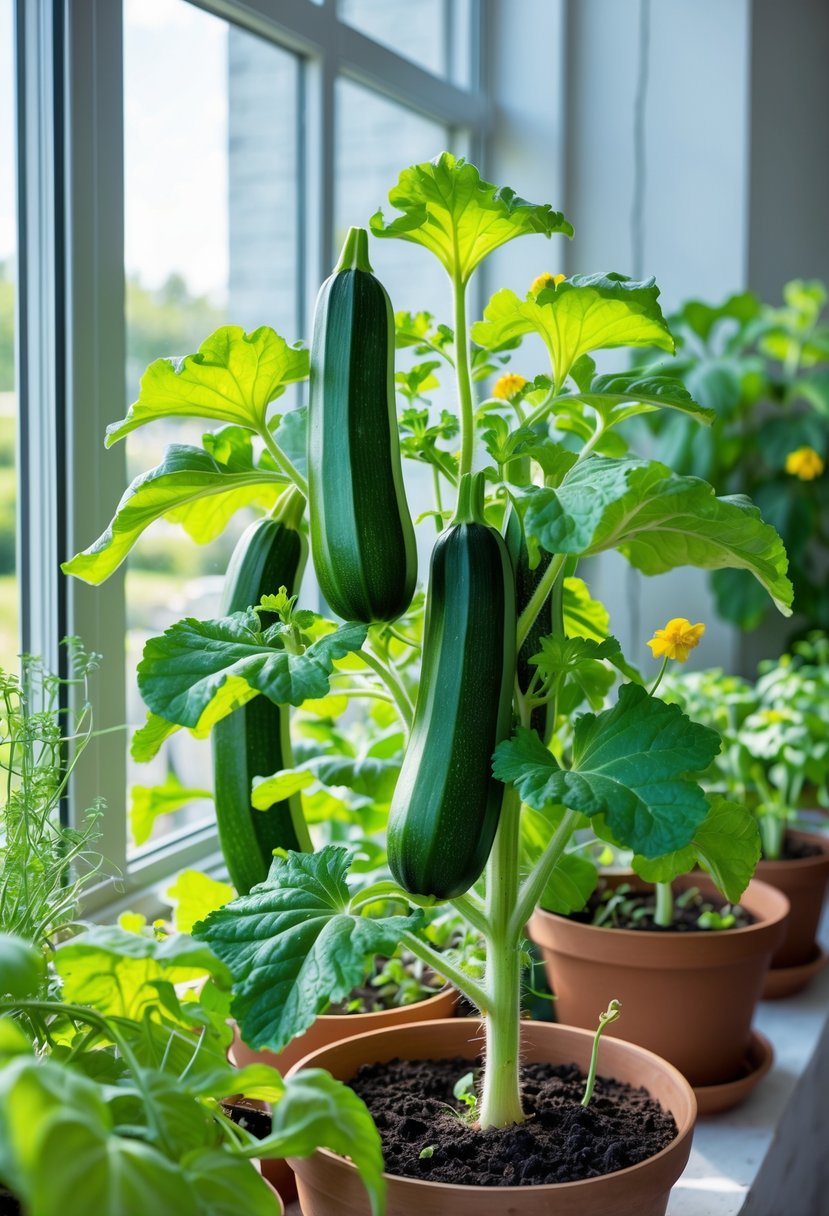
You can grow zucchini indoors with some care and space. Choose a bush variety, as they stay smaller and fit better in containers.
Zucchini needs plenty of light, so place it near a south-facing window or use grow lights. Keep the soil moist but not soggy to avoid root problems.
Pollination can be tricky indoors. Hand-pollinate flowers by transferring pollen with a small brush or cotton swab. This will help your plant produce fruit.
With patience, your indoor zucchini can give you fresh vegetables even without a garden outside. Make sure to give it enough room to grow and regular attention.
12) Microgreens
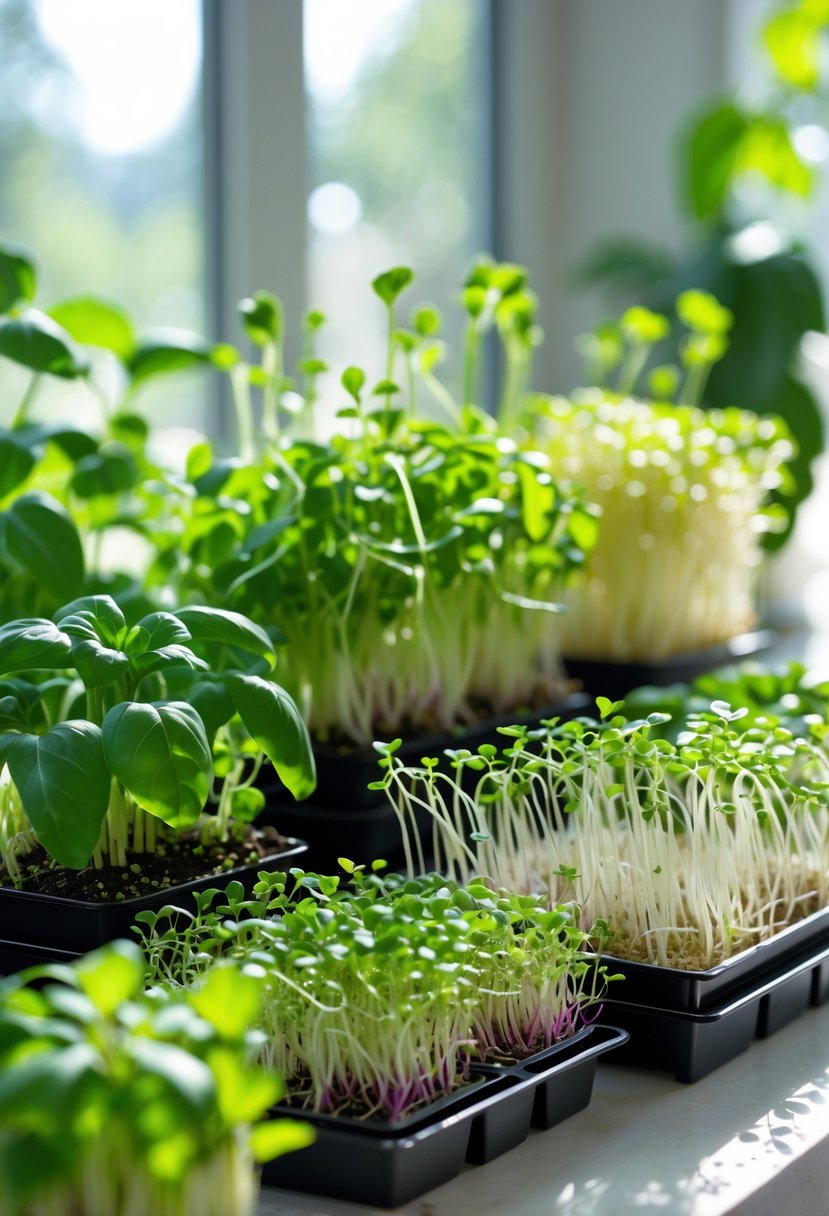
Microgreens are young vegetable or herb seedlings harvested soon after sprouting. You can grow them quickly indoors, usually within 7 to 14 days.
They require little space and simple care, making them ideal for beginners. Just use a shallow tray, some soil, and good light.
Popular microgreens include radish, arugula, and sunflower. These offer fresh flavors and extra nutrients for your meals.
Because they grow fast and in a small area, microgreens let you enjoy fresh greens year-round. You can harvest multiple batches in the same space.
Growing microgreens indoors is a simple way to add variety and nutrition to your diet without needing much time or equipment.
Key Considerations for Indoor Vegetable Gardening
To grow vegetables indoors successfully, you need to manage light, space, soil quality, and nutrients carefully. These factors directly affect how well your plants grow and how much produce you get.
Optimizing Light and Space
Vegetables need plenty of light to grow well. Most indoor vegetables do best with 12 to 16 hours of bright, direct light daily. If natural sunlight is limited, use full-spectrum LED grow lights. Position lights 6 to 12 inches above plants and adjust as they grow.
Space is another important factor. Choose containers that fit your available area but still give roots enough room to grow. Vertical gardening or tiered shelves can help maximize small spaces. Keep plants spaced according to their needs—crowded plants compete for light and may grow weak.
Avoid placing plants near heat sources or drafty windows. Stable temperature and good air circulation also support healthy growth.
Soil Quality and Nutrient Needs
Use well-draining potting soil designed for vegetables. Avoid garden soil, which may not drain well or contain pests. Look for soil that holds moisture but does not stay soggy.
Vegetables need nutrients like nitrogen, phosphorus, and potassium to develop leaves, roots, and fruits. You can supply these with balanced, water-soluble fertilizers. Follow package directions to avoid over-fertilizing, which can harm plants.
Consider adding compost or organic matter to improve soil structure. Refresh the soil every few months if you reuse pots. Monitor plants for signs of nutrient deficiency, such as yellow leaves, and adjust feeding accordingly.
Common Challenges and Smart Solutions
You will face some issues like pests and humidity when growing vegetables indoors. Knowing how to handle these problems early helps keep your plants healthy and productive.
Pest Prevention Indoors
Pests such as aphids, spider mites, and fungus gnats can harm your indoor vegetables. To prevent infestations, inspect plants regularly for signs of damage or bugs.
Use natural pest control methods like neem oil sprays or insecticidal soap. These solutions are safe for indoor use and do not harm your plants.
Keep your growing area clean by removing dead leaves and debris. Avoid overwatering, as damp soil attracts many pests.
You can also introduce beneficial insects like ladybugs if you have a larger indoor garden. They eat harmful pests naturally.
Maintaining Proper Humidity
Indoor vegetables need the right humidity levels to grow well. Most thrive between 40% to 60% humidity. Low humidity can dry out leaves, while too much can cause mold or root rot.
Use a humidifier or place water trays near your plants to increase humidity. Misting the leaves lightly can help but don’t overdo it.
Monitor humidity with a simple hygrometer. Adjust your room’s ventilation to keep air moving without causing drafts.
Group plants together to create a microenvironment with higher humidity. This is especially useful for more moisture-loving vegetables like spinach and lettuce.
Frequently Asked Questions
Growing vegetables indoors requires the right balance of light, space, soil, and watering. Knowing which plants suit your conditions helps you get better results. Managing pests is also important to keep your plants healthy.
What are the easiest vegetables to grow indoors for beginners?
Lettuce, cherry tomatoes, spinach, green beans, and bell peppers are good choices. These plants are forgiving and grow well with basic care.
How much light do indoor vegetable gardens require?
Most vegetables need 6 to 8 hours of bright, indirect light each day. If natural light is limited, you can use grow lights to provide enough light for growth.
Which vegetables can thrive in limited space conditions?
Lettuce, spinach, and cherry tomatoes do well in small pots or containers. These vegetables have compact root systems and don’t require large growing areas.
What soil type is best for indoor vegetable gardening?
Use a well-draining potting mix designed for vegetables. The soil should hold moisture but not stay soggy to avoid root rot.
How often should indoor garden vegetables be watered?
Water when the top inch of soil feels dry. Most indoor vegetables need watering about once or twice a week, but this can vary with humidity and temperature.
What are common pests in indoor vegetable gardens and how can they be controlled?
Spider mites, aphids, and fungus gnats are common indoors. Control pests by wiping leaves, using insecticidal soap, and keeping your plants clean and healthy.