
10 Lush Climbing Plants for Arches to Enhance Your Garden’s Elegance
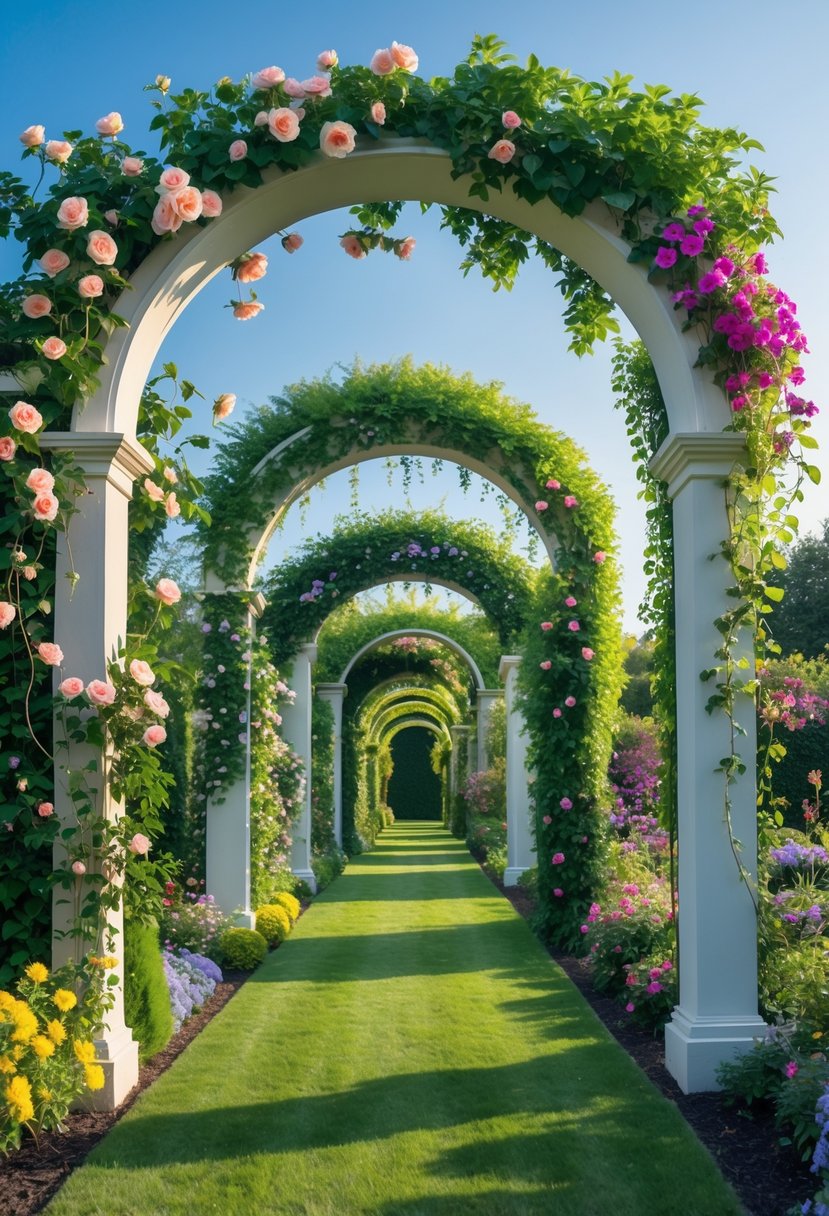
Climbing plants are a great way to add life and color to your garden arches. They bring texture and interest to outdoor spaces while making arches stand out as key features. Choosing the right plants can transform a simple structure into a lush, inviting focal point.
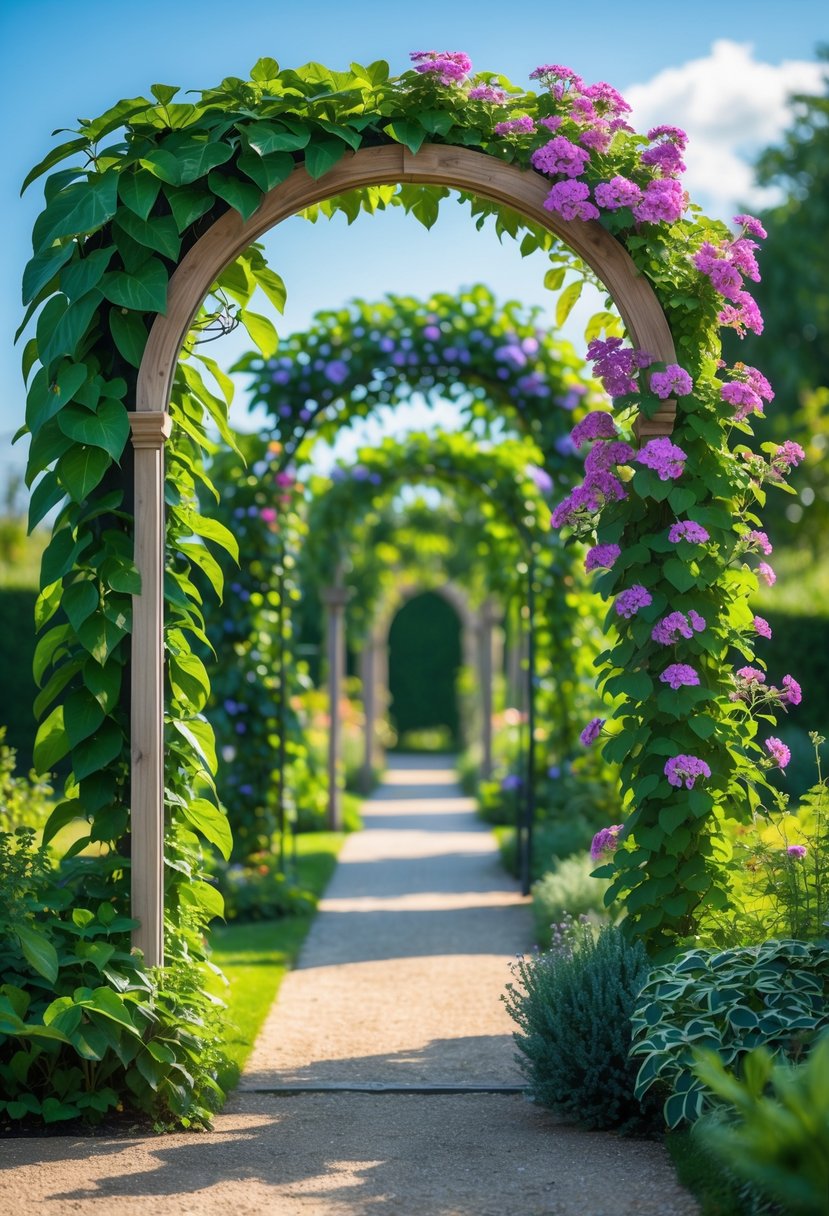
The best climbing plants for arches combine beauty, growth habit, and ease of care to fit your garden’s needs. With the right selection, you can create a vibrant and green space that suits your style and climate.
1) Climbing Roses
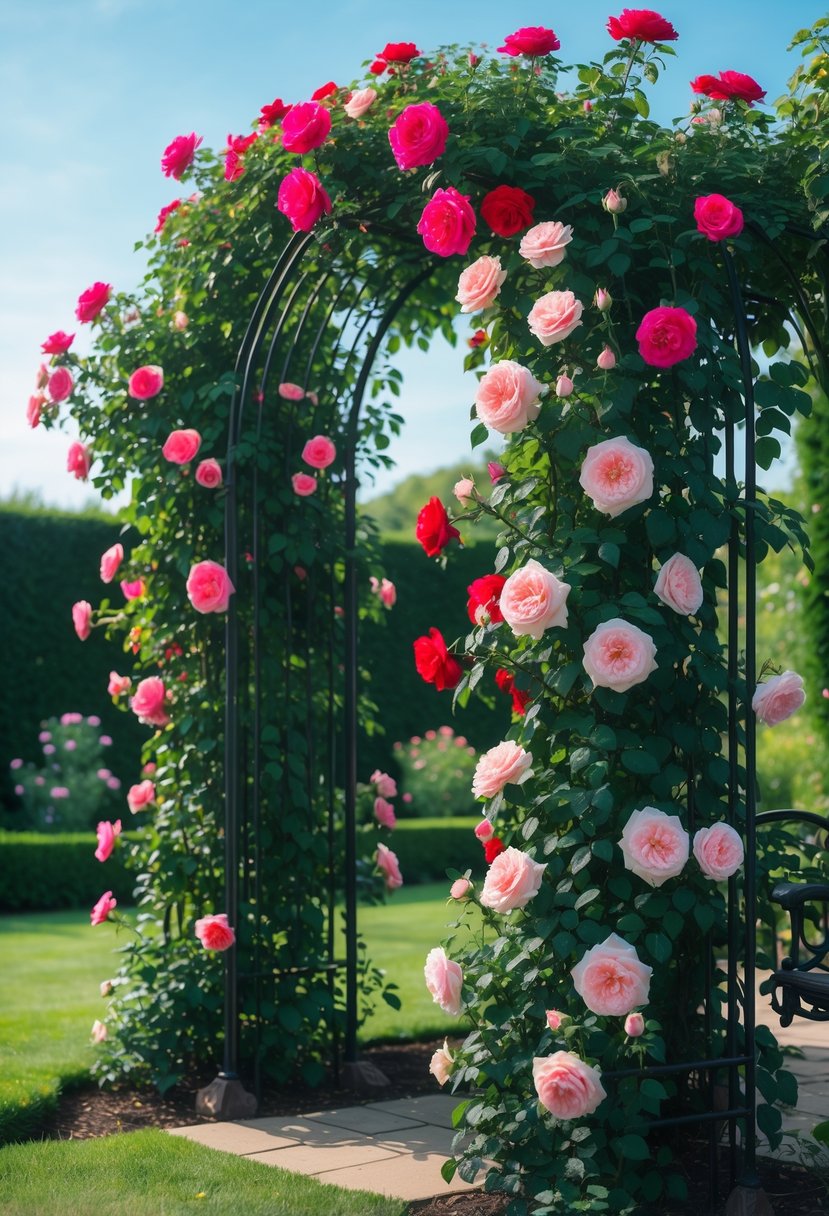
Climbing roses are a classic choice for arches. They produce long canes that you can train to grow upward and cover your arch beautifully.
You can choose from many varieties, like Crimson Glory, New Dawn, or Lady of Shalott. Each offers different bloom colors and fragrances.
Plant climbing roses in a spot with full sun or light shade. Morning sun with some afternoon protection helps them grow well. Make sure your arch can support their heavy, long canes.
With good care, climbing roses add a romantic and elegant touch to your garden arches. They also provide lush foliage and lovely blooms through the growing season.
2) Clematis
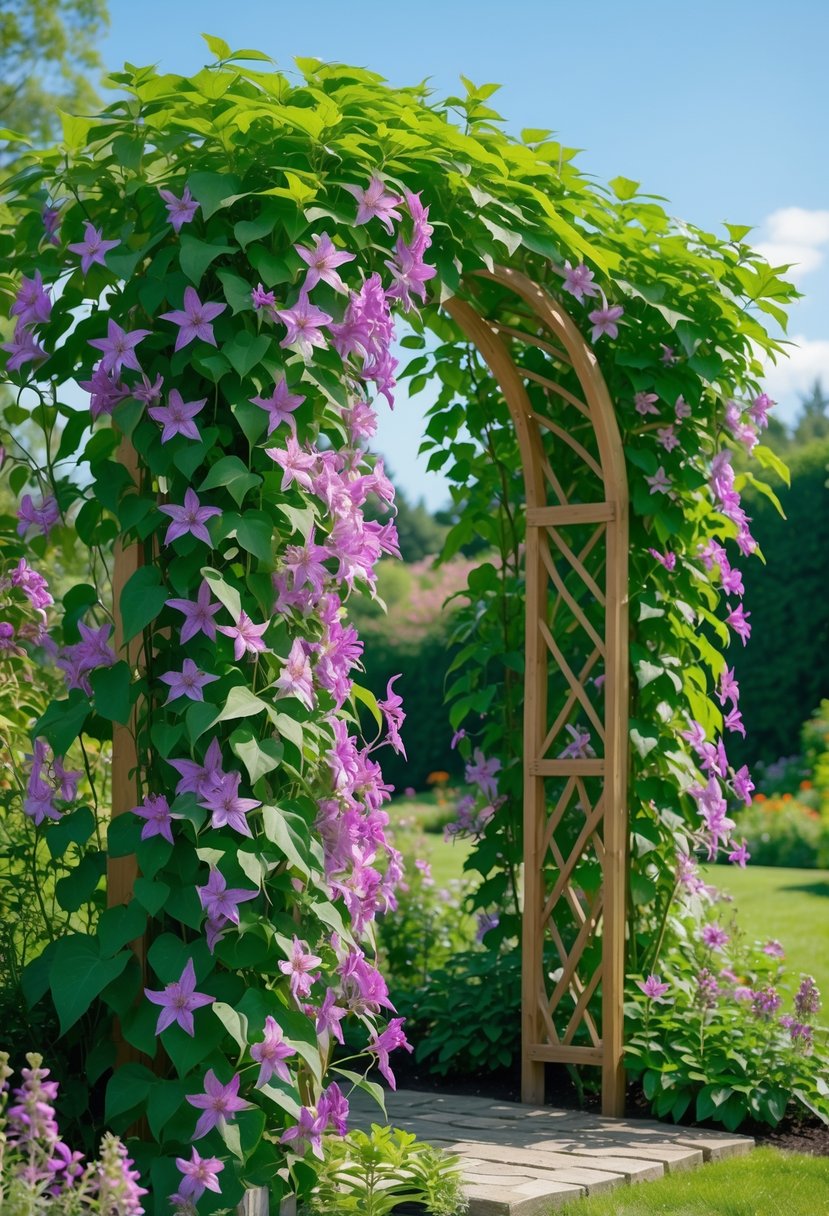
Clematis is a popular climbing plant that works well on garden arches. It has many varieties, offering different flower shapes and colors, so you can find one that fits your garden style.
You can grow clematis in pots or directly in the ground. It prefers sunny or partly shaded areas with soil that drains well.
When you train clematis to climb, provide sturdy support. Its vines will wrap around the arch, creating a beautiful display of flowers.
This plant is hardy and tends to bloom for a long time. With proper care, your clematis will add color and charm to your arch year after year.
3) Wisteria
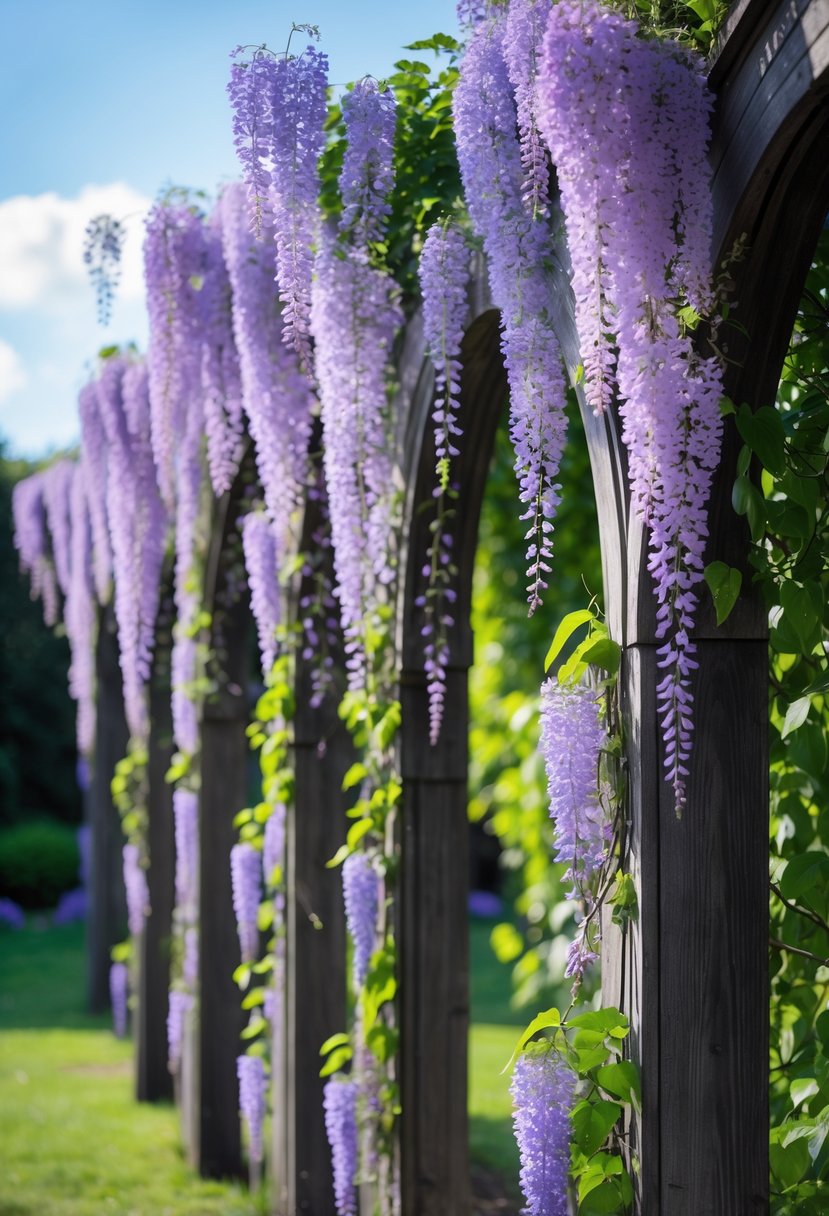
Wisteria is a popular choice for garden arches because of its beautiful, hanging clusters of flowers. The blooms usually come in shades of purple, blue, or white. You will notice a light fragrance that adds a pleasant scent to your garden.
This plant can grow quite heavy, so make sure your arch is strong enough to support it. Wisteria needs full sun to bloom well and prefers well-drained soil. Prune it regularly to control its size and encourage more flowers.
If cared for properly, wisteria can cover your arch with stunning, cascading flowers each spring. It can create a peaceful, natural look in your garden space.
4) Honeysuckle
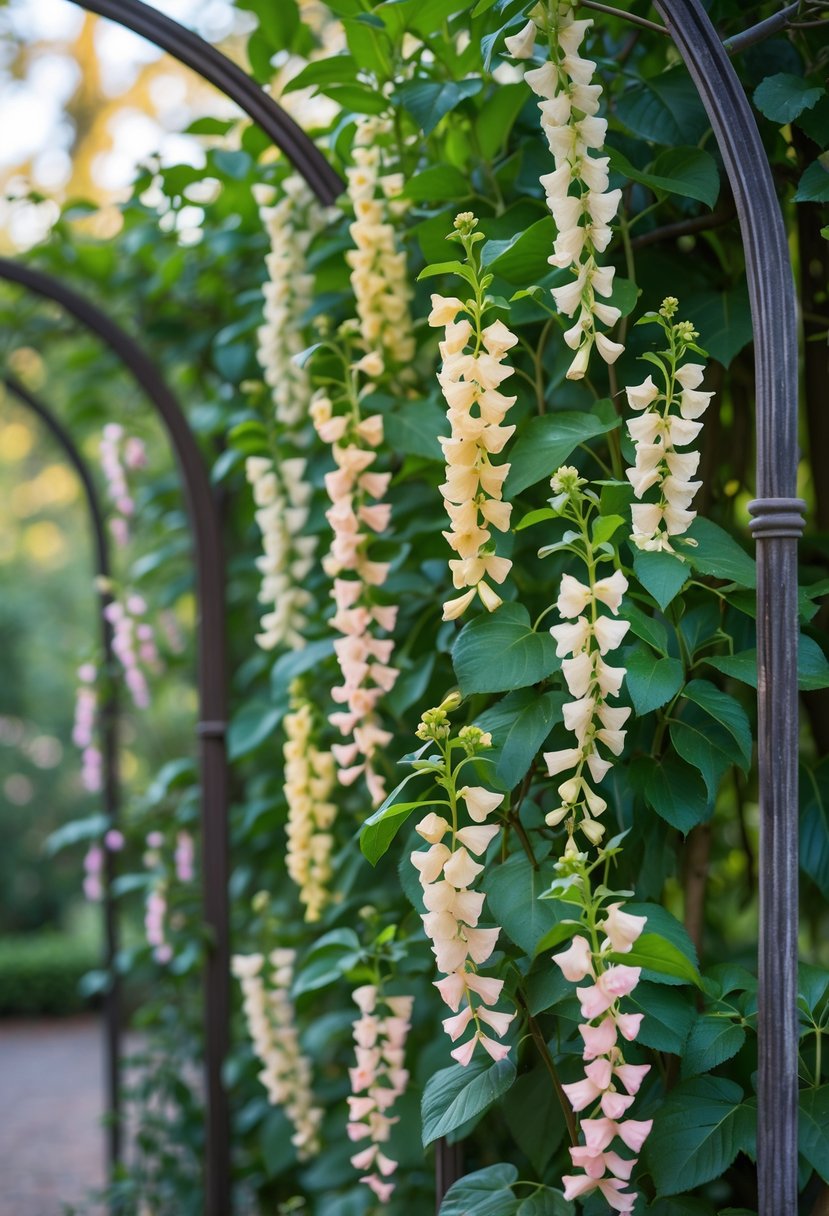
Honeysuckle is a popular choice for arches because it grows quickly and covers structures well. You will appreciate its sweet fragrance that attracts hummingbirds and pollinators to your garden.
This plant’s flowers range from white and cream to bright orange and red, adding color to your arch throughout the growing season. Honeysuckle is hardy and will do well in many conditions, including some shade.
You can train honeysuckle to climb wooden slats, fences, or trellises. It creates a lush green backdrop that enhances your outdoor space with natural beauty and texture. Regular pruning helps you control its size and shape on your arch.
5) Jasmine
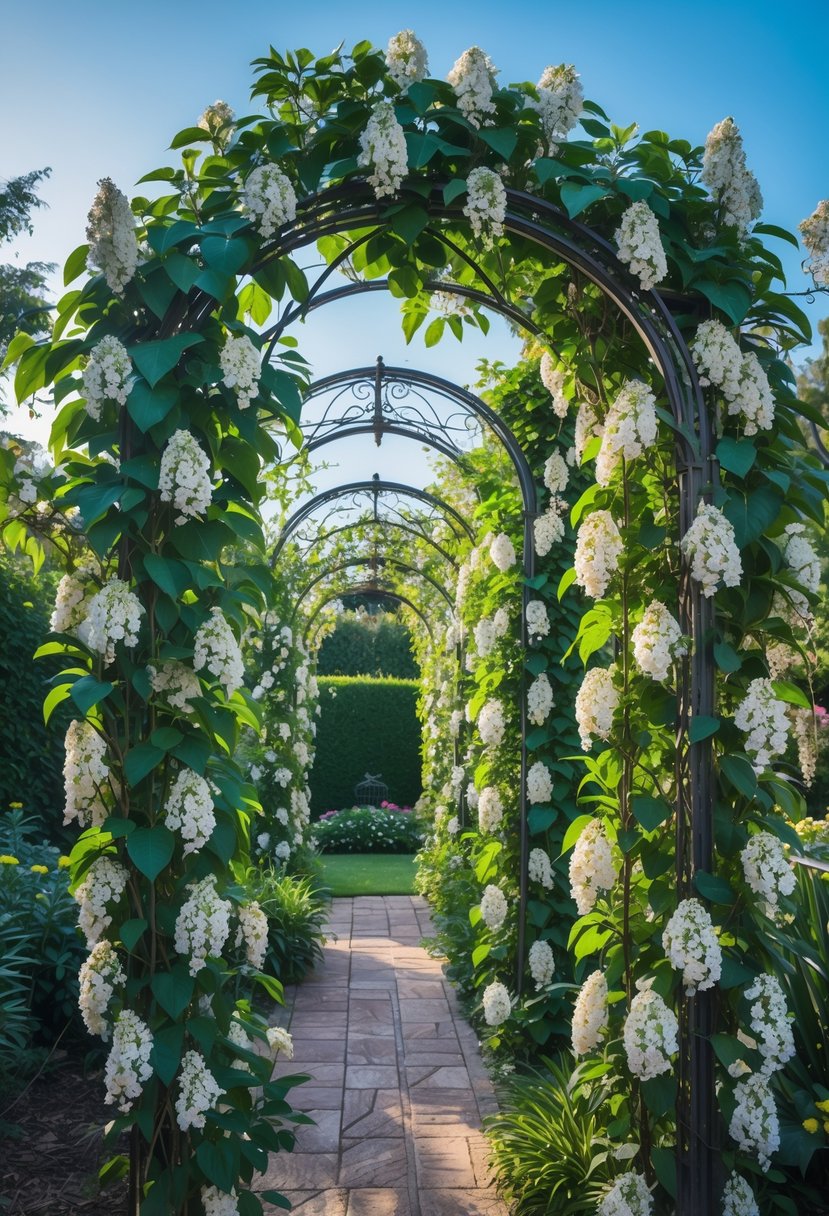
Jasmine is a popular choice for garden arches because of its lovely scent and attractive flowers. You can find varieties like common jasmine and star jasmine that grow well on arches.
This plant prefers sunny or partly shaded spots with moist, well-drained soil. When you plant jasmine, give it something to climb, like a trellis or arch structure, to guide its growth.
Jasmine grows quickly, creating a dense cover of green leaves and white or yellow blooms. Its sweet fragrance can fill your garden, especially on warm evenings, making your arch a charming focal point.
6) Bougainvillea
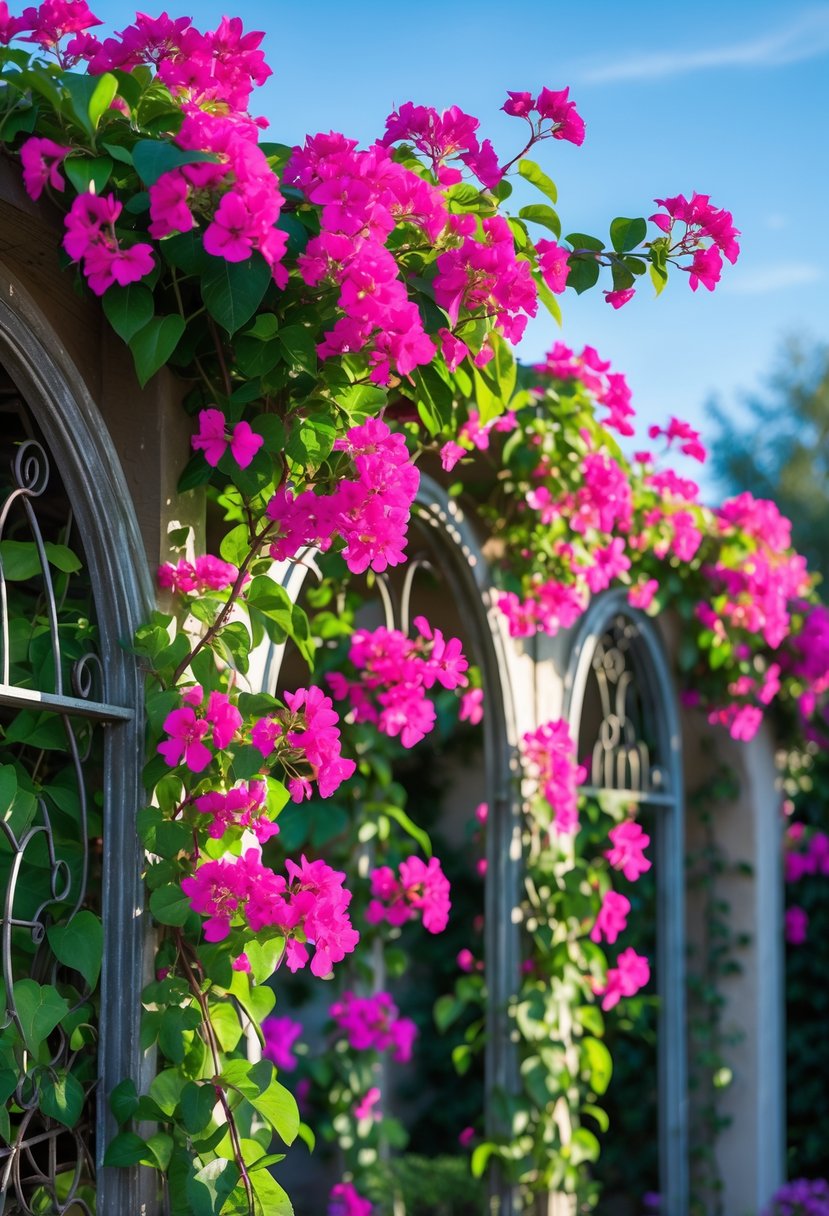
You can use bougainvillea to cover garden arches quickly. It grows fast and shows bright colors that stand out.
This plant is drought-tolerant, so it needs less water once it is established. It attracts pollinators like bees and butterflies, which is good for your garden.
Bougainvillea can be shaped as a climbing vine, shrub, or small tree. Make sure to provide a strong support like a trellis or pergola for it to grow well.
Be careful not to let it grow close to your house eaves, as its branches can cause damage over time. Regular pruning helps keep it tidy and healthy.
7) Climbing Hydrangea
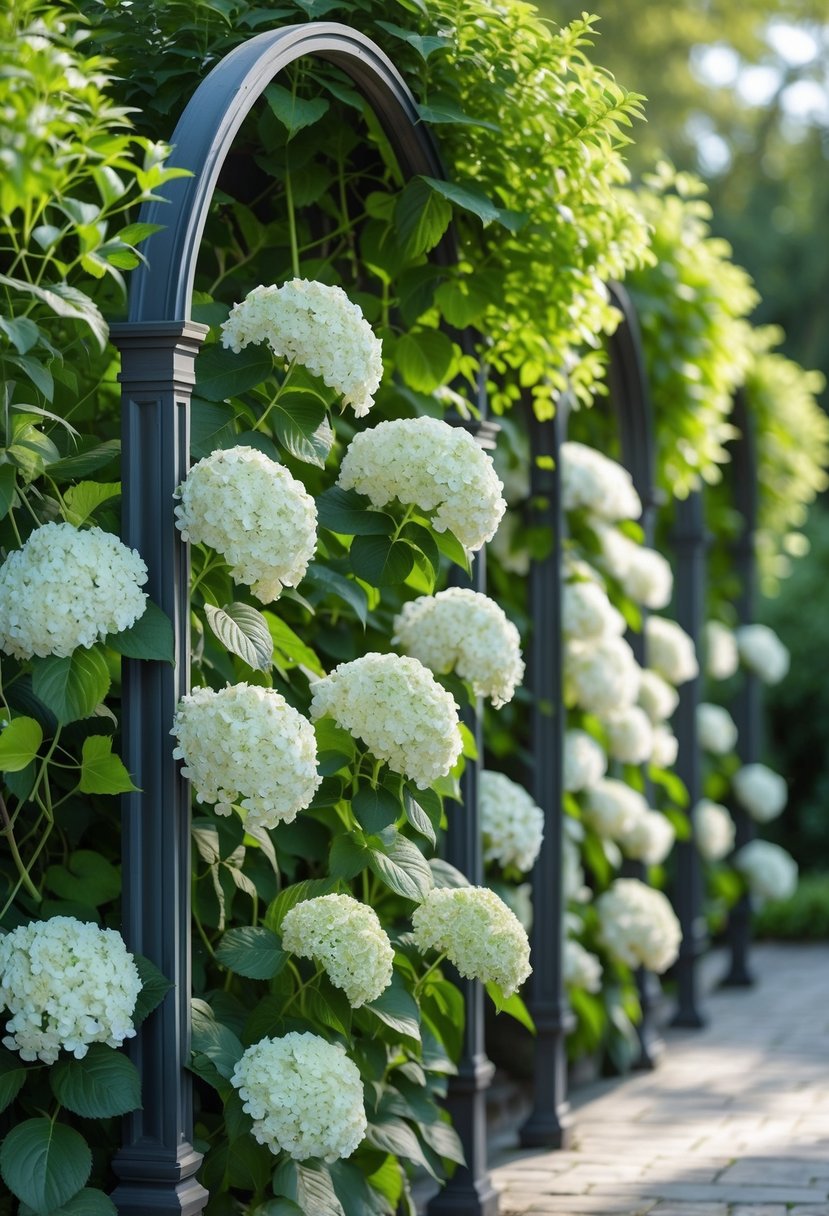
Climbing hydrangea is a slow-growing vine that can reach up to 30-40 feet. It prefers partial to full shade, making it suitable for less sunny garden arches.
You will appreciate its large clusters of white flowers that bloom in summer. The glossy green leaves provide a lush backdrop all season long.
This plant clings to surfaces using aerial roots, so you need sturdy support for it to climb. It thrives in moist, well-drained soil.
Climbing hydrangea adds a natural, elegant look to your arch without requiring much maintenance once established. It is a good choice if you want shade-loving plants with showy blooms.
8) Trumpet Vine
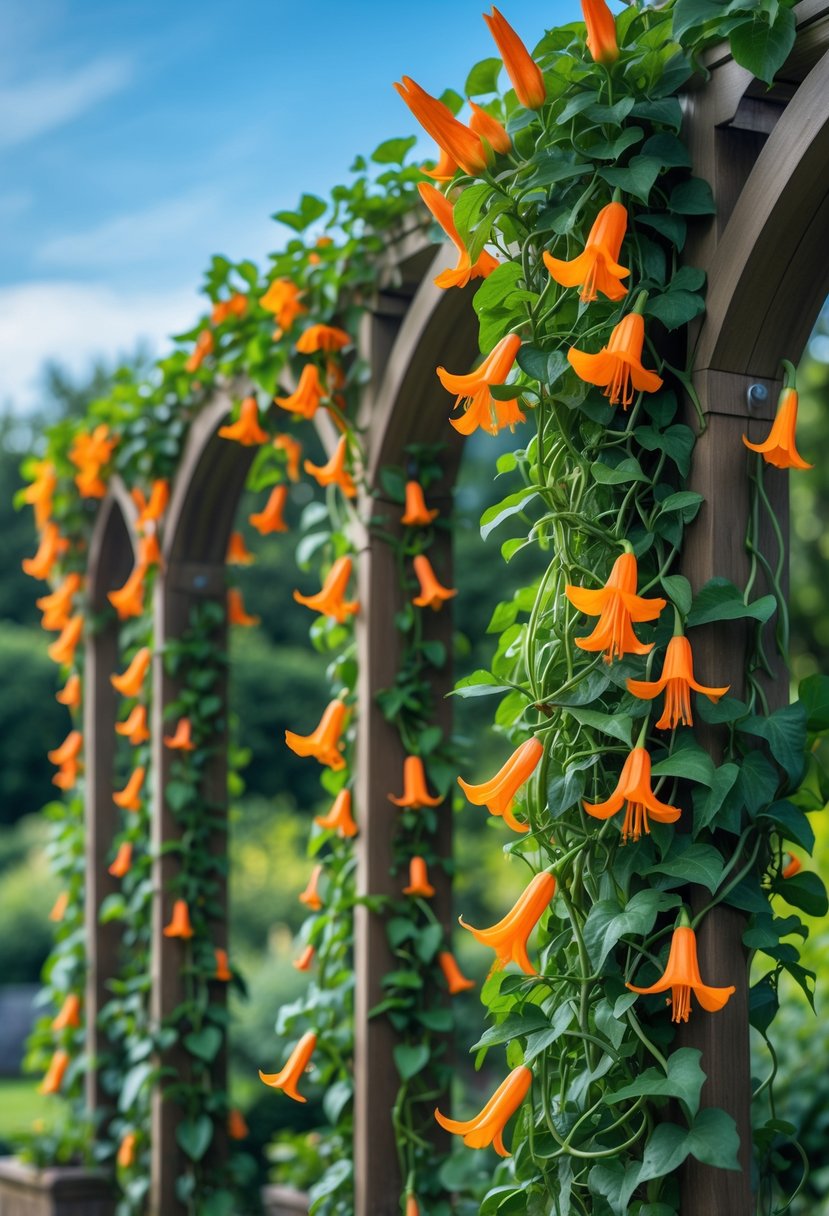
Trumpet vine is a fast-growing climbing plant that can reach up to 40 feet in one season. It thrives in full sunlight but its leaves will tolerate some shade.
You’ll find its bright red-orange, trumpet-shaped flowers attractive to hummingbirds. This vine adds vibrant color and life to your garden arch or trellis.
Be aware that trumpet vine can become aggressive and spread quickly. It needs a strong support structure and regular pruning to keep it under control.
If you want fast coverage and a bold look, trumpet vine is a solid choice for your garden arch. Just plan for its vigorous growth.
9) Black-eyed Susan Vine
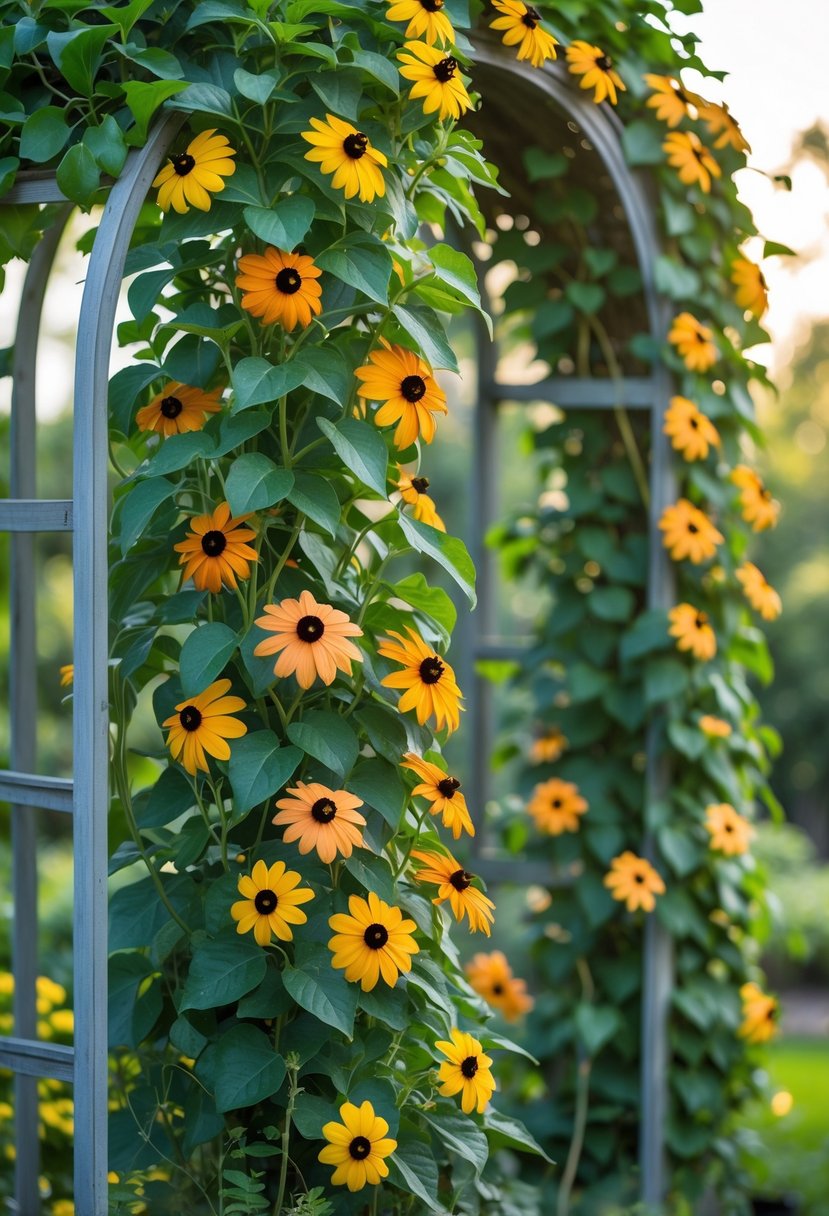
You can grow the Black-eyed Susan Vine to add bright color to your garden. It has cheerful yellow or orange flowers with dark centers that stand out against green leaves.
This vine grows quickly and can climb arches, fences, or trellises. It reaches heights of about 5 to 8 feet, giving you fast coverage with little effort.
For best results, plant it in full sun or partial shade. It needs regular watering but is otherwise low maintenance. You will enjoy blooms from summer to fall, making your garden look lively for months.
10) Passionflower
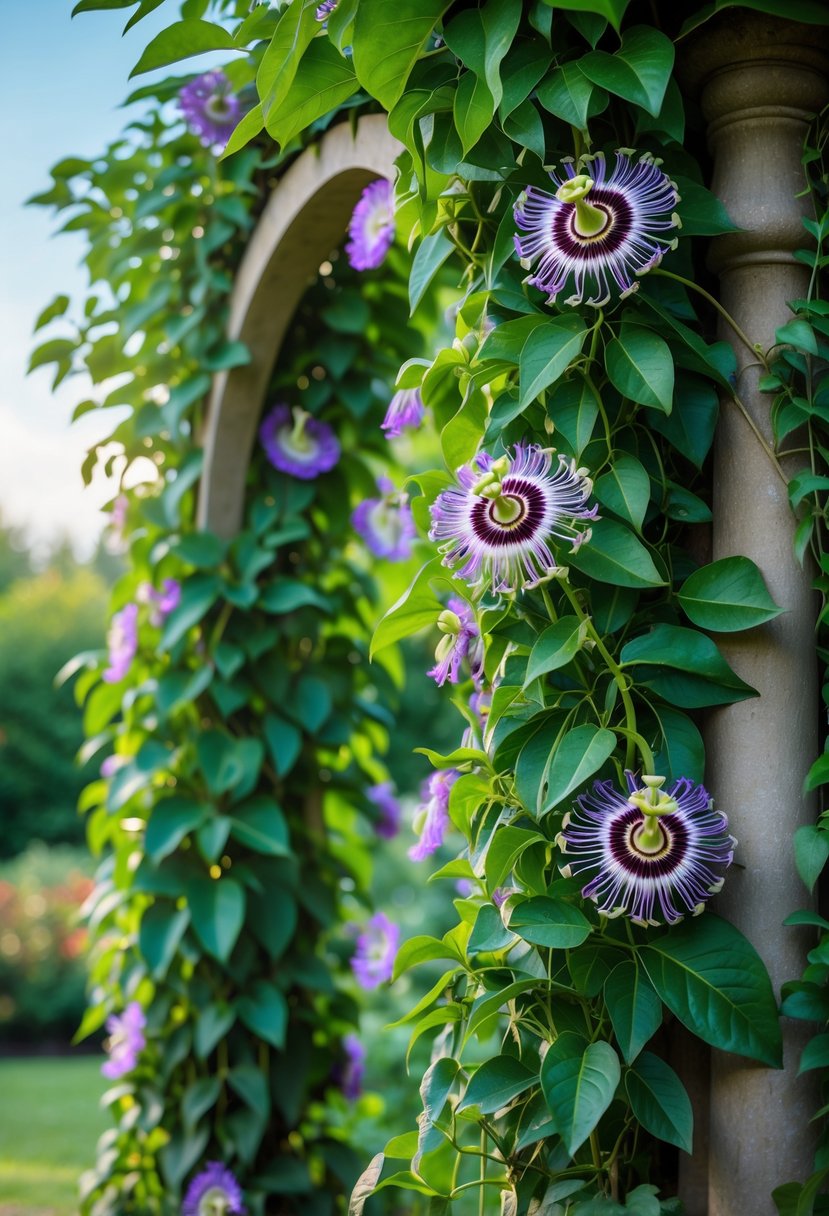
Passionflower is a fast-growing vine that works well on garden arches. You will appreciate its unique flowers, which have an intricate design and bright colors. These blooms add interest without needing much care.
You can grow passionflower in warm or moderate climates. The plant produces edible fruits and has a strong, pleasant scent. It also attracts butterflies and other pollinators to your garden.
If you want a climbing plant that is both beautiful and useful, passionflower is a good choice. It can quickly cover structures, giving your arch a lush and lively look.
How to Train Climbing Plants on Arches
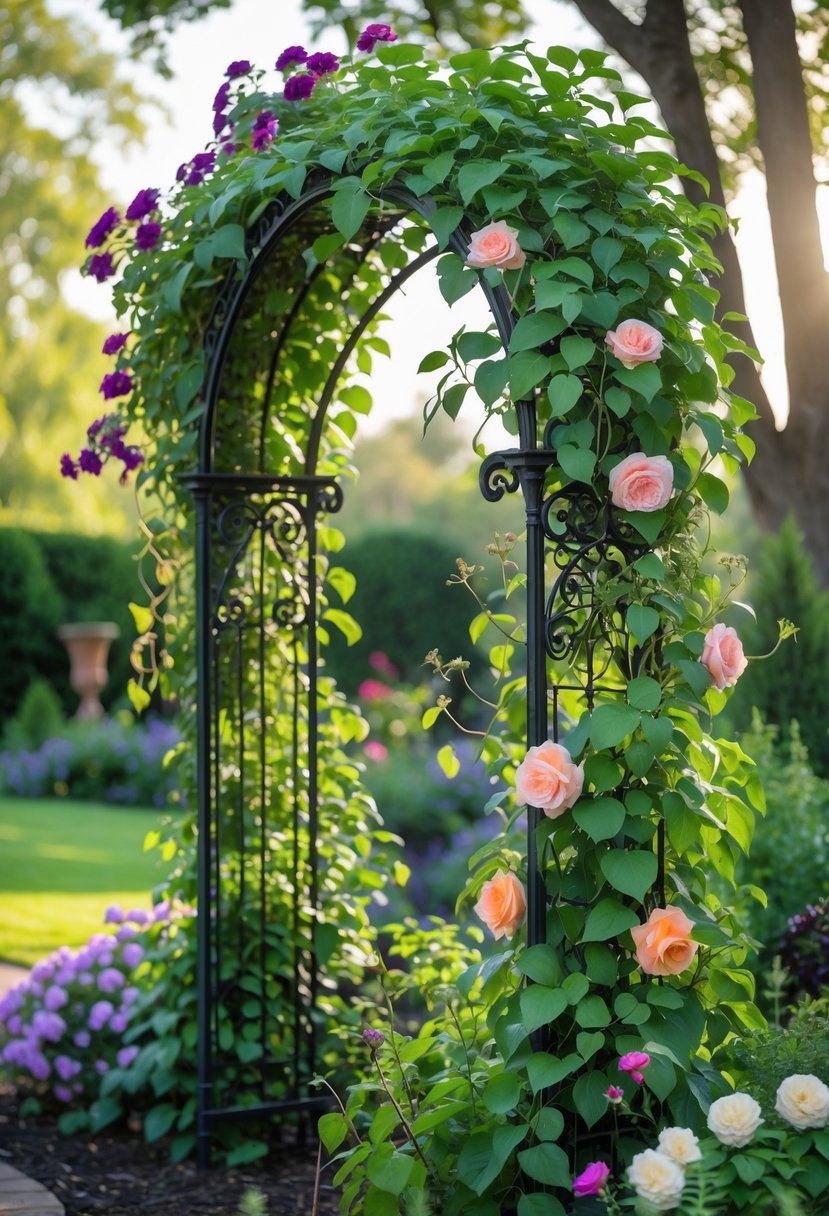
Training climbing plants requires choosing a strong support, securing the vines carefully, and regular maintenance. Proper care guides growth and keeps plants healthy while enhancing the beauty of your arch.
Choosing the Right Support Structure
Your support needs to match the type and size of the climbing plant. Heavy climbers like wisteria need strong wooden or metal arches to handle thick, woody stems. Lighter vines, such as clematis or morning glory, can use thinner, less robust frames.
Make sure the structure is stable and won’t move in wind. Open lattices or mesh work well because they give vines places to grip. Consider the shape and size of your arch. Taller or wider arches need stronger supports.
Also, think about the material. Metal lasts longer but can heat up in sun, which may stress some plants. Wood blends with garden surroundings but may need treatment to resist rot.
Securing and Guiding Vines
Begin by gently tying young shoots to the arch using soft garden ties, twine, or strips of cloth. Avoid tight knots that can damage stems. As plants grow, continue to guide shoots along the supports, wrapping them naturally around bars or weaving through lattices.
Use a spiral or figure-eight pattern to keep the vine stable and prevent breakage. This also helps cover the arch evenly. Check ties every few weeks and loosen or adjust them as the plant thickens.
Avoid forcing vines in directions they don’t want to grow. Let them find natural grip points, which keeps the plant stronger and healthier.
Maintenance and Pruning Tips
Regular pruning controls growth and encourages flowers or fruit. Remove dead or weak stems to improve airflow and prevent disease. Pinch back tips during the growing season to keep plants full and dense.
For heavy climbers, prune after flowering to reduce weight and shape growth. Lighter vines might need pruning once or twice a year to avoid overcrowding.
Check the base of the plant for healthy soil and add mulch to retain moisture. Water deeply but avoid wetting foliage to reduce fungus risk.
By keeping your plants well-maintained, you ensure they stay strong and your arch looks neat year-round.
Seasonal Care and Troubleshooting
Your climbing plants need specific care throughout the year to stay healthy and vibrant. You must manage pests and diseases carefully and adjust watering, feeding, and protection based on your local climate.
Preventing Common Pests and Diseases
To keep your climbers healthy, check them often for pests like aphids, spider mites, and caterpillars. Use insecticidal soap or neem oil at the first sign of infestation. Remove any damaged leaves to stop disease from spreading.
Powdery mildew and rust are common fungal problems. Improve air circulation by pruning crowded areas. Water plants early in the day to let leaves dry quickly. Avoid overhead watering to reduce fungal growth.
Keep your arch and supports clean, as pests and disease can hide there. Using mulch around the base helps retain soil moisture and limits weeds, which can host pests.
Adapting Care Across Different Climates
In hot, dry climates, water your climbing plants deeply but less often to encourage strong roots. Mulch well to keep roots cool and moist. Provide afternoon shade if possible to prevent leaf scorch.
In colder regions, protect roots with a thick layer of mulch before winter. Some climbers trap air near stems, so avoid heavy mulch against the plant base to prevent rot.
For humid areas, focus on pruning to improve airflow. Wet conditions can increase fungal disease risk, so space plants well. You may need fungicide treatments if problems persist.
Adjust fertilizing schedules based on growth cycles in your area to avoid overfeeding or nutrient shortages.