10 Gorgeous Climbing Flowers to Grow on a Trellis for Stunning Vertical Gardens
Climbing flowers are a great way to add height and color to your garden without taking up much space. They grow upward by wrapping around a support like a trellis, turning simple structures into beautiful displays. Using a trellis with climbing flowers can help you create an eye-catching and vibrant garden feature.
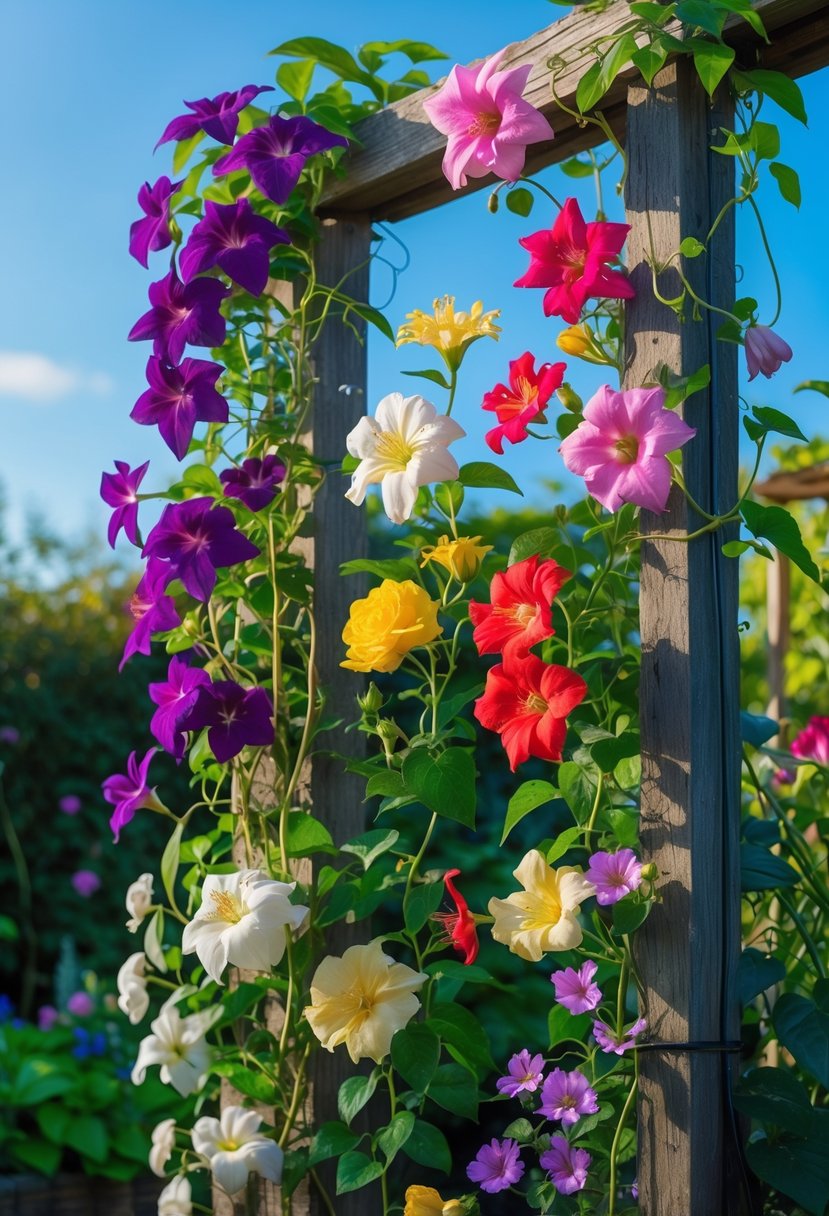
These plants also offer practical benefits. They can cover walls, fences, or other areas that may look plain or worn. Whether you want more privacy or just want to enhance your outdoor space, climbing flowers are a smart choice to consider.
1) Clematis
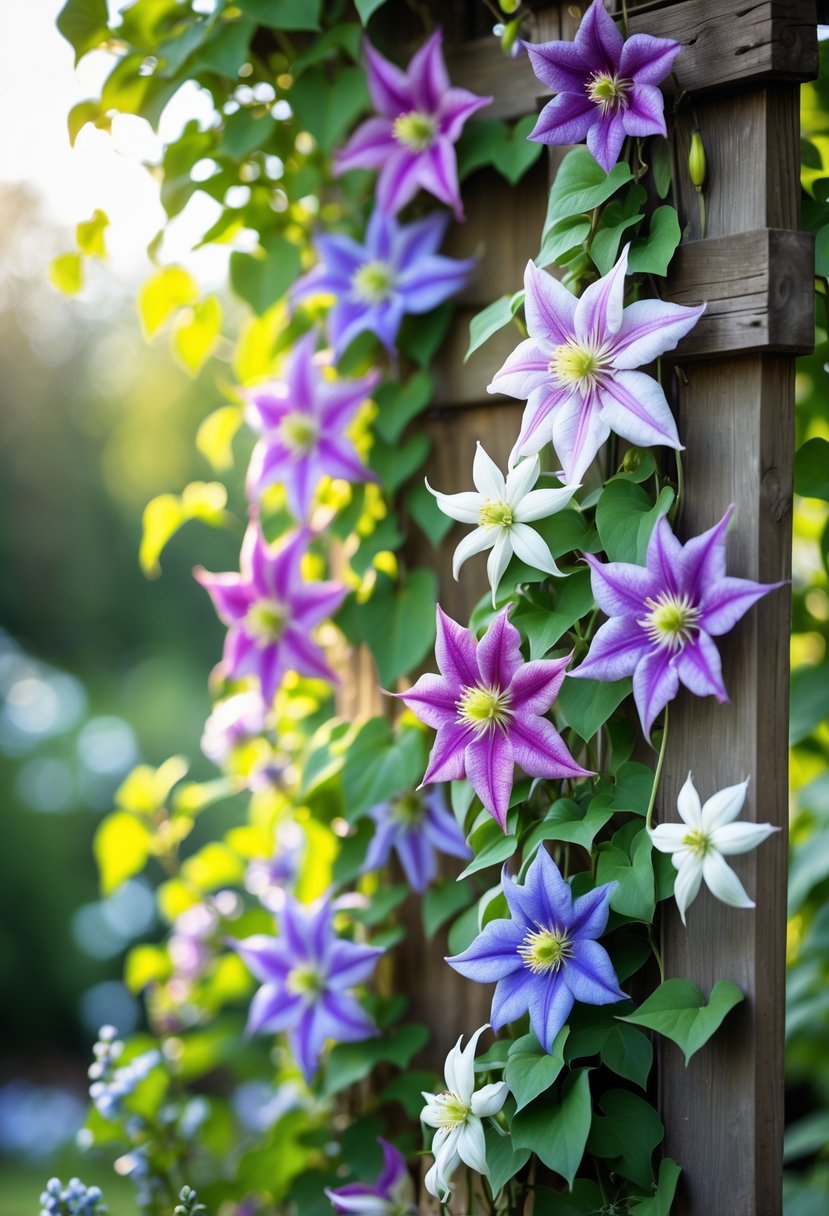
You can grow clematis on a trellis to add color and height to your garden. These climbing plants produce vibrant flowers from spring to fall.
Choosing the right trellis helps your clematis grow strong and healthy. Make sure it fits the size and weight of your particular clematis variety.
Training your clematis on a trellis improves air flow and sunlight exposure. This encourages more blooms and reduces disease risk.
2) Honeysuckle
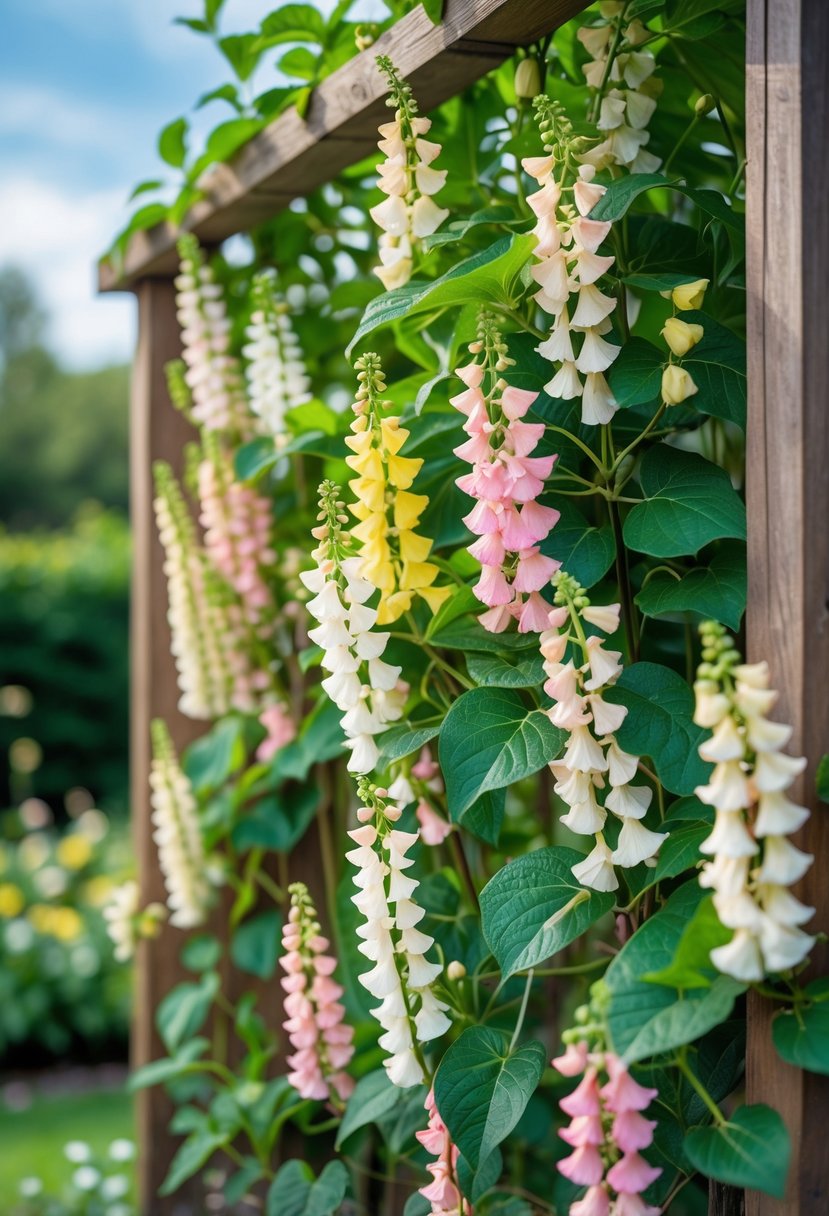
Honeysuckle is a great choice if you want a climbing plant with sweet-smelling flowers. You can train its vines to grow up a trellis easily.
It grows quickly and can cover walls or fences, adding both color and fragrance. Honeysuckles come in many varieties, so you can pick the one that fits your garden.
This plant is low maintenance but needs some sunlight and regular watering to thrive. It can make your outdoor space look and smell nice without much effort.
3) Climbing Rose
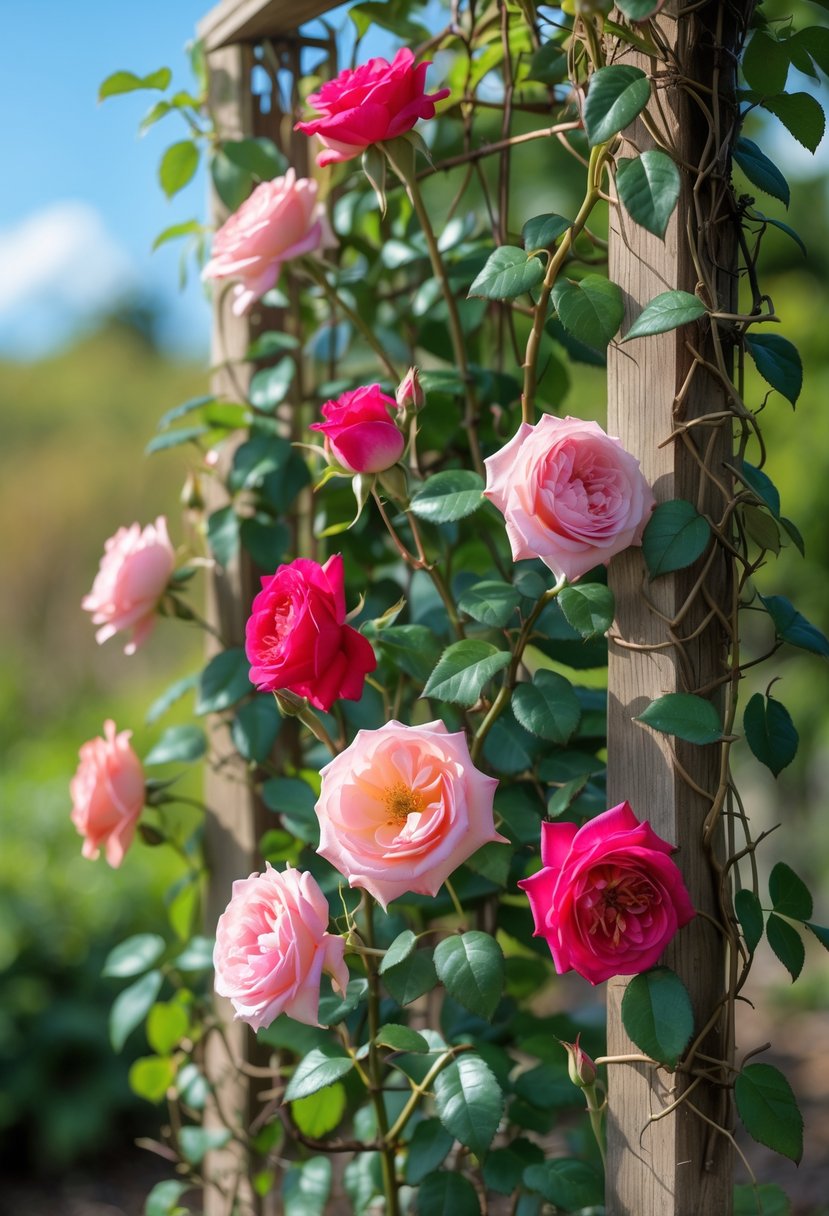
You can grow climbing roses on a trellis to add color and fragrance to your garden. They grow well in full sun but will also flower in light shade.
Climbing roses need good air flow, so place the trellis at least a few inches from walls or fences. This helps prevent disease and keeps the plant healthy.
These roses can reach 10 to 15 feet high. You can train them to cover fences, arbors, or pergolas for a classic and elegant look.
4) Climbing Hydrangea
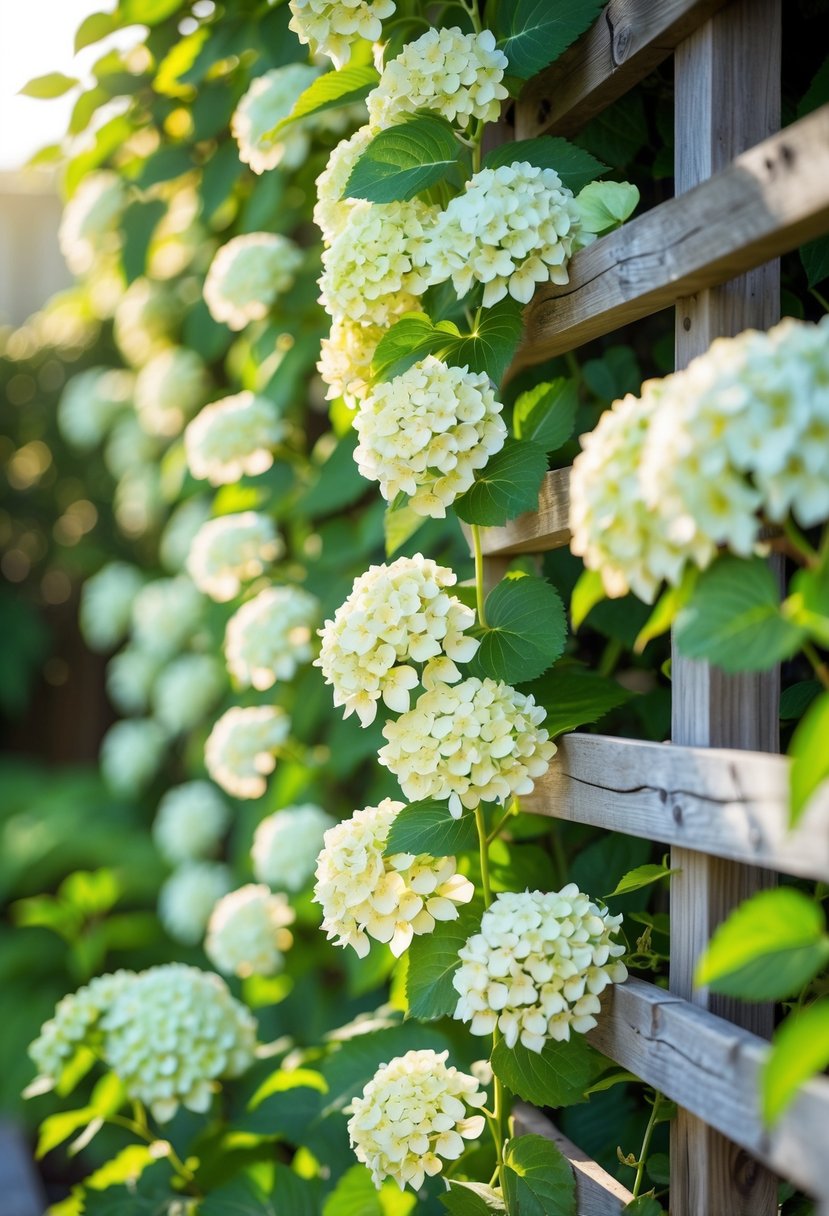
You can grow climbing hydrangea in partial shade or full sun. It uses aerial roots to climb walls, fences, or trellises without damaging surfaces.
This plant blooms with delicate white lacecap flowers from late spring to summer. It needs patience since it may take 2 to 3 years to establish before flowering.
Keep the soil moist and prune it properly to maintain shape and health. Climbing hydrangea works well in cooler zones and adds a soft, elegant touch to your garden.
5) Jewel of Africa Nasturtium
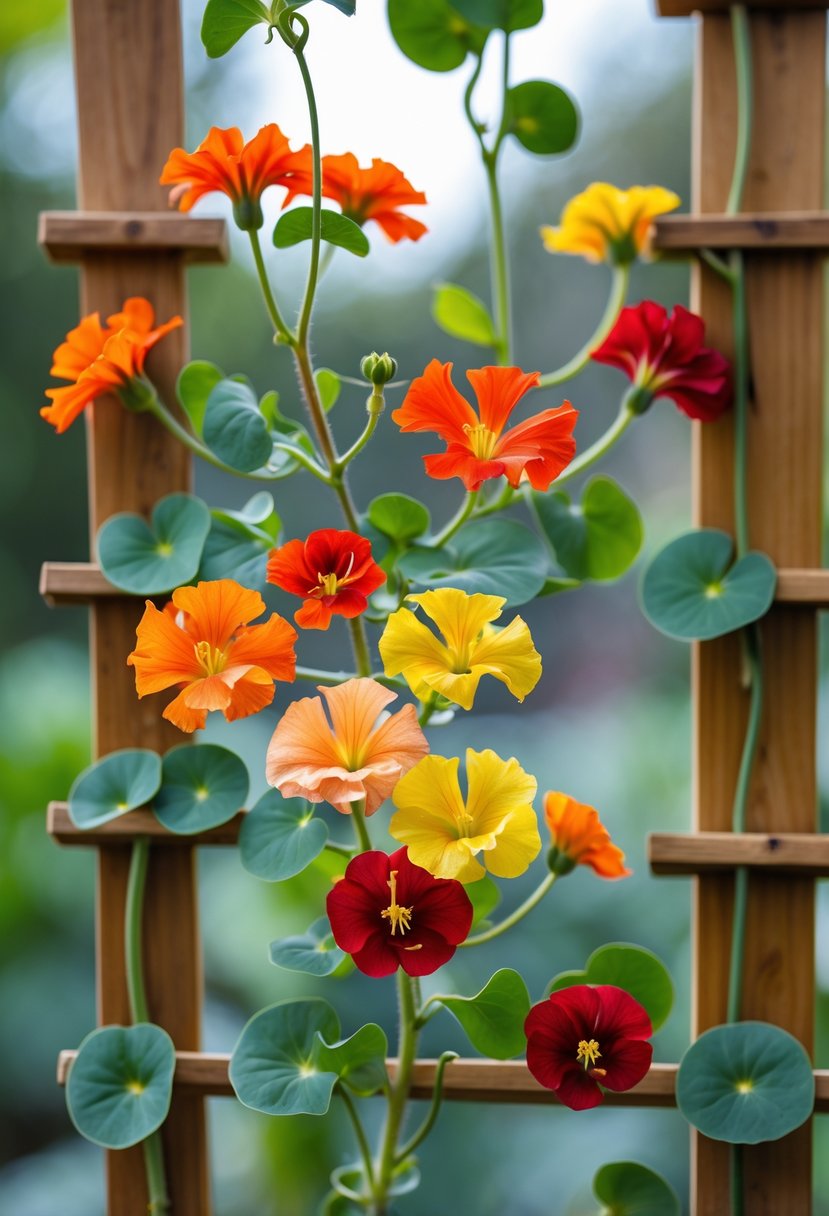
You will find the Jewel of Africa Nasturtium a colorful and easy-to-grow option for your trellis. It produces flowers in shades of orange, maroon, yellow, and cream. Its leaves and flowers are also edible.
This plant thrives in full sun and can bloom from early summer through fall. It climbs well and adds vertical interest to your garden. Keep it maintained, and it will brighten garden edges or hanging baskets.
6) Trumpet Vine
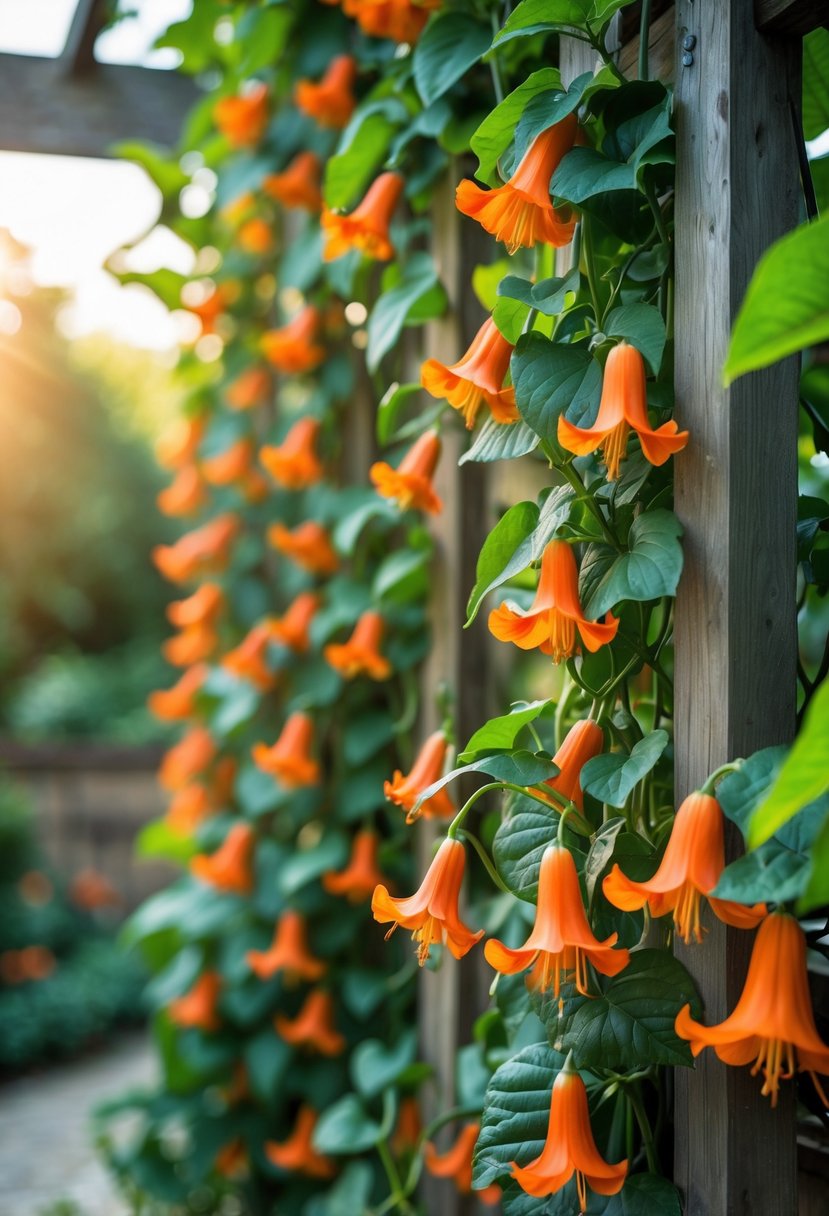
Trumpet vine is a strong climber that grows well on trellises. It produces trumpet-shaped flowers in colors like orange, yellow, and red.
You can expect it to grow up to 10 feet tall. This vine adds color and height to your garden quickly. It also attracts pollinators like hummingbirds.
Make sure your trellis is sturdy enough to support its vigorous growth. It can spread fast, so regular pruning may be needed to keep it in check.
7) Wisteria
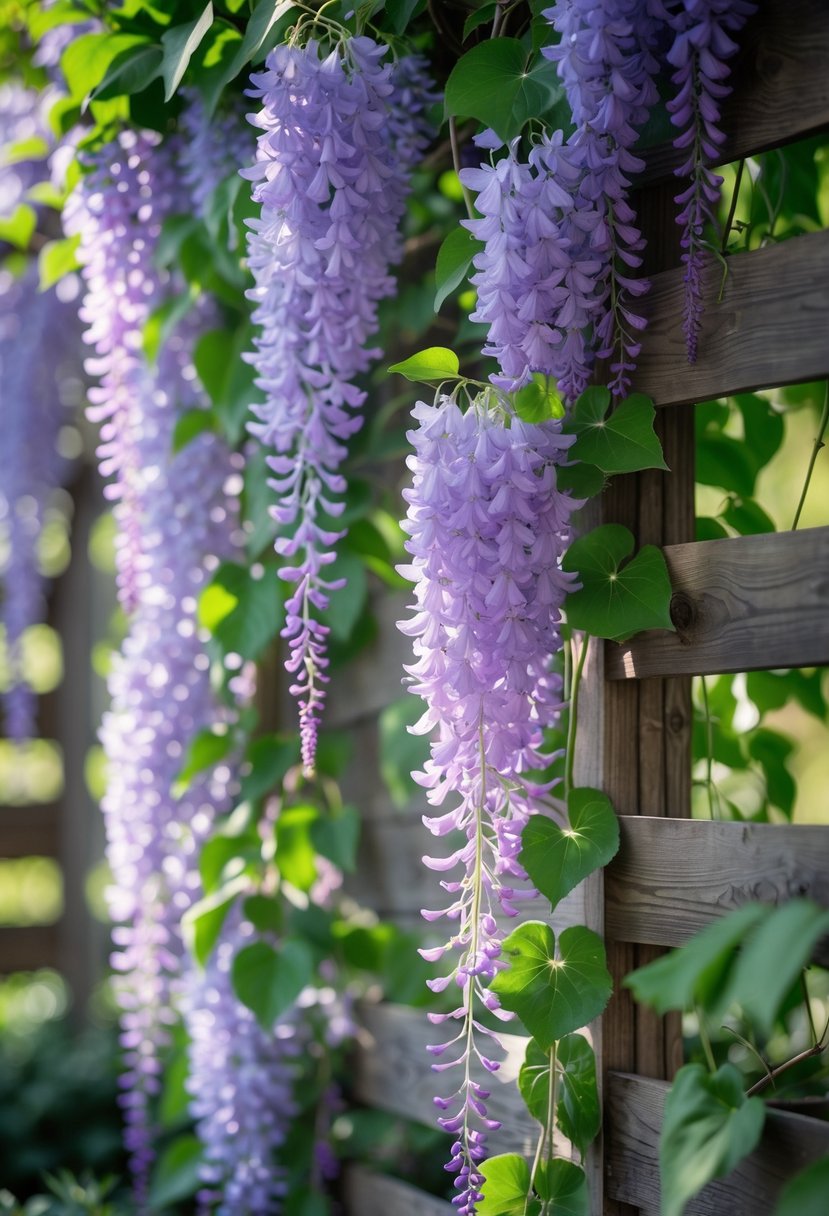
You can grow wisteria on a strong trellis because it is a fast-growing and heavy climber. It produces long clusters of fragrant, lavender or white flowers in spring and early summer.
Wisteria needs full sun to bloom well. It’s best to prune it regularly to keep its shape and encourage more flowers.
A sturdy structure like a pergola or arch works well to support its vigorous growth.
8) Sweet Pea
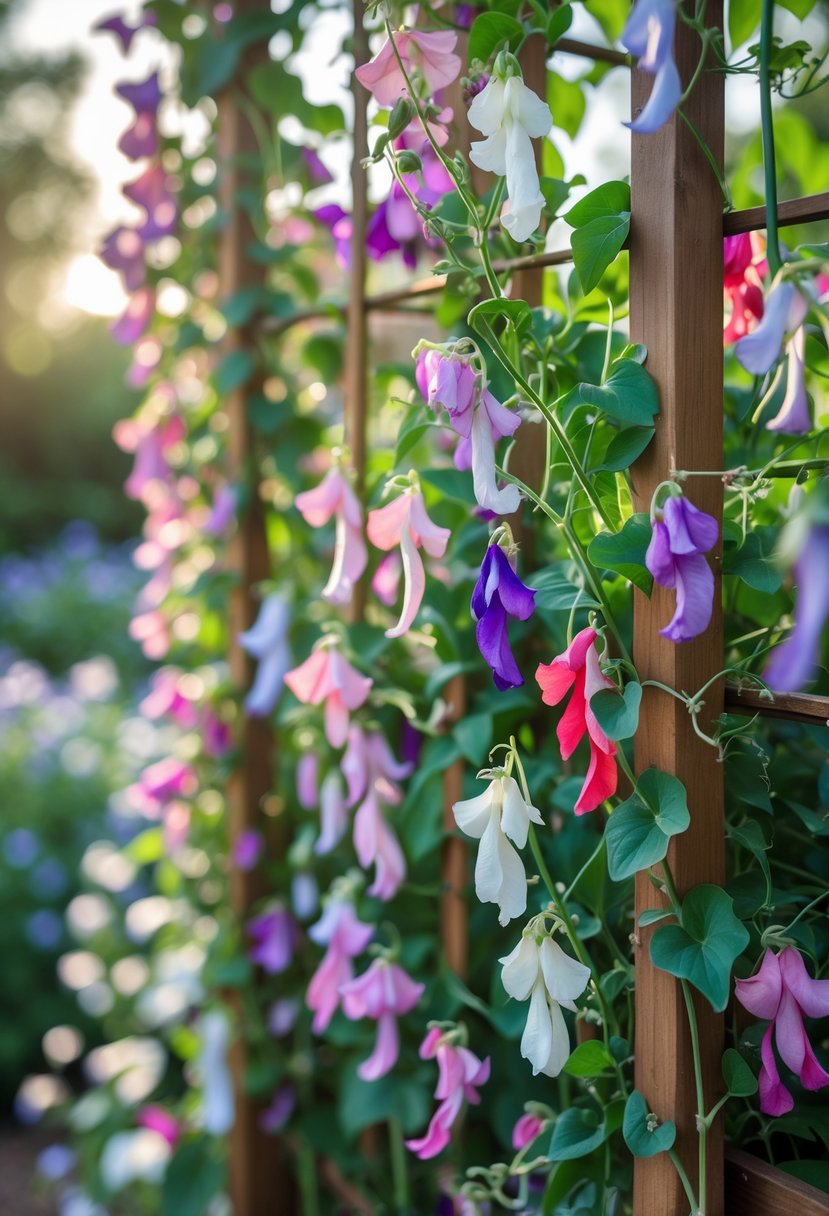
Sweet peas are climbing flowers that grow well on a trellis. You can expect delicate blooms in pink, white, lavender, and red.
They have a sweet fragrance that adds a pleasant scent to your garden. To grow them successfully, provide a sturdy trellis about 6 to 10 feet tall.
These flowers climb by wrapping their stems around the trellis. Regular care, including watering and support, helps them grow strong and healthy.
9) Morning Glory
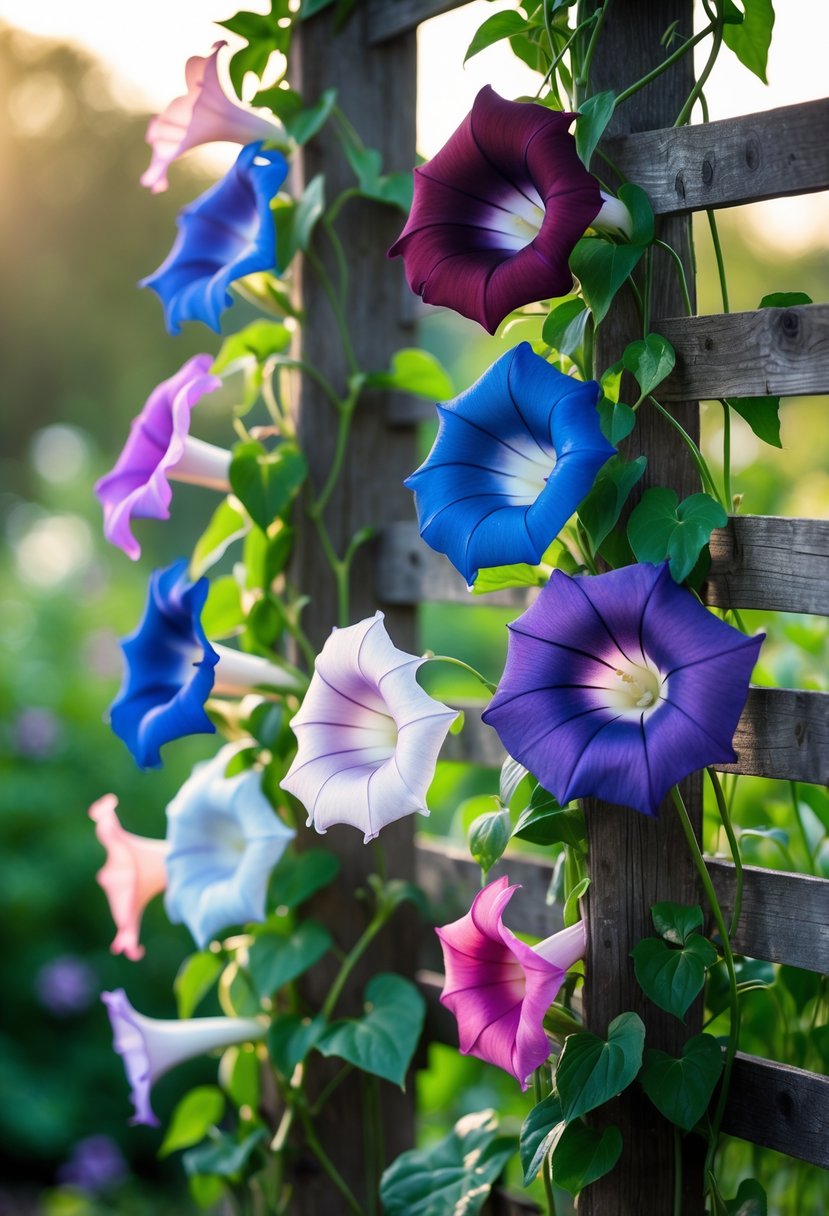
You can grow morning glory on a trellis to add height and color to your garden. These vines climb quickly and can reach 6 to 12 feet tall.
Their trumpet-shaped flowers bloom in colors like blue, purple, pink, and white. Plant them at the base of your trellis and guide the vines to climb.
Morning glories need full sun and well-drained soil. With proper support, they will brighten your space with vibrant, fresh blooms each season.
10) Passionflower
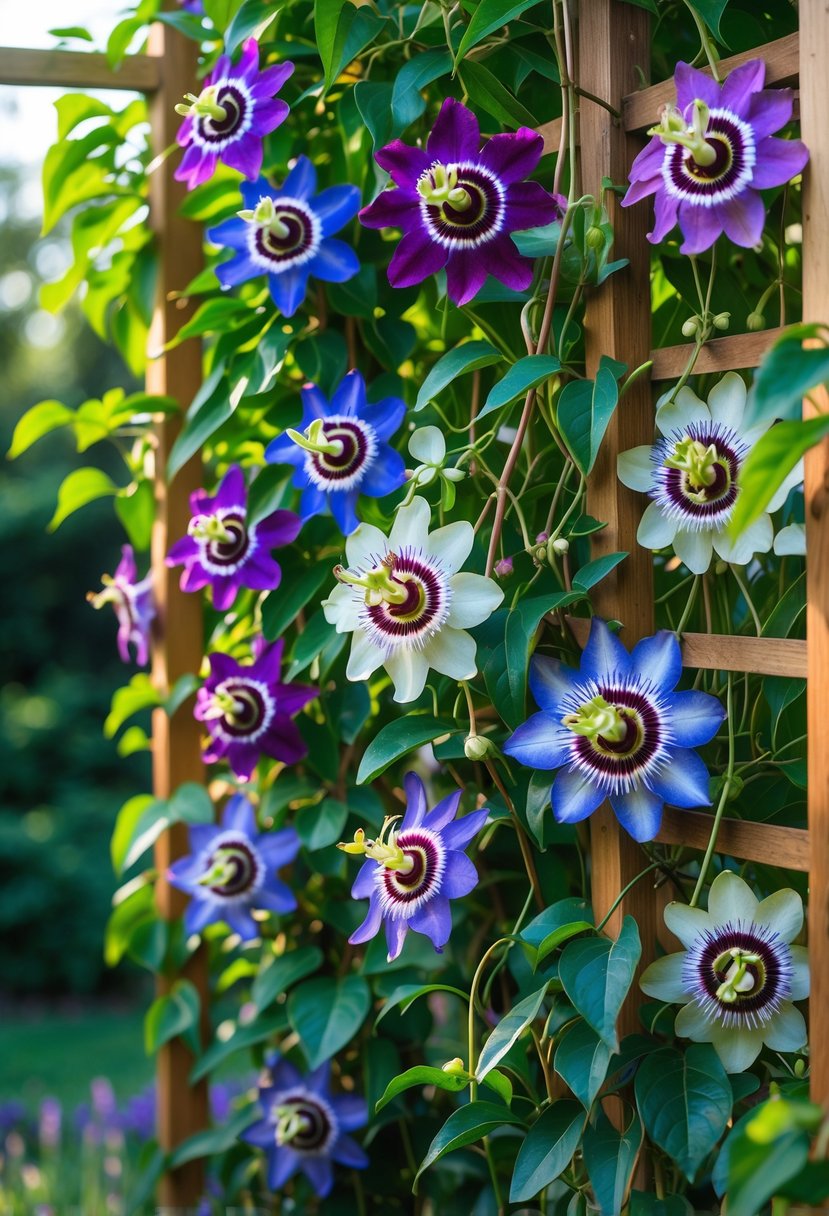
You can grow passionflower on a trellis to add height and color. It climbs well and can reach 10 to 15 feet tall.
The flowers come in colors like purple, pink, blue, and white. They bloom from midsummer to the first frost.
Plant the vine in spring and guide the stems up your trellis. Use twine or wire to help the plant attach and grow evenly.
Designing With Climbing Flowers
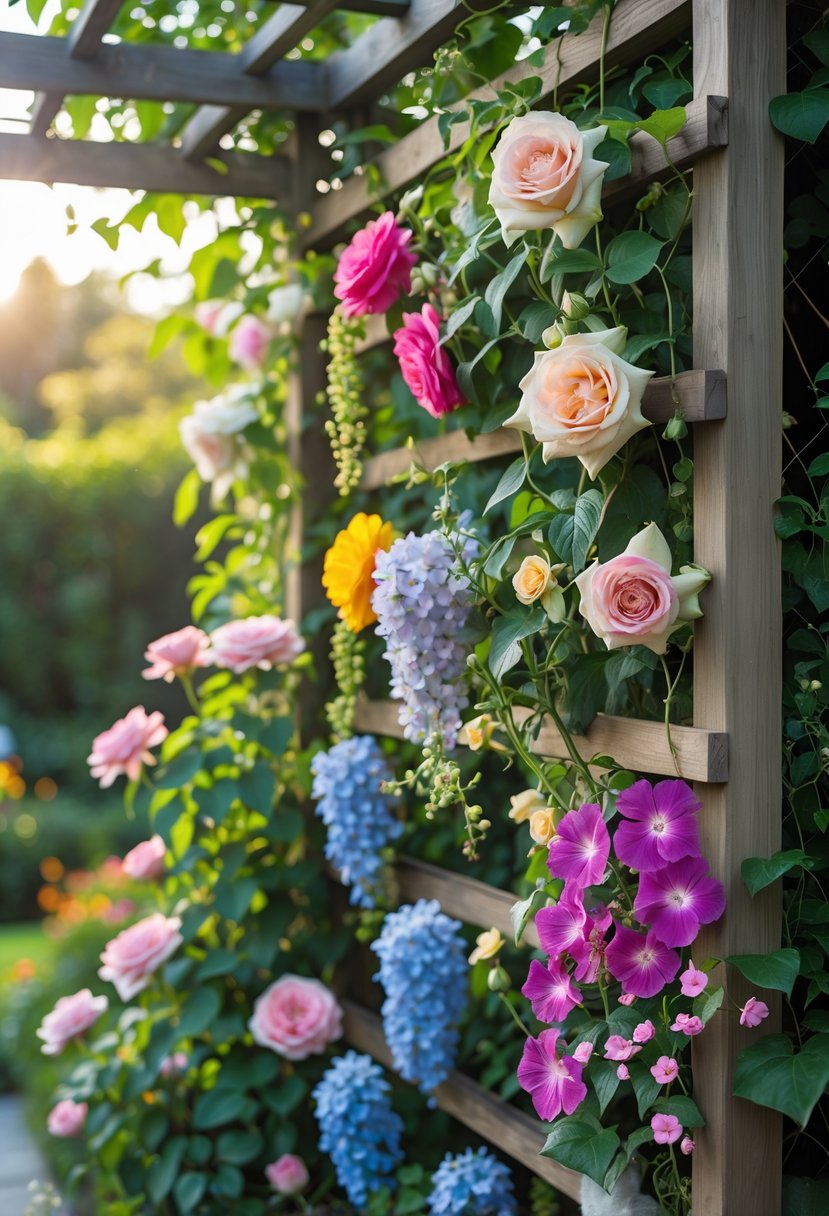
You need to select a strong, suitable trellis and think carefully about which plants will grow well together. Both choices impact how your garden looks and how well your climbers thrive.
Choosing the Right Trellis
Pick a trellis made from durable material like wood, metal, or vinyl. It should support the weight of mature climbing flowers as some vines get heavy over time.
The size matters too. Taller trellises suit fast-growing climbers like clematis or climbing roses. Smaller, compact trellises work better for delicate vines or limited spaces.
Spacing matters for airflow and sunlight. Make sure your trellis structure allows light to reach the plants and air to circulate. This helps prevent mildew and encourages healthy growth.
Consider the style. A simple lattice is good for most flowers. Decorative trellises add character but make sure they don’t block too much light.
Pairing With Other Garden Plants
Match your climbing flowers with plants that have similar sunlight and water needs. For example, roses and honeysuckle both prefer full sun and regular watering.
Use low-growing plants or ground cover at the base of the trellis. This creates a layered look and hides the trellis supports. Ferns and hostas can be good companions in shade.
Avoid pairing aggressive climbers with slower plants as they may take over. Keep an eye on growth patterns to ensure that one plant doesn’t crowd out another.
Plant flowers that bloom at different times. This gives your garden color and interest through multiple seasons. For instance, combine spring-blooming clematis with summer-flowering jasmine.
Caring for Your Climbing Blooms
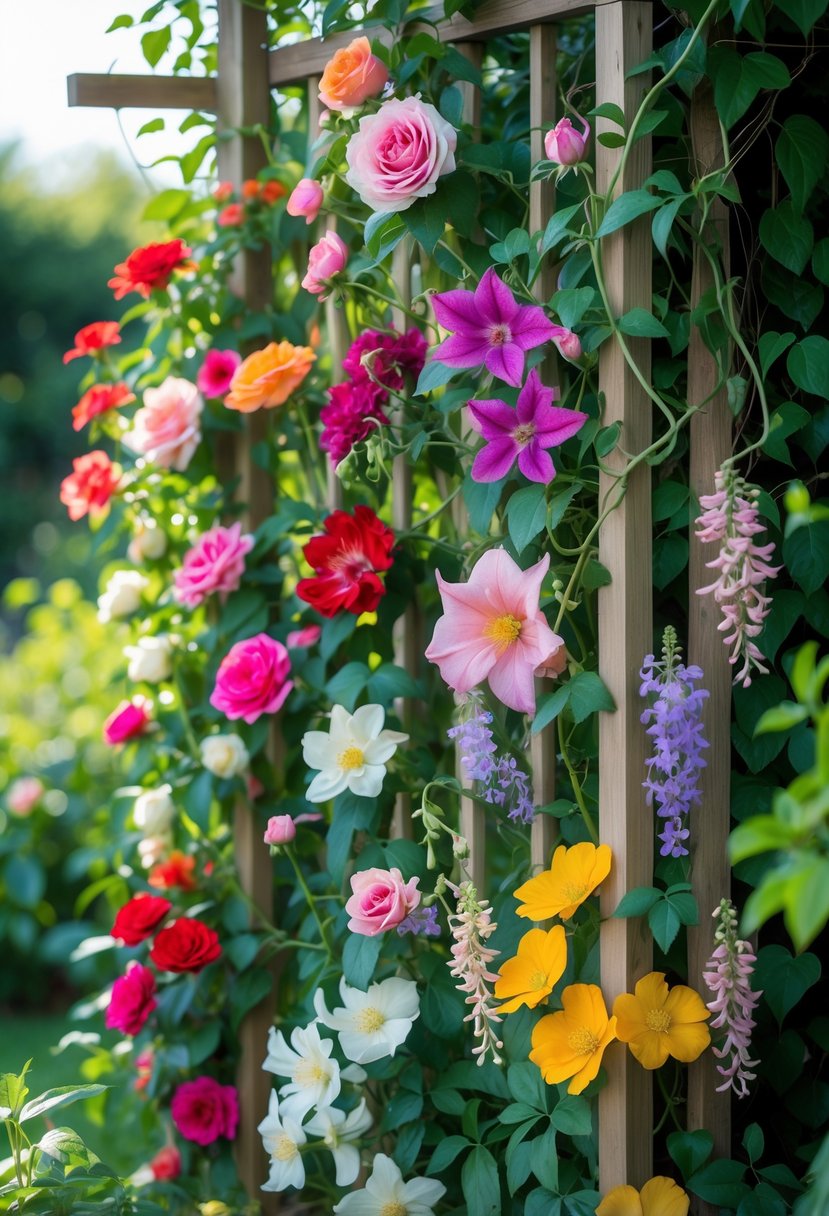
To keep your climbing flowers healthy and vibrant, focus on steady watering, proper feeding, and regular pruning. These actions help support strong growth and abundant blooms throughout the season.
Watering and Feeding Tips
Climbing flowers need consistent moisture, especially during dry spells. Water them deeply once or twice a week rather than light, frequent watering. This encourages deep root growth.
Use mulch around the base to keep soil moist and reduce weeds. Avoid wetting the leaves to prevent fungal diseases.
Feed your plants with a balanced fertilizer, such as a 10-10-10 formula, every 4 to 6 weeks during the growing season. Slow-release fertilizers or liquid feeds work well. Adjust feeding based on your plant type—roses, for example, benefit from extra potassium to improve flowering.
Pruning for Healthy Growth
Pruning climbing flowers helps control size and promotes new blooms. Start by removing dead, damaged, or weak stems early in the season.
For most climbers, prune after flowering. Cut back spent flower stems and thin out crowded branches to improve air circulation.
Use sharp, clean tools to avoid disease. Train new shoots along your trellis by gently tying them with soft garden ties or twine. Regular pruning encourages a fuller plant and keeps blooms coming year after year.