10 Best Vines To Cover A Wall for Easy and Stunning Greenery
Covering a wall with vines is an easy way to add beauty and greenery to your outdoor space. Vines can transform plain walls into natural backdrops that create a fresh and inviting atmosphere.
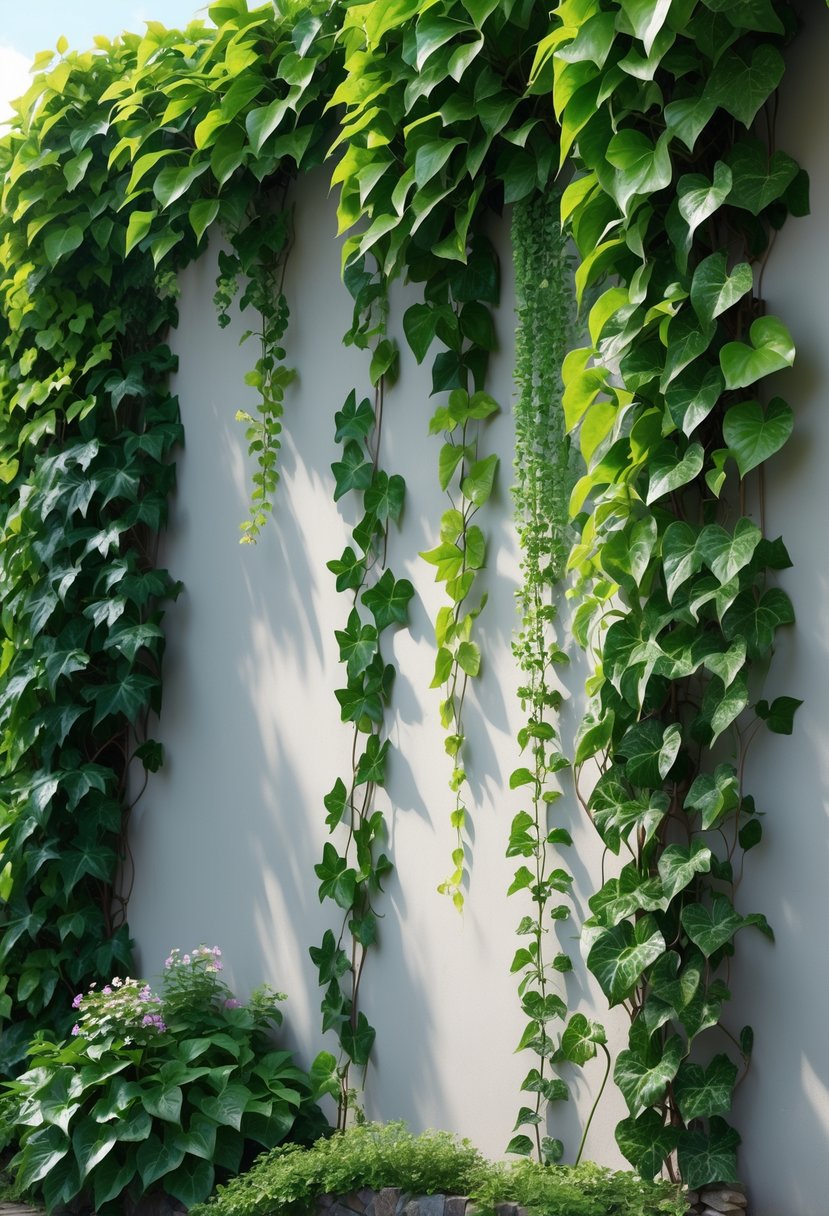
Choosing the right vine helps you achieve the look and coverage you want while fitting the conditions of your space. Whether you want lush greenery or colorful blooms, the right plants can make a big difference.
1) English Ivy
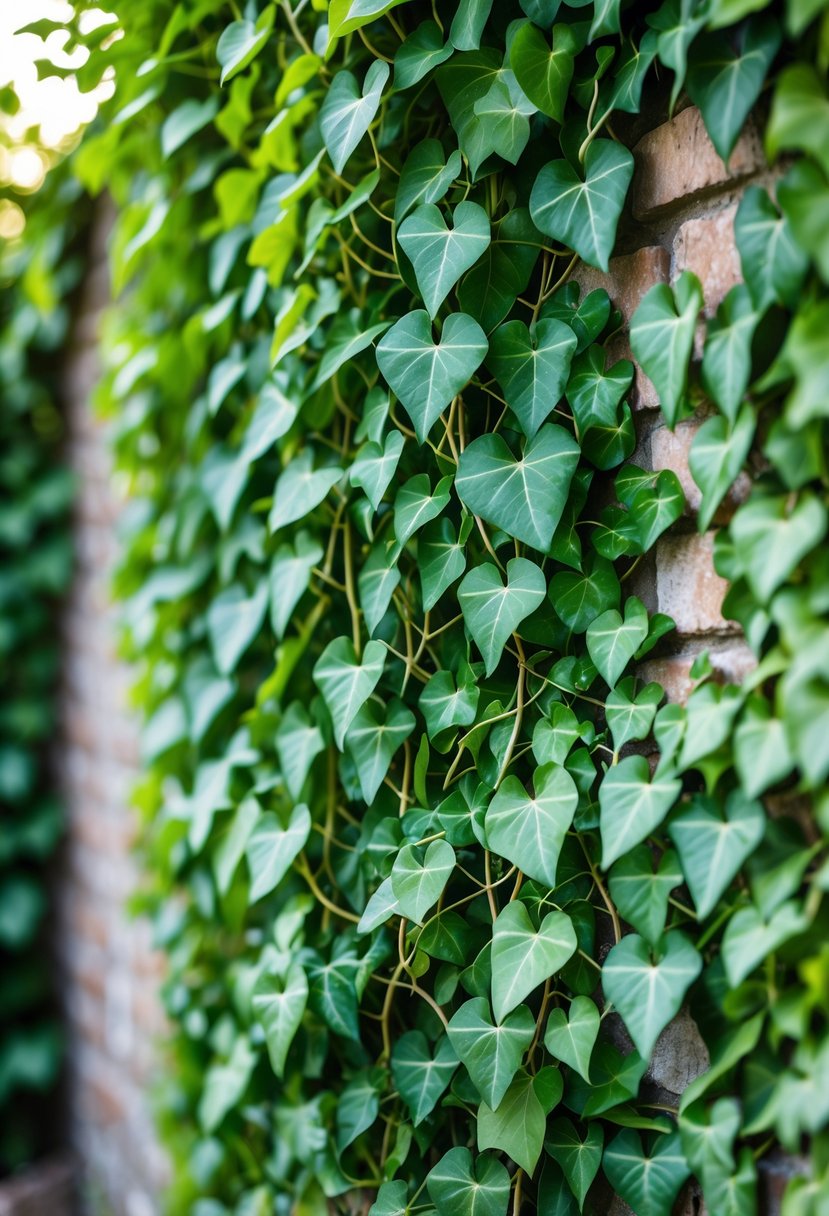
English Ivy is a popular choice for covering walls. It grows steadily and provides a lush, green look all year.
If you want a vine that stays green in winter, English Ivy fits well. It climbs easily on many surfaces using small rootlets.
This vine requires some time to establish but needs less pruning later. You can shape it into neat, formal patterns if you like.
Be aware that English Ivy can grow quite dense. Regular checks help keep it from damaging walls or nearby plants.
2) Clematis
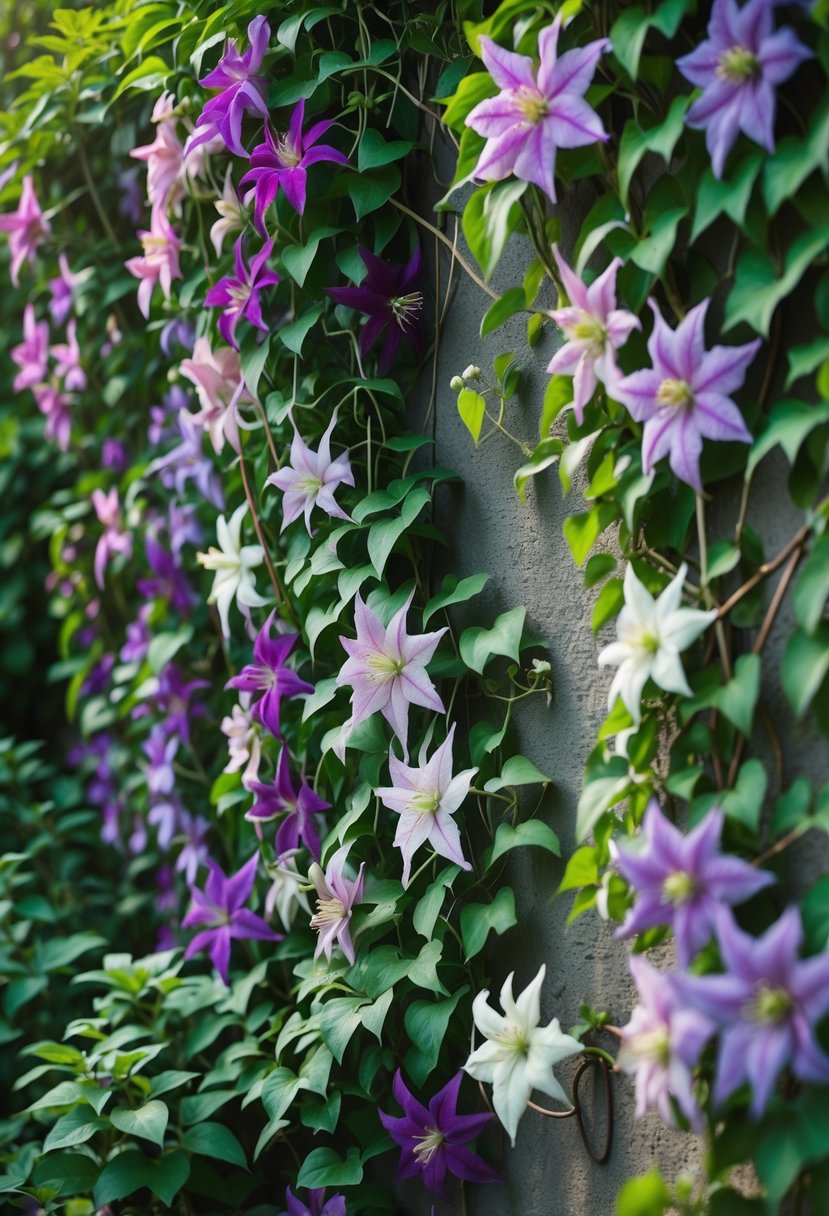
Clematis is a popular choice if you want a vine that climbs well and looks good. Some varieties, like Clematis montana, have stems that wrap tightly around walls or fences, helping them cling without extra support.
You can find Clematis in many colors and sizes. This makes it easy to pick one that fits your wall and garden style.
This vine grows quickly, so you will see coverage in a short time. Clematis also flowers at different times depending on the type you choose, giving your wall color through several seasons.
Clematis is generally not too aggressive, so it won’t take over your garden. It fits well with other plants and adds beauty without too much work.
3) Star Jasmine
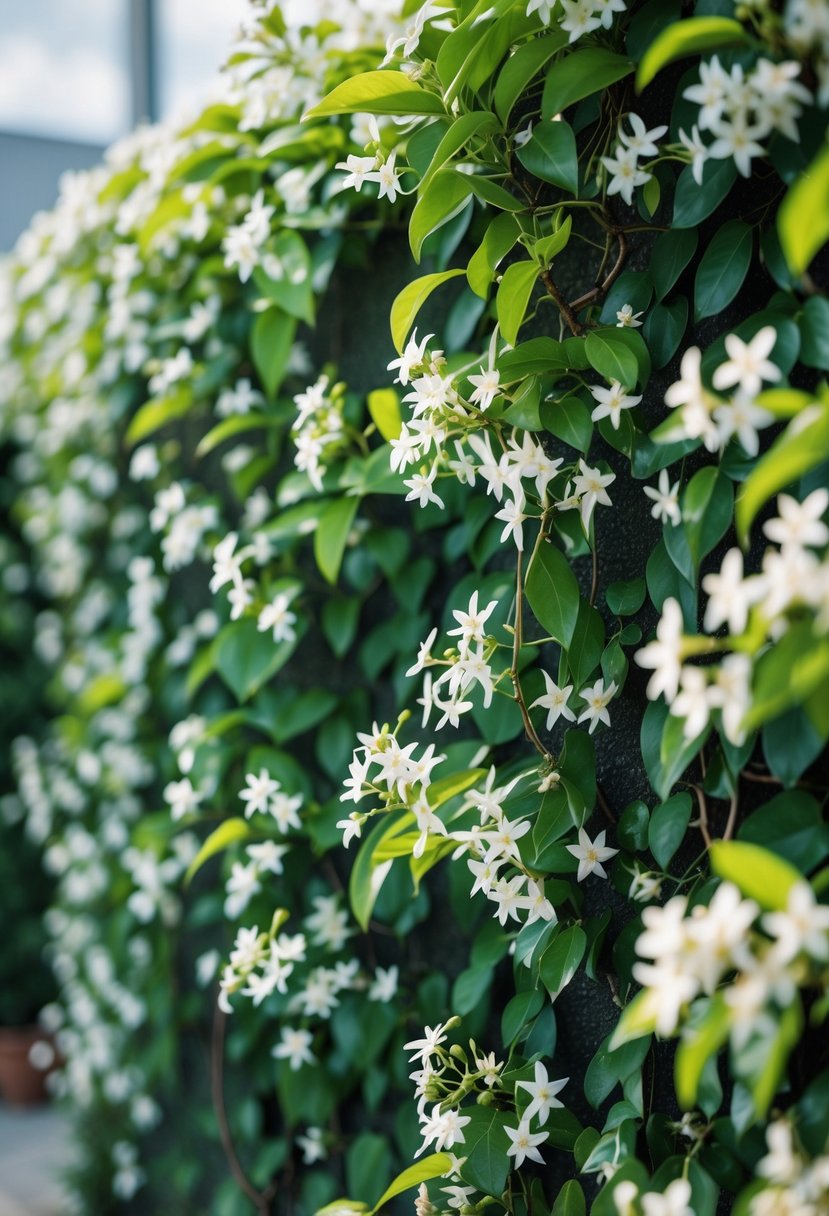
Star Jasmine is a fast-growing vine that can cover walls, fences, or trellises quickly. You’ll notice its dark green, leathery leaves stay on the plant year-round, giving your wall constant greenery.
In spring, Star Jasmine produces small, white, star-shaped flowers that have a mild, pleasant fragrance. The flowers add a touch of beauty without overwhelming the space.
This vine grows best in sun or partial shade, but avoid areas with intense reflected heat. It can reach up to 30 feet tall, so you may need to trim it regularly to keep it neat.
For healthy growth, mix organic soil with basic garden soil. This mix helps the plant get the nutrients it needs without costing too much.
You need to provide some support for Star Jasmine since it climbs by twining around structures.
4) Climbing Hydrangea
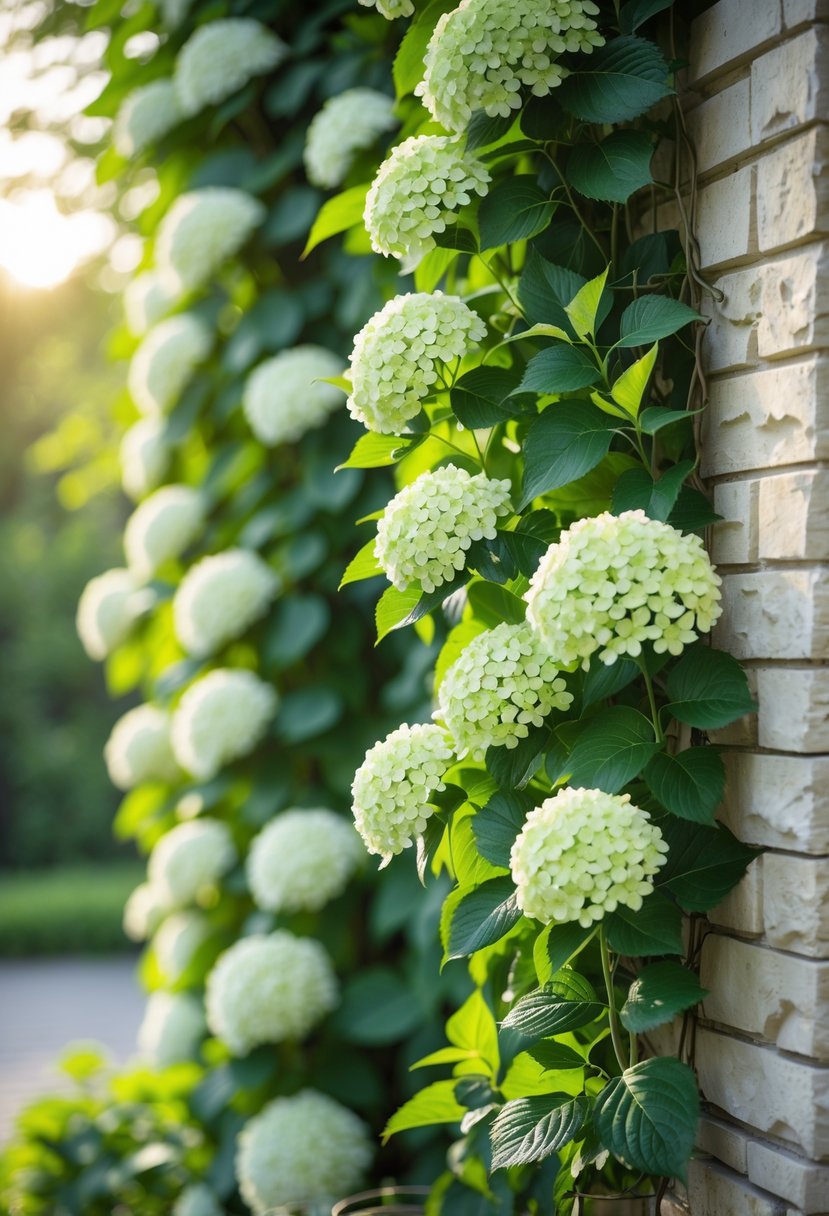
Climbing hydrangea is a strong choice for covering walls and fences. It attaches itself without needing extra support. You will see clusters of white flowers appear around mid-summer, adding a soft, natural look to your space.
This vine can grow quite tall, reaching up to 40 feet. It works well in cooler or warmer climates, thriving in USDA zones 6 to 10. You can expect dense greenery that helps provide good coverage.
If you want a low-maintenance option, climbing hydrangea is reliable. It is slow to start but grows steadily once established. You should plant it in partial to full shade for best results.
5) Trumpet Vine
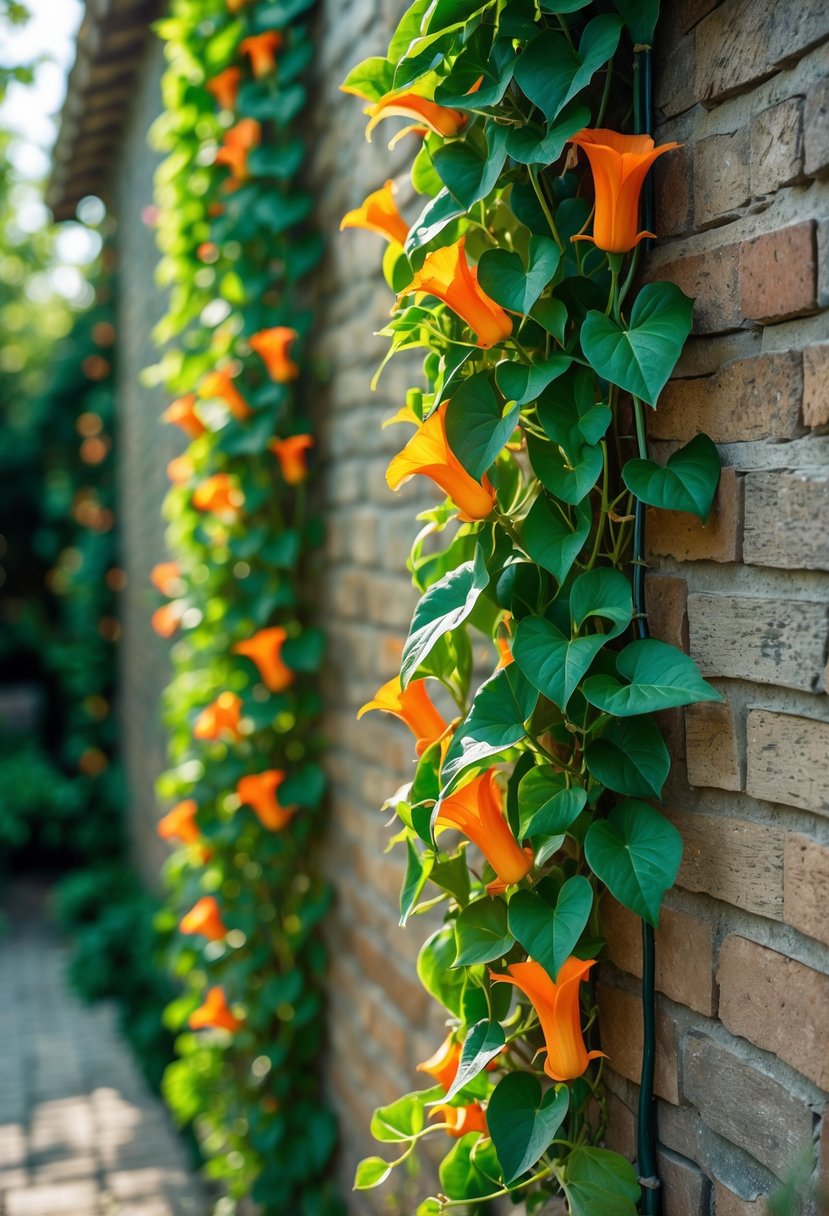
Trumpet vine is a strong climber that can quickly cover a wall or fence. You will notice its large, bright orange-red trumpet-shaped flowers that bloom in summer. These flowers attract hummingbirds and other pollinators to your garden.
This vine can grow very tall, sometimes reaching 20 to 30 feet. It is best for full sun areas and well-drained soil. Be aware that trumpet vine can spread aggressively, so regular pruning helps keep it under control.
Its thick, woody stems cling to surfaces, making it easy to cover large areas. If you want a fast-growing vine with bright, showy flowers, trumpet vine is a solid choice for your wall.
6) Boston Ivy
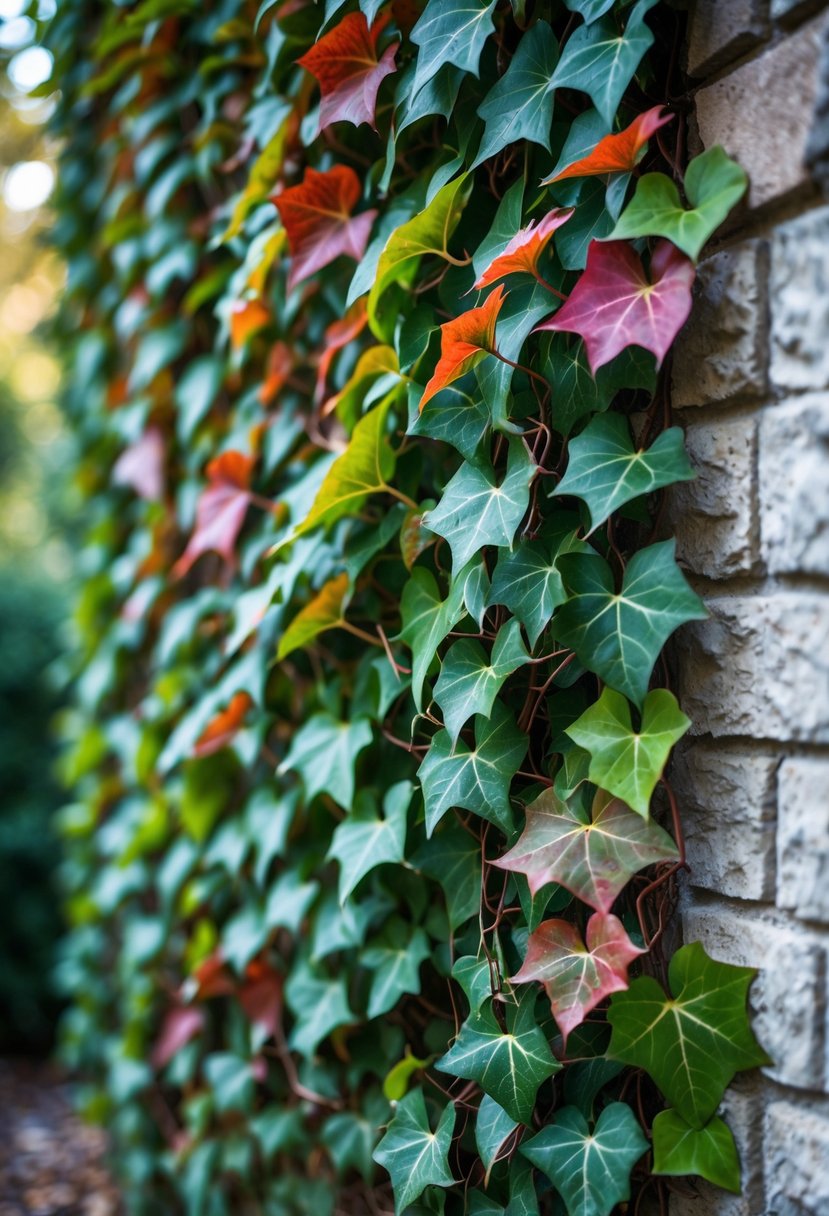
Boston Ivy is a strong climber that can quickly cover walls. It is not a true ivy but looks very similar with its dense green leaves.
In the fall, the leaves change to bright red, adding color to your wall. This makes it a good choice if you want seasonal interest.
You should be careful when planting Boston Ivy near brick or wooden walls. It can stick tightly and might cause damage over time if not managed.
To avoid problems, train the vines regularly and check how they attach to your wall. Boston Ivy works well if you want a natural, leafy look that changes with the seasons.
7) Wisteria
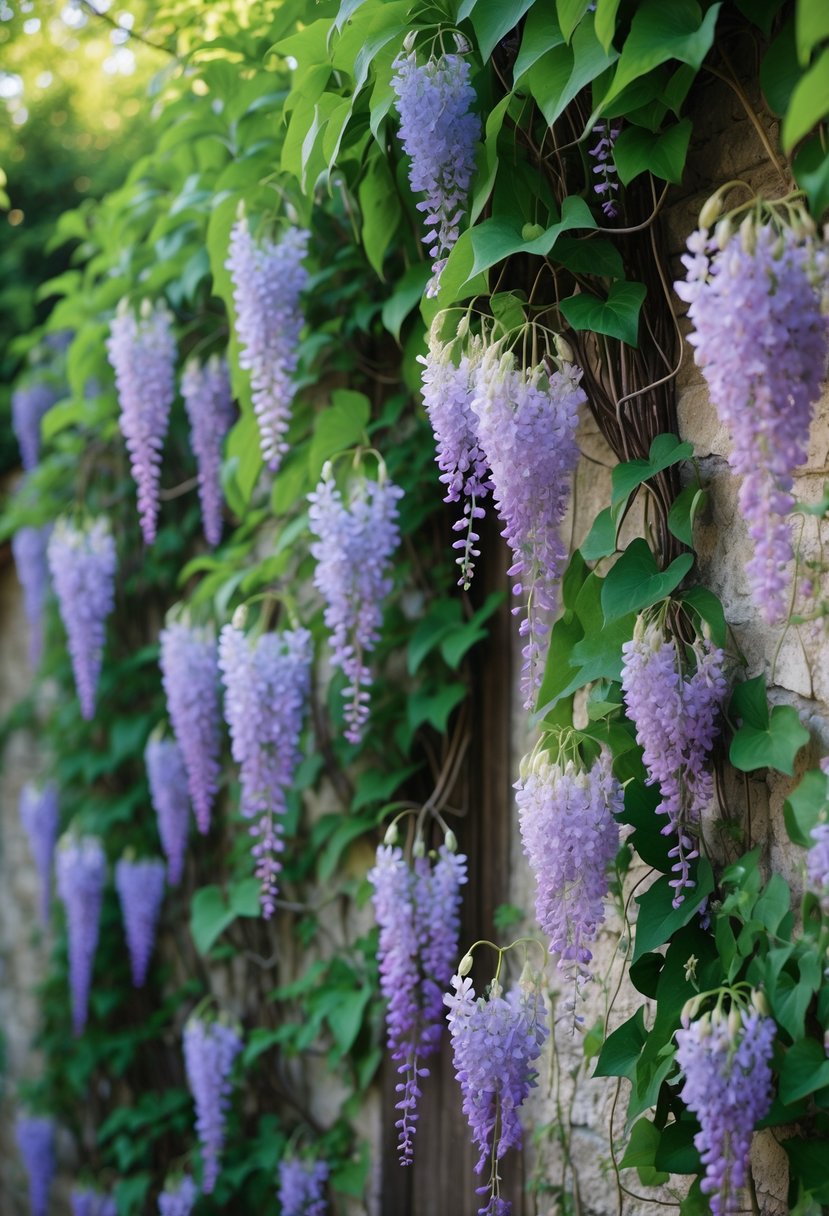
Wisteria is a strong climbing vine that works well to cover walls. It produces long clusters of flowers in colors like purple, blue, pink, and white. These blooms give your wall a decorative look during spring.
You should know that Wisteria needs support to climb and takes time to grow. It can become quite heavy, so make sure your wall or structure is sturdy. Regular pruning is important to keep it under control.
If you want to add color and fragrance to your space, Wisteria is a good choice. It suits many garden styles and adds a natural charm to any wall you want to cover.
8) Bougainvillea
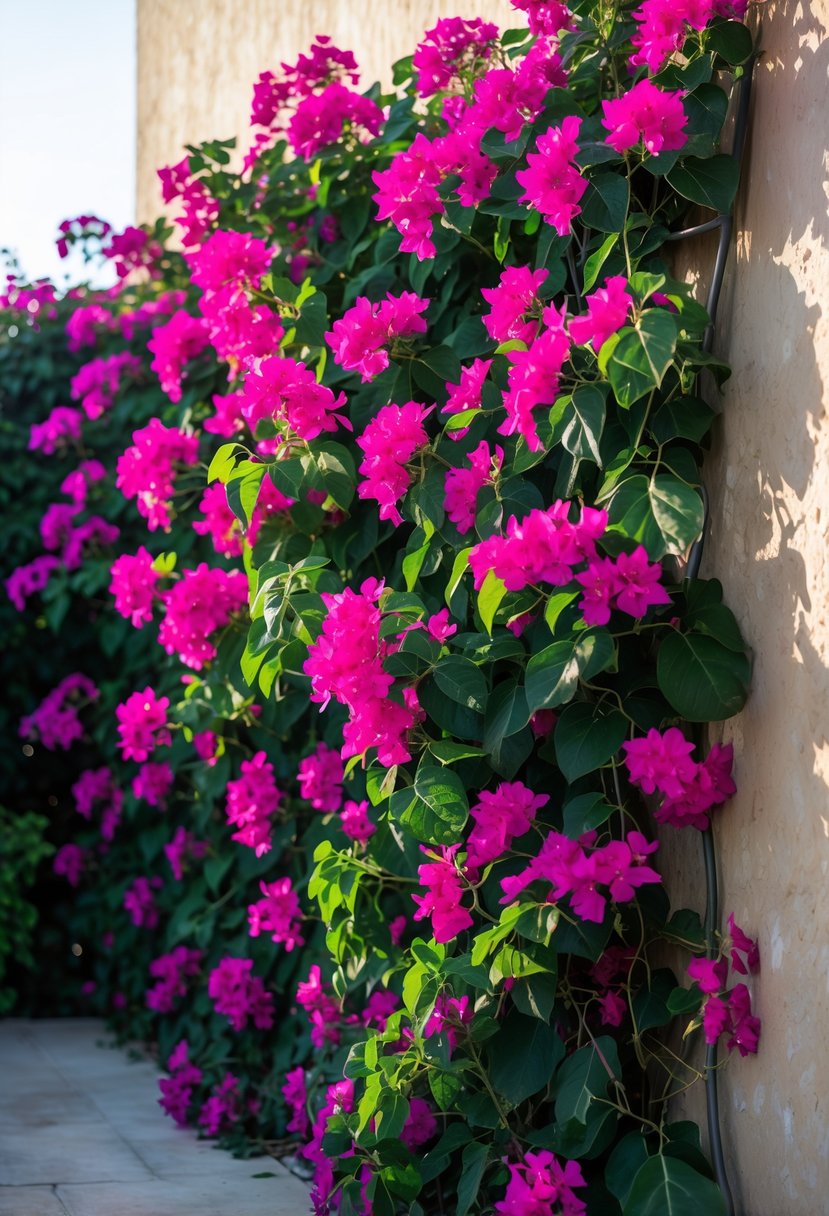
Bougainvillea is a popular vine to cover walls because it adds bright, lasting color. You can find it in shades of pink, purple, orange, and white. The plant grows well in warm climates and resists drought.
To grow bougainvillea on your wall, use well-draining soil. Plant it in spring when the vine is active but not blooming. Training the vine early helps you shape it as it grows.
You will need strong support since bougainvillea has woody stems. Use soft ties to attach the stems gently to your structure. With regular care, this vine can create a vibrant, natural wall covering.
9) Passion Flower
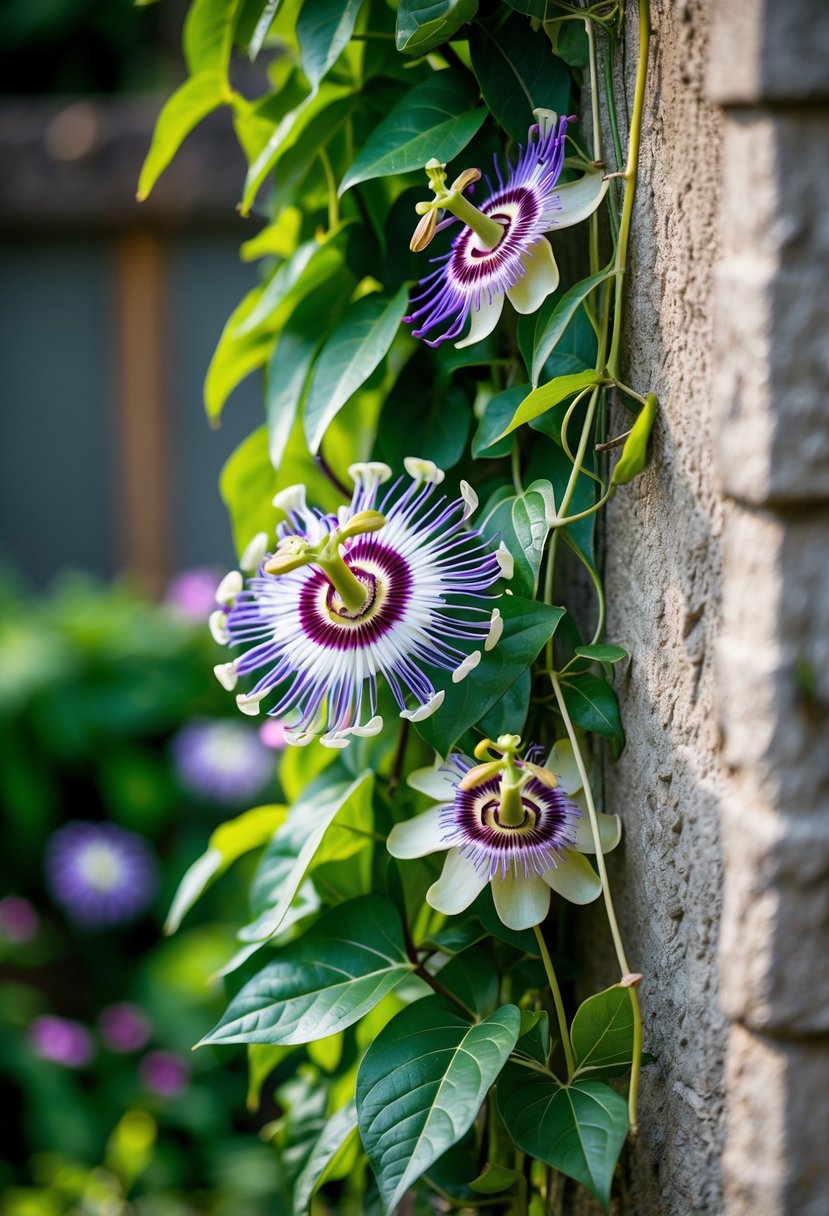
Passion flower vines are a good choice if you want to cover a wall with bright, unique flowers. They have unusual blooms that stand out because of their complex shapes and colors.
You can grow passion flowers on fences, trellises, or walls. They also provide some privacy while adding beauty to your outdoor space.
These vines do well in many climates, especially from zone 6 to zone 10. If you care for them properly, you will enjoy their exotic look for a long time.
10) Honeysuckle
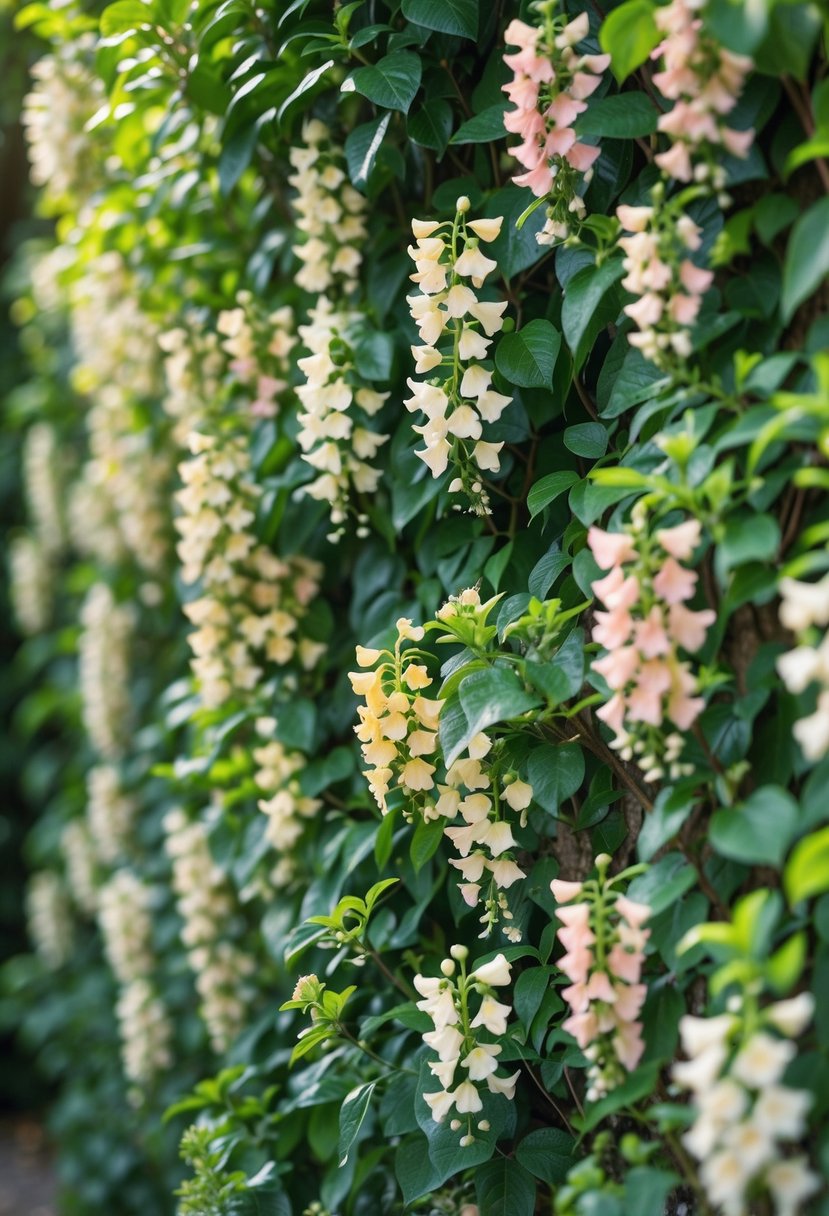
Honeysuckle is a popular vine for covering walls because it grows quickly and produces pleasant-smelling flowers. You can find varieties that thrive in both full sun and partial shade.
This vine uses twining stems to climb, so it attaches well to trellises or wires on your wall. Its flowers attract pollinators like bees and hummingbirds, adding life to your garden.
Honeysuckle is also fairly low maintenance. You should prune it regularly to keep it healthy and control its shape. It works well if you want a natural, green cover with colorful blooms through the growing season.
How To Train Vines for Wall Coverage
Training your vines properly helps them grow evenly and stick closely to the wall. Using the right support and keeping the plants healthy with regular care are key to creating dense, attractive coverage.
Choosing the Right Support Structures
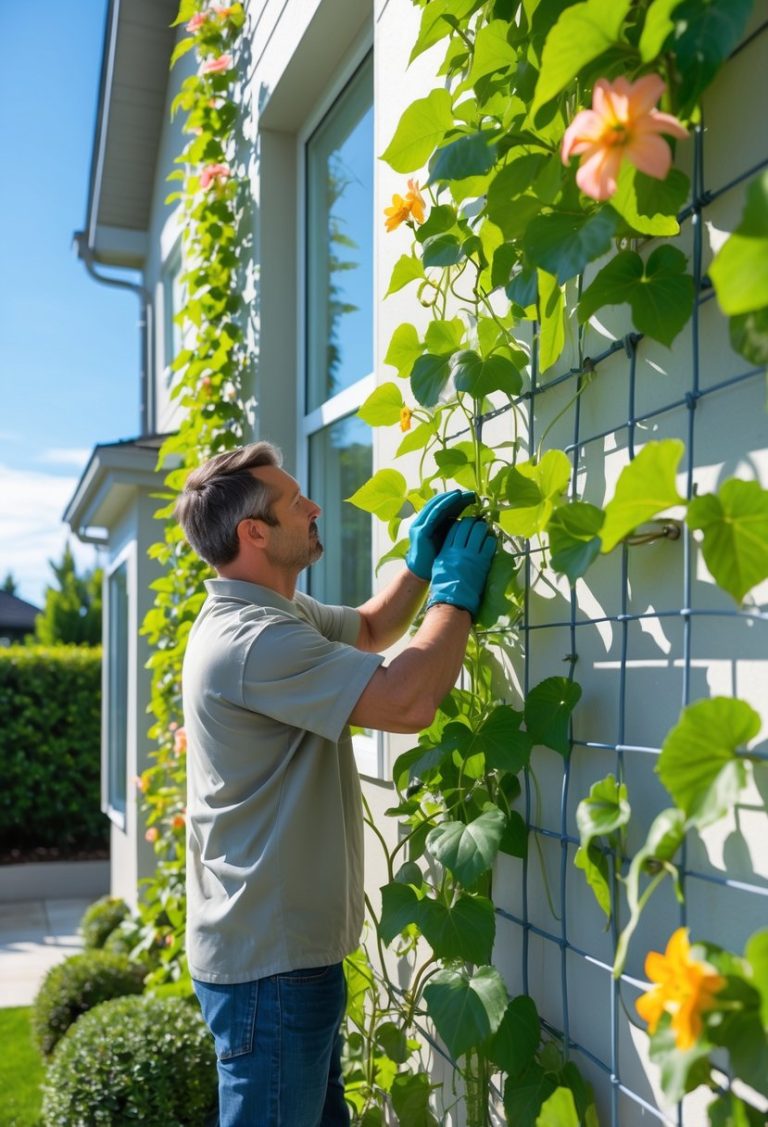
You need strong supports to help your vines climb flat walls. For twining vines, use a grid made of weather-resistant training wire and eyehooks. Space the wires evenly to cover the area where you want the vines to grow. This setup guides the vines and gives them places to wrap their stems.
If your vine clings by adhesive pads or tendrils, the wall surface should be rough or porous. Smooth walls make it harder for these vines to stick. For other types, use soft ties or stretchy plastic tape to secure the vine to supports without damaging the stems.
Make sure your supports can hold the weight of mature vines. Check and tighten ties regularly as the plant grows.
Maintenance Tips for Healthy Growth
Keep vines healthy by pruning them to direct growth and prevent overcrowding. Cut back the oldest stems to encourage new shoots. Remove dead or weak parts to avoid disease.
Water your vines regularly, especially in dry spells, but do not overwater. Most vines prefer soil that drains well.
Feed your vines with a balanced fertilizer during the growing season to boost growth. Use slow-release fertilizers or liquid feeds based on the plant’s needs.
Inspect for pests like aphids or spider mites. Treat infestations early with insecticidal soap or natural remedies.
Training vines is ongoing. Adjust ties and supports as needed to keep the plant growing where you want it.
Common Challenges When Growing Wall Vines
Growing vines on walls can bring some issues you need to watch out for. These include dealing with pests and diseases that target your plants, and making sure the vines don’t harm your walls as they grow. Managing these challenges well helps keep your vines healthy and your walls intact.
Dealing With Pests and Diseases
Vines are often attacked by insects such as aphids, spider mites, and scale. These pests feed on leaves and stems, causing yellowing, wilting, or stunted growth. You should inspect your plants regularly and remove any damaged parts.
Fungal diseases like powdery mildew and leaf spot can appear in humid or crowded conditions. To prevent this, space your vines properly and prune them to improve airflow. If you spot signs of disease, use appropriate fungicides or natural treatments like neem oil.
Keep an eye out for any unusual changes in color or texture. Early action is key to stop pests and diseases from spreading and weakening your vines.
Preventing Wall Damage
Some vines attach to surfaces with strong roots or sticky pads that can damage paint or brickwork. You should choose species that climb using twining stems or tendrils, which are less harmful.
Make sure to train your vines away from gutters, windows, and siding. Check your walls often for cracks or peeling paint caused by vine growth.
Using a trellis or wire frame a few inches away from the wall keeps vines from sticking directly to surfaces. This setup protects your walls and makes it easier to manage growth.
Frequently Asked Questions
You can choose vines based on how fast they grow, their flowering patterns, or their ability to cling to walls. Some vines offer privacy, while others work better on trellises or indoors. Different vines suit different spaces and sunlight levels.
Which vines are the best for quick coverage on outdoor walls?
English Ivy grows quickly and covers walls densely. Trumpet Vine also spreads fast and produces bright flowers while covering large areas.
What are the top flowering vines suitable for all-year blooming?
Star Jasmine offers year-round blooms with a strong fragrance. Clematis blooms in multiple seasons, adding color from spring through fall.
Can you list some fast-growing vines ideal for privacy screens?
Trumpet Vine and English Ivy grow quickly and form thick screens to block views. Both help create natural privacy with dense leaves.
What climbing plants are recommended for trellises in full sun?
Clematis thrives in full sun and blooms in many colors. Star Jasmine also prefers sunny spots and clings well to trellises.
Are there any self-clinging vines that are particularly good for walls?
English Ivy naturally clings to walls without extra support. Climbing Hydrangea also clings, but it grows slower and prefers shaded areas.
Which indoor hanging vine plants are best for home decoration?
While not in the outdoor list, common indoor hanging vines include pothos and philodendron. For indoor beauty, you can also use smaller Clematis varieties with support.